

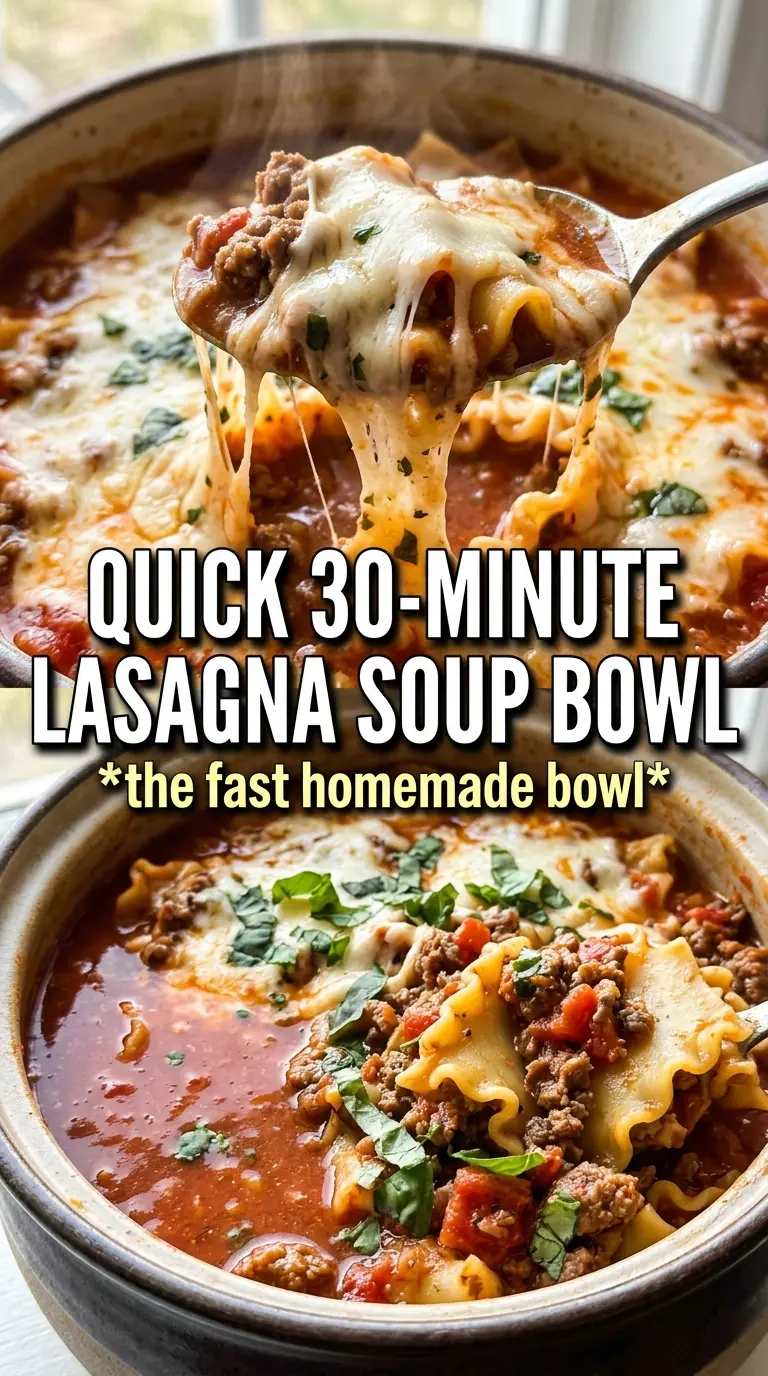
Lasagna soup gives you all the comfort of baked lasagna without waiting on a casserole dish or a long oven bake. The broth turns rich and tomato-forward, the sausage seasons the whole pot, and the broken noodles cook right in the soup so every spoonful lands with that familiar, cozy chew. The cheese dollop on top melts into the bowl just enough to give you the creamy, salty finish you want.
What makes this version work is the way the flavor builds in layers fast. Browning the sausage first leaves behind the browned bits that flavor the broth, and the marinara does the heavy lifting so you don’t need to simmer for an hour. The noodles go in near the end and cook directly in the liquid, which keeps the soup from turning mushy or overly thick before dinner is on the table.
If you’ve ever had lasagna soup that tasted flat or ended up gluey, the details below will help. The broth-to-noodle ratio matters, and the cheese topping is worth doing separately instead of stirring everything together at the start.
The broth got thick and rich without turning sticky, and the broken noodles stayed tender instead of falling apart. I loved stirring the ricotta mixture into each bowl at the table.
Save this 30-minute lasagna soup for nights when you want the flavor of baked lasagna with a fast tomato broth and a creamy ricotta topping.
The Shortcut That Keeps Lasagna Soup Tasting Like Lasagna, Not Pasta in Broth
The biggest mistake with lasagna soup is treating it like a regular noodle soup. If the broth is thin, the sausage isn’t browned well, or the noodles sit too long, it turns into a bland tomato pot with broken pasta. This version avoids that by leaning on a strong marinara base and using the sausage drippings to give the broth depth right away.
Adding the noodles after the broth comes to a boil matters more than it sounds. They need enough heat to cook through in about 10 to 12 minutes, but they also need enough liquid to move freely. Stir occasionally, not constantly, so the noodles don’t break down. If the soup looks a little loose before serving, that’s a good sign; the noodles will keep soaking up broth in the bowl.
What Each Ingredient Is Actually Doing In This Pot
- Italian sausage — This is the backbone of the soup. It seasons the broth from the start, so the final pot tastes built, not assembled. Mild or hot both work; hot sausage gives the most depth with no extra effort.
- Marinara sauce — A good jar of marinara saves time here because it’s already seasoned and concentrated. Choose one with a flavor you like on its own, since it becomes the tomato base of the whole soup.
- Chicken broth — This stretches the marinara into soup without making it too heavy. If you use a lower-sodium broth, you get more control at the end, especially because the sausage and cheese already bring salt.
- Lasagna noodles — Broken noodles give you the right texture and the visual feel of lasagna without any layering. Break them into rough pieces instead of tiny bits so they hold their shape and don’t vanish into the broth.
- Ricotta, mozzarella, and parmesan — This quick cheese dollop is what makes the bowl taste like lasagna. Ricotta gives the creaminess, mozzarella adds stretch, and parmesan sharpens the finish. Stir them together right before serving so the mixture stays fluffy instead of turning watery.
- Fresh basil — Basil cuts through the richness and wakes up the bowl at the end. Add it after ladling, not in the pot, so it stays bright.
Building The Broth So The Noodles Don’t Ruin It
Browning The Sausage First
Start with the sausage in a large pot over high heat and let it get real color before you move on. You want browned edges and a little fond stuck to the bottom of the pot; that’s where the flavor is. If the sausage steams instead of browns, the pot is overcrowded or the heat dropped too low. Drain the fat if there’s a lot, but leave the browned bits behind.
Softening The Onion In The Same Pot
Cook the diced onion in the same pot for about 3 minutes, just until it starts to turn translucent and pick up the sausage flavor. Add the garlic for the last minute only. Garlic burns fast in a hot pot, and burnt garlic makes the whole soup taste sharp and bitter instead of savory.
Letting The Broth Come Together
Pour in the marinara and broth, then add the Italian seasoning and red pepper flakes. Bring the pot to a boil before the noodles go in so the broth is moving strongly and the pasta starts cooking evenly right away. This is the point where the soup should smell bright, meaty, and tomato-rich. If it seems too thick before the noodles are added, loosen it with a splash more broth rather than waiting for the pasta to fix it.
Cooking The Noodles To The Right Bite
Add the broken lasagna noodles and boil them for 10 to 12 minutes, stirring occasionally so they don’t stick to the bottom or clump together. Pull the pot as soon as the noodles are just tender; if you wait until they’re completely soft in the pot, they keep cooking in the hot broth and go mushy. The best texture is slightly firm in the center when you ladle the soup.
Finishing Each Bowl With The Cheese Dollop
Mix the ricotta, mozzarella, and parmesan quickly while the soup finishes. Spoon a generous amount into each bowl, then ladle the hot soup around it so it melts into ribbons instead of disappearing into the pot. Fresh basil goes on at the end. That last hit of green keeps the soup from feeling heavy.
Three Ways To Make This Soup Fit Your Kitchen
Use Ground Turkey For A Lighter Bowl
Ground turkey works if you want a lighter soup, but it needs help with flavor. Add an extra pinch of salt and don’t skip browning it well, because turkey doesn’t bring the same built-in seasoning or richness that Italian sausage does. The broth will still be good, just a little cleaner and less savory.
Make It Gluten-Free With Gluten-Free Pasta
Use a sturdy gluten-free noodle that can handle boiling in broth, and start checking it a minute or two early. Gluten-free pasta can go from firm to soft faster than wheat noodles, so the pot needs closer attention near the end. The flavor stays the same, but the texture is best when you serve it right away.
Skip The Dairy And Top With Olive Oil And Herbs
For a dairy-free bowl, leave off the ricotta mixture and finish with a drizzle of good olive oil plus extra basil. You’ll lose the creamy lasagna-style topping, but the soup itself still carries the sausage, tomato, and noodle comfort. A spoonful of dairy-free pesto also works if you want something richer.
Storage And Reheating
- Refrigerator: Store in an airtight container for up to 4 days. The noodles will keep absorbing broth, so the soup thickens as it sits.
- Freezer: It freezes better without the noodles. If you want to freeze it, stop before adding pasta, then cook fresh noodles when you reheat.
- Reheating: Warm gently on the stove over medium-low heat with a splash of broth or water. High heat breaks the noodles down and makes the soup too thick too fast.


