Big bowls of chicken noodle soup should leave you satisfied, not hungry again an hour later. This version keeps everything people love about the classic — clear broth, tender noodles, soft vegetables, bright lemon — and gives it more staying power with diced chicken breast and chickpeas. The broth stays light, but the soup eats like a full meal.
The key is building flavor in layers without muddying the broth. The vegetables soften first, the chicken gets a quick browning before the broth goes in, and the chickpeas add body without turning the pot into a stew. Using high-protein or whole wheat egg noodles helps the bowl feel hearty without needing cream or extra fat.
Below, I’ll walk through the little details that keep the chicken juicy, the noodles from going mushy, and the lemon from tasting flat at the end. There’s also a simple way to make this soup work for meal prep without sacrificing texture.
The noodles stayed firm, the broth was clear, and the chickpeas made it feel like a full dinner instead of just soup. I added the lemon at the end like you said and it made the whole pot taste brighter.
High Protein Chicken Noodle Soup with chickpeas, lemon, and tender egg noodles is the kind of bowl that tastes like it simmered all day.
The Broth Stays Clear Only If You Don’t Rush the Chicken
Chicken noodle soup goes wrong when the pot is pushed to a hard boil too soon. That agitation clouds the broth and can tighten the chicken before it has a chance to stay tender. Here, the vegetables cook first to build a base, then the chicken gets a brief browning, and the broth comes in after that so it can simmer gently.
The other place people trip up is the noodles. If they go in too early, they keep drinking broth until the soup turns thick and the pasta turns soft. Add them after the chickpeas and let them cook just until they’re tender with a little chew left in the center.
What Each Ingredient Is Actually Doing in the Pot
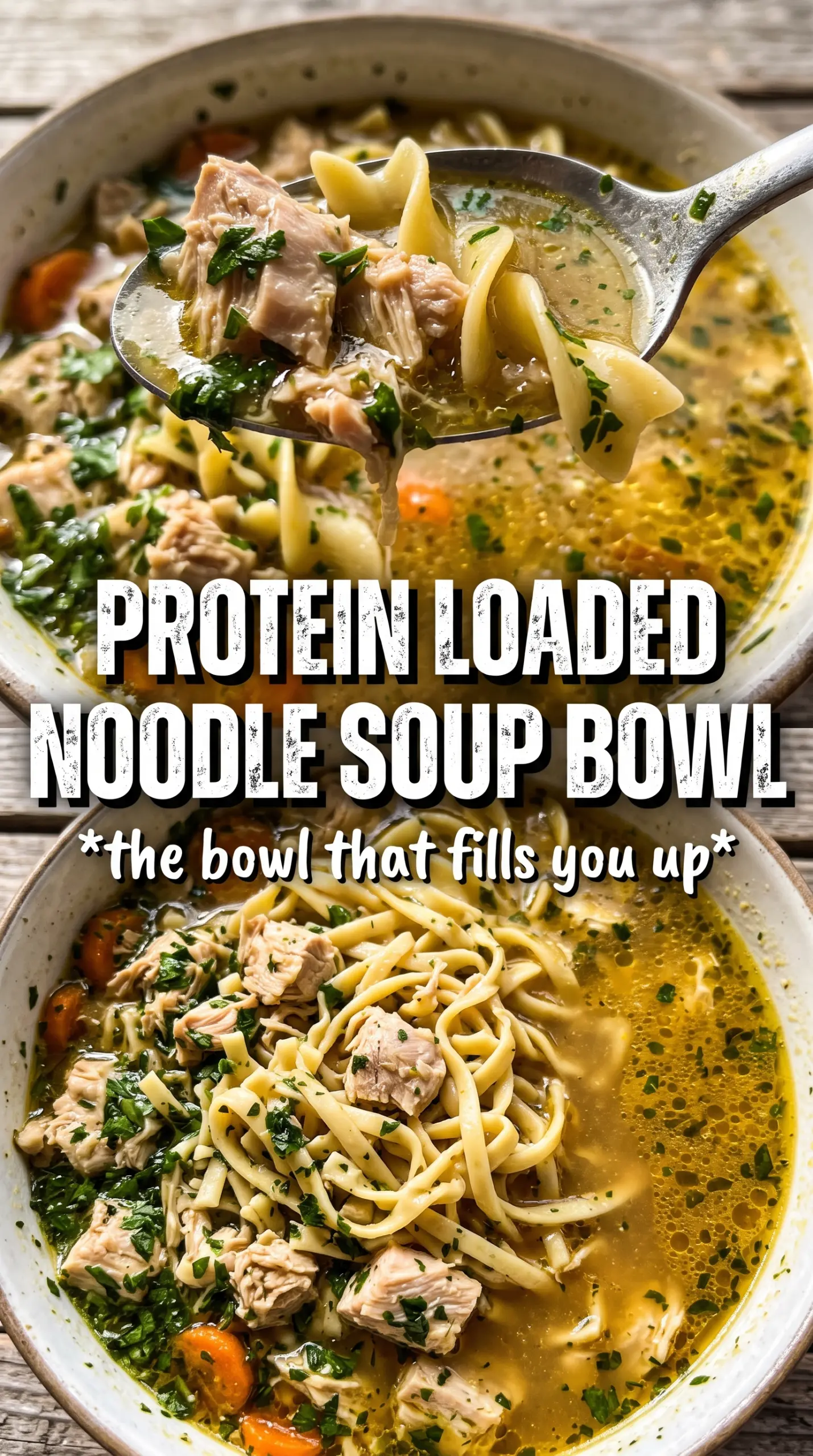
- Chicken breast — Dicing it gives you more browned surface area and faster cooking than whole pieces. Thighs work if you want a richer soup, but breasts keep this lighter and are the easiest swap if you’re aiming for higher protein without extra fat.
- Chickpeas — These are what turn the soup from light lunch into actual dinner. They hold their shape well in broth and add a creamy, meaty bite that canned white beans can mimic, but not quite match.
- Chicken broth — Use a broth you’d actually drink. A good boxed broth is fine here because the vegetables, herbs, and lemon do a lot of the finishing work.
- High-protein or whole wheat egg noodles — These give you more staying power and a little more chew. If you use standard egg noodles, keep the simmer short and watch them closely, because they soften fast and will keep cooking in the hot broth after the pot comes off the heat.
- Lemon juice — Add it at the end, not during the simmer. Heat dulls the brightness, and this soup needs that sharp finish to wake up the broth.
- Fresh parsley — It’s not just garnish. The fresh herb note makes the whole bowl taste cleaner and keeps the soup from reading flat.
Building the Pot in the Right Order
Softening the Vegetables First
Start with the olive oil, onion, carrots, and celery. You’re looking for the onion to turn translucent and the carrots to lose their raw edge, not for deep browning. If the heat is too high, the onions will color before the carrots soften, and the base tastes uneven.
Giving the Chicken a Head Start
Add the garlic for just a minute, then the diced chicken. Stir until the outside loses its pink color and picks up a little color in spots. That quick browning matters because it gives the broth a deeper savory note without turning the chicken tough. If the pan looks dry, the vegetables should still be releasing enough moisture to keep things moving.
Simmering Without Beating Up the Broth
Once the broth and herbs go in, bring the pot to a boil only long enough to get everything moving, then drop it down to a steady simmer. A gentle bubble is what you want. A rolling boil makes the chicken stringy and can make the broth look cloudy.
Adding the Noodles at the End
Stir in the chickpeas and noodles near the finish and cook just until the noodles are tender. Start checking early if you’re using a thinner noodle, because they can go from done to bloated fast. Pull the pot off the heat before they lose their bite; they’ll keep softening in the hot broth for a few minutes.
Finishing with Lemon and Salt
Lemon juice goes in last, after the noodles are cooked. Taste again after that, then season with salt and pepper. If the soup tastes flat, it usually needs more salt, not more lemon — salt makes the broth taste fuller, while lemon gives it lift.
How to Adjust This Soup for Your Pantry and Your Week
Make it gluten-free
Use a gluten-free noodle that holds up in broth, and cook it just to tender so it doesn’t break apart. Rice-based noodles work, but they soften faster than egg noodles, so keep an eye on the pot near the end.
Use rotisserie chicken instead of raw chicken breast
Stir in shredded cooked chicken after the broth has simmered and the vegetables are tender. Skip the browning step and reduce the simmer time a bit, since the chicken only needs to warm through.
Swap the chickpeas for white beans
Cannellini beans or great northern beans give you a softer bite and a milder flavor. The soup will still be hearty, but it loses a little of the nutty texture chickpeas bring.
Storage and Reheating
- Refrigerator: Store for up to 4 days. The noodles will keep soaking up broth, so the soup gets thicker as it sits.
- Freezer: Freeze without the noodles if you can. The broth, chicken, and vegetables freeze well for up to 3 months; add freshly cooked noodles after thawing for the best texture.
- Reheating: Warm gently on the stove over medium-low heat until steaming. If the soup thickened in the fridge, loosen it with a splash of broth or water before it gets hot, since boiling it hard can make the chicken dry and the noodles mushy.
Answers to the Questions Worth Asking
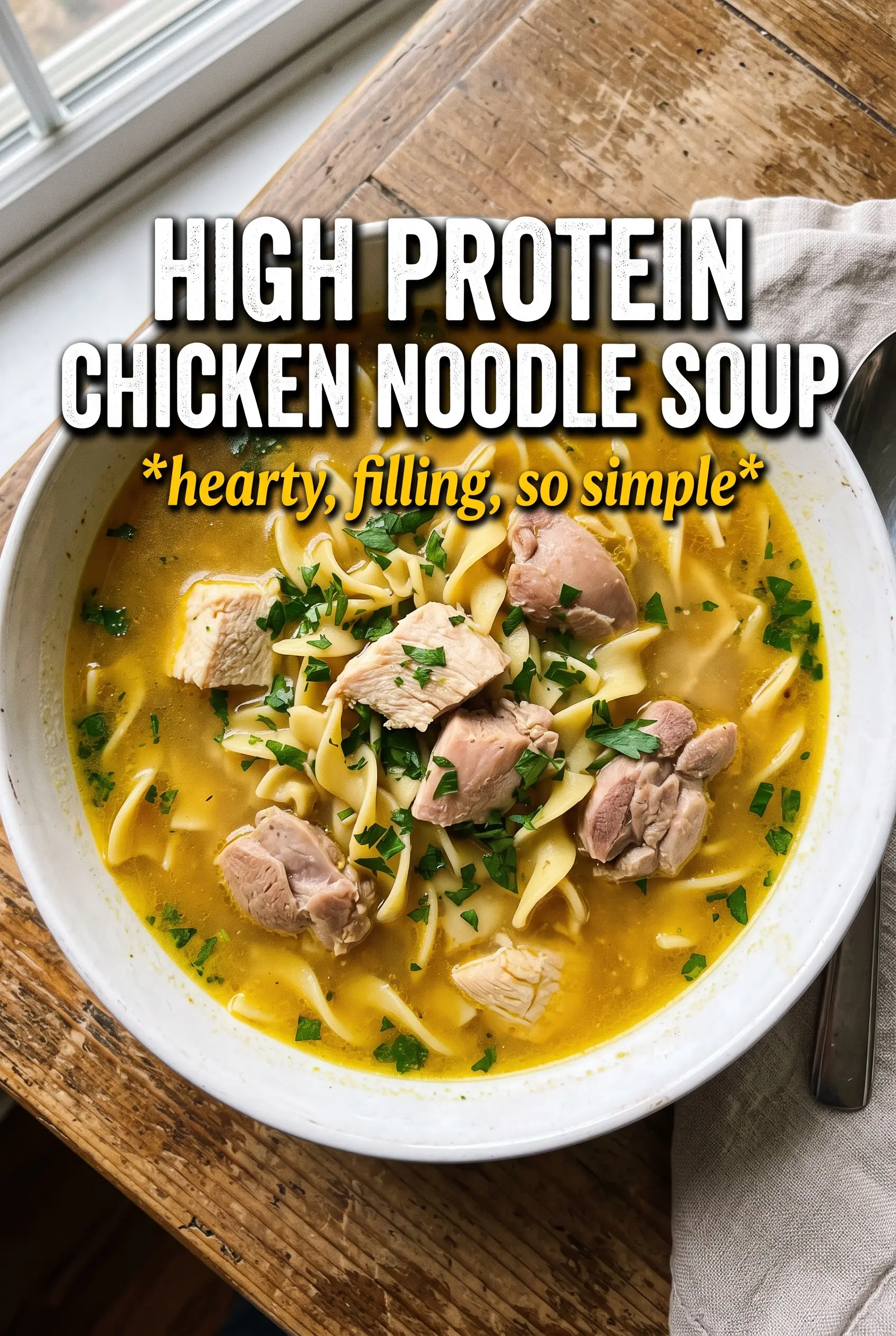
High Protein Chicken Noodle Soup
Ingredients
Equipment
Method
- Heat olive oil in a large pot over medium heat, then sauté onion, carrots, and celery for 5 minutes until they start to soften and smell fragrant.
- Add garlic and cook for 1 minute, stirring, until fragrant but not browned.
- Add the diced chicken and cook for 4 minutes, stirring occasionally, until lightly browned.
- Add chicken broth, dried thyme, and dried parsley, then bring to a boil.
- Once boiling, reduce to a simmer and cook for 15 minutes until the broth tastes well seasoned and the vegetables are tender-crisp.
- Add chickpeas and egg noodles, then cook for 6–8 minutes, stirring as needed, until the noodles are tender.
- Stir in lemon juice and season with salt and pepper to taste.
- Garnish with fresh parsley and serve hot.