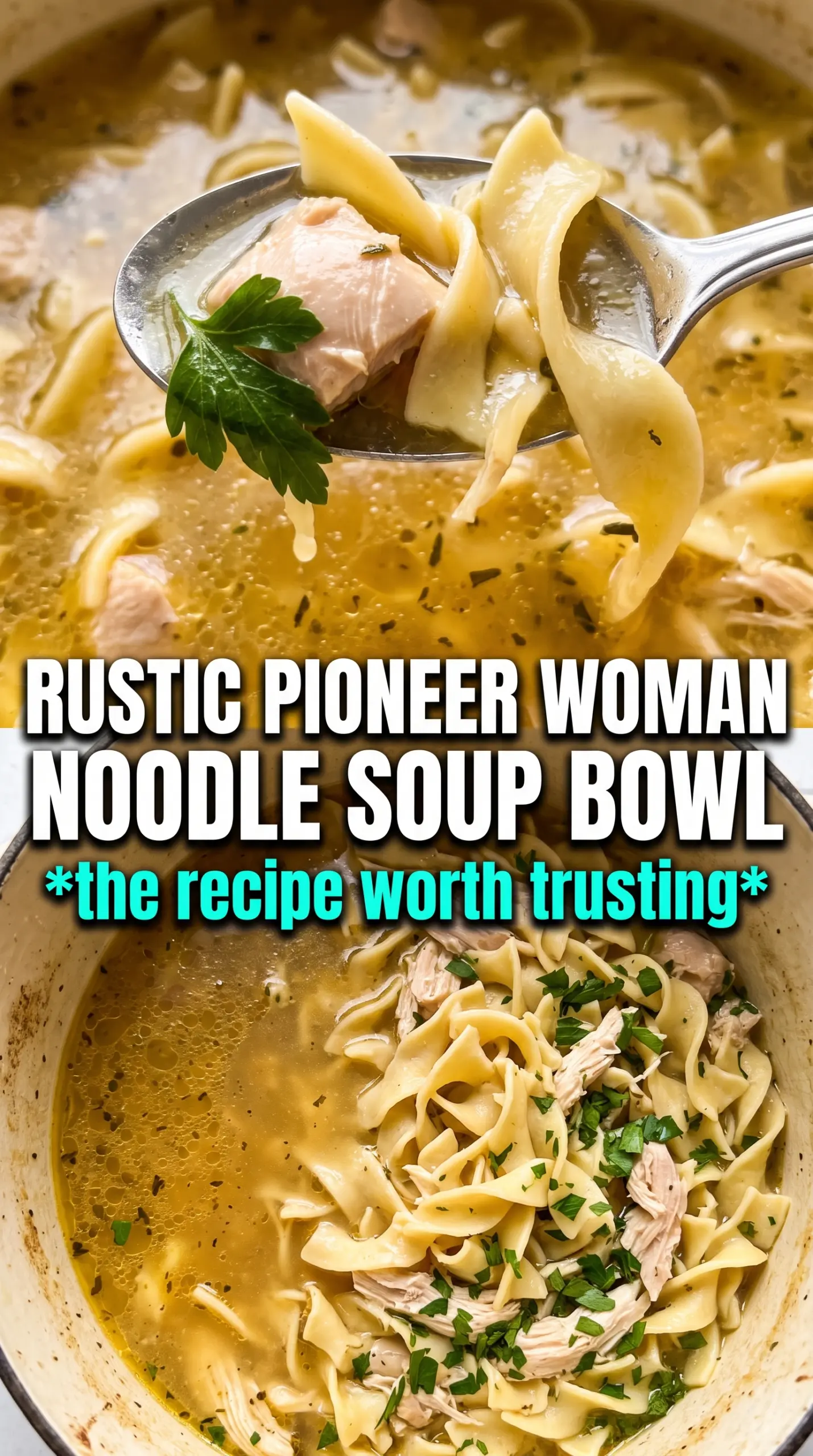
Rich broth, tender shreds of chicken, and wide egg noodles give this soup the kind of depth that makes a second bowl feel like the natural next step. The butter stirred in at the end rounds out the broth and gives it that farmhouse-style finish that tastes fuller than a basic chicken soup without turning heavy. It’s the sort of pot that smells like comfort before it even reaches the table.
What makes this version work is the way it builds flavor from the whole chicken instead of relying on boxed stock. The chicken simmers with onion, carrot, celery, garlic, bay leaves, and peppercorns long enough to turn the broth savory and layered, then the finished broth gets a little extra body from butter before the noodles go in. That order matters. If you boil the noodles in the first broth, they’ll soak up too much liquid and leave you with a starchy, tired soup instead of a clear, rich one.
Below, I’m walking through the small choices that keep the broth clean, the noodles tender, and the seasoning bold enough to carry the whole pot. There’s also a note on how to keep the noodles from going mushy if you’re planning leftovers.
The broth had that rich, homemade taste and the noodles stayed tender instead of falling apart. I followed the timing exactly and the chicken shredded easily after simmering, which made the whole pot come together fast.
Save this Pioneer Woman Chicken Noodle Soup for the nights when you want a deeply savory broth, tender chicken, and buttery egg noodles in one pot.
The Part That Keeps the Broth Clear Instead of Cloudy
The biggest mistake in chicken noodle soup is boiling it hard the entire time. That pulls the broth in two bad directions: it turns cloudy from agitation and it can make the chicken stringy before the meat has a chance to relax and shred easily. A gentle simmer is what gives you a clean-tasting broth and tender chicken that falls apart without resistance.
Skimming the foam in the first few minutes matters more than most people think. That gray froth is proteins rising to the surface, and if you leave it in, the broth tastes muddier. Straining the broth before you add the final vegetables gives you a cleaner pot and a better final texture, especially since the noodles are wide and can make a soup feel heavy if the broth itself is already murky.
What Each Ingredient Is Actually Doing In This Soup
- Whole chicken — This is the backbone of the soup. A whole bird gives you meat for shredding and enough bones to build a broth with body, which you won’t get from plain chicken breast alone. If you only have bone-in chicken thighs, use them, but the broth will be a little less rounded.
- Carrots, celery, and onion — These are the classic soup base, but here they do double duty: the first batch flavors the broth, and the second batch gives the finished soup fresh texture. Slice the second round evenly so they cook through at the same pace as the noodles.
- Garlic, bay leaves, and peppercorns — These are subtle, but they’re what keep the broth from tasting flat. Bay leaves bring depth, peppercorns give the broth a gentle warmth, and garlic softens into the background instead of shouting.
- Butter — This is the difference between a thin chicken soup and one that feels richer and more satisfying. Stir it in after straining the broth so it melts smoothly into the finished base instead of getting lost during the long simmer.
- Wide egg noodles — These are the right noodle for this soup because they hold onto broth without disappearing into it. Cook them until just tender; if they go a minute too far, they’ll keep softening in the hot liquid.
- Fresh parsley — Add it at the end so it stays bright and clean-tasting. Dried parsley won’t give the same lift, and the soup needs that fresh finish after all the slow simmering.
Building the Pot in the Right Order
Starting the Broth With the Chicken
Put the whole chicken in the pot first, then add the water, onion, a couple of carrots, a couple of celery stalks, garlic, bay leaves, and peppercorns. Bring it up to a boil only until the liquid gets moving, then lower it to a steady simmer. If the heat stays too high, the chicken tightens up and the broth turns rough instead of mellow. Let it cook until the meat is very tender and pulls away easily from the bones.
Straining Before You Season
Lift out the chicken and strain the broth before anything else goes back in. This gives you a cleaner soup and lets you check the broth on its own, which is the moment to judge whether it needs salt. Shred the chicken while it’s still warm enough to handle easily, removing skin and bones as you go. If you wait until it’s cold, the meat gets clumpier and harder to separate into nice strands.
Finishing With Vegetables, Noodles, and Butter
Return the broth to the pot, stir in the butter, and bring it back to a simmer before adding the remaining carrots and celery. They should soften but still hold their shape. Add the noodles only after the vegetables have had a head start, because if they go in too early, they soak up too much broth before the soup is finished. Return the chicken at the end, stir in parsley, and season generously with salt and pepper until the broth tastes complete, not just salty.
How to Adjust This Soup Without Losing What Makes It Good
Gluten-Free Version
Swap the egg noodles for a gluten-free noodle that holds its shape well, then cook it separately if the package suggests a short cook time. Gluten-free pasta can break down faster in soup, so adding it at the very end keeps the texture from turning soft and gummy.
Dairy-Free Variation
Skip the butter and let the broth stay a little lighter. You’ll lose some of that round, rich finish, but the soup will still have plenty of depth from the whole chicken and vegetables. If you want to replace the body, add a small drizzle of olive oil at the end instead of cooking the vegetables in it.
Using Rotisserie Chicken
This cuts the time down fast, but you’ll need a better store-bought broth to make up for what the whole chicken usually gives you. Simmer the carrots, celery, onion, garlic, bay leaves, and peppercorns in the broth long enough for the base to taste homemade, then add the shredded chicken near the end so it stays juicy.
Storage and Reheating
- Refrigerator: Store up to 4 days. The noodles will keep soaking up broth, so expect the soup to thicken as it sits.
- Freezer: Freeze the broth, chicken, and vegetables without the noodles for the best texture. Cook fresh noodles when you reheat so they don’t turn mushy.
- Reheating: Warm gently on the stove over medium-low heat until steaming. If the soup has thickened in the fridge, add a splash of water or broth and stir before serving so the noodles don’t clump.
Answers to the Questions Worth Asking

Pioneer Woman Chicken Noodle Soup
Ingredients
Equipment
Method
- Place the whole chicken in a large pot with water, onion, 2 carrots, 2 celery stalks, garlic, bay leaves, and peppercorns; bring to a boil over high heat. Visual cue: you should see rolling bubbles across the surface.
- Skim the foam, then reduce heat and simmer at a low boil for 1 hour until the chicken is very tender. Visual cue: the chicken pulls apart easily when pierced with a fork.
- Remove the chicken and strain and reserve the broth. Shred all chicken meat and set aside.
- Return the broth to the pot, add the butter, and bring to a simmer. Visual cue: butter melts and the broth looks glossy and golden.
- Add the remaining sliced carrots and celery, then cook at a simmer for 10 minutes until tender. Visual cue: carrots soften but still hold their shape.
- Add the wide egg noodles and cook at a simmer for 6–8 minutes until just tender. Visual cue: noodles are soft through with no chalky center.
- Return the shredded chicken to the pot and stir in the fresh parsley. Visual cue: parsley turns bright green throughout the soup.
- Season very generously with salt and pepper and stir to combine. Visual cue: flavors taste balanced and the broth feels robust.