
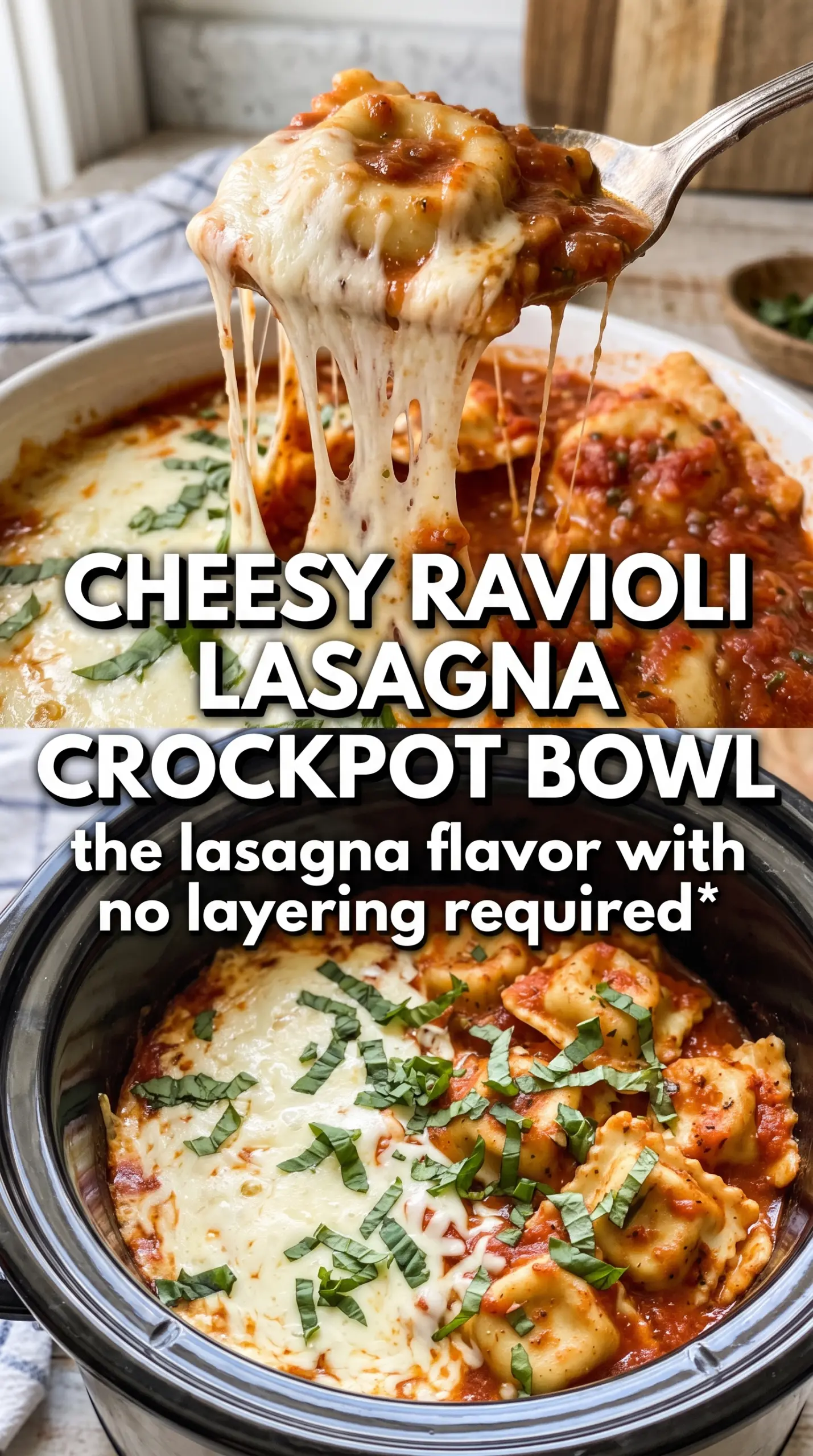
Layers of sauce, tender ravioli, and a bubbling blanket of cheese make crockpot ravioli lasagna one of those rare slow cooker dinners that tastes like you spent all afternoon fussing over it. The ravioli turns into built-in pasta layers, the ricotta stays creamy, and the meat sauce settles into every bite instead of sliding off the top. It comes out hearty, saucy, and easy to serve in big scoops that hold together on the plate.
What makes this version work is the balance of moisture and structure. The marinara and drained diced tomatoes keep the sauce rich without turning watery, while the frozen ravioli cooks in the steam and sauce instead of getting mushy in boiling water first. A thin layer of sauce on the bottom protects the pasta from sticking, and the final layer of cheese melts into a browned, stretchy top that makes the whole dish feel like lasagna without the extra work.
Below, I’ve included the timing that keeps the ravioli tender instead of overcooked, plus a few smart swaps if you want to use sausage, keep it meatless, or stretch this to feed a bigger crowd.
The ravioli held its shape and the ricotta stayed creamy between the layers. I did it on low for just under 4 hours, and the cheese on top got perfectly melted without the edges drying out.
Save this crockpot ravioli lasagna for a layered, cheesy slow cooker dinner that comes out rich, bubbly, and easy to serve.
The Layer Order That Keeps Ravioli from Turning to Mush
The biggest mistake with slow cooker lasagna-style dishes is treating the crockpot like a boiling pot of pasta. It isn’t. Ravioli needs enough moisture to cook, but it also needs structure from the sauce and cheese so it doesn’t collapse into a soft, starchy layer. That’s why the sauce goes down first and the ravioli sits in a single layer rather than getting stirred through the pot.
The other thing that matters is heat and time. On low, the ravioli has time to soften evenly while the cheese melts slowly into the sauce. On high, it works faster, but the edges can get a little tighter, so the shorter cook window matters. If your slow cooker runs hot, start checking early and stop as soon as the ravioli is tender at the center.
- Frozen ravioli — Straight from the freezer is fine here. Thawing first can make them too soft before the lasagna is even done.
- Drained diced tomatoes — The drain matters. Extra liquid turns the bottom layer soupy instead of saucy.
- Ricotta — This gives you those creamy pockets that make the dish feel like lasagna. Cottage cheese works in a pinch, but it’s looser and less rich.
- Parmesan — Use grated Parmesan from a wedge if you can. It melts better and tastes sharper than the shelf-stable stuff.
What Each Ingredient Is Doing in the Crockpot
- Ground beef or Italian sausage — This gives the sauce body and a savory base. Sausage brings more seasoning, while beef keeps the flavor milder and lets the marinara lead.
- Marinara sauce — Use a jarred sauce you already like, because it’s the backbone of the dish. A thinner, brighter sauce works better than a very sweet one.
- Diced tomatoes — They add little bursts of tomato and help keep the filling from tasting flat. Draining them keeps the final texture thick enough to layer.
- Cheese ravioli — This is the shortcut that makes the whole dish work. Fresh ravioli cooks a little faster and softer than frozen, so check it early if you use it.
- Ricotta, mozzarella, and Parmesan — The three cheeses each do a different job: creamy, melty, and salty. Don’t skip the mozzarella on top; it creates that stretchy, browned finish people expect from lasagna.
- Fresh basil — Add it at the end for a clean, fresh note. It cuts through the richness and makes the dish taste finished instead of heavy.
Building the Layers So the Slow Cooker Works for You
Starting with a thin sauce base
Spoon a thin layer of meat sauce into the bottom of the slow cooker before anything else. That layer keeps the ravioli from sticking and gives the pasta moisture from the start. If you dump the ravioli directly onto the crock, the bottom pieces can dry out or glue themselves to the insert.
Stacking without pressing everything flat
Add the ravioli in a single layer, then dollop the ricotta over the top and scatter on the mozzarella and Parmesan. The goal is layers, not compression. If you pack everything down, the cheese disappears into the sauce and you lose the lasagna effect. Repeat the layers until the ingredients are gone, ending with a generous cheese layer on top so the surface melts into a lid.
Cooking until tender, then stopping
Cook on low for 4 to 5 hours or on high for 2 to 2.5 hours. The ravioli should be tender all the way through and the cheese fully melted, with the edges just beginning to bubble. If you go too long, the pasta starts breaking apart and the sauce tightens up around it. Turn the heat off and rest it for 10 minutes before serving so the layers settle and you get clean scoops.
Ways to Adjust the Dish Without Losing What Makes It Good
Make it with Italian sausage for a deeper sauce
Swap the ground beef for Italian sausage if you want a richer, more seasoned filling. Hot sausage adds a little heat, while mild sausage keeps the flavor classic. Since sausage releases more fat, drain it well after browning so the sauce doesn’t get greasy.
Go meatless without losing the layered feel
Leave out the meat and use a thicker marinara, then add sautéed mushrooms, spinach, or chopped zucchini if you want more substance. The key is to cook off any extra moisture first, or the filling gets watery and the layers slide around. You’ll still get a hearty, cheesy casserole with a lighter finish.
Use gluten-free ravioli if needed
Gluten-free cheese ravioli works well here, but it usually softens a little faster than wheat pasta. Start checking at the early end of the cook time and stop as soon as the centers are tender. The sauce and cheese still carry the dish, so the swap doesn’t cost you much flavor.
Storage and Reheating
- Refrigerator: Store leftovers in an airtight container for up to 4 days. The pasta softens a bit as it sits, but the flavor holds well.
- Freezer: It freezes best in individual portions. Cool completely, wrap tightly, and freeze for up to 2 months. The texture of the ravioli gets softer after thawing, but it still reheats well for a fast dinner.
- Reheating: Reheat covered in the microwave or in a 325°F oven with a splash of marinara or water to loosen the sauce. The common mistake is blasting it uncovered, which dries out the cheese before the center is hot.
Questions I Get Asked About This Recipe

Crockpot Ravioli Lasagna
Ingredients
Equipment
Method
- In a skillet over medium-high heat, brown the ground beef or Italian sausage until no pink remains, then drain well.
- In a bowl, mix the browned meat with marinara sauce, diced tomatoes, Italian seasoning, garlic powder, onion powder, salt, and black pepper.
- Spread a thin layer of the meat sauce in the bottom of the slow cooker.
- Add a single layer of frozen ravioli on top of the sauce.
- Dollop ricotta cheese over the ravioli, then sprinkle mozzarella and Parmesan evenly.
- Repeat layers of meat sauce, ravioli, ricotta, and cheeses until all ingredients are used, finishing with a generous layer of cheese on top.
- Cook on low for 4–5 hours (or high for 2–2.5 hours) until the ravioli is cooked through and the cheese is fully melted, with visible bubbling at the edges.
- Let the crockpot ravioli lasagna rest for 10 minutes, then garnish with fresh basil and serve warm.


