
Fall-apart crockpot beef short ribs turn into something special when the meat braises low and slow in red wine, tomatoes, and herbs until it’s spoon-tender and deeply savory. The sauce ends up rich enough to coat mashed potatoes, but it still tastes like actual ingredients, not just a heavy gravy. That balance is what keeps this recipe in regular rotation.
The slow cooker does the gentle work here, but the flavor starts with a smart base: wine for depth, tomato paste for body, Worcestershire for a little backbone, and a small amount of brown sugar to smooth out the acidity. The vegetables melt into the sauce as they cook, and the short ribs release just enough fat to make everything taste round and full without feeling greasy. If you’ve ever had braised beef turn dry or bland, it usually means the liquid was too thin or the cook time was cut short.
Below, I’ve included the details that matter most: how to keep the sauce from tasting flat, what substitutions still hold up, and the don’t-skip step that helps the final sauce cling to every bite.
The ribs were fall-apart tender and the sauce got beautifully rich after I skimmed the fat. I served it over polenta and my husband said it tasted like a restaurant braise.
Save these crockpot beef short ribs for the kind of dinner that braises into a glossy, wine-dark sauce and falls right off the bone.
The Part Most People Rush: Building Braise Flavor Before the Slow Cooker
Short ribs can taste flat if everything goes straight into the pot with no thought to the liquid. The wine, tomato paste, Worcestershire sauce, and brown sugar work together here to create a sauce that tastes deep instead of thin and one-note. That matters because the slow cooker won’t concentrate flavor the way a stovetop simmer does; it mostly softens and blends. If the base tastes balanced before cooking, it will still taste balanced after eight hours.
The other common miss is seasoning too lightly at the start. Short ribs need a generous hand with salt, pepper, and smoked paprika because the meat is thick and the sauce is broad. As they cook, the seasoning spreads through the braise rather than sitting on the surface. That’s why the finished dish tastes seasoned all the way through, not just on top.
What Each Ingredient Is Actually Doing in This Dish
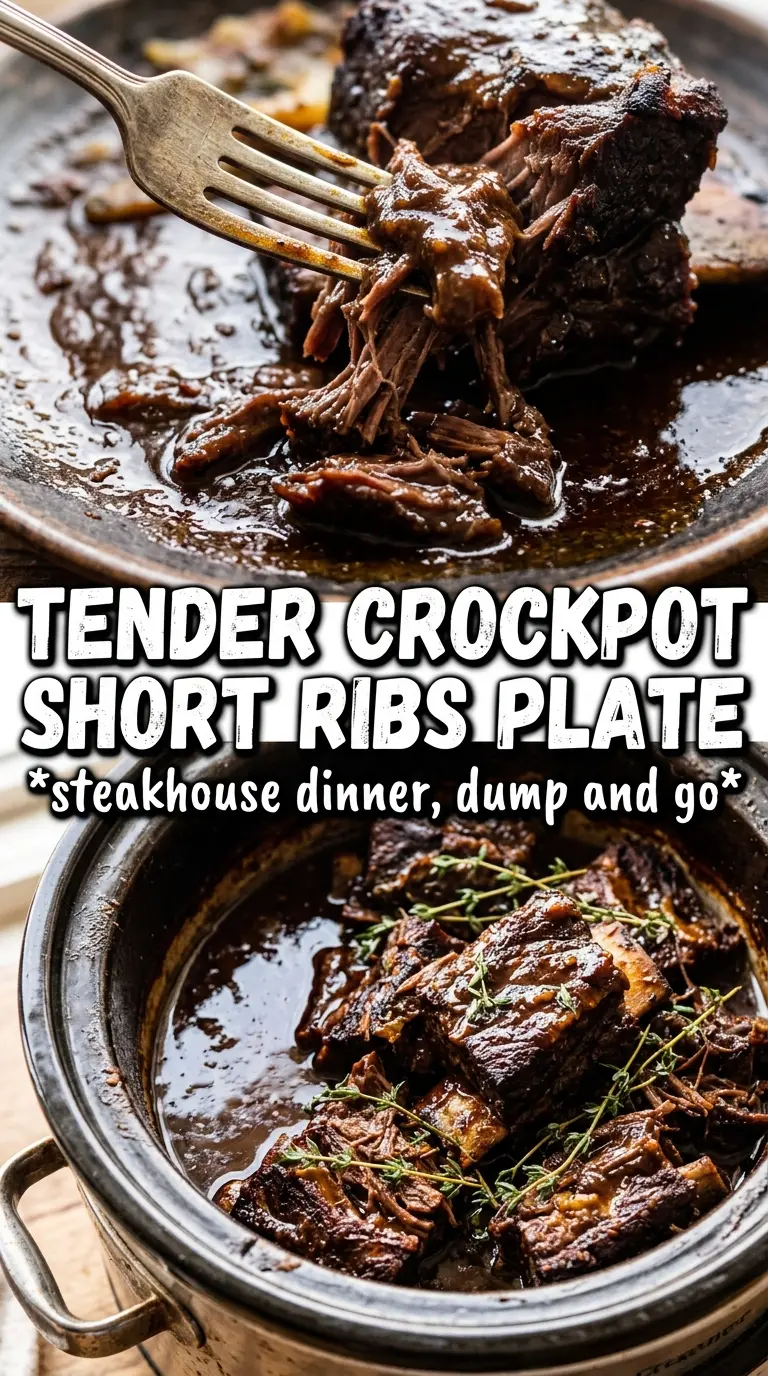
- Bone-in beef short ribs — These are the whole point of the recipe. The bones add flavor, and the marbling breaks down over long cooking into that silky, tender texture you can’t get from a lean cut. Boneless short ribs can work, but they cook a little faster and won’t give you quite the same deep beefiness.
- Dry red wine — Cabernet or Merlot gives the sauce structure and a rich, savory edge. Use something you’d drink, not cooking wine, because the flavor stays in the finished sauce. If you need to skip the wine, replace it with more beef broth and a tablespoon of balsamic vinegar for depth.
- Tomato paste and crushed tomatoes — The paste thickens the braising liquid and gives it a concentrated backbone, while the crushed tomatoes keep the sauce spoonable and give it body. Tomato sauce is too smooth and usually too sweet for this dish; crushed tomatoes hold up better during the long cook.
- Worcestershire sauce — This is the quiet ingredient that makes the sauce taste like it simmered for much longer than it did. It adds salt, tang, and a little fermented depth that beef loves.
- Carrots, celery, onion, garlic — This is the aromatic base that keeps the braise from tasting like meat and liquid only. Dice them fairly small so they melt into the sauce instead of staying chunky and separate at the end.
How to Layer the Slow Cooker So the Sauce Finishes Rich, Not Watery
Season the ribs before they go in
Coat the short ribs with salt, pepper, and smoked paprika before they hit the slow cooker. That early seasoning has time to work into the meat as it cooks, which gives you better flavor than trying to fix everything at the end. If the ribs go in unseasoned, the sauce may taste fine but the beef itself can stay bland. A quick, even coating is enough.
Whisk the braising liquid until the paste disappears
The tomato paste needs to dissolve into the wine, broth, and tomatoes before it goes over the meat. If you dump it in clumps, it sits in pockets and never really blends, which can leave you with random dense spots instead of a smooth sauce. Whisk until the mixture looks uniform and slightly darker. That’s the cue that the base is ready.
Cook until the meat gives up cleanly
Eight to nine hours on low is the sweet spot for most slow cookers, but the real test is the way the meat reacts to a fork. It should pull back from the bone easily and feel loose, not tight. If it still resists, give it more time; short ribs need full tenderness before you stop. Cutting the cook short is the fastest way to end up with chewy beef.
Skim the fat before serving
Short ribs release a fair amount of fat, and some of it will float to the top after cooking. Skim off the excess with a spoon before you serve the sauce over potatoes or polenta. That step keeps the braise glossy instead of greasy and lets the wine and herbs come through more clearly. Don’t stir the fat back in unless you want a heavier finish.
How to Adapt This Braise Without Losing What Makes It Work
Dairy-Free Serving Base
Serve the short ribs over creamy polenta instead of mashed potatoes, or use olive-oil mashed potatoes if you want to keep the whole plate dairy-free. The braise itself is already dairy-free, so the only adjustment is the side. Polenta holds the sauce especially well and gives you a softer, spoonable base.
No-Wine Version
Replace the red wine with an equal amount of beef broth plus 1 tablespoon balsamic vinegar. You’ll lose a little of the wine’s roundness, but the vinegar brings back some brightness so the sauce doesn’t taste dull. This is the best swap when you want the dish family-friendly without giving up depth.
A Leaner Cut in a Pinch
Chuck roast can stand in if short ribs aren’t available, but the texture changes. It slices or shreds instead of giving you that classic bone-in braised rib feel, and it may need a little less time. The sauce still works, but the result is closer to pot roast than true short ribs.
Storage and Reheating
- Refrigerator: Store leftovers in an airtight container for up to 4 days. The sauce usually thickens and tastes even richer after a night in the fridge.
- Freezer: This freezes well for up to 3 months. Cool it completely first, then freeze the ribs and sauce together in a freezer-safe container, leaving a little headspace.
- Reheating: Reheat gently on the stovetop or in the oven covered at low temperature until hot. Don’t blast it in the microwave on high, or the meat can dry out while the sauce separates.
Answers to the Questions Worth Asking
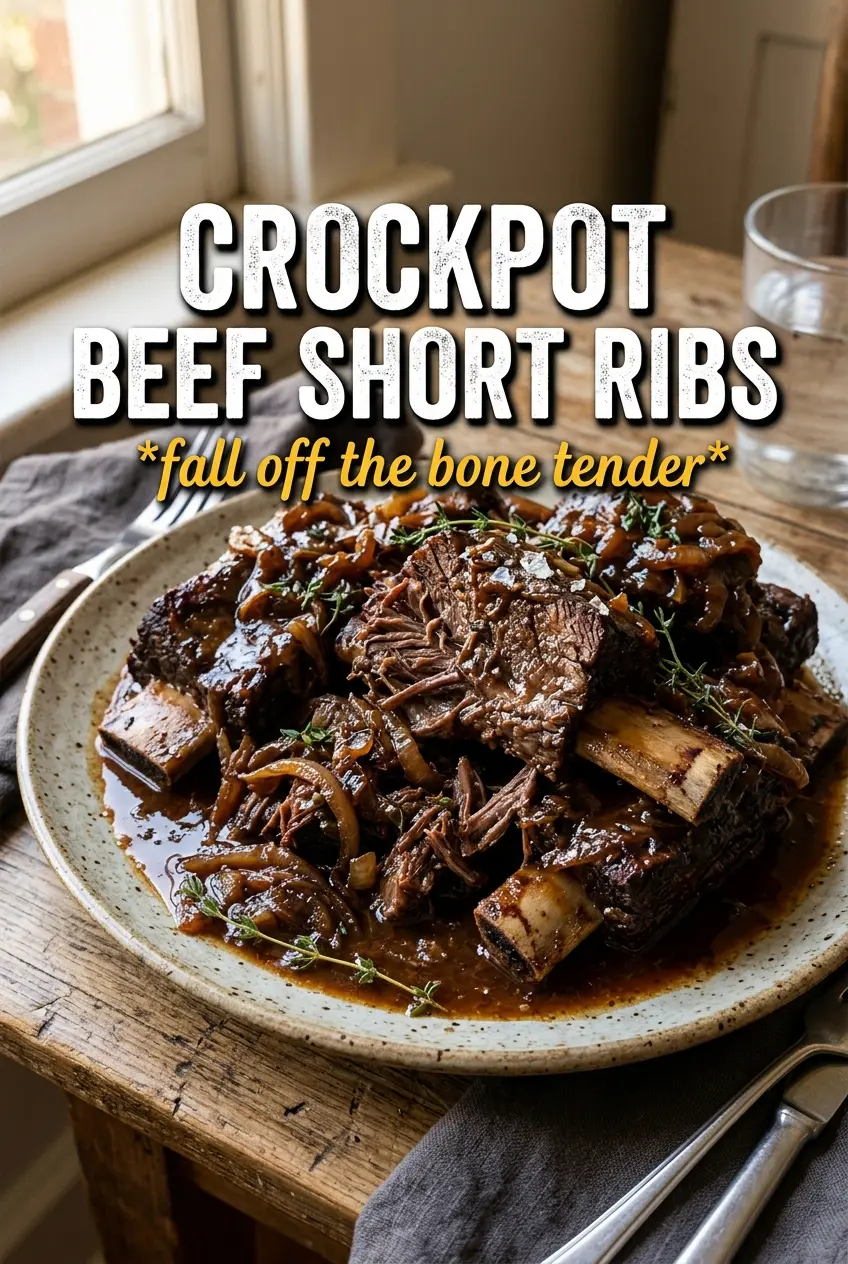
Crockpot Beef Short Ribs
Ingredients
Equipment
Method
- Season the short ribs generously with salt, black pepper, and smoked paprika, coating all sides with an even layer.
- Place the seasoned short ribs in the slow cooker in a single layer as much as possible.
- Whisk together the red wine, beef broth, crushed tomatoes, tomato paste, Worcestershire sauce, and brown sugar until the tomato paste is fully loosened.
- Add the diced onion, minced garlic, diced celery, and diced carrots to the slow cooker.
- Sprinkle in the dried thyme and dried rosemary over the vegetables, then pour the sauce over everything so the meat is mostly covered.
- Cook on low for 8–9 hours until the meat is fall-off-the-bone tender, checking that the sauce is gently bubbling around the edges.
- Remove the ribs and skim excess fat from the surface of the sauce so it looks glossy and not greasy.
- Serve the ribs over mashed potatoes or creamy polenta, spooning the sauce generously over the top for a glossy coating.
- Garnish with fresh thyme and parsley right before serving.


