Golden broth, tender shredded chicken, and soft egg noodles make this soup the kind of bowl you reach for when you want something that feels restorative without being fussy. The ginger and garlic give it a gentle heat, the turmeric turns the broth a deep sunny color, and the lemon at the end keeps it from tasting flat or heavy. It eats like classic chicken noodle soup, just with a sharper, brighter edge that wakes everything up.
What makes this version work is the order of the pot. The chicken simmers with the vegetables long enough to build a full-bodied broth, and the turmeric goes in early so it can tint and perfume the liquid as it cooks. The lemon juice and apple cider vinegar wait until the end because acidity tastes cleaner when it isn’t boiled hard for half an hour. That last hit of acid is what keeps the soup lively.
Below you’ll find the timing that keeps the noodles from going mushy, plus a few swaps that make sense if you need to use what’s already in the kitchen. If you’ve ever had chicken noodle soup turn bland or pasty by the time it hit the bowl, this version fixes both problems.
The broth came out rich and clear, and the noodles stayed tender without falling apart. I loved the little kick from the ginger and the lemon at the end made it taste fresh instead of heavy.
Save this cold fighting chicken noodle soup for the next time you want a bright, gingery broth with tender chicken and noodles that actually hold their texture.
The Broth Needs Time to Taste Like More Than Seasoned Water
A lot of chicken noodle soup goes wrong because the broth never gets a chance to become its own thing. If the chicken is boiled too hard, the meat turns stringy and the broth gets cloudy and thin at the same time. A gentle simmer pulls flavor from the bone-in pieces, carrots, celery, onion, garlic, and ginger without wrecking the texture of the chicken.
The other mistake is adding acid too early. Lemon juice and apple cider vinegar taste sharp and bright at the end, but if they simmer the whole time they lose that clean edge. Turmeric also needs a few minutes in the broth to bloom and lose its raw, dusty flavor, which is why it goes in with the vegetables instead of at the finish.
- Bone-in chicken pieces — These give the broth depth that boneless breast meat just can’t match. The bones and skin help the soup taste rounder and more savory.
- Fresh ginger and garlic — Fresh is worth using here because the soup depends on their clean, punchy aroma. Powdered versions taste flatter and can make the broth seem muddy.
- Chicken broth — Use a broth you’d drink on its own. If yours is salty, hold back on the seasoning until the very end so the soup doesn’t turn sharp.
- Egg noodles — They cook fast and absorb broth well, but they also keep cooking in the hot soup. Pull the pot off the heat as soon as they’re tender so they don’t swell into mush.
What Each Ingredient Is Doing in the Pot

- Carrots, celery, and onion — This is the base that gives the broth a familiar chicken-soup backbone. Dice the onion fine so it melts into the broth instead of floating around in pieces.
- Turmeric — It adds color and a subtle earthy note, but it doesn’t overpower the soup. A teaspoon is enough; too much and the broth starts tasting chalky.
- Thyme — Dried thyme fits here because it holds up during simmering. Fresh thyme works too, but use a little more because the flavor is softer.
- Lemon juice and apple cider vinegar — These brighten the broth and make the chicken taste more present. If you only have lemon, use it for both the bright acid and the final finish, but add it gradually so the soup doesn’t turn too tart.
- Fresh parsley and lemon wedges — This isn’t garnish for show. The parsley adds freshness and the lemon lets each bowl be adjusted right at the table.
How to Keep the Chicken Tender and the Noodles Intact
Start with a Gentle Simmer
Combine the chicken, vegetables, garlic, ginger, broth, turmeric, and thyme in a large pot, then bring it just to a boil before dropping it down to a steady simmer. You want movement in the pot, not a rolling churn. If it boils hard, the chicken tightens up and the broth turns rough instead of silky. Twenty-five minutes is usually enough for bone-in pieces to become tender enough to shred cleanly.
Shred the Chicken Before the Noodles Go In
Lift the chicken out once it’s falling off the bone and shred it while it’s still warm enough to handle. Pull off the skin and bones, then return only the meat to the pot. This keeps the noodles from getting overcooked while you fuss with the chicken, and it also lets the meat soak up more broth once it goes back in.
Cook the Noodles at the Very End
Add the egg noodles after the chicken is back in the pot and cook just until tender, usually 6 to 8 minutes. The biggest failure here is letting the noodles sit in the soup too long; they’ll keep drinking up liquid and soften past the point you want. If you know you’ll have leftovers, cook the noodles separately and add them to each bowl so the soup stays brothy.
Finish with Acid and Taste Again
Stir in the lemon juice and apple cider vinegar after the heat is down, then season with salt and pepper. This is when the soup comes alive. If it tastes flat, it usually needs a little more salt before it needs more lemon, because salt sharpens the broth and lets the ginger and turmeric show up properly.
Ways to Bend This Soup Without Breaking It
Make it gluten-free
Swap the egg noodles for your favorite gluten-free pasta or use rice noodles. Cook them separately if possible, because gluten-free noodles can break down fast in hot broth and turn the soup cloudy.
Make it dairy-free and lighter
This recipe is naturally dairy-free as written, and you can keep it lighter by skimming any fat from the top before adding the noodles. Using a very rich homemade broth will deepen the flavor, but a good boxed broth still works fine here.
Make it with cooked chicken
If you have leftover rotisserie or cooked chicken, skip the long simmer and build the broth with the vegetables, spices, and broth first. Add the shredded chicken near the end just long enough to warm through so it stays moist.
Storage and Reheating
- Refrigerator: Store for up to 4 days. The noodles will absorb broth, so expect the soup to thicken a little as it sits.
- Freezer: Freeze the broth, chicken, and vegetables without the noodles for the best texture. Noodles turn soft after thawing, so cook a fresh batch when you reheat.
- Reheating: Warm gently on the stove over medium-low heat until steaming, not boiling. If the soup has thickened, add a splash of broth or water before heating so the noodles and chicken don’t tighten up.
Questions I Get Asked About This Recipe
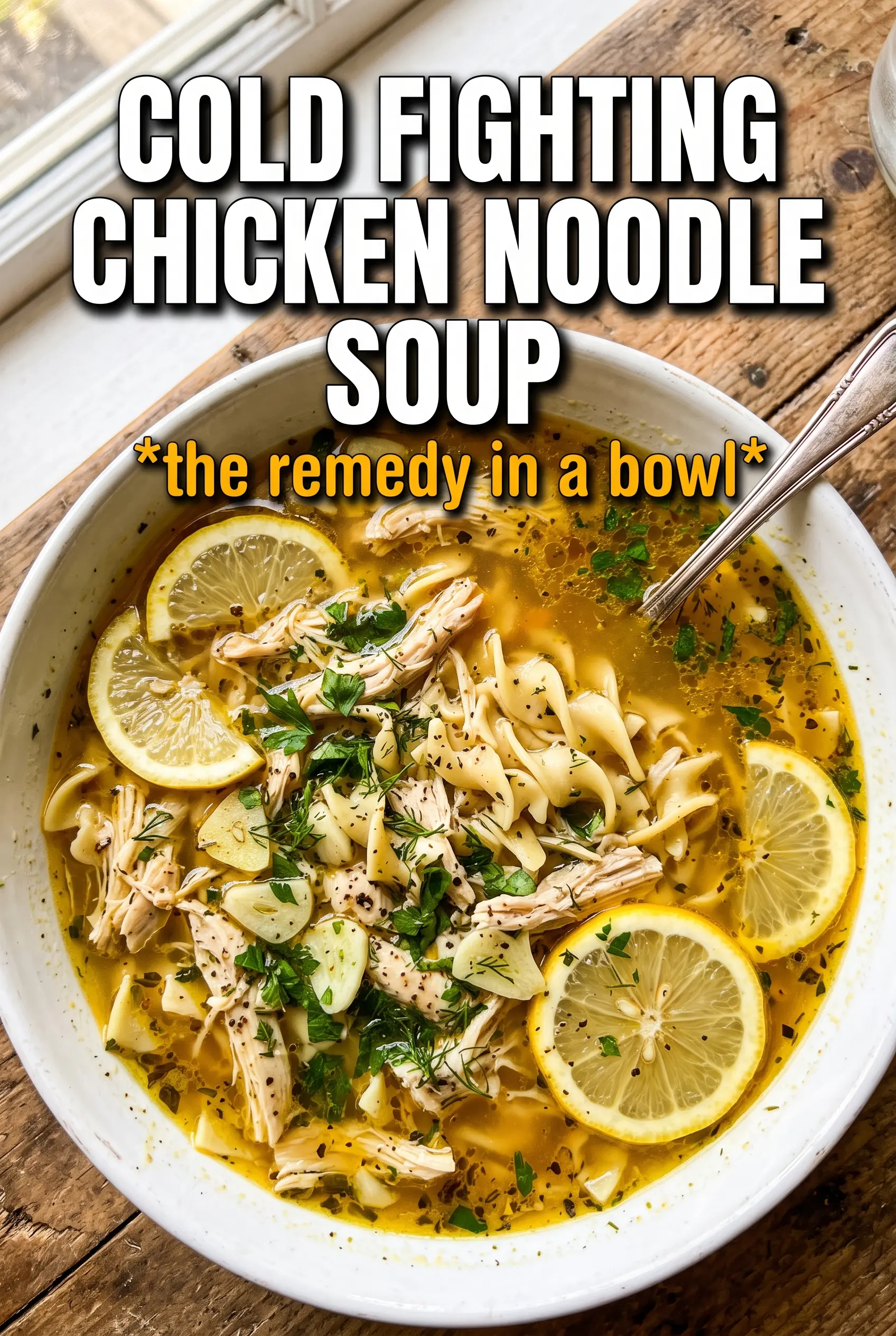
Cold Fighting Chicken Noodle Soup
Ingredients
Equipment
Method
- Combine chicken pieces, carrots, celery, onion, garlic, ginger, chicken broth, turmeric, and thyme in a large pot. Bring everything together for even seasoning before heating.
- Bring to a boil over high heat, then reduce heat to maintain a gentle simmer. Simmer for 25 minutes until the chicken is falling off the bone, and keep the surface moving lightly.
- Remove the chicken, shred it, and return the shredded chicken to the pot while discarding skin and bones. Stir until the broth looks uniform again with chicken throughout.
- Add egg noodles and cook for 6–8 minutes until tender. Keep simmering gently so the noodles stay separate.
- Stir in lemon juice and apple cider vinegar, then season with salt and pepper to taste. Taste the broth and adjust until the flavor is bright and balanced.
- Ladle the soup into bowls and top with fresh parsley. Serve with lemon wedges on the side for squeezing at the table.