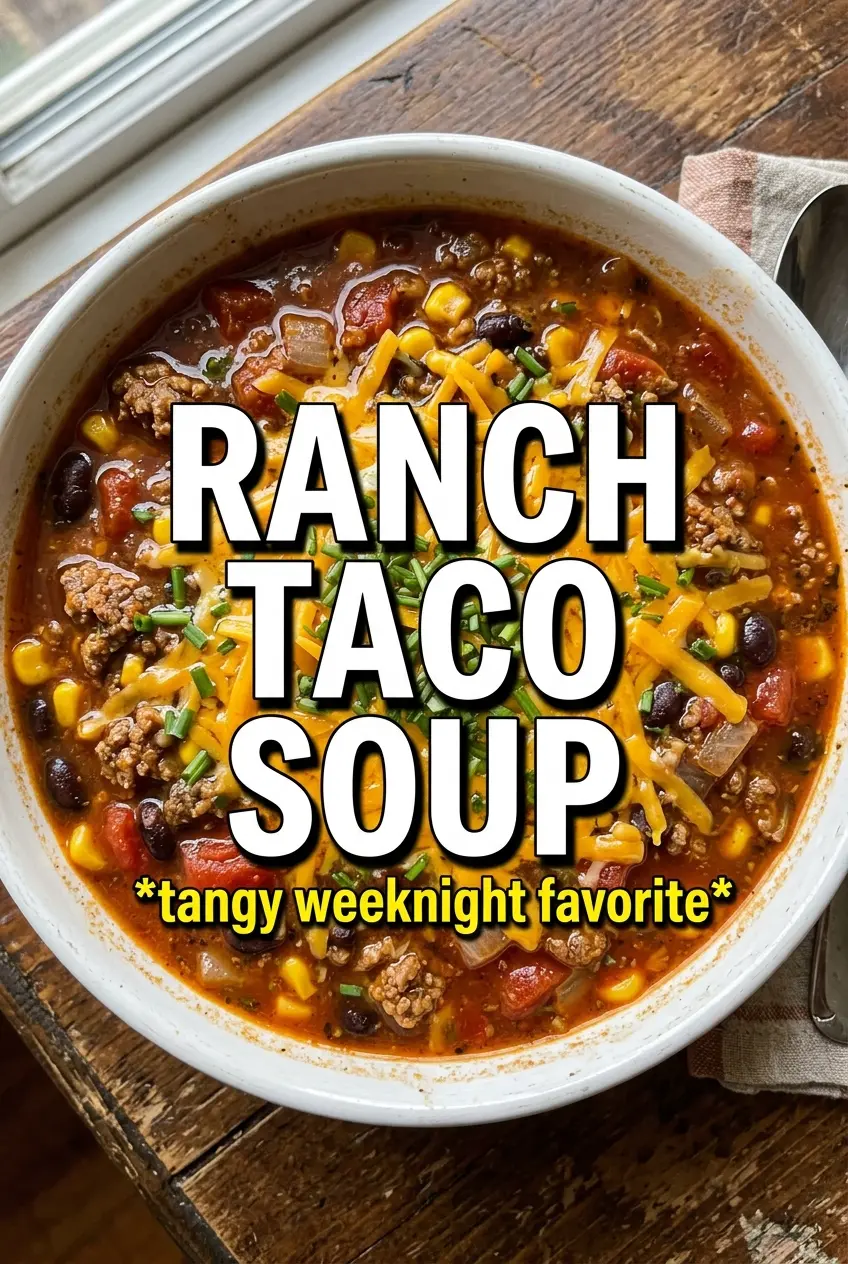
Taco soup with ranch packet hits that sweet spot between bold and effortless: a big, brothy bowl with seasoned beef, beans, corn, and tomatoes in every spoonful, plus that familiar ranch-and-taco backbone that makes it taste like more than the sum of its pantry parts. It’s hearty without turning heavy, and it holds onto its texture all the way to the last bowl instead of collapsing into a thick, muddy stew.
The reason this version works is simple. The beef gets browned first so the pot starts with real flavor, not just seasoning from a packet. Then the beans, corn, Rotel, and diced tomatoes go in together so the broth stays lively and a little chunky. The ranch packet adds a creamy-savory note that rounds out the taco seasoning, but it also means you need to go easy on extra salt until the very end.
Below, I’ll show you the small details that keep the broth balanced and the toppings in the right place. A good bowl of taco soup doesn’t need a lot of fuss, but it does reward the right order.
The broth tasted seasoned all the way through, and the ranch packet gave it this creamy-salty finish without making it thick. I topped mine with chips and cheddar, and the soup still had texture even after sitting on the stove for a bit.
Pin this taco soup with ranch packet for a fast Tex-Mex dinner with bold broth, beans, and loaded toppings.
The Ranch Packet Is the Shortcut That Still Needs a Light Hand
Most taco soups go sideways when the seasoning gets overdone and the broth turns blunt instead of layered. With both taco seasoning and ranch mix in the pot, the big mistake is dumping in extra salt too early or letting the soup reduce until every spoonful tastes aggressively salty. This version stays balanced because the broth is added right away, which gives the packets room to spread out instead of clinging to the meat in one harsh layer.
The other thing that matters is texture. You want a soup, not a chili clone, so the canned tomatoes, beans, and corn should stay distinct. A brief simmer is enough to meld everything; if you cook it down too long, the corn loses its pop and the broth gets too concentrated.
- Browned ground beef — This is your base flavor. If you skip the browning and just cook it until gray, the soup tastes flatter. Drain off excess fat so the ranch seasoning doesn’t have to fight greasy broth.
- Taco seasoning and ranch mix — These are the point of the recipe. Store-brand ranch works fine here, but use a packet, not a bottled dressing mix. The dry mix dissolves into the broth and gives that specific savory edge.
- Rotel tomatoes — The tomatoes bring acidity and a little heat. If you only have plain diced tomatoes, add a small can of diced green chiles to replace the bite that Rotel would have given you.
- Beef broth — Use a broth you’d actually drink, because it becomes the soup base. Low-sodium is the safest choice since the seasoning packets already bring plenty of salt.
What Each Ingredient Is Actually Doing in This Recipe

- Primary ingredient (the star) — Quality matters most. Choose the best you can find.
- Cooking medium (oil, butter, or broth) — This carries flavors and prevents dryness.
- Seasonings (salt, pepper, spices, herbs) — Layer flavors so nothing overpowers. Build depth gradually.
- Aromatics (garlic, onion, herbs) — Cook with fat to bloom flavors. Become the foundation.
- Supporting ingredients — Complement the main ingredient without overpowering it.
- Sauce or liquid (if applicable) — Brings flavors together. Balance richness with acid.
- Acid (lemon, vinegar, wine, or other) — Brightens and prevents flat-tasting results.
- Final finish (garnish, glaze, or sauce) — Prevents one-dimensional taste and adds visual appeal.
How to Build the Soup So It Stays Brothy and Bold
Start with the beef and onion
Cook the ground beef in a large pot until it’s no longer pink and you start to see browned bits sticking to the bottom. Those bits matter; they’re what keep the soup from tasting like seasoned canned food. Add the onion and cook just until it softens and loses its raw edge, about 3 minutes. If the pot looks dry, the beef was lean enough that you can move straight on without adding anything else.
Add the canned ingredients before the seasoning
Pour in the beans, corn, Rotel, and diced tomatoes first, then sprinkle both packets over the top. This helps the seasonings disperse through the liquid instead of clumping on the beef. Stir well enough that you don’t see dry pockets of seasoning at the surface. If you stir too lightly here, the ranch mix can leave little salty patches that never fully dissolve.
Simmer just long enough to marry the flavors
Add the broth, bring the pot to a boil, then lower it to a steady simmer for 15 to 20 minutes. You’re looking for the soup to bubble gently, not vigorously; a hard boil can make the broth taste thin and can break down the beans faster than you want. Taste near the end, not at the beginning. The packets need time to bloom in the liquid, and the salt level only makes sense once everything has had a chance to come together.
How to Make Taco Soup Work With What’s Already in the Pantry
Use ground turkey instead of beef
Ground turkey works well if you want a lighter bowl, but it needs a little help because it doesn’t bring the same rich drippings as beef. Brown it until you get some color on the pan, and don’t be shy with the onion. The finished soup tastes a touch cleaner and less hearty, which is fine as long as you keep the toppings generous.
Make it gluten-free
This is an easy gluten-free dinner if your taco seasoning and ranch packet are certified gluten-free. The soup itself is naturally built from beans, tomatoes, corn, beef, and broth, so the seasoning packets are the only place to check carefully. Serve it with tortilla chips that are labeled gluten-free if that matters for your kitchen.
Swap the beef broth for chicken broth
Chicken broth changes the base a little, making the soup lighter and slightly less beefy, but it still tastes right because the taco and ranch packets do the heavy lifting. This is a smart swap if that’s what you have on hand. Use low-sodium chicken broth so the soup doesn’t turn overly salty once the packets are in.
Stretch it for a bigger crowd
This soup scales up cleanly. Add another can of beans and another cup or two of broth if you want more servings without changing the character of the dish. Keep the seasoning packets in proportion, then taste at the end so the broth stays balanced instead of overly sharp.
Storage and Reheating
- Refrigerator: Keep covered for up to 4 days. The broth may thicken a bit as it sits, especially if the beans absorb liquid.
- Freezer: This freezes well for up to 3 months. Cool it completely, then store it in freezer-safe containers with a little headspace.
- Reheating: Warm it gently on the stove over medium-low heat or in the microwave in short bursts, stirring between rounds. Add a splash of broth or water if it looks too thick. Don’t boil it hard on reheating or the beans can split and the broth can taste over-reduced.
Answers to the Questions Worth Asking
Taco Soup With Ranch Packet
Ingredients
Equipment
Method
- Heat a large pot over medium-high heat, add ground beef, and cook until browned, breaking it up as needed, about 8–10 minutes. Drain the fat.
- Add diced onion to the pot and cook for 3 minutes, stirring occasionally, until softened and fragrant.
- Add all canned ingredients to the pot, then sprinkle both seasoning packets over the top. Stir to distribute the seasonings evenly.
- Pour in beef broth, stir everything together, and bring to a boil over high heat. Once boiling, reduce to a simmer and cook 15–20 minutes until thickened slightly.
- Taste the soup and add salt only if needed, since both packets are salty. Ladle into bowls and top with shredded cheddar, sour cream, tortilla chips, and green onions, then add jalapeños if desired.