
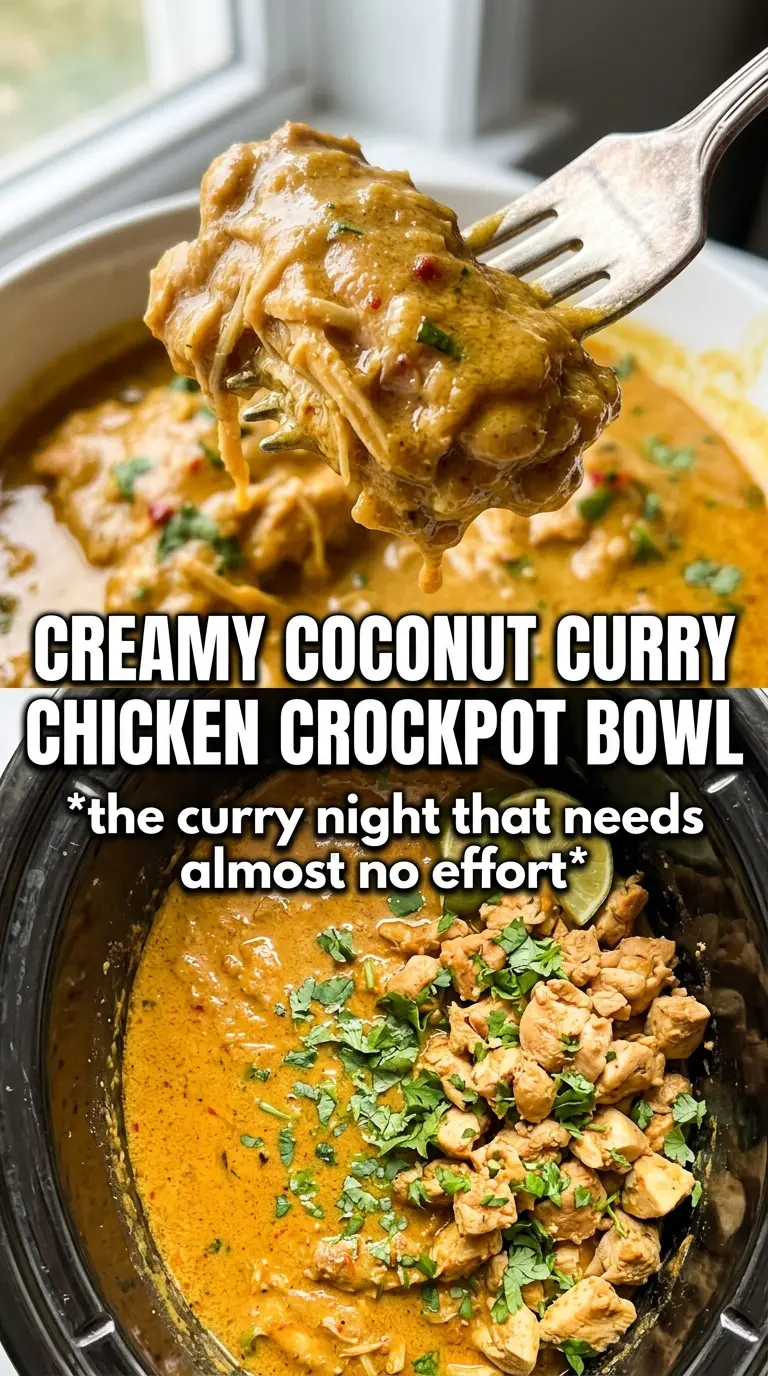
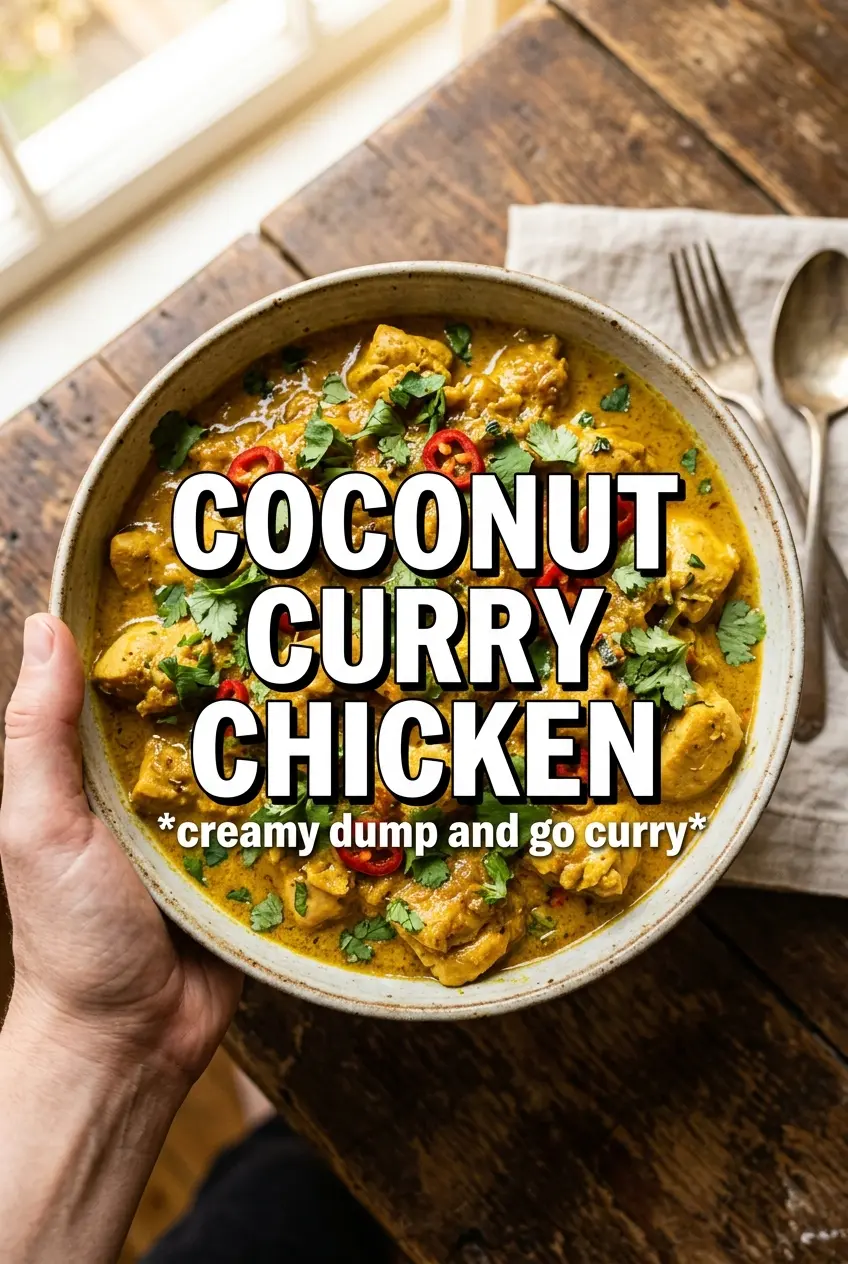
Slow cooker coconut curry chicken comes out spoon-tender, fragrant, and deeply comforting without asking you to hover over the stove. The chicken soaks up a rich coconut curry sauce while the peppers stay bright and the peas add a clean pop at the end. Served over jasmine rice, it lands in that sweet spot where dinner feels generous but the work stays low.
What makes this version work is the balance in the sauce. Full-fat coconut milk brings body, red curry paste gives the backbone, and a little brown sugar, lime juice, and fish sauce keep it from tasting flat or heavy. The slow cooker does the long, gentle work of softening the chicken thighs, which hold up far better here than breasts. I also add the peas near the end so they stay green instead of turning dull and mushy.
Below, I’ve broken down the one step that matters most for keeping the sauce balanced, plus the ingredient swaps that still make sense if you need to work with what’s already in your pantry.
The sauce thickened beautifully and the chicken stayed so tender after 6 hours on low. I added the peas at the end like you said, and they still had a nice bite instead of turning mushy.
Save this slow cooker coconut curry chicken for nights when you want tender chicken, a creamy coconut sauce, and jasmine rice in one bowl.
The Part That Keeps the Coconut Sauce Smooth Instead of Splitting
Slow cooker curries can go grainy or oily when the heat is too aggressive or the sauce starts with the wrong balance of liquid. Coconut milk is forgiving, but it still likes gentle cooking. That’s why this recipe leans on low heat and keeps the curry paste dissolved into the coconut milk before it goes into the pot. You’re not just mixing ingredients; you’re building an emulsion that stays together long enough to coat the chicken instead of breaking around it.
Chicken thighs are the right cut here because they stay juicy over a long cook and absorb the sauce without drying out. The onion softens into the base, the garlic and ginger keep the curry from tasting one-note, and the turmeric gives the sauce a warmer color and a little earthy depth. If you’ve ever ended up with curry that tasted thin, the missing piece was usually enough seasoning balance, not more spice. The fish sauce, lime, and brown sugar do that quiet work in the background.
- Full-fat coconut milk — This is the body of the sauce. Light coconut milk turns thinner and less silky, and it won’t cling to the rice the same way.
- Red curry paste — This carries the main heat and aromatics. Brands vary a lot, so taste the finished sauce before deciding you need more; some are saltier and stronger than others.
- Chicken thighs — They stay tender through the full cook time. Breasts can work in a pinch, but they’re much easier to overcook and dry out.
- Fish sauce — This adds depth and salt in a way plain salt can’t quite match. If you need a substitute, use soy sauce, but the curry will lose a little of its Thai-inspired edge.
- Fresh lime juice — Add it at the end, not at the start. Heat dulls the brightness, and this dish needs that fresh finish to keep the coconut from feeling heavy.
What Each Ingredient Is Actually Doing in This Recipe
- Primary ingredient (the star) — Quality matters most. Choose the best you can find.
- Cooking medium (oil, butter, or broth) — This carries flavors and prevents dryness.
- Seasonings (salt, pepper, spices, herbs) — Layer flavors so nothing overpowers. Build depth gradually.
- Aromatics (garlic, onion, herbs) — Cook with fat to bloom flavors. Become the foundation.
- Supporting ingredients — Complement the main ingredient without overpowering it.
- Sauce or liquid (if applicable) — Brings flavors together. Balance richness with acid.
- Acid (lemon, vinegar, wine, or other) — Brightens and prevents flat-tasting results.
- Final finish (garnish, glaze, or sauce) — Prevents one-dimensional taste and adds visual appeal.
How to Layer the Slow Cooker So the Curry Stays Balanced
Whisk the Sauce Until the Paste Disappears
Start by whisking the coconut milk, curry paste, broth, garlic, ginger, fish sauce, brown sugar, lime juice, and turmeric until the paste is fully dissolved. If you leave little streaks of curry paste behind, they’ll cling to the sides of the slow cooker and cook unevenly. You want the sauce looking smooth and orange-gold before it ever hits the chicken.
Let the Chicken Sit in the Sauce, Not on Top of It
Place the chicken in the slow cooker first, then pour the sauce over it and add the onion and bell pepper. The chicken doesn’t need to be submerged perfectly, but it should be coated and mostly covered so it cooks evenly. If you pile the pepper slices on top, they’ll soften too late and stay a little too crisp by the time the chicken is done.
Hold the Peas for the End
Frozen peas only need the last 20 minutes. Any longer and they lose their color and go wrinkled. Stir them in near the end, then let the lid go back on long enough for the residual heat to warm them through. That keeps the sauce looking fresh and the peas tasting sweet instead of tired.
Taste After the Slow Cook, Then Adjust the Finish
Once the chicken is very tender, taste the sauce before serving. Slow cookers mute acid and seasoning, so the final balance often needs a nudge of lime juice, fish sauce, or brown sugar. If the sauce tastes flat, it usually needs salt or acid, not more curry paste. The goal is a sauce that tastes rounded, not loud.
How to Adapt This Coconut Curry When Your Pantry Changes
For a dairy-free dinner that still feels rich
This recipe is already dairy-free as written, which is one reason it works so well for a mixed crowd. Don’t swap in a lighter coconut milk if you’re trying to keep that creamy texture; full-fat coconut milk gives the sauce its body and helps it cling to the chicken and rice.
If you want more heat without changing the base
Add sliced red chili, extra curry paste, or a small spoonful of chili crisp at the table. I wouldn’t crank up the paste too early unless you know the brand well, because some curry pastes are far saltier and hotter than others. Adding heat at the end keeps the sauce balanced.
For a gluten-free version without changing the method
The recipe is naturally gluten-free if your curry paste and fish sauce are labeled that way. That’s the part to check, since those two ingredients can vary by brand. Serve it with jasmine rice, and you’ve got the same texture and comfort without any extra adjustments.
Storage and Reheating
- Refrigerator: Store for up to 4 days. The sauce may thicken a little as it sits, which is normal.
- Freezer: Freezes well for up to 2 months. Cool it completely first, then pack it in airtight containers with a little room at the top.
- Reheating: Warm it gently on the stove or in the microwave, stirring once or twice so the coconut sauce heats evenly. High heat can make the sauce look a little separated, so keep the heat moderate and add a splash of broth if it seems too thick.
Questions I Get Asked About This Recipe
Slow Cooker Coconut Curry Chicken
Ingredients
Equipment
Method
- Add the chicken chunks to the slow cooker.
- In a bowl, whisk together the coconut milk, red curry paste, chicken broth, garlic, ginger, fish sauce, brown sugar, lime juice, and turmeric until smooth.
- Pour the sauce over the chicken, then add the diced onion and sliced red bell pepper.
- Cook on low for 6–7 hours, or on high for 3 hours, until the chicken is very tender and the sauce looks cohesive.
- During the last 20 minutes, stir in the frozen peas until bright green and hot through.
- Taste the curry and adjust seasoning with additional fish sauce, lime juice, or brown sugar as needed, until the flavor balances.
- Serve over jasmine rice and top with fresh Thai basil and lime wedges.


