
Rich tomato broth, tender gluten-free pasta, and a creamy cheese dollop make this gluten free Crockpot lasagna soup taste like a full lasagna dinner without the layering, oven time, or babysitting. The sausage seasons the whole pot from the start, and the slow cooker gives the tomatoes time to mellow into something deeper and more balanced than a quick stovetop soup usually manages.
The part that makes this version work is timing. Gluten-free pasta goes in near the end so it stays pleasantly tender instead of breaking apart into mush, and the cheese is mixed separately so every bowl gets that lasagna-style finish instead of disappearing into the broth. A little tomato paste adds body, which helps the soup eat like a meal instead of a thin tomato broth with noodles floating in it.
Below, I’m walking through the details that matter most: how to keep the pasta from overcooking, what to do if your broth tastes flat, and the small adjustments that help this soup hold up whether you’re serving it right away or reheating it later.
The pasta stayed perfectly tender and the ricotta-mozzarella topping melted into the soup just like lasagna. I added the noodles in the last half hour and they held up great.
Pin this gluten free Crockpot lasagna soup for a cozy bowl with tender pasta, savory sausage, and that melty ricotta topping.
The Trick to Keeping Gluten-Free Pasta from Turning to Mush
Gluten-free pasta does not behave like regular pasta in a slow cooker. It softens faster, sheds starch differently, and can go from tender to blown-out in a short window, especially if it sits in hot broth too long. That’s why the pasta belongs at the end, not at the beginning, even if the rest of the soup benefits from a long simmer.
The other common failure is adding too little body to the broth. Without tomato paste, the soup can taste thin even when the flavor is there. A spoonful or two of tomato paste gives the broth that slow-cooked, lasagna-like depth and helps the cheese topping stand up to the soup instead of getting lost.
- Browned Italian sausage — This is the backbone of the soup. Browning it first builds flavor before the slow cooker even starts, and draining off excess fat keeps the broth from turning greasy.
- Crushed and diced tomatoes — The combination gives you both body and texture. Crushed tomatoes make the soup rich and cohesive, while diced tomatoes leave little tomato pieces that feel right in a lasagna-style bowl.
- Certified gluten-free broth — Buy a broth that’s clearly labeled if you need the soup to stay gluten-free. The flavor is mild here, so a clean-tasting broth matters more than usual.
- Gluten-free lasagna noodles or penne — Broken lasagna noodles give the most classic feel, but GF penne works if that’s what you have. Add either one late and check often; the difference between tender and overcooked can be only a few minutes.
- Ricotta, mozzarella, and parmesan — The cheese mixture is what makes this taste like lasagna instead of tomato soup with pasta. Use full-fat ricotta if you can; it melts into a creamier dollop and balances the acidity of the tomatoes better than a low-fat version.
What Each Ingredient Is Actually Doing in This Recipe

- Primary ingredient (the star) — Quality matters most. Choose the best you can find.
- Cooking medium (oil, butter, or broth) — This carries flavors and prevents dryness.
- Seasonings (salt, pepper, spices, herbs) — Layer flavors so nothing overpowers. Build depth gradually.
- Aromatics (garlic, onion, herbs) — Cook with fat to bloom flavors. Become the foundation.
- Supporting ingredients — Complement the main ingredient without overpowering it.
- Sauce or liquid (if applicable) — Brings flavors together. Balance richness with acid.
- Acid (lemon, vinegar, wine, or other) — Brightens and prevents flat-tasting results.
- Final finish (garnish, glaze, or sauce) — Prevents one-dimensional taste and adds visual appeal.
How to Build the Soup So the Pasta Stays Tender
Start with a flavorful base
Brown the sausage until it has actual color, not just a gray crumble. That browned surface brings in the savory edge that carries through the whole pot. Add the onion and garlic to the slow cooker with the sausage, and let the long cook soften them into the broth. If the sausage is not drained well, the soup can end up heavy instead of rich.
Let the slow cooker do the work
Once the tomatoes, broth, tomato paste, and seasonings go in, cook until the broth looks unified and the onion is soft. The tomato paste should disappear into the liquid rather than floating in rusty little streaks. If your slow cooker runs hot, check toward the earlier end of the time range so the broth doesn’t reduce too far before the pasta is added.
Add the gluten-free pasta late
Stir in the broken noodles during the last 30 to 35 minutes, then watch them closely. Gluten-free pasta can hold its shape for a minute and then suddenly go soft, so test a piece early instead of waiting for the timer. If the soup isn’t bubbling enough to cook the pasta, switch to High for that final stretch. The noodles should be tender with just a little structure left.
Finish with the cheese dollop
Mix the ricotta, mozzarella, parmesan, and basil in a bowl right before serving. Spoon it over hot soup so it melts into creamy ribbons instead of disappearing into the pot. This keeps the broth bright and gives each bowl that lasagna finish. Season the soup at the end, after the cheese goes on, because the sausage and parmesan already bring salt.
What to Change When You Need a Different Version
Make it dairy-free
Skip the ricotta, mozzarella, and parmesan topping and serve the soup with a spoonful of dairy-free cashew cream or a plain dairy-free ricotta alternative. The soup itself is already dairy-free, so this is an easy swap that keeps the texture creamy without changing the broth.
Make it lighter
Use turkey Italian sausage instead of pork sausage. You’ll lose a little richness, so keep the tomato paste and cheese topping in place to replace some of that depth. If the broth tastes flat, a pinch more salt and a little extra parmesan usually brings it back.
Make it vegetarian
Leave out the sausage and use a sturdy vegetarian Italian sausage or extra mushrooms for body. You’ll need a little more seasoning and a more generous hand with the tomato paste because the sausage normally carries a lot of the savory flavor. Vegetable broth works fine here as long as it tastes full-bodied, not watery.
Storage and Reheating
- Refrigerator: Store for up to 4 days. The pasta will keep soaking up broth, so expect the soup to thicken.
- Freezer: Freeze the soup base without the pasta and cheese topping for best results. Gluten-free noodles get soft after freezing and thawing, so add fresh pasta when you reheat if you can.
- Reheating: Warm gently on the stove over medium-low, adding a splash of broth if needed. Don’t boil it hard or the pasta will break down and the ricotta topping will lose its creaminess.
Answers to the Questions Worth Asking
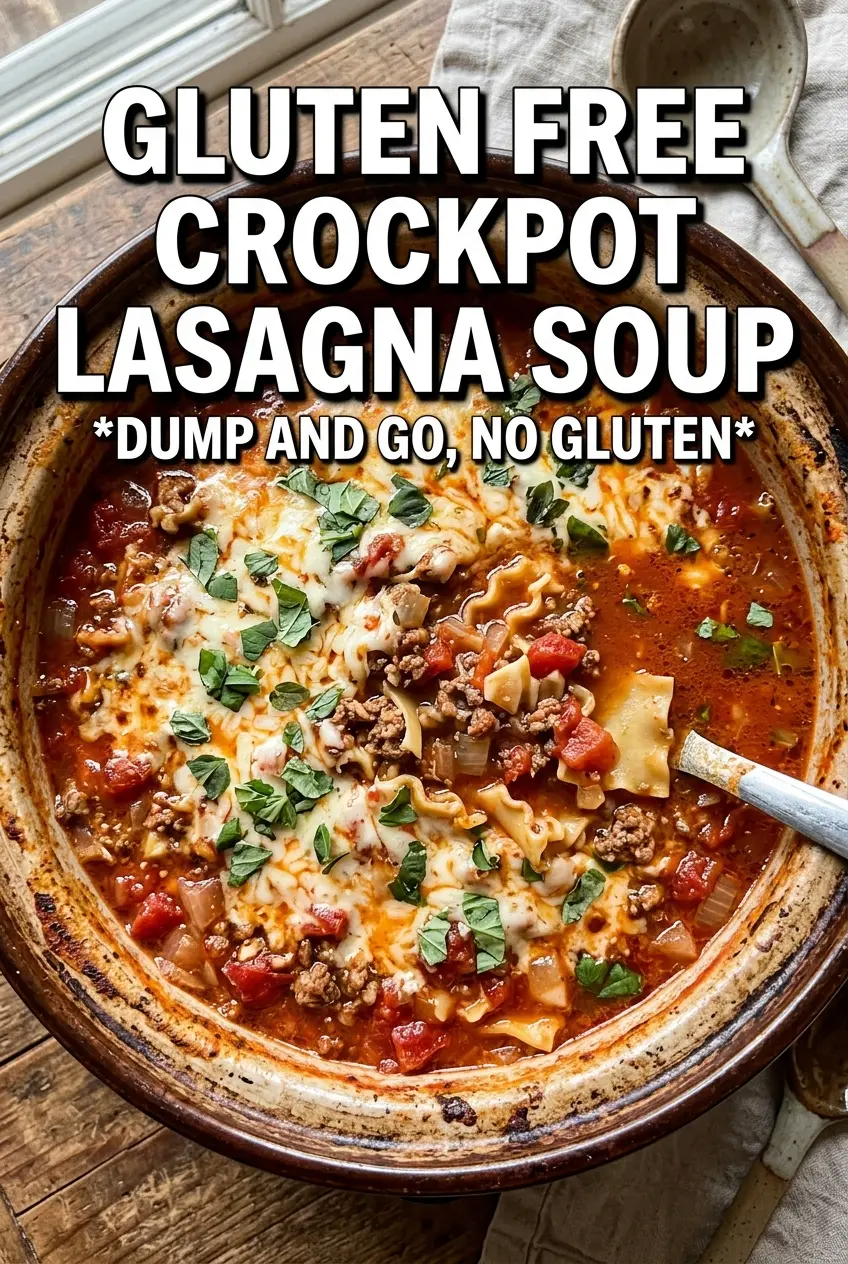
Gluten Free Crockpot Lasagna Soup
Ingredients
Equipment
Method
- Brown the Italian sausage in a cast iron skillet until cooked through, then drain off excess grease. Transfer the sausage to a crockpot.
- Add the onion and cook with the sausage in the crockpot for 0 minutes, then stir in the garlic. Add the crushed tomatoes, diced tomatoes, chicken broth, tomato paste, Italian seasoning, dried basil, and red pepper flakes.
- Cook on Low for 5-7 hours (or High for 2.5-3 hours). Keep the lid closed during cooking for best simmer and flavor development.
- During the last 30-35 minutes, add broken gluten-free lasagna noodles (or GF penne) and stir to submerge. Increase to High if needed so the pasta cooks through.
- Check the pasta frequently as it cooks until tender, because gluten-free pasta can overcook quickly. Once tender, season with salt and pepper to taste.
- Mix the ricotta, shredded mozzarella, and parmesan together until combined into a thick dollop. Spoon a generous dollop into each bowl.
- Top each bowl with fresh basil and serve immediately while the cheese softens. Add extra cheese dollop if desired.


