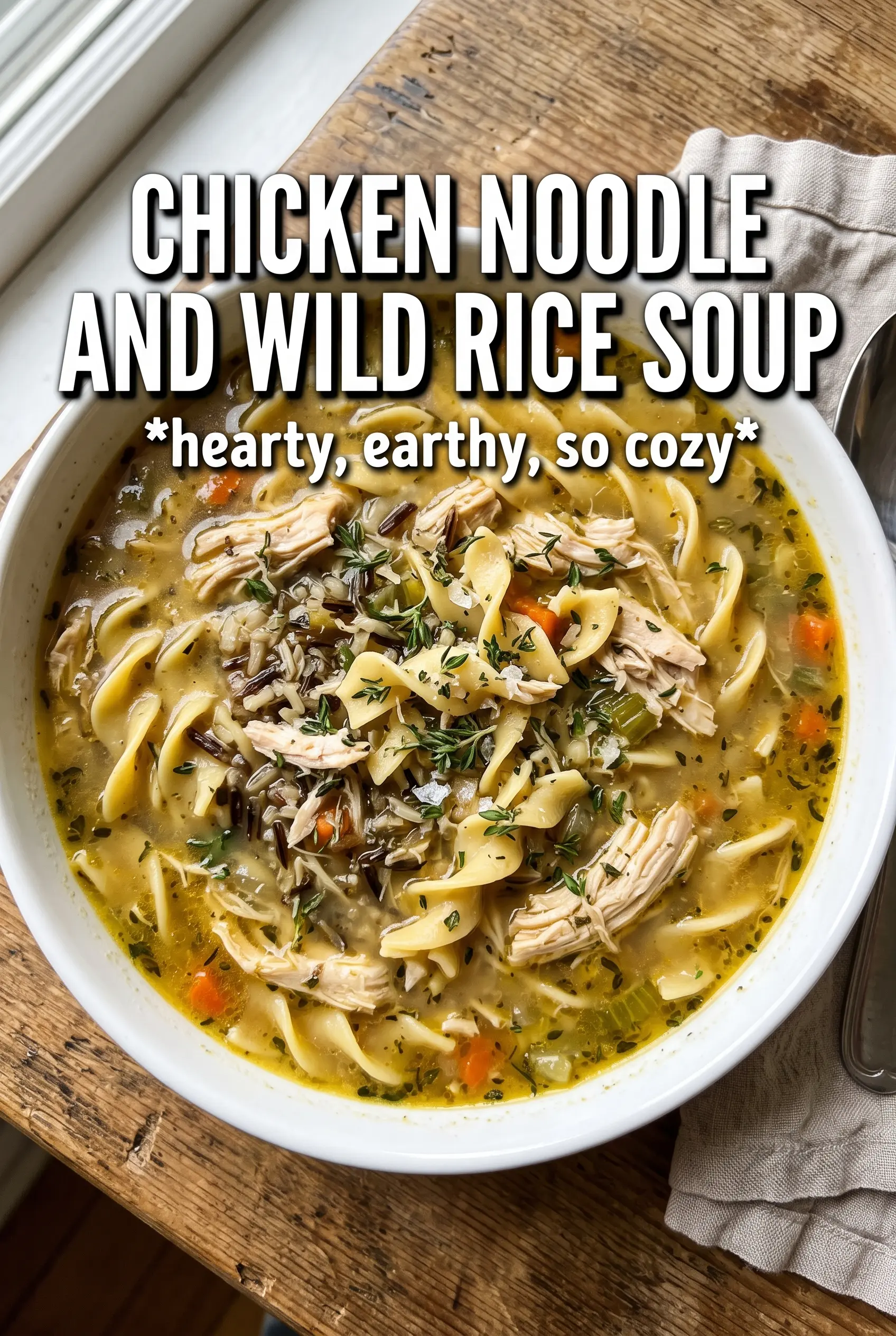
Chicken noodle and wild rice soup settles into the bowl with the kind of warmth that makes dinner feel handled. The broth turns creamy and golden, the wild rice stays pleasantly chewy, and the egg noodles give it that familiar comfort-food softness without making the soup heavy or muddy. It eats like a full meal, not a starter, and the balance of chicken, vegetables, and grains keeps every spoonful interesting.
What makes this version work is the order of operations. The chicken simmers right in the broth so it stays tender and seasons the soup from the inside out, while the wild rice gets enough time to soften without turning gummy. The roux goes in after the chicken is shredded, which gives the broth body without relying on a pile of cream or overcooking the noodles. That keeps the texture clean and the broth velvety instead of gluey.
Below, I’ll walk through the part that matters most: how to thicken the broth without lumps, when to add the noodles, and what to change if you want to make it dairy-free or stretch it for leftovers.
The broth thickened up beautifully and the wild rice stayed chewy instead of collapsing. I loved that the noodles went in at the end so they didn’t turn mushy, and the leftovers were even better the next day.
Save this chicken noodle and wild rice soup for a creamy, hearty bowl with chewy rice, tender chicken, and noodles that stay intact.
The Reason the Broth Stays Creamy Instead of Turning Gluey
The biggest trap in chicken noodle and wild rice soup is trying to thicken everything all at once. Wild rice keeps absorbing liquid as it cooks, and egg noodles do the same, so if you add a heavy roux too early, the pot can turn stodgy long before the noodles are tender. This version avoids that by simmering the rice and vegetables first, then bringing in the roux only after the chicken is shredded and the base has already developed flavor.
The other thing that matters is heat. Once the cream goes in, keep the soup at a gentle simmer, not a hard boil. High heat can make the dairy taste flat and can push the broth toward separation, especially if the pot has already been thickened with flour. A low, steady simmer keeps the texture silky and gives the noodles time to cook without breaking apart.
- Wild rice blend — A blend works better than plain white rice here because it gives you chew, color, and a deeper nutty flavor. If you use straight wild rice, expect a longer cook time and add more broth if needed.
- Heavy cream — This gives the soup its rounded, creamy body. Half-and-half will work in a pinch, but the broth will be thinner and a little more likely to look split if it boils.
- Egg noodles — These soften quickly and make the soup feel like classic chicken noodle soup. If you swap in a sturdier pasta, cook it separately so it doesn’t soak up too much broth in the pot.
- Butter and flour — This roux is what turns the broth from thin to spoon-coating without making it pasty. Cook it for the full minute or two so the soup doesn’t taste raw or floury.
What Each Ingredient Is Actually Doing in This Recipe

- Primary ingredient (the star) — Quality matters most. Choose the best you can find.
- Cooking medium (oil, butter, or broth) — This carries flavors and prevents dryness.
- Seasonings (salt, pepper, spices, herbs) — Layer flavors so nothing overpowers. Build depth gradually.
- Aromatics (garlic, onion, herbs) — Cook with fat to bloom flavors. Become the foundation.
- Supporting ingredients — Complement the main ingredient without overpowering it.
- Sauce or liquid (if applicable) — Brings flavors together. Balance richness with acid.
- Acid (lemon, vinegar, wine, or other) — Brightens and prevents flat-tasting results.
- Final finish (garnish, glaze, or sauce) — Prevents one-dimensional taste and adds visual appeal.
What Each Stage Is Doing in the Pot
Simmering the Chicken and Rice
Start with the broth, chicken, wild rice, carrots, celery, onion, garlic, thyme, and parsley together in the pot. You want a gentle simmer with a few bubbles breaking the surface, not a rolling boil, so the chicken stays tender and the rice cooks evenly. If the heat is too high, the chicken tightens up before the rice has a chance to soften.
After about 30 minutes, check the wild rice for tenderness; it should be chewy but not hard in the center. The chicken should shred easily with two forks. If it still feels springy, give it a few more minutes rather than forcing it out early.
Making the Roux Without Lumps
Melt the butter in a small pan, whisk in the flour, and cook it until it smells a little nutty and looks like a smooth paste. Then whisk in one cup of the hot broth slowly. If you dump the liquid in all at once, the flour can clump before it has a chance to loosen.
Once the mixture is smooth, stir it back into the soup. The broth should thicken within a minute or two. If it still looks thin, let it simmer gently rather than adding more flour right away, because the texture usually catches up as it heats.
Finishing with Cream and Noodles
Stir in the heavy cream before the egg noodles so the dairy gets distributed evenly through the pot. Add the noodles last and cook just until they’re tender with a little bite left in the center. If they simmer too long, they’ll soak up too much broth and go soft.
Taste the soup at the end and season with salt and pepper while it’s hot. Cold soup always tastes flatter than hot soup, so don’t underseason this step. The final bowl should be creamy, savory, and balanced, with each ingredient still holding its shape.
How to Adapt This Soup for Different Kitchens and Leftovers
Dairy-Free Version
Swap the heavy cream for full-fat coconut milk or an unsweetened oat cream. Coconut milk gives the soup a slightly softer, rounder finish, while oat cream keeps the flavor more neutral. Either way, keep the heat low so the soup stays smooth.
Gluten-Free Adjustments
Use a gluten-free flour blend for the roux and replace the egg noodles with gluten-free pasta. The soup will still thicken, but the pasta can go soft faster, so cook it separately if you want the best texture on day two.
Using Rotisserie Chicken
If you’re short on time, use shredded rotisserie chicken and add it after the rice and vegetables have simmered. You’ll lose some of the broth flavor that comes from cooking the chicken in the pot, so taste carefully at the end and add a little extra salt or thyme if needed.
Storage and Reheating
- Refrigerator: Store for up to 4 days. The noodles will keep absorbing broth, so expect the soup to thicken overnight.
- Freezer: Freeze without the noodles if possible. Creamy noodle soups are better frozen before the pasta goes in, then finished with fresh noodles when reheated.
- Reheating: Warm gently on the stove over low heat, adding a splash of broth if needed. Don’t boil it hard or the cream can separate and the noodles can turn bloated.
Questions I Get Asked About This Soup
Chicken Noodle and Wild Rice Soup
Ingredients
Equipment
Method
- Add chicken breast, wild rice blend, carrots, celery, onion, garlic, dried thyme, dried parsley, and chicken broth to a Dutch oven. Simmer over medium heat for 30 minutes, until the wild rice is nearly tender, with visible gentle bubbling around the edges.
- Lift the chicken from the pot and shred it, then return the shredded chicken back into the soup. Stir until evenly distributed and simmer gently again.
- In a separate cast iron skillet, melt butter. Whisk in flour and cook for 1-2 minutes, until it looks slightly darker and smells nutty.
- Whisk in 1 cup of the hot broth until the mixture is smooth and lump-free. Stir it back into the Dutch oven while the soup is hot to thicken evenly.
- Stir in heavy cream and bring the soup back to a steady simmer. Add egg noodles and cook for 6-8 minutes, until tender, with noodles visibly softened.
- Season with salt and pepper to taste. Taste and adjust until the flavor pops, then serve hot.