Clear, golden broth and tender chicken make this copycat Panera Bread chicken noodle soup taste like the bowl you remember from the bakery-café. The broth stays light but still tastes full, the vegetables soften just enough to give the soup body, and the egg noodles hold their shape without turning gummy. It’s the kind of soup that feels simple at first, then keeps pulling you back for one more spoonful because everything lands in the right balance.
The trick is building flavor in layers without muddying the broth. Sautéing the onion, carrots, and celery first gives the soup a sweeter, rounder base, and adding the garlic briefly keeps it from turning bitter. The noodles go in at the end on purpose, because they’ll keep soaking up liquid long after the pot comes off the heat. That’s the difference between a clean, restaurant-style bowl and one that turns starchy and heavy.
Below, I’ve included the small timing details that matter most, plus a few swaps if you need to work with what’s in your kitchen. If you want that Panera-style broth to stay clear and the noodles to stay pleasantly firm, those notes are worth reading before you start.
The broth stayed clear and the noodles were still perfect after dinner. I followed the noodle timing exactly and it tasted just like the Panera soup my kids always order.
Save this copycat Panera chicken noodle soup for the nights when you want a clear broth, tender chicken, and noodles that still have a little bite.
The Broth Stays Clear When the Noodles Go In Last
What makes this soup taste like Panera is restraint. The vegetables and herbs build flavor early, but the broth stays clean because nothing is overcooked or left to boil hard. A rapid boil turns chicken breast dry and clouds the broth; a gentle simmer keeps the meat tender and the liquid bright. That’s the line that separates a polished bowl from a heavy homemade soup.
The other thing people get wrong is noodle timing. Egg noodles drink up liquid fast, and if they sit in the soup too long they swell and turn soft in a way that steals the whole texture. Add them only when the chicken is cooked through and the broth is seasoned the way you want it to taste in the bowl.
- Chicken breast — Cut it into even 1-inch pieces so it cooks quickly and stays tender. Thighs work too, but they make the soup a little richer and less like the Panera version.
- High-quality chicken broth — This is where flavor comes from, so use the best broth you have. If yours tastes flat out of the carton, the soup will taste flat too, even with herbs.
- Egg noodles — Broken noodles give you that café-style spoonable texture. If you use whole noodles, break them before adding so they cook evenly and don’t clump.
- Fresh parsley — Add it at the end for a clean finish. Dried parsley won’t give you the same bright lift.
What Each Ingredient Is Actually Doing in This Recipe

- Primary ingredient (the star) — Quality matters most. Choose the best you can find.
- Cooking medium (oil, butter, or broth) — This carries flavors and prevents dryness.
- Seasonings (salt, pepper, spices, herbs) — Layer flavors so nothing overpowers. Build depth gradually.
- Aromatics (garlic, onion, herbs) — Cook with fat to bloom flavors. Become the foundation.
- Supporting ingredients — Complement the main ingredient without overpowering it.
- Sauce or liquid (if applicable) — Brings flavors together. Balance richness with acid.
- Acid (lemon, vinegar, wine, or other) — Brightens and prevents flat-tasting results.
- Final finish (garnish, glaze, or sauce) — Prevents one-dimensional taste and adds visual appeal.
Building the Soup So the Noodles Stay Tender
Softening the Vegetables First
Start with the olive oil, onion, carrots, and celery in a large pot and cook them until the onion turns translucent and the carrots just begin to soften. This step gives the soup its base sweetness and keeps the vegetables from tasting raw. If you rush this part, the broth can taste thin even after the herbs go in. The goal is softened, not browned.
Letting the Garlic and Herbs Open Up
Add the garlic and cook it for about a minute, just until it smells fragrant. Then pour in the broth and stir in the thyme, rosemary, and poultry seasoning. Garlic burns fast, and burnt garlic will make the whole pot taste sharp, so keep it brief and move straight to the liquid once it smells good.
Cooking the Chicken Without Toughening It
Bring the soup to a boil only long enough to get it moving, then lower it to a simmer before adding the chicken. Let it cook for about 12 minutes, until the pieces are no longer pink in the center and feel firm but not hard. If the soup boils aggressively, the chicken will get stringy on the outside before the inside is done. Gentle heat keeps the pieces juicy.
Finishing With the Noodles and Parsley
Add the egg noodles and cook them exactly until they’re just al dente, usually 6 to 7 minutes. Stir in the parsley at the very end, then season with salt and pepper after tasting the broth. If you salt too early and the broth reduces, the soup can end up overly salty. The final seasoning should taste balanced, warm, and clean.
What to Change When You Need a Different Bowl
Gluten-Free Version
Swap the egg noodles for a gluten-free noodle that holds up well in soup, then cook it separately if possible. Gluten-free pasta can cloud the broth and go soft faster, so keeping it apart until serving gives you a cleaner texture and better leftovers.
Dairy-Free and Naturally Light
This recipe is already dairy-free, which is part of why it tastes so clean and brothy. Keep the broth quality high and don’t try to thicken it with cream if you want to stay close to the Panera-style result.
Using Rotisserie Chicken
You can use shredded rotisserie chicken instead of raw chicken breast if you need dinner faster. Add it near the end and just warm it through, since it’s already cooked; overcooking it in the broth will make it dry and stringy.
Storing the Noodles Separately
If you know you’ll have leftovers, cook the noodles in a separate pot and add them to each bowl. That keeps the broth from turning starchy and prevents the noodles from soaking up all the liquid overnight.
Storage and Reheating
- Refrigerator: Store for up to 4 days. The noodles will keep absorbing broth, so the soup gets thicker as it sits.
- Freezer: Freeze the soup without the noodles for the best texture. Cook fresh noodles when you reheat it, or the pasta will break down and turn mushy.
- Reheating: Warm it gently on the stove over medium-low heat until steaming. If it boils hard, the chicken tightens up and the noodles fall apart faster.
Answers to the Questions Worth Asking
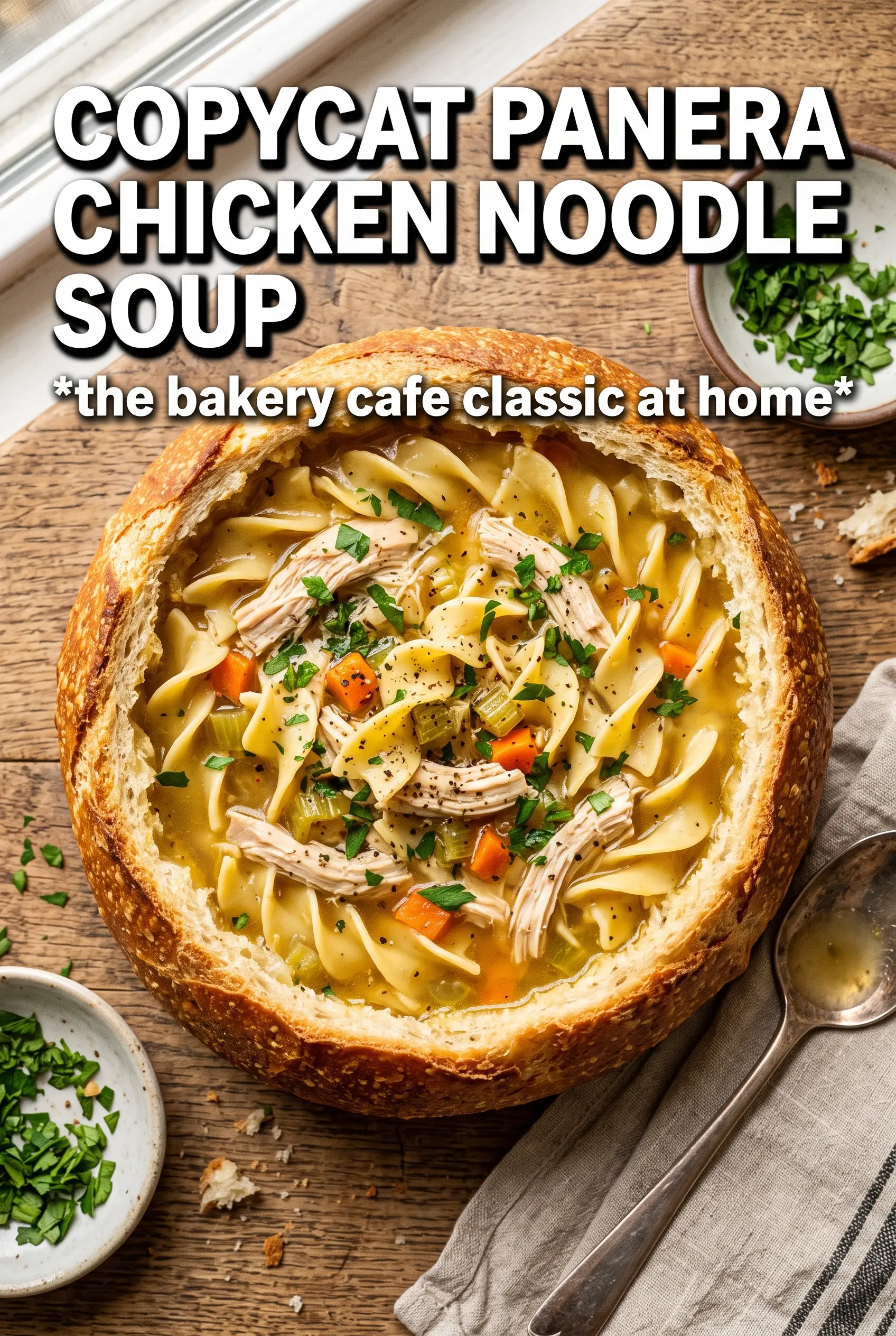
Copycat Panera Bread Chicken Noodle Soup
Ingredients
Equipment
Method
- Heat 2 tablespoons olive oil in a large pot over medium heat, then sauté onion, carrots, and celery for 5 minutes until softened, stirring occasionally so the vegetables don’t brown.
- Add minced garlic and cook for 1 minute, then pour in 8 cups chicken broth and stir in dried thyme, dried rosemary, and poultry seasoning.
- Bring the soup to a boil over high heat, then reduce to a gentle simmer so the surface stays lightly bubbling.
- Add the 1-inch chicken pieces to the simmering broth and cook for 12 minutes until cooked through and no longer pink in the center, keeping the heat at a steady simmer.
- Stir in the egg noodles (broken into shorter pieces) and cook for 6-7 minutes until just al dente, watching the noodles closely so they don’t over-soften.
- Stir in the chopped fresh parsley and season generously with salt and pepper to taste.