
Thick, glossy cranberry apple chutney brings sharp fruit, warm spice, and just enough sweetness to cut through rich food without tasting heavy. The cranberries break down into a jammy base while the apples hold some shape, so every spoonful gives you a little burst of tartness, soft fruit, and gentle heat. It’s the kind of side that quietly takes over the plate, especially next to turkey, pork, or a good cheese board.
What makes this version work is the balance. Brown sugar rounds out the cranberries, apple cider vinegar keeps the chutney bright, and a small handful of golden raisins adds body without making it taste overly sweet. The onion and ginger cook down into the background, which gives the chutney a savory edge that keeps it from reading like dessert.
Below, I’ll walk through the texture cues that tell you when the chutney is done, why the fruit order matters, and a few easy ways to adapt it if you want it a little spicier, brighter, or suited to what’s already in your pantry.
I made this for Thanksgiving and the chutney thickened into this perfect spoonable jam. The apples stayed tender but not mushy, and the little bite from the ginger and pepper flakes made it taste much more interesting than the usual cranberry sauce.
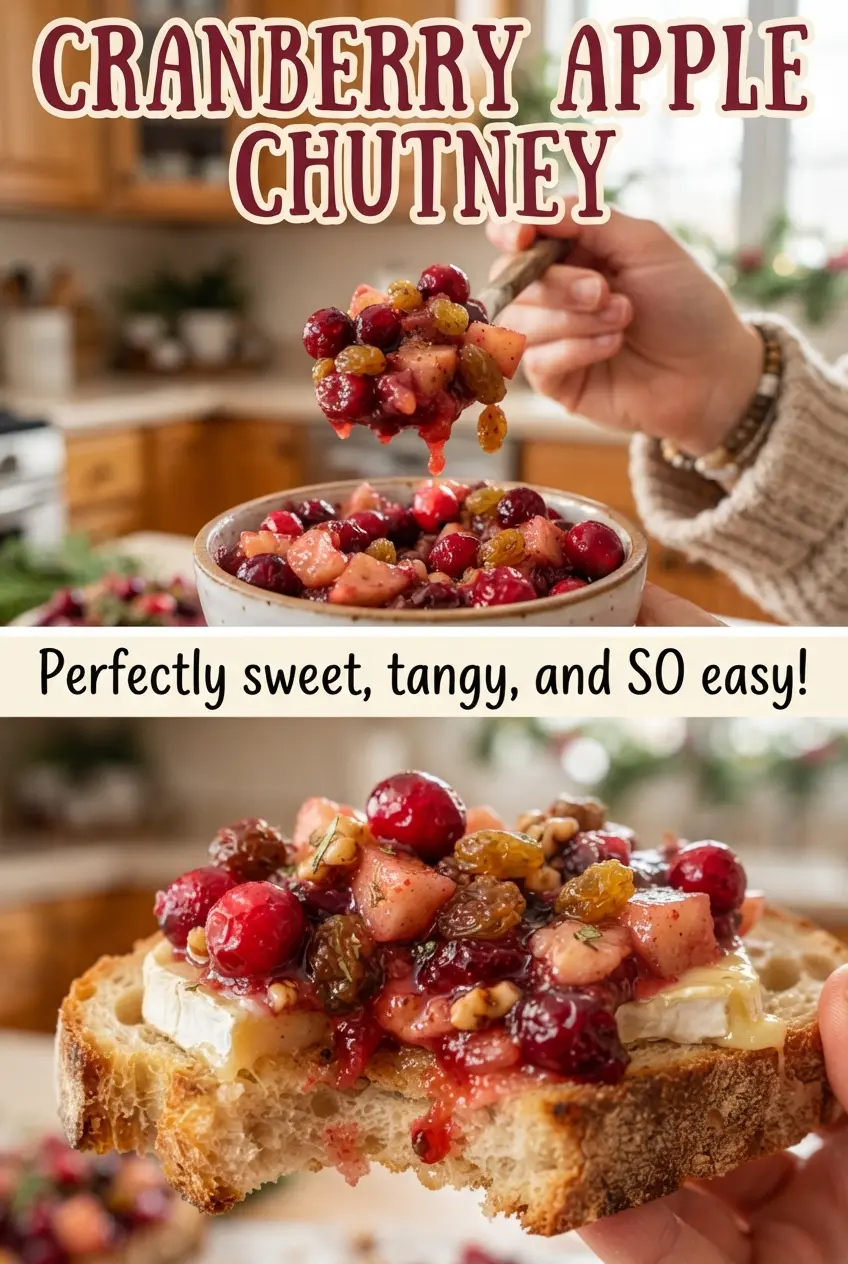
Save this cranberry apple chutney for holiday platters, roasted meats, and the cheese board that needs something bright, chunky, and spiced.
The Difference Between Jammy Chutney and Watery Fruit Sauce
The biggest mistake people make with cranberry chutney is pulling it off the heat as soon as the cranberries burst. At that point it still looks loose, almost soupy, and it won’t tell you the truth until it cools. Chutney thickens as the liquid reduces and the fruit breaks down, so the pan should look glossy and slightly loose while it’s hot, not stiff.
The other thing that matters here is heat control. Once the sugar, vinegar, and water come to a boil, the spices and onion need a few minutes to soften before the fruit goes in. That short simmer takes the edge off the red onion and blooms the cinnamon and cloves, which keeps the finished chutney from tasting harsh or raw. If you rush that base, the vinegar stays sharp and the spices taste dusty instead of warm.
What Each Ingredient Is Actually Doing in This Chutney
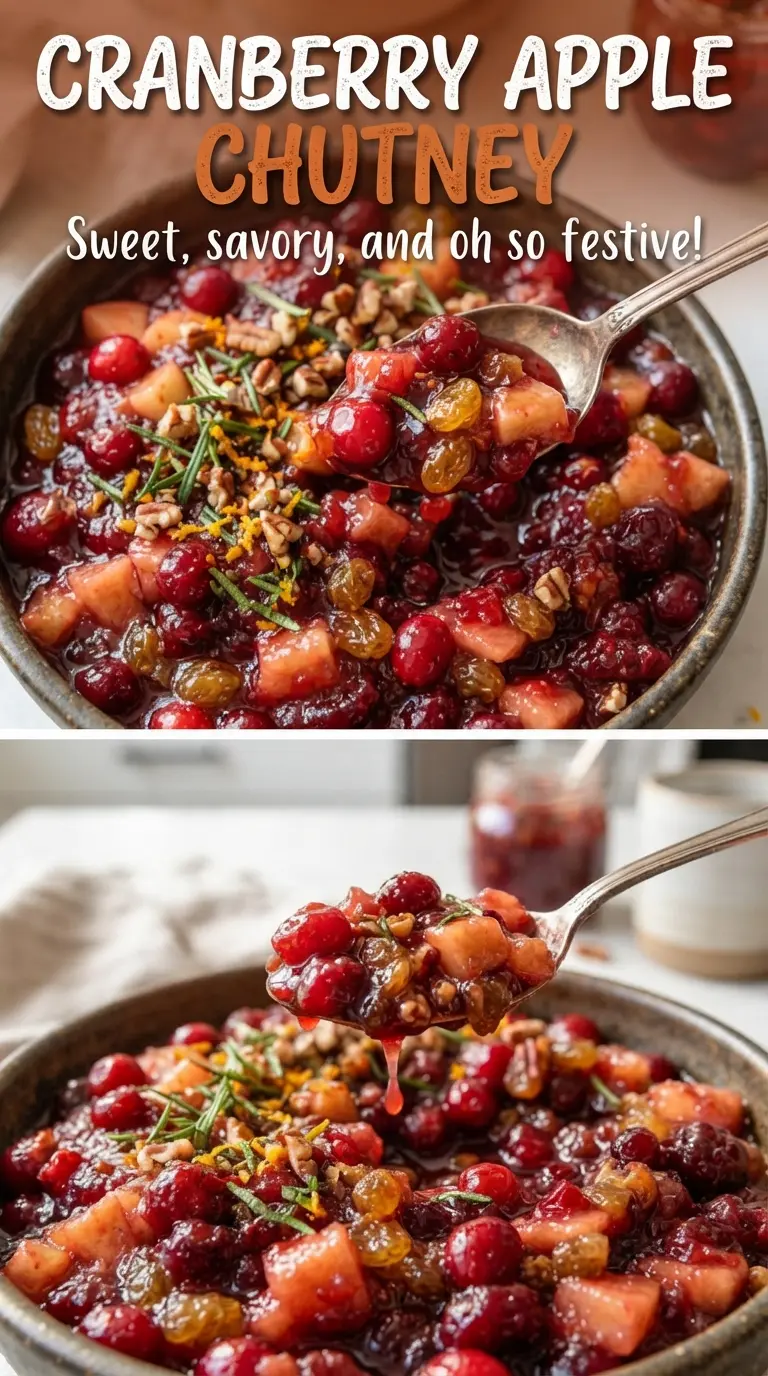
- Cranberries — These bring the tart backbone and the natural pectin that helps the chutney thicken. Fresh cranberries work best because they burst and soften at the right pace; frozen will work in a pinch, but don’t thaw them first or they’ll release more water and take longer to reduce.
- Apples — They add sweetness, body, and little soft chunks that keep the chutney from turning into a one-note sauce. A firm baking apple or sweet-tart apple holds shape best; a very soft apple will disappear into the pot.
- Apple cider vinegar — This sharpens the fruit and keeps the chutney lively. White vinegar tastes too blunt here; cider vinegar has the rounder acidity that fits the apples and cranberries.
- Golden raisins — They melt into the background and give the chutney a fuller, rounder sweetness. Regular raisins work too, but golden raisins stay lighter in color and don’t darken the finished chutney.
- Ginger, cinnamon, cloves, and red pepper flakes — These build the spiced finish. Fresh ginger is worth using here because it gives a brighter lift than powdered ginger, and the pepper flakes add a tiny slow burn that makes the fruit taste more complex.
How to Cook It Down Until It’s Thick and Glossy
Starting the Syrup Base
Bring the brown sugar, apple cider vinegar, and water to a full boil first. That dissolves the sugar completely and gives you a uniform base before the fruit goes in. If the sugar isn’t fully dissolved at this stage, the bottom of the pan can taste sandy and the chutney won’t cook evenly.
Softening the Aromatics
Add the onion, ginger, cinnamon, cloves, red pepper flakes, and salt, then let the mixture simmer for 5 minutes. You’re looking for the onion to lose its raw bite and the liquid to smell warm and spiced instead of sharply acidic. Keep the heat at a lively simmer, not a hard boil, or the spices can turn bitter and the vinegar can reduce too fast.
Cooking the Fruit to the Right Texture
Stir in the cranberries, apples, and raisins, then simmer for 20 to 25 minutes, stirring often. The cranberries should burst, the apples should soften but still keep some shape, and the liquid should cling to the spoon instead of running off like syrup. If the mixture starts sticking, the heat is too high; lower it and keep stirring so the sugars don’t scorch on the bottom.
Cooling for the Final Set
Take the pan off the heat when it still looks a touch looser than you want. Chutney tightens as it cools, and the cleanest texture comes from stopping just before it seems finished. Cool it completely before refrigerating so the steam doesn’t water down the flavor or leave condensation in the container.
Three Ways to Make This Chutney Fit the Meal in Front of You
Make it sharper for roast pork
Use the recipe as written, then add another tablespoon of apple cider vinegar at the end. That extra hit of acidity cuts through fatty meat and keeps the chutney from reading too sweet against pork.
Make it dairy-free and gluten-free for a shared table
This recipe already fits both without any changes, which is part of why it’s such a useful side dish. Serve it with roasted vegetables, turkey, or a cheese board made with dairy-free cheese if needed; the chutney itself brings enough body and seasoning to stand on its own.
Make it less sweet for a sharper condiment
Cut the brown sugar back to 1/2 cup and let the chutney reduce a few extra minutes. You’ll get a more tart, savory finish that works well beside rich meats or a salty cheese plate, though the texture will be a little looser until it cools fully.
Swap the apples based on what you have
A firm Granny Smith will give you more tartness and stronger structure, while Honeycrisp or Fuji will lean sweeter and softer. Just avoid apples that collapse completely when cooked unless you want a smoother chutney with less visible fruit.
Storage and Reheating
- Refrigerator: Keep in a sealed container for up to 2 weeks. The flavor deepens after a day, and the texture gets even thicker as it chills.
- Freezer: It freezes well for up to 3 months. Portion it into small containers so you can thaw only what you need.
- Reheating: Warm gently on the stove over low heat or serve chilled or at room temperature. Don’t boil it again, or the fruit can break down too far and the chutney will lose that chunky, spoonable texture.
Answers to the Questions Worth Asking
Cranberry Apple Chutney
Ingredients
Equipment
Method
- Combine brown sugar, apple cider vinegar, and water in a saucepan and bring to a boil over medium-high heat, watching for steady bubbling at the edges.
- Add red onion, fresh ginger, ground cinnamon, ground cloves, red pepper flakes, and salt, then simmer for 5 minutes to meld the spices.
- Stir in fresh cranberries, apples, and golden raisins, ensuring everything is evenly coated in the spiced syrup.
- Simmer for 20-25 minutes, stirring often, until the mixture is thick and jammy and clings to the spoon.
- Cool completely at room temperature, then refrigerate until chilled and ready to serve.
- Serve the cranberry apple chutney with turkey, pork, or as part of a cheese board.


