
Glossy pearl onions in a velvety cream sauce are the kind of side dish that quietly takes over the plate. The onions stay tender but keep their shape, the sauce clings instead of pooling, and the fried sage on top adds a sharp, earthy crunch that keeps every bite interesting. It feels classic without being heavy, and it lands right in that sweet spot between elegant and practical.
The trick here is giving the thawed onions time in the skillet before the cream goes in. That first bit of browning builds sweetness and keeps the finished dish from tasting flat. A small amount of flour thickens the sauce just enough, while Parmesan adds body and a savory edge that makes the cream taste deeper than it is.
Below, you’ll find the part that matters most: how to keep the sauce smooth, how to avoid watery onions, and what to change if you need a dairy-free version that still holds together.
The sauce thickened beautifully and the onions stayed tender without turning mushy. The crispy sage on top made the whole dish taste restaurant-level.
Like this creamed pearl onions with sage and thyme? Save it for the holiday table or any night that needs a silky side with crispy sage on top.
The Reason the Sauce Stays Velvety Instead of Turning Thin
Frozen pearl onions bring convenience, but they also bring extra moisture. If they go straight from thawed to cream without a little time in the pan, the finished sauce can end up loose and a bit flat. Letting them cook until lightly golden drives off that surface water and starts the flavor in the right place.
The flour goes in after the herbs, not before, so it can coat the onions and absorb fat evenly. That gives the sauce structure without making it pasty. If your sauce ever turns grainy, the usual culprit is high heat after the dairy goes in. Keep the simmer gentle and let the cream thicken slowly.
What the Sage, Thyme, and Parmesan Are Actually Doing Here
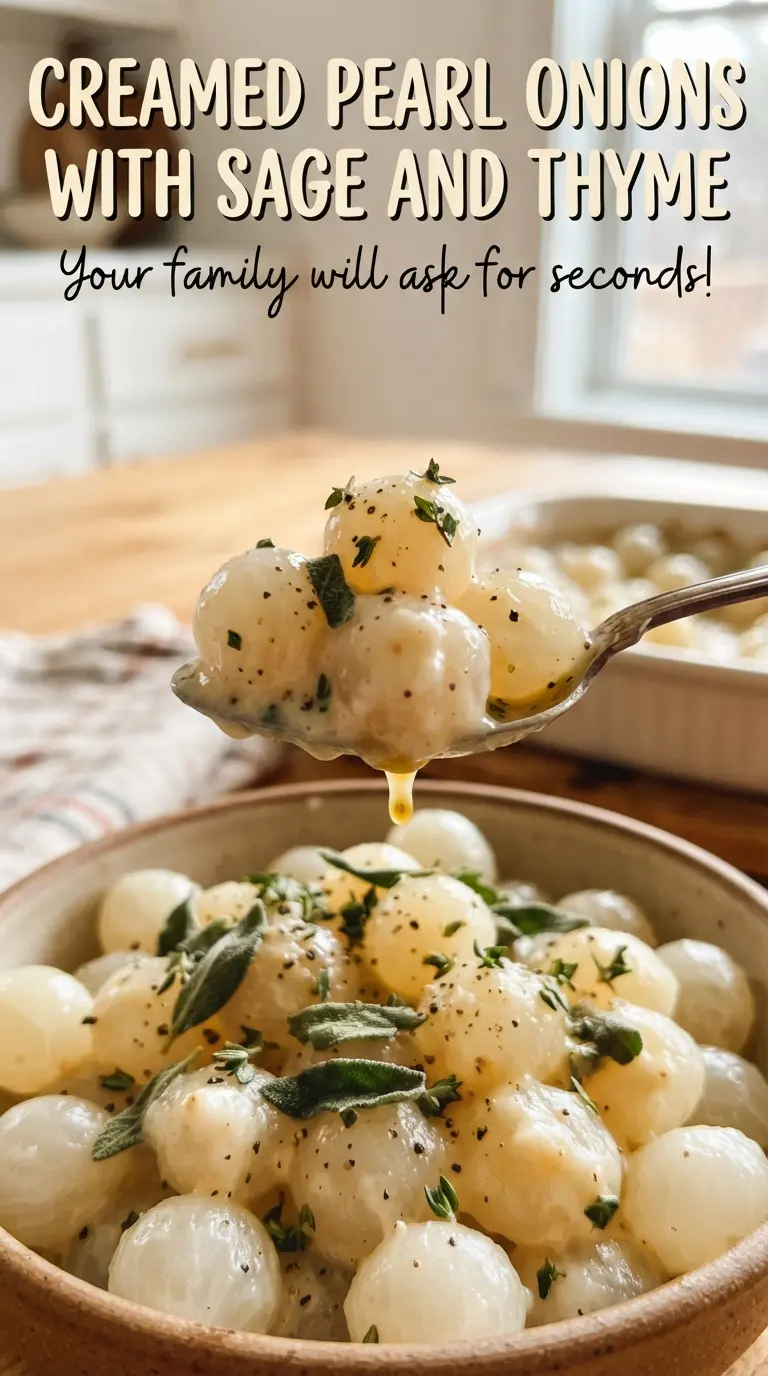
- Frozen pearl onions — Thawed onions cook evenly and keep the prep manageable. If you can only find onions packed in water, drain them well and pat them dry before they hit the skillet or the sauce will thin out.
- Fresh sage — Chopped sage seasons the sauce from within, while whole leaves fry into crisp garnish. Dried sage won’t give the same bright, woodsy edge, so use fresh here if you can.
- Fresh thyme — Thyme softens the richness of the cream and keeps the dish from tasting one-note. Strip the leaves from the stem before cooking; whole sprigs won’t distribute evenly.
- Heavy cream and Parmesan — Cream gives the body, but Parmesan is what makes the sauce taste finished. Grate it finely so it melts smoothly; pre-shredded cheese can leave the sauce a little sandy.
- White pepper and nutmeg — White pepper blends into the pale sauce without black flecks, and nutmeg rounds out the dairy. You only need a pinch, but leaving it out makes the sauce taste less complete.
The 20 Minutes That Build the Whole Dish
Frying the Sage First
Melt the butter in a large skillet, then drop in a few whole sage leaves and let them sizzle for about 30 seconds until crisp. Pull them out right away and set them on a paper towel. If they stay in the butter too long, they’ll turn dark and bitter instead of fragrant and crunchy.
Softening and Browning the Onions
Add the thawed pearl onions to the same skillet and cook them for 8 to 10 minutes, stirring now and then, until they pick up a light golden color. That color is doing real work here: it concentrates flavor and helps the onions stand up to the sauce. If the pan looks dry, the onions are probably still releasing moisture; keep cooking until that moisture evaporates.
Building the Herb-Studded Base
Stir in the chopped sage, thyme, and flour, then cook for 1 minute. This step removes the raw flour taste and coats the onions so the sauce thickens evenly later. Keep the heat moderate; flour can scorch fast in a butter-heavy pan, and a burnt base will carry through the whole dish.
Finishing the Cream Sauce
Whisk in the broth and cream, then simmer gently for 6 to 8 minutes until the sauce thickens and the onions are tender all the way through. The goal is a soft simmer, not a hard boil. If it boils aggressively, the cream can separate and the texture turns uneven.
Bringing in the Parmesan
Stir in the Parmesan, salt, white pepper, and nutmeg off to the side of the burner if the pan is very hot. The sauce should turn glossy and coat the onions in a loose blanket. Top with the crispy sage leaves and serve warm, while the sauce is still at its silkiest.
How to Adapt This for a Bigger Table or a Dairy-Free Pan
Dairy-Free Version with the Right Body
Use a full-fat unsweetened oat or cashew cream in place of the heavy cream, and swap in a dairy-free Parmesan-style cheese or leave it out and add a little extra salt. The sauce won’t taste exactly the same, but it will still coat the onions well if you keep the simmer gentle and don’t over-reduce it.
Make-Ahead for a Holiday Meal
Cook the dish up to the point where the sauce is thick and the onions are tender, then cool and refrigerate. Reheat gently on the stove with a splash of broth or cream. If you finish it too far ahead, the sauce can tighten up and lose that fresh glossy look.
Doubling the Recipe Without a Heavy Pan
Double everything in a wide, heavy skillet or a Dutch oven so the onions still have room to brown instead of steaming. If the pan is crowded, the onions will soften before they color and the sauce will taste less deep. A wide surface is worth it here.
Storage and Reheating
- Refrigerator: Store covered for up to 3 days. The sauce will thicken as it chills, and the onions will soften a bit more.
- Freezer: Not ideal. Cream sauces can separate after freezing, and the onions lose their best texture.
- Reheating: Warm slowly on the stove over low heat with a splash of broth or cream, stirring often. High heat is the mistake that breaks the sauce and makes the Parmesan seize.
Answers to the Questions Worth Asking

Creamed Pearl Onions with Sage and Thyme
Ingredients
Equipment
Method
- Melt butter in a large skillet over medium heat; fry a few whole sage leaves for 30 seconds until crisp and set aside, leaving the butter in the pan. You should see the sage turn darker and crisp at the edges.
- Add pearl onions to the same skillet and cook for 8-10 minutes until lightly golden. Stir occasionally so the onions develop browned spots.
- Stir in chopped sage, thyme, and all-purpose flour, then cook for 1 minute. The mixture should smell fragrant and look slightly thicker.
- Whisk in chicken broth and heavy cream, then simmer for 6-8 minutes until thick and the onions are tender. Reduce until the sauce coats the onions.
- Stir in grated Parmesan, salt, white pepper, and nutmeg until the sauce is smooth and evenly seasoned. The sauce should look glossy and creamy.
- Top with the crispy sage leaves and serve warm. The garnish should stay crisp on top.


