
Parmesan roasted Brussels sprouts come out with crisp, frilly edges, tender centers, and a salty, lacy cheese crust that clings to the pan and the sprouts themselves. When they’re done right, you get that satisfying contrast in every bite: caramelized cut sides, a little char on the loose leaves, and a bright finish from lemon that keeps the whole pan from feeling heavy.
The trick is using a hot oven and giving the sprouts enough direct contact with the pan to brown instead of steam. Grated Parmesan melts into a thin blanket under and around the sprouts, then turns into a crisp crust as the vegetables roast. Garlic goes in with the oil so it perfumes the pan without burning, and the lemon comes at the end so the flavor stays clean and fresh.
Below, I’m walking through the part that matters most: how to get that golden cheese crust without sticking, plus a few smart swaps if you want to change the flavor or make it fit what’s in your kitchen.
The Parmesan formed that crisp golden layer underneath, and the sprouts stayed tender instead of soggy. I squeezed the lemon on at the end like you suggested, and it made the whole tray taste brighter.
Like these Parmesan roasted Brussels sprouts? Save them to Pinterest for the nights when you want a crispy, cheesy side dish with almost no cleanup.
The Part That Stops Brussels Sprouts From Going Limp
The difference between crisp-edged sprouts and soft ones comes down to moisture and contact. A hot oven helps, but the real move is placing the sprouts cut-side down so the flat surface can sear against the pan and the cheese underneath. If the sprouts are crowded, they steam. If the pan is too cool, the Parmesan melts before it has a chance to brown. Both problems leave you with a pale tray and no crunch.
Parmesan also behaves differently from a breaded topping. It doesn’t sit on top like a crusty lid; it melts into the pan, then caramelizes where it touches the heat. That’s why this recipe works best with grated Parmesan, not thick shavings. The finer texture spreads evenly and gives you those crispy cheese frills around the edges instead of clumps that burn before the vegetables are tender.
What Each Ingredient Is Actually Doing In This Dish
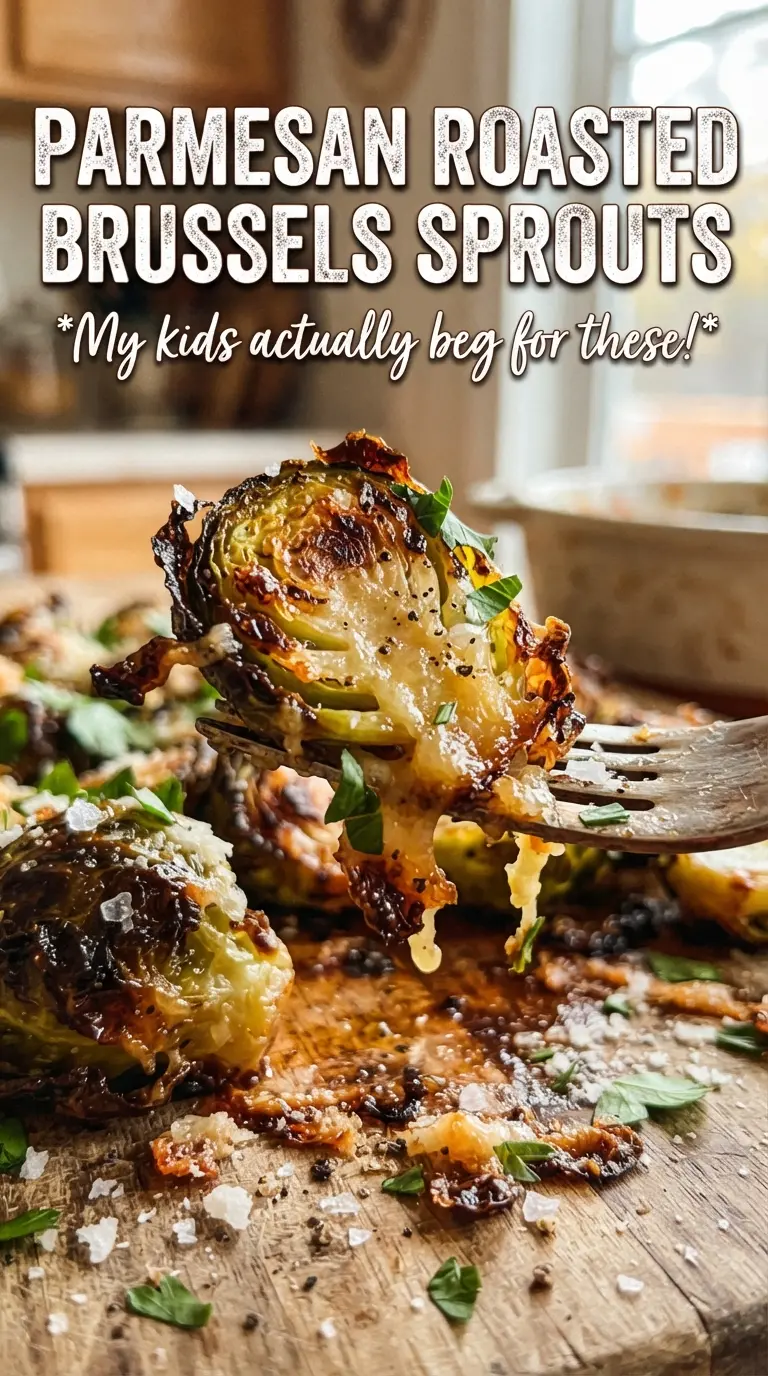
- Brussels sprouts — Halving them exposes the cut side, which is where the best browning happens. Smaller sprouts roast a little faster; larger ones just need to be cut evenly so the pan finishes at the same time.
- Olive oil — This coats the sprouts and helps the garlic and pepper cling. You need enough to lightly gloss every piece, but not so much that the pan turns greasy and the cheese slides instead of crisping.
- Garlic — Fresh minced garlic gives the dish its sharp, savory edge. If you use jarred garlic, it can taste a little flat and may darken faster, so keep an eye on the pan during the last few minutes.
- Parmesan — Grated Parmesan is the key to the crust. Pre-shredded cheese often has anti-caking agents that keep it from melting as cleanly, so grate it yourself if you want that lacy, golden layer.
- Lemon juice — This is the finish that lifts the whole tray. Add it after roasting, not before, or the acid dulls the browning and you lose that bright pop on the first bite.
Getting the Cheese Crust Before the Sprouts Overcook
Start With A Hot Pan And Dry Sprouts
Heat the oven fully before the sprouts go in. A 425F oven gives the Parmesan enough heat to melt and brown at the same pace the sprouts turn tender. If the sprouts are wet from washing, dry them well first; extra surface water creates steam, and steam is the fastest way to lose the crisp edges you’re after.
Let The Cut Side Do The Work
Toss the sprouts with oil, garlic, salt, and pepper, then sprinkle the Parmesan evenly over the sheet pan before arranging the sprouts cut-side down on top. That cut surface is flat and starchy, which means it browns better than the rounded outer leaves. Don’t stir them once they’re in the oven or you’ll break the crust before it sets.
Roast Until The Cheese Turns Frilly And Deep Gold
After about 20 minutes, start checking the pan edges and the bottoms of the sprouts. You want the cheese to look lacy and deeply golden, not just melted, and the sprouts should give easily when pierced with a fork. If the Parmesan looks pale, give it a few more minutes; if it’s darkening too fast, move the pan up one rack so the sprouts can finish without scorching.
Finish With Lemon While It’s Still Hot
Squeeze the lemon juice over the sprouts right after they come out of the oven. The heat carries the citrus flavor across the whole tray, and the acidity cuts through the richness of the cheese. Serve them hot so the crust stays crisp; once they sit too long, the trapped steam softens the bottom layer.
How To Adapt Them For Different Tables And Different Pan Sizes
Dairy-Free Version
Skip the Parmesan and roast the sprouts with a little extra olive oil, then finish with a dusting of nutritional yeast if you want some savory depth. You won’t get the same brittle cheese crust, but you’ll still get strong browning and a clean, salty finish from the lemon.
Extra Crispy, More Charred Edges
Use two sheet pans if needed so the sprouts have room to brown instead of steam. Spreading them out gives more exposed surface area and more of those crackly loose leaves, which is what makes this side dish feel special.
Bacon or Pancetta Upgrade
Cook small pieces of bacon or pancetta first, then use a little of the rendered fat in place of some of the olive oil. The sprouts will roast with a deeper savory flavor, but don’t overload the pan with meat or the cheese won’t make that clean crust underneath.
Make It Gluten-Free Without Changing Anything
This recipe is naturally gluten-free as written, as long as your Parmesan is pure and not blended with anti-caking fillers that you don’t want. The texture stays exactly the same, which makes this an easy side for mixed-diet tables.
Storage and Reheating
- Refrigerator: Store leftovers in an airtight container for up to 4 days. The crust softens in the fridge, but the flavor holds up well.
- Freezer: I don’t recommend freezing these. Brussels sprouts and Parmesan both lose their best texture after thawing, and the crust turns mushy.
- Reheating: Reheat on a sheet pan in a 400F oven until the edges crisp back up, about 8 to 10 minutes. The mistake most people make is using the microwave, which steams the sprouts and wipes out the crust.
Answers to the Questions Worth Asking
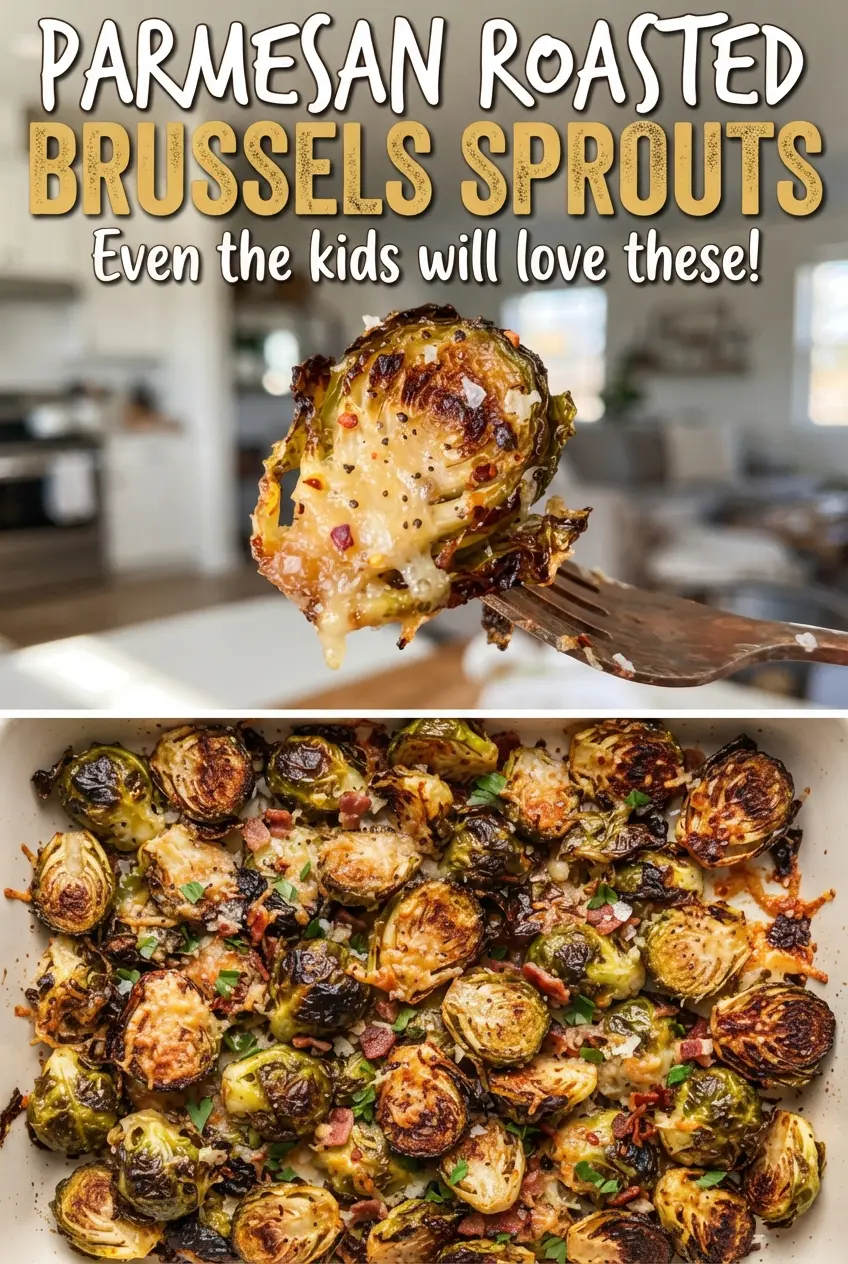
Parmesan Roasted Brussels Sprouts
Ingredients
Equipment
Method
- Preheat the oven to 425F and line a sheet pan with parchment for easy release and browning.
- Toss the Brussels sprouts with olive oil, minced garlic, salt, and black pepper until evenly coated, glossy, and evenly speckled.
- Sprinkle the grated Parmesan evenly over the pan, then place the sprouts cut-side down directly on top of the cheese for a lacy crust.
- Roast for 20-25 minutes at 425F until the Brussels sprouts are tender and the Parmesan turns golden with crisp, charred edges.
- Squeeze the lemon juice over the top right before serving to brighten the roasted flavor.


