
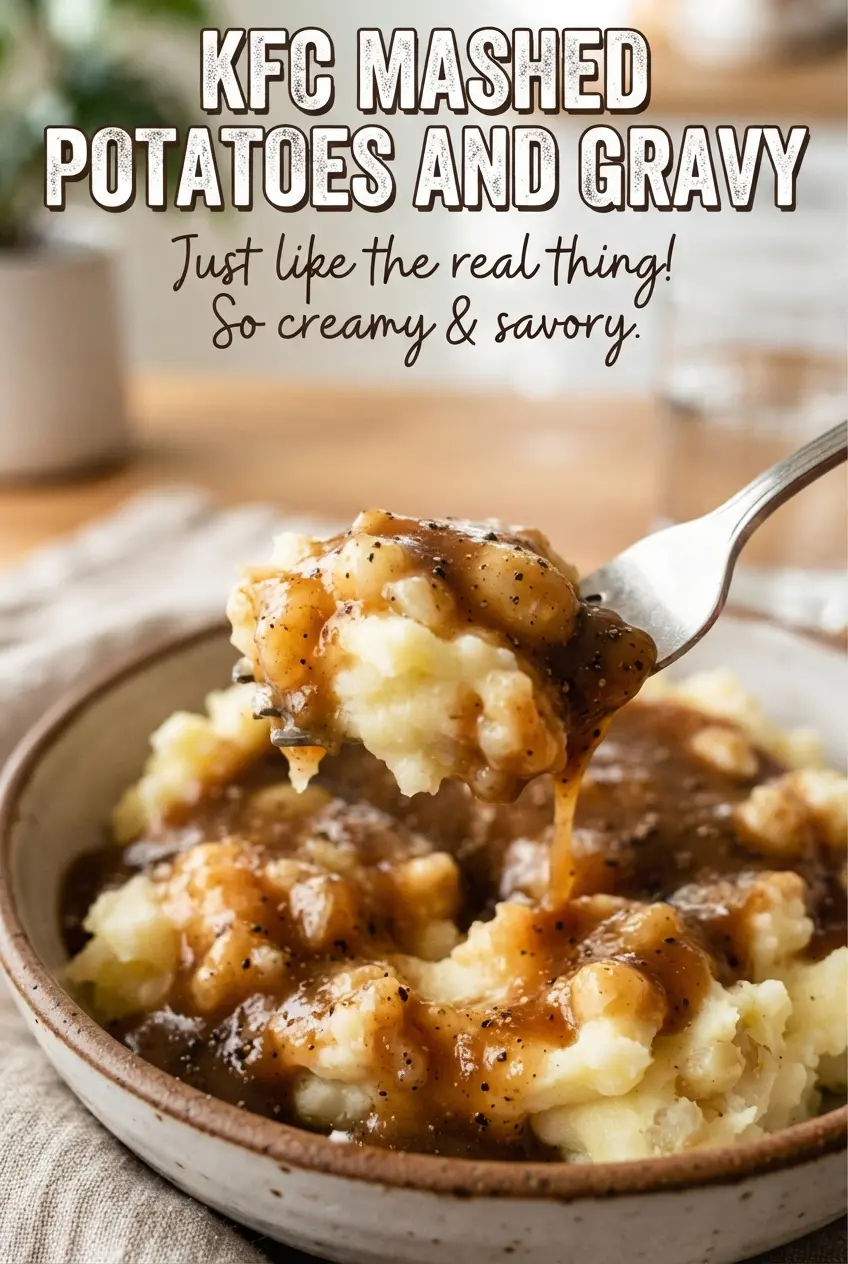
Silky mashed potatoes and glossy brown gravy land together in the kind of comfort-food combination that disappears fast at the table. The potatoes stay light and smooth instead of gluey, and the gravy brings that peppery, savory finish that makes every bite taste complete. It’s the sort of side dish people pile high, then go back for after the main plate is gone.
The key is starting with russet potatoes and warming the milk before it hits the mash. Russets break down into a fluffier texture than waxy potatoes, and warm dairy keeps the potatoes hot while helping the butter melt evenly. The gravy gets its depth from a properly cooked roux; if you rush that step, it tastes raw and stays pale, but give it time and it turns into the deep brown base that makes this version taste like the classic.
Below, you’ll find the small details that keep the potatoes smooth, the gravy lump-free, and the final bowl looking exactly the way it should: a well of potatoes filled with plenty of peppery sauce.
The gravy thickened up exactly right, and the potatoes stayed fluffy instead of turning gummy. I used the warm milk tip and it made a bigger difference than I expected.
Save this KFC mashed potatoes and gravy recipe for the nights when you want ultra-smooth potatoes with a deep, peppery gravy.
The Reason the Gravy Turns Deep and Savory Instead of Thin and Pasty
The difference here is the roux. A pale roux gives you a sauce that tastes floury and looks flat; a darker roux brings in the toasted, roasted note that makes the gravy taste finished. Keep whisking it over medium heat until it looks like wet sand turning into peanut butter and smells nutty, not burnt.
The other place people slip up is adding broth too fast. When the liquid goes in gradually, the roux loosens without clumping, and the gravy can smooth out before the next splash arrives. If it seizes into lumps, the heat was too high or the broth was dumped in all at once. Pull it back, whisk steadily, and it comes together.
What the Potatoes and Broths Are Each Doing Here

- Russet potatoes — These are the right choice because their dry, starchy texture mashes up fluffy instead of dense. Yukon Golds work in a pinch, but they’ll give you a richer, heavier mash and won’t match the classic texture as closely.
- Warm whole milk — Warm milk blends in without cooling the potatoes down or making the butter seize. Cold milk can make the mash tighten up before it has a chance to turn smooth.
- Beef broth plus chicken broth — The blend gives the gravy more depth than either one alone. Beef broth brings color and body, while the chicken broth keeps it from tasting too heavy.
- Soy sauce — This is a small amount, but it quietly deepens the color and boosts the savory backbone. It doesn’t make the gravy taste like soy sauce; it just gives it that rounded, seasoned finish.
- Black pepper — Use enough to give the gravy a proper bite. The pepper is part of the character of the dish, not just a background seasoning.
Building the Mash and Gravy So Everything Stays Smooth
Cooking the Potatoes Until They Collapse at the Edge of the Fork
Start the potatoes in well-salted water and cook them until a knife slides through with no resistance at all. If they’re even a little underdone, you’ll feel that sandy center when you mash them, and no amount of butter can hide it. Drain them well and let the steam escape for a minute so the mash doesn’t turn watery.
Mashing for a Fluffy Texture, Not Glue
Add the butter first, then the warm milk and salt, and mash until the potatoes look smooth and light. Stop as soon as they’re finished; overworking potatoes makes them turn gummy fast, especially with a tool that beats them hard. A hand masher gives you the best control, and even then, gentle is the move.
Whisking the Roux Into a Dark, Lump-Free Gravy
Melt the butter, whisk in the flour, and keep it moving until the color deepens to a rich brown. That color change is the signal that the raw flour taste is gone. When the broth goes in, drizzle it in slowly while whisking constantly, and don’t walk away while it thickens. Once the gravy coats the back of a spoon and falls in a slow ribbon, it’s ready.
Bringing the Bowl Together
Spoon the potatoes into bowls and make a little well in the center before pouring in the gravy. That shape isn’t just for looks; it keeps the gravy pooled where you want it instead of disappearing into the plate. Serve it right away while the gravy is glossy and the potatoes are still hot.
How to Make This Work With What You’ve Got
Dairy-Free Swap
Use a plant-based butter and unsweetened oat milk for the potatoes. The mash won’t have quite the same richness, but it will still turn smooth if the milk is warmed first. For the gravy, choose a broth with enough body and taste as you go, since dairy-free swaps don’t bring the same roundness from the butter.
Gluten-Free Gravy
Replace the all-purpose flour with a gluten-free flour blend that thickens well, or use cornstarch mixed into cold broth at the end instead of making a roux. The flavor will be a little less toasted, but the texture can still be smooth if you whisk steadily and don’t boil it hard.
Extra-Creamy Potatoes
Swap part of the milk for half-and-half if you want a richer mash. It makes the potatoes heavier and silkier, which works especially well if you’re serving them with a simple roasted chicken or meatloaf. Just keep the liquid warm so the texture stays light.
Storage and Reheating
- Refrigerator: Store the potatoes and gravy separately for up to 4 days. The potatoes firm up as they chill, and the gravy thickens.
- Freezer: The gravy freezes well for up to 2 months; the potatoes are best fresh, since freezing can make them grainy.
- Reheating: Reheat the gravy slowly over low heat with a splash of broth until smooth. Warm the potatoes with a little milk and butter over low heat or in the microwave in short bursts, stirring between each one so they don’t dry out.
Answers to the Questions Worth Asking
KFC Mashed Potatoes and Gravy
Ingredients
Equipment
Method
- Add the peeled, cubed russet potatoes to a pot of salted water and boil for 15–18 minutes, until very tender. You’ll know they’re ready when a fork slides through easily.
- Drain the potatoes thoroughly, then mash with the unsalted butter, warmed whole milk, and 1/2 teaspoon salt until very smooth. Keep mashing until no lumps remain and the texture looks fluffy.
- Melt 3 tablespoons butter in a saucepan over medium heat, then whisk in the all-purpose flour. Cook for 4–5 minutes, stirring constantly, until a deep brown roux forms and smells nutty.
- Slowly whisk the beef broth and chicken broth into the roux until smooth, with no visible lumps. Keep whisking as it thickens.
- Stir in the soy sauce, black pepper, and onion powder, then simmer for 5 minutes until thick. The gravy should coat the back of a spoon.
- Spoon the mashed potatoes into bowls, make a well in the center, and fill with the glossy gravy. Let some gravy spill slightly over the sides for a classic look.


