
Hungarian goulash gets its depth from a slow build of onions, paprika, and beef, not from a long list of extras. When it’s done right, the broth turns brick-red and silky, the beef goes spoon-tender, and the potatoes soak up every bit of the paprika-rich sauce. It’s the kind of stew that tastes even better after it sits for a few minutes, which is exactly why I keep coming back to it.
The key is treating the paprika like the main event instead of just another seasoning. It goes into the pot off the heat so it doesn’t scorch and turn bitter, and the onions are cooked until they’re soft and golden enough to give the broth real body. Lard adds a round, old-world richness, but vegetable oil works too if that’s what you’ve got. Once the beef simmers low and slow, the carrots and potatoes finish the dish with just enough sweetness and starch to make the broth cling.
Below, I’ll walk through the part that matters most: how to keep the paprika from burning, how to build a stew that tastes balanced instead of flat, and what to change if you want to make it your own.
The paprika flavor came through beautifully and the beef was tender after the full simmer. I loved how the potatoes thickened the broth just enough without turning mushy.
Save this paprika-rich Hungarian goulash for a slow-simmer dinner with tender beef, potatoes, and plenty of sour cream.
The Part Where Most Goulash Loses Its Paprika
The biggest mistake in goulash is letting the paprika sit over direct heat long enough to turn sharp and bitter. Paprika doesn’t need to fry; it needs to be warmed just enough to bloom in the fat and coat the onions before the broth goes in. That’s why the pot comes off the burner for that step. It protects the spice and keeps the stew sweet, earthy, and rounded instead of harsh.
The other thing that matters is patience with the onions. They’re not just aromatics here. When they soften and turn golden, they dissolve into the sauce a bit and give the broth a fuller body without needing flour. If the onions are still pale, the finished stew tastes thinner and more one-note.
What Each Ingredient Is Actually Doing in This Stew
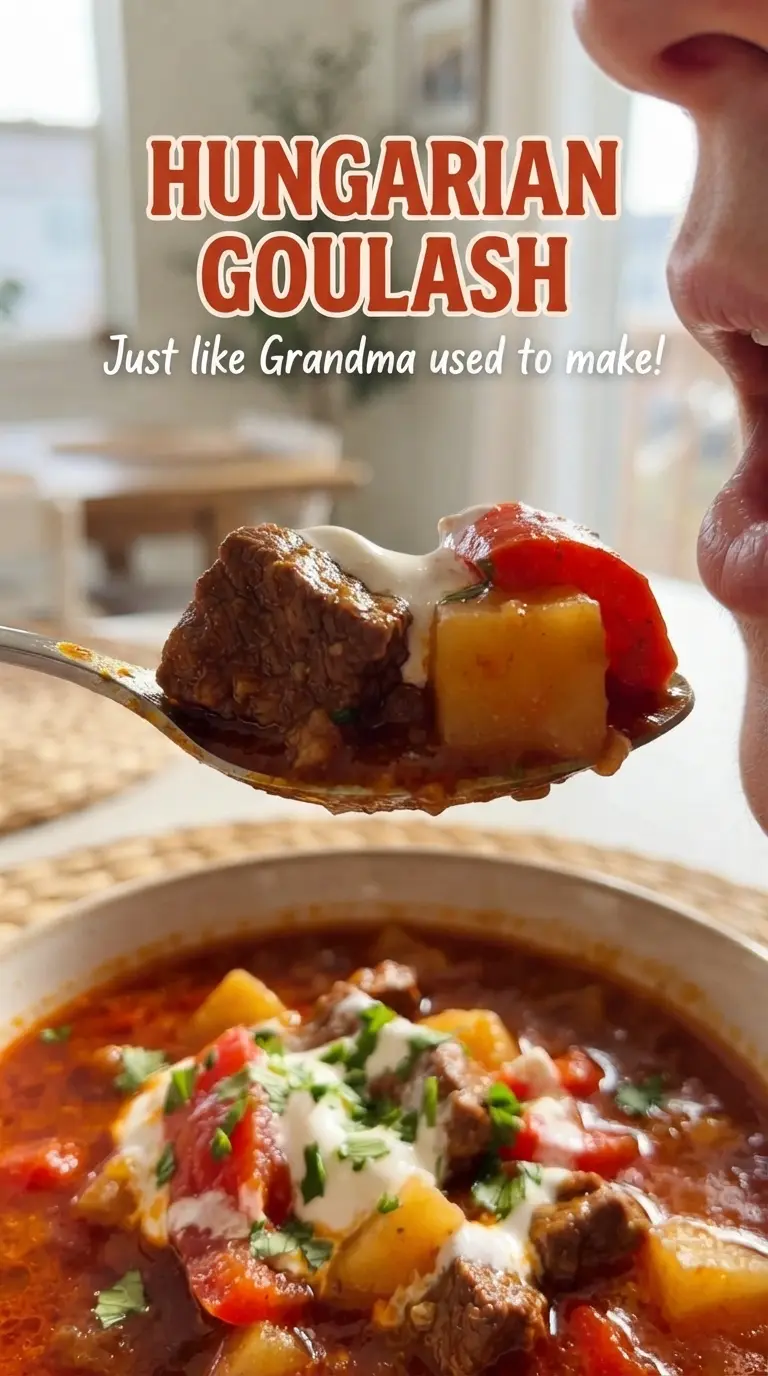
- Beef chuck — This cut has enough connective tissue to turn silky during the long simmer. Anything too lean dries out before the broth has time to develop. If chuck is all you can find, keep the cubes large so they stay juicy.
- Sweet Hungarian paprika — This is the backbone of the dish, so use fresh paprika if you can. Old paprika tastes flat and dusty, and there’s no real fix for that. If you need to substitute, use another good sweet paprika and add a tiny pinch of hot paprika only if you want more heat.
- Onions — They build the base and help thicken the stew naturally. Don’t rush them; the golden color is where the depth comes from.
- Lard or oil — Lard gives the most traditional flavor and a rounder mouthfeel, but vegetable oil works fine. Use what you have; the long simmer is doing most of the flavor work anyway.
- Potatoes and carrots — They turn the stew into a full meal and give the broth a softer, slightly sweet finish. Cut them evenly so they cook at the same pace and don’t collapse before the beef is done.
Building the Stew So the Beef Stays Tender
Cooking the Onions and Blooming the Spices
Start with the onions in lard or oil and let them cook until they’re deep golden and soft, not just translucent. That takes longer than most people expect, but it’s where the stew gets its base flavor. Add the garlic for just a minute at the end so it stays fragrant instead of bitter. Then pull the pot off the heat before stirring in the paprika and caraway. If the paprika darkens instantly or smells sharp, it’s already gone too far.
Coating the Beef Before the Long Simmer
Add the beef and stir until every piece is stained red from the paprika mixture. That coating matters because it keeps the surface of the meat seasoned as the stew starts to simmer. Once the broth goes in, bring it back to a gentle simmer, not a hard boil. A hard boil tightens the beef and muddies the broth; a slow simmer keeps the liquid clear and gives the chuck time to soften.
Letting the Vegetables Finish the Pot
The potatoes and carrots go in later so they don’t break apart before the beef is tender. Simmer until the potatoes are just soft at the center and the beef yields easily when pressed with a spoon. If the broth looks a little thin before serving, leave the lid off for the last few minutes. That reduction tightens the flavor without changing the texture of the meat.
How to Adapt This Goulash Without Losing Its Character
Make It Dairy-Free Without Changing the Stew
The stew itself is already dairy-free; just skip the sour cream at the table or use a plain dairy-free alternative. A spoonful of something tangy still helps balance the paprika, so choose one with a clean flavor rather than a sweet one.
Use Pork Shoulder Instead of Beef Chuck
Pork shoulder works well if you want a slightly sweeter, softer stew. Keep the simmer gentle and expect it to be a little silkier and less beefy than the original. The paprika and onions still carry the flavor, but the final bowl will taste lighter.
Skip the Potatoes for a Lower-Carb Version
Leave out the potatoes and add a little more carrot or a handful of diced celery root if you want a lower-carb bowl. The stew will be a little brothier, so simmer uncovered near the end to concentrate it. You’ll lose some body, but the paprika-beef combination stays intact.
Storage and Reheating
- Refrigerator: Store in an airtight container for up to 4 days. The flavor deepens overnight, and the broth may thicken a little as it chills.
- Freezer: It freezes well for up to 3 months. Cool it completely first, then freeze without the sour cream and add that after reheating.
- Reheating: Warm it gently on the stove over low heat until hot through. A hard boil can break down the potatoes too much and make the beef stringy.
Questions I Get Asked About This Recipe
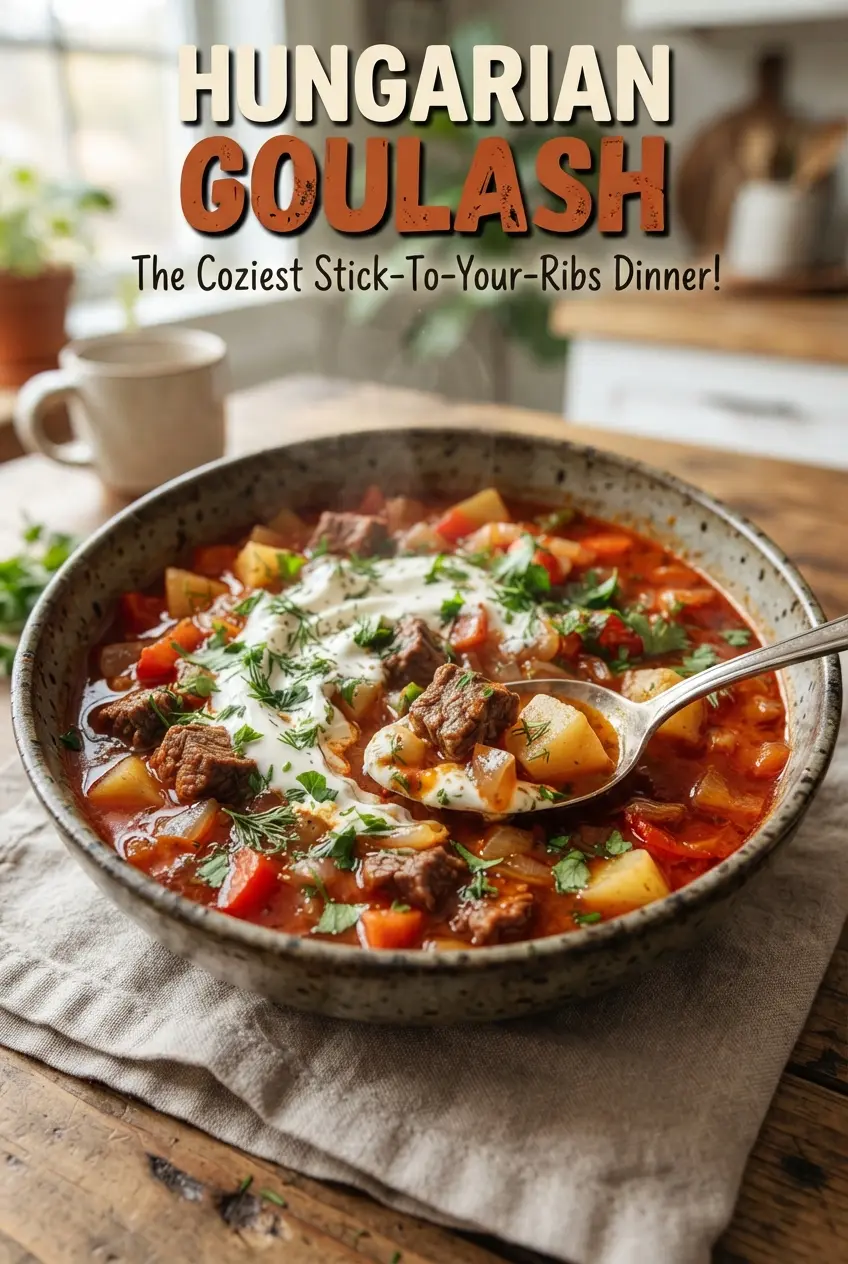
Hungarian Goulash
Ingredients
Equipment
Method
- Heat lard or vegetable oil in a Dutch oven and cook diced onions for 10 minutes, stirring until golden with translucent edges. Add minced garlic and cook 1 minute, until fragrant.
- Remove the pot from the heat, then stir in sweet Hungarian paprika and caraway seeds. Cook no longer—keep the mixture off the burner so the paprika doesn’t burn.
- Add the beef chuck cubes and stir to coat evenly. Return to medium heat and cook 5 minutes, letting the beef pick up a deeper color.
- Stir in tomato paste, diced red bell pepper, diced green bell pepper, beef broth, salt, black pepper, and bay leaf. Cover the pot and simmer for 1 hour, keeping a gentle bubbling visible around the edges.
- Add the cubed potatoes and sliced carrots to the Dutch oven. Simmer for 45 minutes until the beef and potatoes are tender, stirring once or twice so nothing sticks.
- Remove the bay leaf and ladle the goulash into bowls. Serve with sour cream on top.


