
Rich, spoon-coating beef stew is exactly what the Instant Pot does best when you want the kind of deep, slow-cooked flavor that usually takes all afternoon. The beef turns tender, the potatoes hold their shape, and the broth cooks down into a glossy gravy that clings to every bite. This version keeps the vegetables hearty instead of mushy, which is the difference between a good stew and one you’d happily make again next week.
The trick is building flavor before the pressure lid ever goes on. Browning the beef in batches gives you the dark edges that make the broth taste like beef stew instead of boiled beef. Tomato paste, Worcestershire, and a quick deglaze pull up the browned bits from the bottom of the pot, and that step matters because it’s where the stew gets its backbone. The cornstarch goes in at the end, after pressure cooking, so the sauce thickens cleanly without dulling the flavor.
Below you’ll find the small details that make this stew work on a busy night, including how to avoid a scorched pot, when to stop cooking the vegetables, and what changes if you want to make it dairy-free, gluten-free, or ahead for later in the week.
The beef got tender in the pressure cooker, and the gravy thickened up beautifully after the slurry went in. I was worried the potatoes would fall apart, but they held their shape and soaked up all that savory broth.
Save this Instant Pot beef stew for the nights when you want tender beef, chunky vegetables, and a thick savory gravy without babysitting the stove.
The Reason This Stew Stays Thick Instead of Watery
The biggest mistake in pressure-cooked stew is treating the Instant Pot like a slow cooker and loading everything in at once. That usually leaves you with bland broth and soft vegetables. Here, the flavor gets built in layers first, and the stew only cooks under pressure after the bottom of the pot has been scraped clean.
The other thing that matters is timing. Potatoes and carrots need enough pressure to turn tender, but not so much that they collapse into the broth. Thirty-five minutes is the sweet spot for 1 1/2-inch beef cubes and sturdy vegetables, and the 10-minute natural release helps the meat relax instead of tightening up.
- Browning the beef gives the stew its dark, meaty flavor. Skip it and the broth tastes flatter, no matter how long you pressure cook it.
- Deglazing with broth lifts the browned bits from the bottom so the pot doesn’t throw a burn warning.
- Adding the slurry at the end keeps the gravy smooth. If it goes in before pressure cooking, it can break down and lose its thickening power.
What Each Ingredient Is Actually Doing in This Pot

- Beef chuck is the right cut because it has enough collagen to turn tender under pressure. Lean stew meat can work, but it doesn’t give the same silky texture in the broth.
- Tomato paste deepens the base and adds a little body. Let it cook for a minute with the onion and garlic so it loses that raw edge.
- Worcestershire sauce adds the savory backbone that makes the broth taste rounded instead of thin. There isn’t a perfect substitute, but a small splash of soy sauce will cover some of the same ground if needed.
- Yukon gold potatoes hold together better than russets. If you use russets, expect a softer stew with more starch in the broth.
- Cornstarch slurry thickens the stew after pressure cooking without turning the liquid cloudy or gummy. Stir it in only after switching back to SAUTE.
Building the Flavor Before the Lid Locks
Brown the Beef in Batches
Season the beef first, then sear it in a single layer in hot oil. If the pieces crowd each other, they steam and lose the crust that gives stew its depth, so work in batches even if it takes a few extra minutes. You want deep brown edges, not gray cubes. That color is the flavor foundation.
Cook Down the Onion and Tomato Paste
Once the beef is out, the onion goes in and cooks until soft and translucent, then the garlic and tomato paste join it. The paste should darken slightly and smell sweeter, not raw. If the pot looks dry or the bottom starts to catch, the broth goes in right away for the deglaze.
Pressure Cook, Then Finish the Gravy
After the broth, Worcestershire, thyme, bay leaf, potatoes, and carrots go in, seal the lid and cook on HIGH pressure. Let the pot natural release for 10 minutes before opening it, which keeps the beef from seizing up. Once the lid is off, the slurry goes in and the stew simmers just until the broth turns glossy and thick enough to coat a spoon. Stir in the peas at the very end so they stay bright and sweet.
How to Adapt This Stew Without Losing the Good Part
Gluten-Free Beef Stew
This stew is naturally close to gluten-free as written if your Worcestershire sauce is certified gluten-free. Cornstarch is the right thickener here because it gives you a clean, glossy gravy without needing flour. Check the broth label too, since that’s the place gluten sneaks in most often.
A Dairy-Free, Whole-Food Dinner
Nothing dairy-based is needed here, so this one already works well for a dairy-free table. If you want a cleaner broth, use a low-sodium beef broth and keep the Worcestershire, tomato paste, and thyme in place for flavor instead of leaning on butter or cream.
Using a Different Cut of Beef
If you use stew meat from the store, check that it’s cut into even pieces so it cooks at the same rate. Brisket or chuck roast cut yourself will usually give you better texture than pre-cut beef, which is often a mix of different muscles and sizes.
Storage and Reheating
- Refrigerator: Store in an airtight container for up to 4 days. The gravy thickens as it chills, and the potatoes soften a bit more overnight.
- Freezer: It freezes well for up to 3 months. Cool it completely first, and leave a little space in the container because the liquid expands.
- Reheating: Reheat gently on the stove or in the microwave with a splash of broth if needed. Don’t boil it hard, or the beef can dry out and the potatoes can start to break apart.
Questions I Get Asked About This Recipe
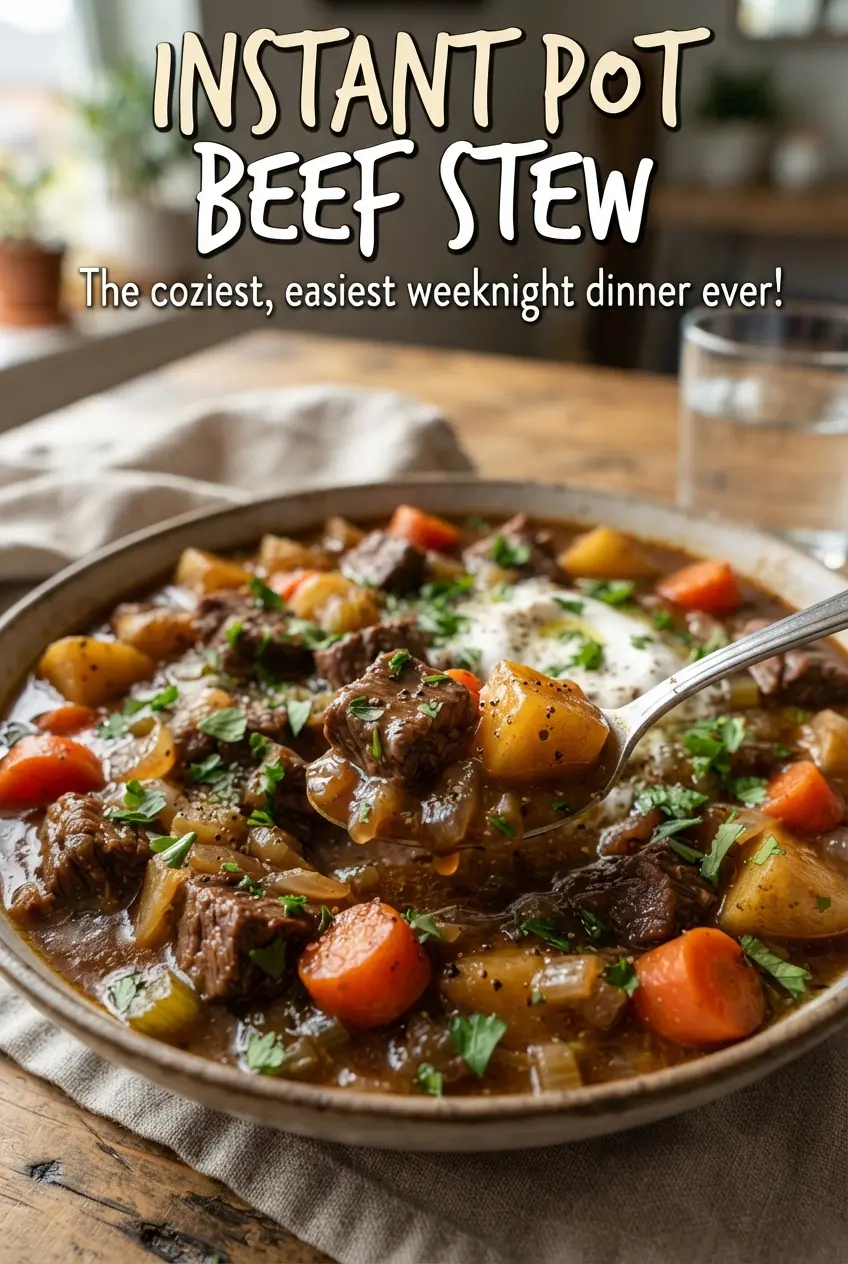
Instant Pot Beef Stew
Ingredients
Equipment
Method
- Season the beef cubes with salt and black pepper, then heat the Instant Pot on SAUTE and brown the beef in batches using the olive oil for 4-5 minutes total, until well-browned. Transfer browned beef to a plate and keep any browned bits in the pot.
- Add the diced onion to the pot and cook for 3 minutes. Add the minced garlic and tomato paste and cook for 1-2 minutes, then deglaze with 1/2 cup broth while scraping the bottom.
- Add the browned beef, remaining broth, Worcestershire sauce, dried thyme, bay leaf, cubed potatoes, and carrot pieces, stirring to combine. Seal the Instant Pot and cook on HIGH pressure for 35 minutes, then use a natural release for 10 minutes.
- Switch to SAUTE, stir in the cornstarch slurry, and simmer for 3-6 minutes until the gravy thickens and coats the meat and vegetables.
- Stir in the frozen peas and cook for 1-2 minutes until heated through, then remove the bay leaf and serve.


