
Golden-orange pumpkin cornbread brings a soft, tender crumb with the faint grit of cornmeal still intact, and that combination makes it far more interesting than a plain quick bread. The pumpkin keeps it moist without turning it cakey, while brown sugar and maple syrup give the edges a warm, caramel note that plays well with butter. It bakes up with a deep color and just enough sweetness to work beside chili, roasted vegetables, or a bowl of soup.
The trick is balance: enough pumpkin for color and softness, but not so much that the bread loses its cornbread character. Buttermilk adds tang and helps the crumb stay light, while melted butter carries flavor through every bite. Stirring the batter only until it comes together matters here, because overmixing tightens the crumb and makes the cornbread dense instead of tender.
Below you’ll find the small details that keep this bake reliable, from the pan choice to the quickest way to tell when the center is done. I’ve also included a few smart variations for anyone who wants to lean sweeter, skip dairy, or make it in a cast iron skillet.
The pumpkin kept it soft for days, and the edges turned out beautifully crisp in my cast iron skillet. I served it with chili and my husband went back for a second piece before the pan was cool.
Save this pumpkin cornbread for the nights when you want a tender, maple-kissed side with crisp edges and a warm spice finish.
The Small Mistake That Makes Pumpkin Cornbread Heavy
Pumpkin cornbread gets dense when the batter is worked like a cake batter. The flour and cornmeal need only a brief stir after the wet ingredients go in; a few streaks are fine because they disappear in the oven. If you keep mixing until the batter looks perfectly smooth, the gluten tightens and the finished bread loses that tender, crumbly cornbread texture people expect.
The other trap is too much pumpkin. Pumpkin puree adds moisture and flavor, but it also weighs the batter down, so the ratio here keeps the crumb soft without turning it gummy. Bake it in a hot oven and stop when the center is just set and a toothpick comes out clean or with a few moist crumbs. Overbaking dries out the edges fast, especially in a cast iron skillet.
What Each Ingredient Is Doing in This Pan
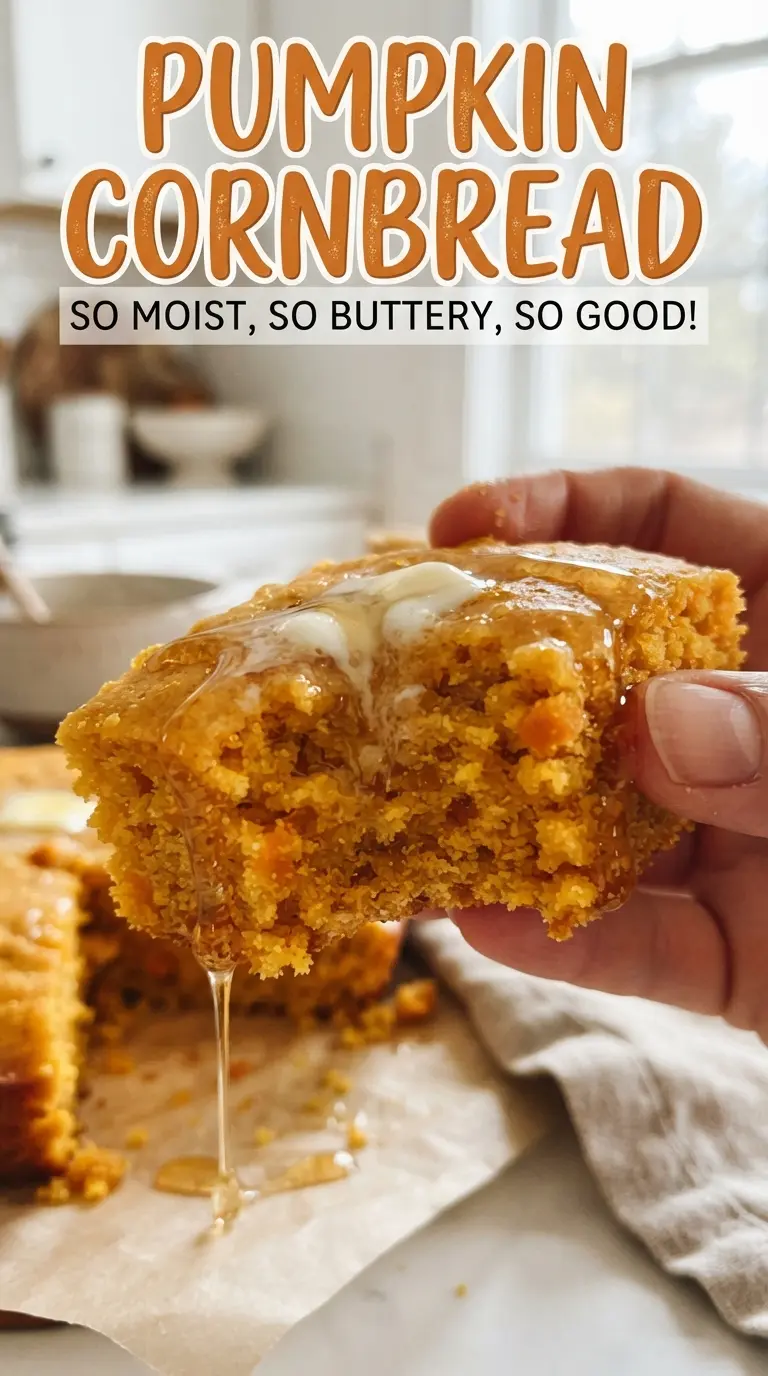
- Yellow cornmeal — This is what gives the cornbread its name and its gentle grain. A medium grind gives the best texture here; fine cornmeal makes the crumb softer, while coarse cornmeal adds more bite.
- All-purpose flour — The flour holds the loaf together so the pumpkin doesn’t make it fragile. You can swap in a 1:1 gluten-free baking blend if needed, but use one that includes xanthan gum so the bread still slices cleanly.
- Pumpkin puree — Use pure pumpkin, not pumpkin pie filling. The puree adds moisture, color, and a mellow earthiness that makes the cornbread taste fuller without making it taste like dessert.
- Buttermilk — This keeps the crumb tender and adds a faint tang that balances the brown sugar and maple syrup. If you don’t have it, stir 2 teaspoons of lemon juice or vinegar into a scant 3/4 cup milk and let it sit for 5 minutes before using.
- Butter and maple syrup — Melted butter gives the cornbread richness and helps the edges brown, while maple syrup rounds out the pumpkin spice without making the loaf overly sweet. If you want a more savory version, cut the maple syrup to 1 tablespoon and add a pinch more salt.
How to Mix the Batter So It Stays Tender
Start with the dry ingredients
Whisk the cornmeal, flour, brown sugar, baking powder, salt, and pumpkin pie spice until everything looks evenly distributed. That quick whisk keeps the leavener from clumping, which matters because baking powder needs to be spread through the batter evenly or you’ll get uneven lift. This also helps break up any brown sugar lumps before the wet ingredients go in.
Bring the wet mixture together smoothly
In a separate bowl, whisk the pumpkin puree, eggs, buttermilk, melted butter, and maple syrup until the mixture looks glossy and uniform. The butter should be melted but not hot enough to scramble the eggs or seize when it hits the pumpkin. If you see little butter streaks, keep whisking a few seconds longer so the fat emulsifies into the batter instead of pooling in spots.
Stop mixing the moment the batter comes together
Pour the wet ingredients into the dry and stir just until no dry pockets remain. The batter should look thick and a little rough, not whipped and silky. Spread it into the pan right away, because the baking powder starts working as soon as it gets wet and the batter holds its best lift when it goes into the oven without delay.
Bake until the center is set, not dry
At 400°F, the top should turn deep golden and the edges should pull slightly from the pan after about 22 to 25 minutes. A toothpick should come out clean or with a few moist crumbs, and the middle should spring back lightly when pressed. If the top is browning too fast before the center is done, tent it loosely with foil for the last few minutes.
Three Ways to Make This Pumpkin Cornbread Work for Your Table
Bake It in Cast Iron for Crisp Edges
An 10-inch cast iron skillet gives the edges a deeper, crisper crust than an 8×8-inch pan. Preheat and grease the skillet before adding the batter if you want that little sizzle when it hits the pan. The center stays soft, but the outer edges come out with more texture and better browning.
Make It Dairy-Free Without Losing Tenderness
Use melted vegan butter and a plant-based milk mixed with 2 teaspoons of lemon juice for the buttermilk. The cornbread will still bake up soft, though the flavor will be a little less rich and the crust slightly less browned. A neutral oat milk or soy milk works best because it doesn’t fight the pumpkin spice.
Lean Sweeter for Breakfast
Add another tablespoon of maple syrup and serve it with maple butter or honey butter. That pushes the bread closer to coffee-cake territory without changing the crumb. It’s still sturdy enough to slice, but the sweetness makes it a better fit for brunch than for chili.
Storage and Reheating
- Refrigerator: Store leftovers in an airtight container for up to 4 days. The crumb stays moist, though the edges soften a bit after day one.
- Freezer: Freeze wrapped squares for up to 2 months. Wrap them individually so you can thaw just what you need without drying out the whole batch.
- Reheating: Warm slices in a 300°F oven for 8 to 10 minutes or toast them lightly in a skillet. The common mistake is microwaving too long, which makes the crumb rubbery instead of soft.
Answers to the Questions Worth Asking
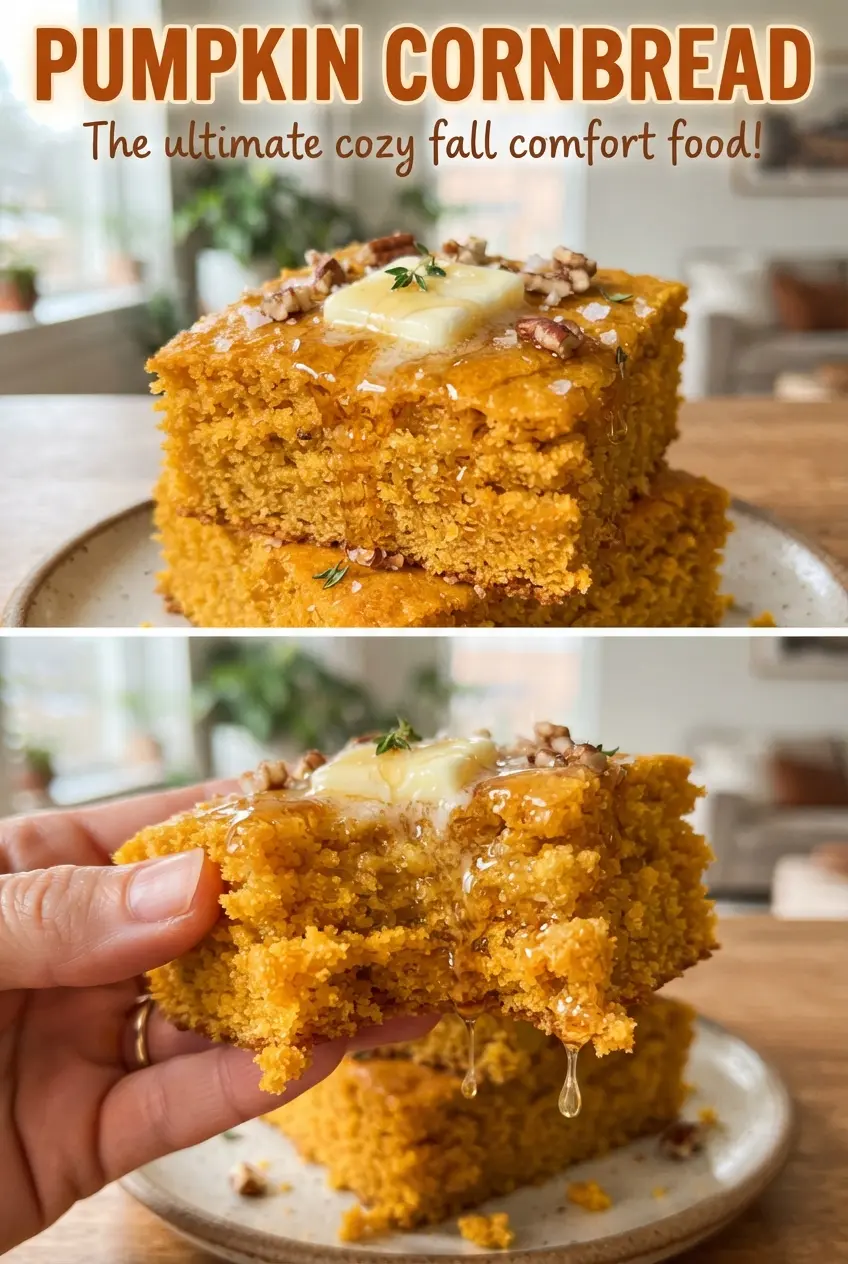
Pumpkin Cornbread
Ingredients
Equipment
Method
- Preheat the oven to 400F, then grease an 8x8-inch pan or 10-inch cast iron skillet. The pan should be lightly greased so the cornbread releases cleanly.
- Whisk yellow cornmeal, all-purpose flour, brown sugar, baking powder, salt, and pumpkin pie spice in a bowl until evenly combined. Stop when the color and spice distribution look uniform.
- Whisk pumpkin puree, eggs, buttermilk, melted butter, and maple syrup until smooth and fully incorporated. Look for no streaks of pumpkin or butter.
- Stir the wet mixture into the dry just until combined. Keep mixing to a minimum so the batter stays thick and tender.
- Spread the batter into the greased pan and level the top. Make the surface even so it bakes consistently.
- Bake for 22-25 minutes at 400F, until golden and a toothpick comes out clean. The edges should look set and slightly darker than the center.
- Serve warm with butter. The crumb should feel soft and moist right out of the oven.


