
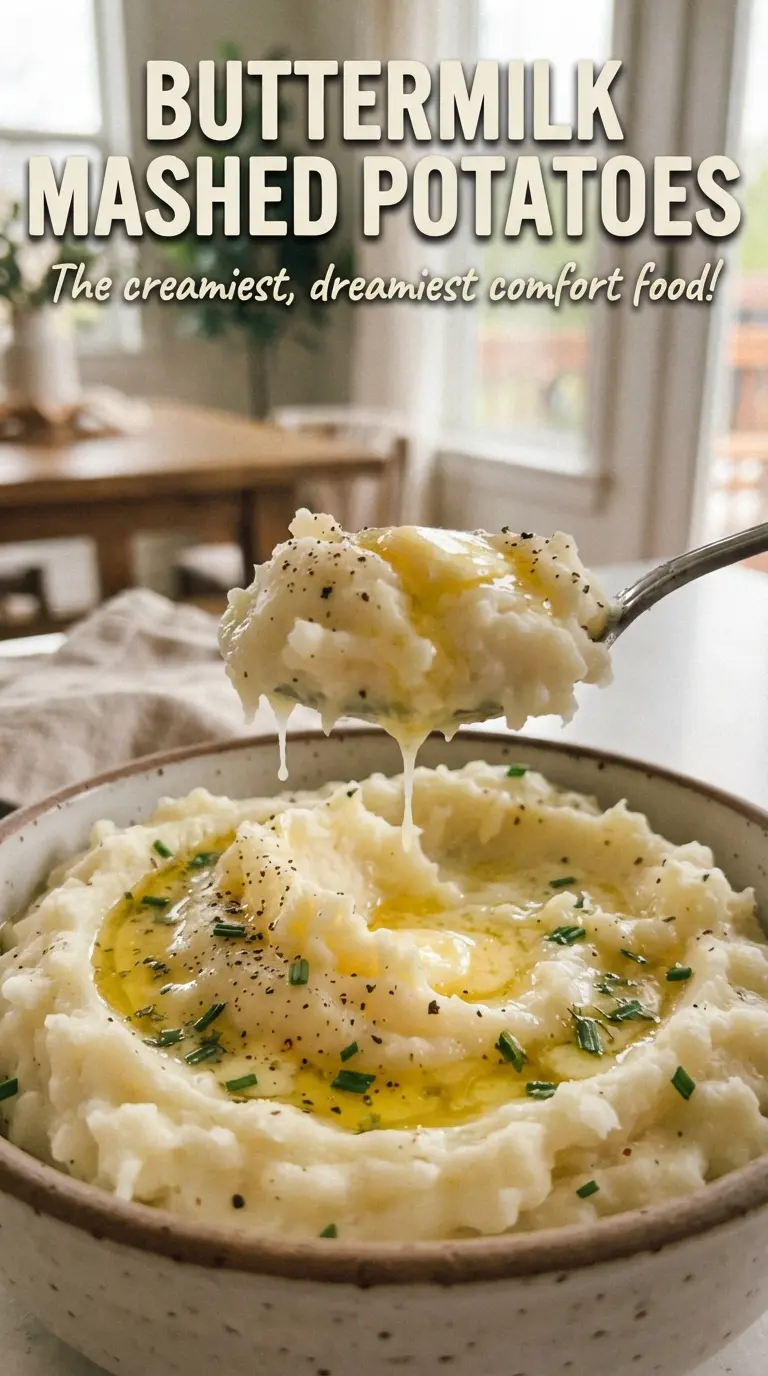
Buttermilk mashed potatoes land with that balance people remember: fluffy, buttery, and gently tangy instead of flat or heavy. The texture stays soft and cloudlike, but there’s enough body that they hold a spoonful of butter on top without turning gluey. They fit beside roast chicken, ham, meatloaf, or a simple pan of greens, and they disappear fast because the flavor has a little more life than standard mashed potatoes.
The trick is in the potatoes and the temperature of the dairy. Yukon golds mash into a naturally creamy base without needing a lot of extra work, and drying them briefly in the hot pot keeps the finished mash from getting watery. Room-temperature buttermilk and warmed milk blend in smoothly; if they’re cold, the potatoes cool too fast and the butter can tighten up instead of melting evenly.
Below, I’ve included the part that matters most: how to keep mashed potatoes fluffy instead of pasty, plus the small swaps that work if you’re cooking around what’s already in the kitchen.
The potatoes came out light and fluffy, and the buttermilk gave them this tangy finish that made them taste richer without being heavy. I loved that they held up for dinner and reheated without turning gummy.
Save these tangy buttermilk mashed potatoes for the dinners that need a fluffy, buttery side with a little Southern bite.
The Step Most People Skip That Makes Mashed Potatoes Dense
Mashed potatoes turn heavy when too much moisture stays trapped in the pot. Boiling gets them tender, but the real difference comes after draining: putting the potatoes back over low heat for a minute lets steam escape from the surface so the mash can absorb the butter and dairy instead of thinning out. That short drying step is the line between silky and soupy.
The other common mistake is working the potatoes too hard. Once they’re mashed, stop as soon as the texture looks smooth and no dry bits remain. Overmixing breaks down the starch and gives you that paste-like texture people blame on the potatoes, when the real issue is usually the handling.
What the Potatoes, Dairy, and Butter Each Bring to the Bowl
- Yukon gold potatoes — These are the backbone here. They break down into a naturally creamy mash with enough starch to thicken the bowl without turning gluey. Russets work too, but they’ll give you a lighter, drier texture that needs a little more dairy to feel rich.
- Buttermilk — This is what makes the potatoes taste awake instead of flat. It adds tang and a little body, but it needs to go in at room temperature so it blends without cooling the potatoes down too fast. Cold buttermilk can make the butter seize slightly and leave the mash uneven.
- Whole milk — The milk smooths everything out and softens the tang from the buttermilk. Warming it first matters because it helps the potatoes stay hot while you stir, which keeps the butter fully melted and the final texture creamy.
- Butter — The butter coats the starch before the dairy goes in, which helps lock in that velvety texture. Use unsalted so you control the seasoning at the end. Salted butter can push the dish over the edge once the potatoes are fully seasoned.
- Chives — They’re not just garnish. Their fresh onion note cuts through the richness and gives the bowl a clean finish, especially if you’re serving these with roast meat or gravy.
Building the Creamy Finish Without Breaking the Potatoes
Cooking the Potatoes Evenly
Start the cubed potatoes in cold salted water so they heat through at the same rate. If you drop them into already boiling water, the outside softens too fast and the centers lag behind, which leaves you with chunks that mash unevenly. Cook until a fork slips in with no resistance, but stop before they start falling apart in the water.
Drying the Potatoes Before Mashing
Drain well, then return the potatoes to the hot pot over low heat for about a minute. You’ll hear a faint sizzle as extra moisture cooks off. If you skip this, the mash can turn loose and watery, and you’ll be tempted to keep stirring, which makes the texture heavier than it should be.
Working in the Butter and Dairy
Mash with the butter first, before adding the buttermilk and milk. That order helps the fat coat the potatoes and gives you a smoother base. Stir in the buttermilk and warm milk gently, just until the mixture turns creamy. Once the dairy is in, don’t let the pot boil; buttermilk can separate if it gets too hot, and the texture will lose that plush finish.
Seasoning and Finishing
Taste after the dairy is fully mixed in, then season with salt and black pepper. The potatoes should taste rich first, then bright from the tang, then clean at the end from the chives. Sprinkle the chives over the top right before serving so they stay fresh and green instead of sinking into the mash.
How to Adapt These Buttermilk Mashed Potatoes for Different Tables
Dairy-Free Version
Use a good unsalted plant-based butter and replace the buttermilk and milk with unsweetened oat milk plus 1 tablespoon lemon juice or vinegar stirred in ahead of time. The potatoes will still be creamy, but they’ll taste a little less rich and a little more bright. Warm the dairy-free milk substitute before adding it so the mash stays soft instead of tightening up.
Extra-Smooth Restaurant-Style Mash
If you want a finer texture, pass the drained potatoes through a ricer before adding the butter. That gives you a lighter, fluffier bowl with fewer lumps than a standard masher. Don’t use a blender or food processor; those tools turn the starch gummy in seconds.
Garlic Buttermilk Mashed Potatoes
Simmer 3 to 4 peeled garlic cloves with the potatoes, then mash them in along with the butter. The garlic melts into the background and gives the potatoes a deeper savory note without overpowering the tang. Roasted garlic works too, but it adds sweetness instead of the sharper finish from simmered cloves.
Storage and Reheating
- Refrigerator: Store in an airtight container for up to 4 days. The potatoes will thicken as they chill.
- Freezer: They freeze fairly well for up to 1 month, though the texture gets a little softer after thawing. Freeze flat in a sealed bag or container for easier reheating.
- Reheating: Reheat gently on the stove or in the microwave with a splash of milk, stirring often. High heat is the main mistake here; it can make the potatoes stiff or separate instead of turning creamy again.
Questions I Get Asked About This Recipe
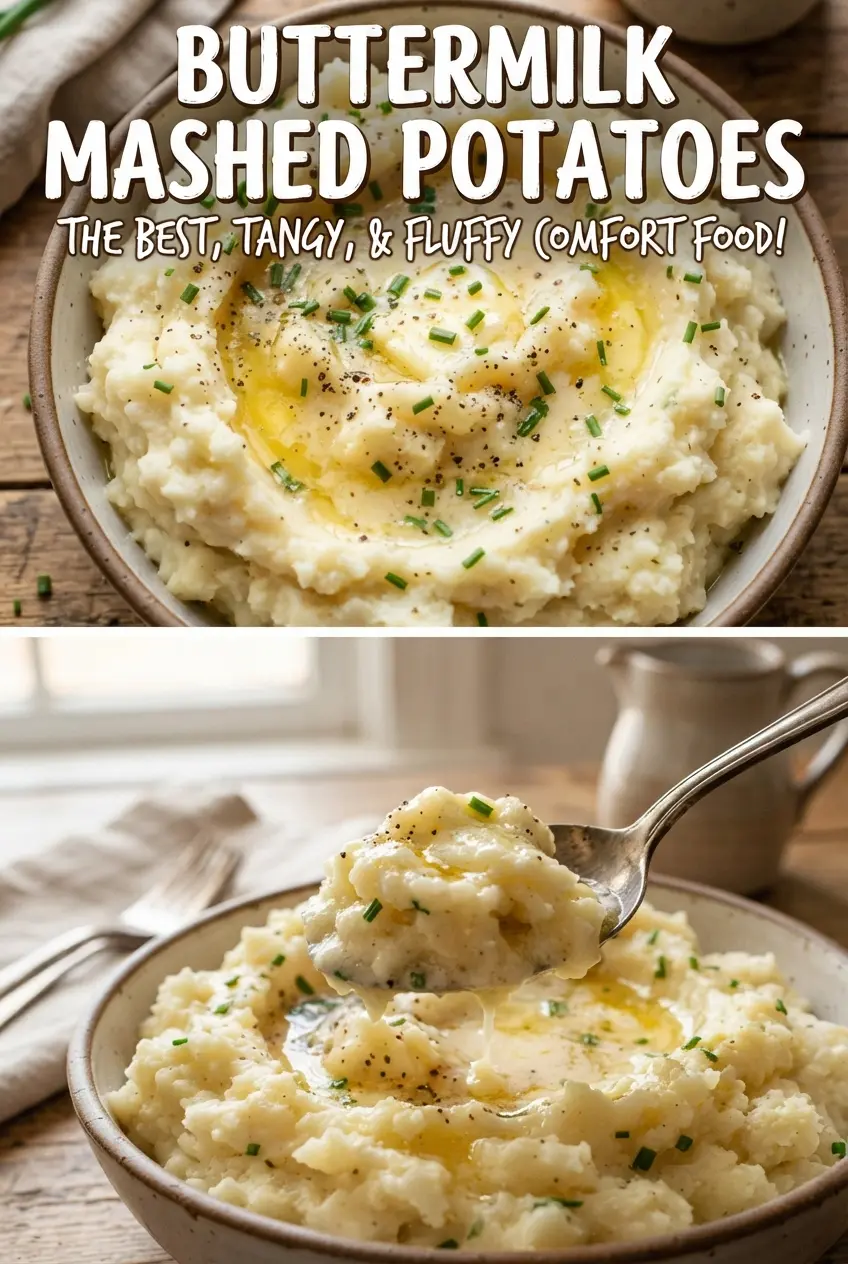
Buttermilk Mashed Potatoes
Ingredients
Equipment
Method
- Boil the peeled and cubed Yukon gold potatoes in salted water for 15–18 minutes, until tender. You should be able to pierce a cube easily with a fork.
- Drain the potatoes completely, then return them to the pot over low heat for 1 minute to dry. You’ll see a little steam rise as excess moisture evaporates.
- Mash the potatoes with the unsalted butter until smooth. Continue mashing until there are no visible chunks.
- Stir in the room-temperature buttermilk and the warmed whole milk until creamy. Do not boil once the buttermilk is in—keep the heat gentle or off heat.
- Season with salt and black pepper, then top with chopped fresh chives. Finish with a visible sprinkle of pepper and green flecks of chives.


