
Cranberry pistachio bread bakes into a tender, fragrant loaf with bright pockets of tart cranberry and a little crunch from toasted pistachios in every slice. The crumb stays soft and moist, but it still cuts cleanly once cooled, and that orange glaze on top adds just enough sweetness to pull the whole loaf together. It’s the kind of bake that looks bakery-made when you slice into it, even though the method is straightforward enough for an ordinary afternoon.
The trick is in the orange zest and sugar rubbed together first. That quick step pulls the oils out of the zest and spreads the citrus flavor through the batter instead of leaving it trapped in one spot. Yogurt or sour cream keeps the loaf plush, while the melted butter gives it a rich, dense tenderness without making it heavy. The cranberries stay bright because the batter is thick enough to hold them in place instead of letting them sink.
Below, I’ve added the small details that matter most: how to keep the loaf from turning dry, what to do if you’re using frozen cranberries, and how to get a glaze that drizzles instead of disappearing into the crust.
The orange zest in the sugar made such a difference, and the loaf stayed moist for days. My pistachios stayed crunchy on top and the cranberries gave every slice a nice tart pop.
Save this cranberry pistachio bread for the days when you want a tender orange-scented loaf with tart berries, crunchy pistachios, and a simple glaze.
The Loaf That Stays Tender Without Turning Heavy
This bread depends on balance. The yogurt or sour cream brings acidity and moisture, which keeps the crumb soft, while the melted butter adds richness without the airiness you’d get from creaming softened butter and sugar. If the batter looks a little thick after the dry ingredients go in, that’s a good sign. It should hold the cranberries and pistachios without becoming pourable.
The most common mistake here is overmixing once the flour goes in. Stir until the last streaks disappear, then stop. Overworked batter turns this kind of quick bread tough and tight. The other thing that matters is cooling time. Slice it too soon and the crumb will compress; let it cool fully and it sets into neat, clean slices.
What the Cranberries, Pistachios, and Orange Zest Are Each Doing
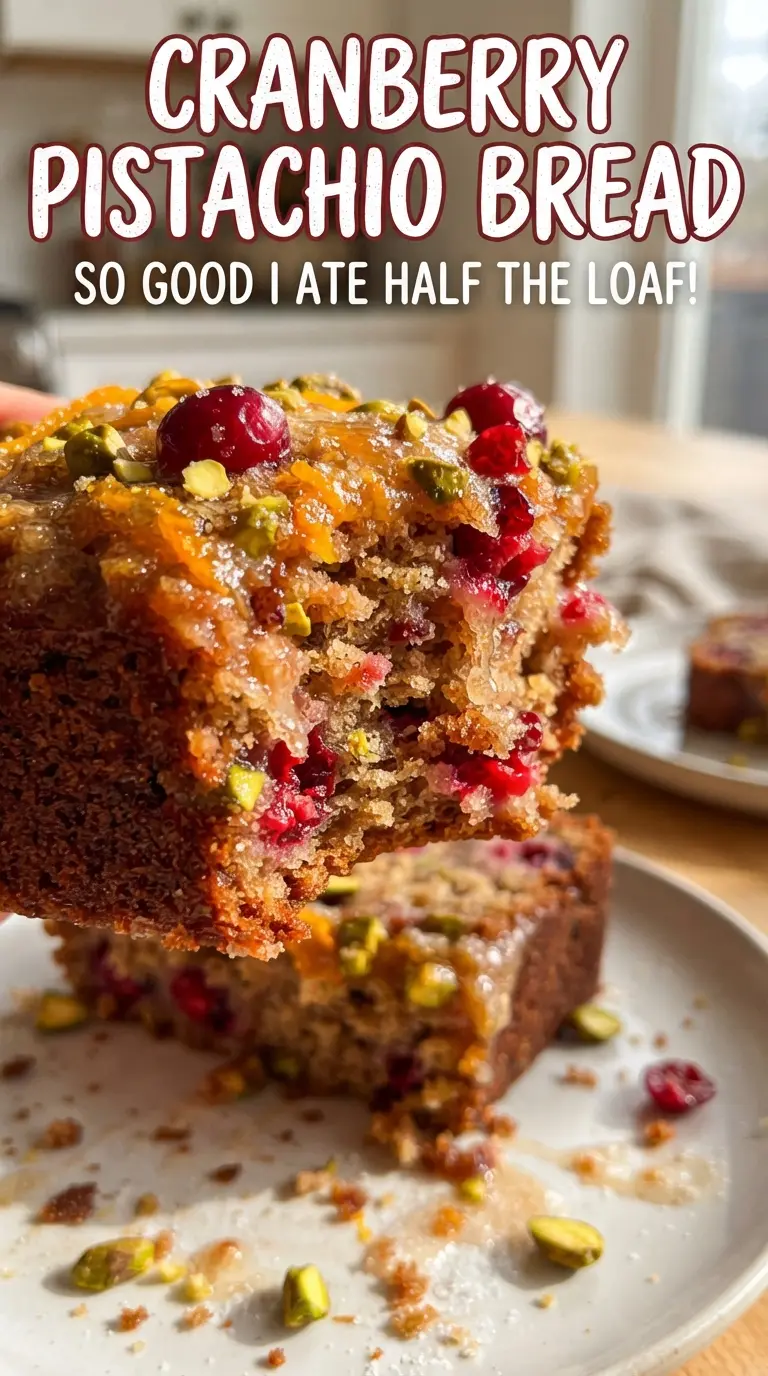
- Orange zest — Rubbing it into the sugar wakes up the citrus oils and spreads the flavor evenly through the loaf. If you skip that step and just stir zest in at the end, the orange tastes flatter.
- Yogurt or sour cream — Either one keeps the crumb moist and gives the bread enough tang to balance the sweet glaze. Plain full-fat yogurt gives a slightly lighter texture; sour cream makes the loaf a touch richer.
- Cranberries — Fresh or frozen both work. If you use frozen berries, add them straight from the freezer and fold them in quickly so they don’t bleed too much color into the batter.
- Pistachios — Their mild sweetness and crunch make the loaf feel complete. Buy shelled pistachios if you can; pre-chopped nuts often include more dusty bits, which don’t add much texture.
- Orange juice glaze — This is more than decoration. It adds a bright top note and keeps the loaf from leaning too sweet. Add the juice a little at a time so the glaze stays thick enough to drizzle instead of soaking straight in.
Getting the Batter Mixed, the Fruit Folded In, and the Glaze Right
Building the Citrus Base
Start by rubbing the sugar and orange zest together until the sugar looks slightly damp and smells strongly of orange. That takes just a minute, but it changes the loaf from mildly scented to clearly citrusy. Whisk in the eggs, yogurt, melted butter, orange juice, and vanilla until the mixture looks smooth and glossy. If the butter is hot, let it cool a bit first or you’ll risk scrambling the eggs.
Folding the Dry Ingredients
Add the flour, baking powder, baking soda, and salt, then fold until you no longer see dry pockets. Don’t chase perfect smoothness here; a few small lumps are better than overmixing. The batter should be thick and spoonable. If it looks thin, the loaf can bake up dense and the fruit may sink.
Adding the Cranberries and Pistachios
Fold in the cranberries and half the pistachios just until they’re distributed. A gentle hand keeps the berries intact and prevents the nuts from breaking into dust. Spoon the batter into the prepared pan and spread it evenly into the corners. If you’re using frozen cranberries, work fast so they stay cold and don’t streak the batter pink.
Baking Until the Crumb Sets
Bake at 350°F for 55 to 60 minutes, until the top is deeply golden and a toothpick comes out clean from the center. If the top browns too quickly before the middle is done, lay a loose piece of foil over the pan for the last 15 minutes. The loaf should spring back lightly when pressed in the center, and the edges will just start pulling from the pan.
Finishing with Glaze and Pistachios
Whisk the powdered sugar with the orange juice until you have a smooth glaze that drips slowly off the spoon. If it looks too thick, add a few drops more juice; if it runs off instantly, it needs more powdered sugar. Drizzle it over the fully cooled loaf, then scatter the remaining pistachios on top so they stick before the glaze sets.
How to Change This Loaf for Different Pantries and Diets
Dairy-Free Cranberry Pistachio Bread
Use a thick unsweetened dairy-free yogurt in place of the yogurt or sour cream, and swap the butter for melted coconut oil or a neutral plant-based butter. Coconut oil adds a faint flavor and sets a little firmer, while neutral butter alternatives keep the loaf closer to the original texture.
Gluten-Free Version That Still Slices Cleanly
Replace the all-purpose flour with a 1:1 gluten-free baking blend that includes xanthan gum. The loaf will still be tender, but it may need the full bake time and a slightly longer cooling period before slicing.
Swap the Nuts for Something Milder
If pistachios aren’t your thing, use chopped pecans or walnuts. Pecans bring a softer, buttery crunch, while walnuts add a slightly bitter edge that plays well with the tart cranberries and orange glaze.
Storage and Reheating
- Refrigerator: Store tightly wrapped for up to 5 days. The crumb stays moist, though the glaze will soften a little.
- Freezer: This loaf freezes well without the glaze. Wrap the cooled bread tightly in plastic and foil, then freeze for up to 2 months. Glaze after thawing for the best texture.
- Reheating: Warm slices in the microwave for 10 to 15 seconds or toast lightly in a toaster oven. Don’t overheat it or the crumb will dry out and the cranberries can turn chewy.
Answers to the Questions Worth Asking
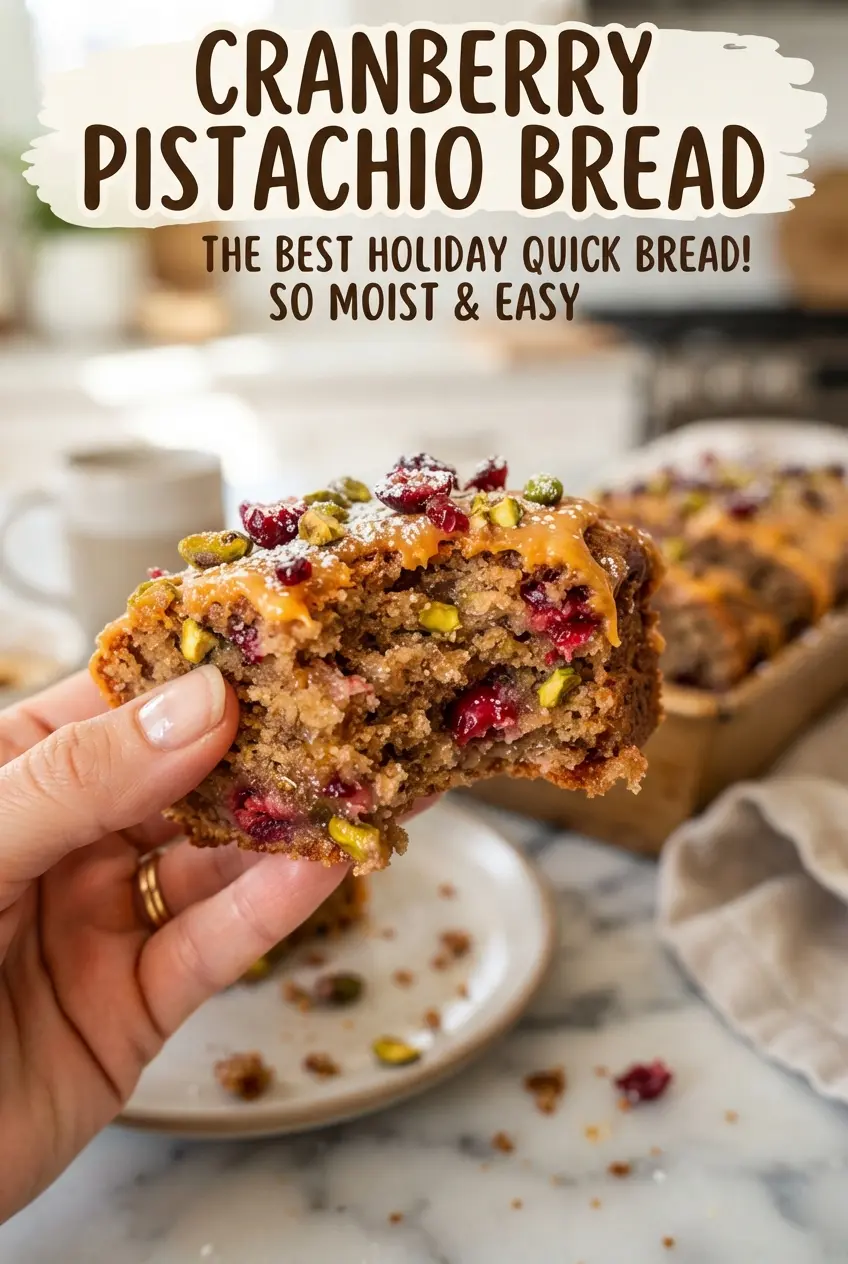
Cranberry Pistachio Bread
Ingredients
Equipment
Method
- Preheat oven to 350F. Grease and line a 9x5-inch loaf pan.
- Rub sugar and orange zest together until fragrant. Whisk in eggs, yogurt or sour cream, melted butter, orange juice, and vanilla.
- Whisk all-purpose flour, baking powder, baking soda, and salt together. Fold into the wet mixture just until combined (do not overmix).
- Fold in cranberries and half of the chopped pistachios. Spread the batter into the pan so it sits evenly.
- Bake at 350F for 55-60 minutes, until a toothpick comes out clean. Cool completely before glazing.
- Whisk powdered sugar with 2 tablespoons orange juice until smooth. Drizzle over the loaf and sprinkle with the remaining pistachios.


