
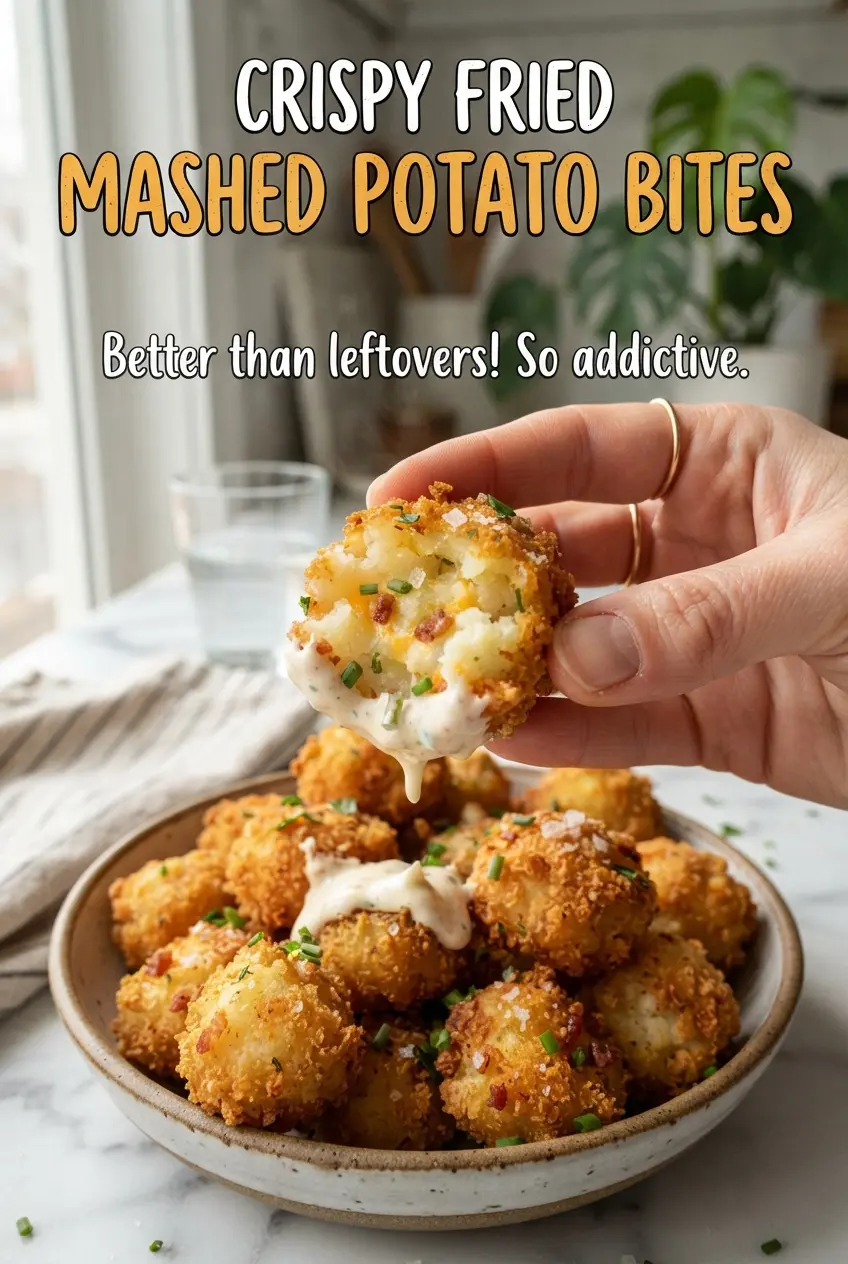
Golden, crunchy, and soft in the middle, these crispy fried mashed potato bites turn leftover mashed potatoes into the kind of appetizer people hover around until the plate is empty. The panko shell stays light and shattery, while the inside sets up into a creamy, cheesy center with little pops of green onion in every bite. They taste like something you meant to make from the start, not something rescued from the back of the fridge.
The trick is using cold mashed potatoes so the mixture holds its shape when you roll it. Cheddar gives the filling enough richness to taste complete, and the extra flour in the mix keeps the bites from turning loose in the hot oil. The double dredge matters here too: flour gives the egg something to grab, and panko gives you that deep, crackly crust that regular breadcrumbs can’t match.
Below, I’ve included the spots where these bites usually fall apart — too-soft potato mixture, oil that isn’t hot enough, and breading that slides off — plus the small adjustments that keep them crisp from the first batch to the last.
The filling held together after chilling, and the panko got crisp without falling off in the oil. We dipped them in sour cream and they disappeared in minutes.
Save these crispy fried mashed potato bites for the next time you’ve got leftover mashed potatoes and want a crunchy appetizer with a cheesy center.
The Part That Keeps the Bites from Falling Apart
Most mashed potato bites fail before they ever hit the pan. The mixture is too warm, too loose, or too wet from a mash that was already heavy on milk or butter. Cold potatoes firm up enough to roll cleanly, and the added flour gives the filling structure without turning it dense. If your base feels soft enough to slump, chill it before shaping. That pause is what keeps the bites round instead of flattening into the oil.
The other piece that matters is the coating order. Flour on the outside dries the surface just enough for the egg to cling, and panko sticks best when the potato ball is dry on the surface. Skip that first flour step and you’ll get bare spots after frying. The oil also has to stay at 350°F; if it drops too low, the crust absorbs oil before it crisps, and the centers can turn greasy instead of creamy.
What Each Ingredient Is Actually Doing in These Bites

- Cold leftover mashed potatoes — This is the backbone of the recipe. Fresh mashed potatoes are usually too warm and loose, which makes shaping difficult. If yours are especially soft, chill them longer before rolling.
- Shredded cheddar — Cheddar melts into the potatoes and gives the center a savory, slightly tangy richness. Mild cheddar melts smoothly, but sharp cheddar gives more flavor. Pre-shredded works, though freshly shredded melts a little cleaner.
- Green onions — They cut through the richness and keep the filling from tasting flat. Slice them fine so they disappear into the mixture instead of poking out and breaking the coating.
- Flour in the filling and for dredging — The flour inside the mixture helps the balls hold together, and the dredging flour helps the egg layer stick. All-purpose flour is the right tool here; swapping in a starch like cornstarch changes the texture and doesn’t give the same binding strength.
- Panko breadcrumbs — Panko is what gives these bites their crisp shell. Regular breadcrumbs will coat them, but they won’t give you the same airy crunch. Crushing the panko smaller is fine if you want a tighter crust.
- Garlic powder — This seasons the crust without adding moisture. It works better than fresh garlic here because fresh garlic can burn in the hot oil.
- Vegetable oil — Use a neutral oil with a high smoke point so the coating fries cleanly. Canola or peanut oil work too. You need enough depth for the bites to float slightly and brown evenly.
Rolling, Bread Crumbing, and Frying Without Losing the Coating
Mixing the Base
Stir the potatoes, cheddar, green onions, egg, and flour until the mixture looks uniform and starts to hold together when pressed. Stop mixing once everything is combined; overworking mashed potatoes can make them gummy, especially if they were already heavily stirred before chilling. If the mixture still feels soft, it needs time in the fridge before shaping.
Shaping and Chilling
Roll the mixture into 1 1/2-inch balls with lightly floured hands so the outside stays smooth. Set them on a tray and chill for 20 minutes. That short rest firms the fat in the potatoes and cheese, which helps the balls keep their shape when they hit the hot oil. If they feel sticky now, they’ll be worse after breading.
Building the Coating
Set up your flour, beaten eggs, and panko in separate bowls. Coat each ball in flour first, then egg, then panko, pressing gently so the crumbs actually adhere. A patchy coating usually means the potato surface was too wet or the flour layer was too thin. Work with one hand for dry ingredients and one hand for wet if you want to keep your fingers from turning into breaded glue.
Frying to a Deep Golden Shell
Heat 2 inches of oil to 350°F and fry the bites in batches for 2 to 3 minutes. They should turn deep golden, not pale blond, before you pull them out. Crowding the pan drops the oil temperature fast, which gives you greasy potatoes instead of crisp ones. Drain them on paper towels and serve right away with sour cream while the crust is still audibly crisp.
How to Adapt These for Different Kitchens and Different Crowds
Bake Them Instead of Frying
Brush or spray the breaded bites with oil and bake at 425°F until the outside is crisp and browned, about 18 to 22 minutes, turning once halfway through. They won’t get quite as shattery as fried bites, but they’ll still hold a crunchy shell and a creamy center. The key is enough oil on the coating so the panko browns instead of drying out.
Make Them Gluten-Free
Use a 1:1 gluten-free flour blend in the filling and for dredging, then swap in gluten-free panko. The texture stays close to the original if you keep the chilling step and don’t skip the flour coat. The one difference you may notice is a slightly more delicate crust, so handle the bites gently when turning them in the oil.
Use a Different Cheese
Swap the cheddar for pepper jack, Monterey Jack, or a little smoked gouda if you want a different flavor direction. Softer cheeses melt more gently but can make the filling looser, so keep the potato mixture cold before shaping. Stronger cheeses give you more flavor without needing extra salt.
Storage and Reheating
- Refrigerator: Store leftovers in an airtight container for up to 3 days. The crust softens as it sits, so don’t expect the same crunch straight from the fridge.
- Freezer: Freeze the breaded, unfried bites on a tray, then transfer them to a freezer bag for up to 2 months. Fry straight from frozen, adding a minute or two as needed. Already-fried bites freeze, but the coating won’t stay as crisp.
- Reheating: Reheat in a 400°F oven or air fryer until hot and crisp again. Avoid the microwave if you want the coating to stay crunchy; it steams the crust and turns the center heavy.
Questions I Get Asked About This Recipe
Crispy Fried Mashed Potato Bites
Ingredients
Equipment
Method
- In a mixing bowl, combine cold leftover mashed potatoes, shredded cheddar, finely sliced green onions, 1 large egg, and 1/4 cup all-purpose flour until fully combined and cohesive.
- Roll the mixture into 1 1/2-inch balls, place them on a tray, and chill for 20 minutes until firm.
- Set up three bowls for dredging: all-purpose flour, beaten large eggs, and panko breadcrumbs mixed with garlic powder.
- Coat each chilled ball in flour, then dip into the beaten eggs, and finish by rolling in the panko mixture so it adheres evenly.
- Heat vegetable oil in a Dutch oven to 350°F, then fry the bites in batches for 2 to 3 minutes until deep golden.
- Drain the fried bites on paper towels and serve hot with sour cream for dipping.


