
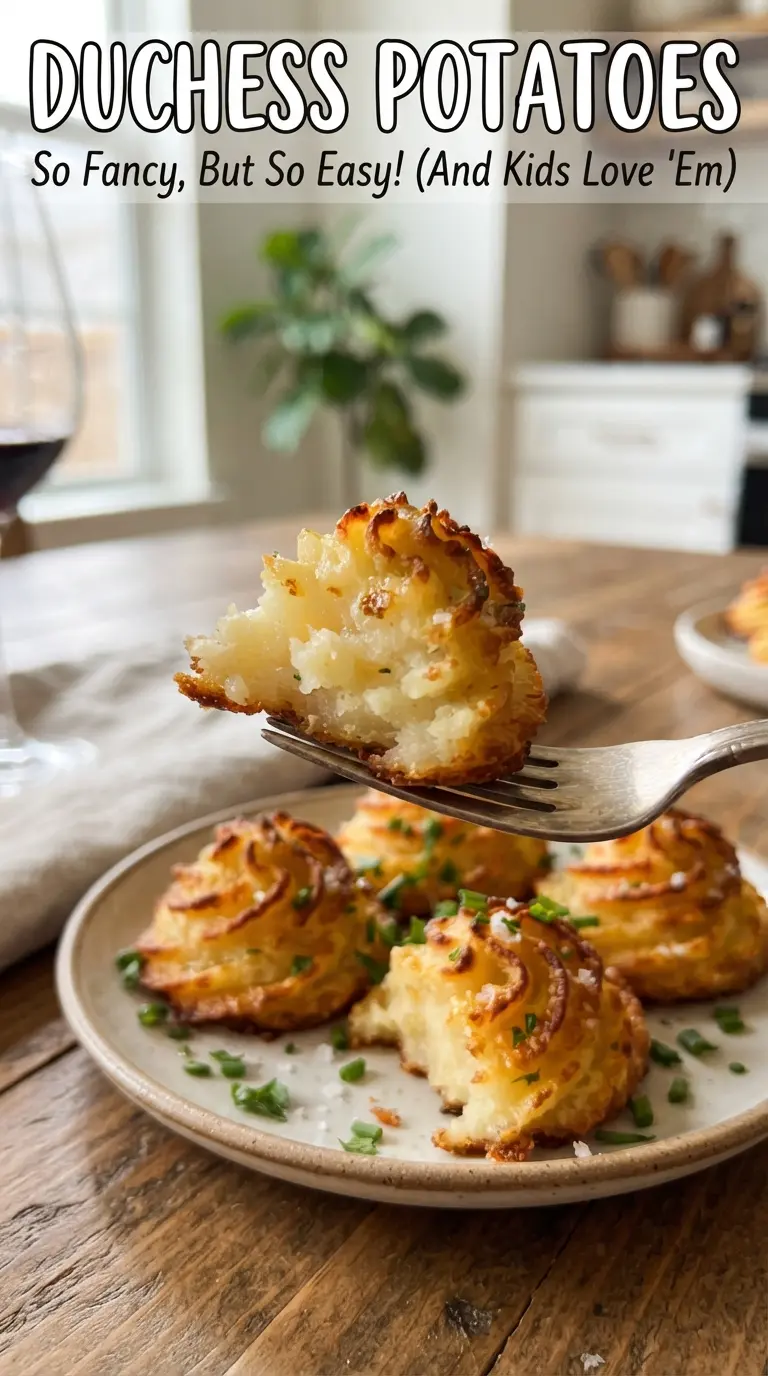
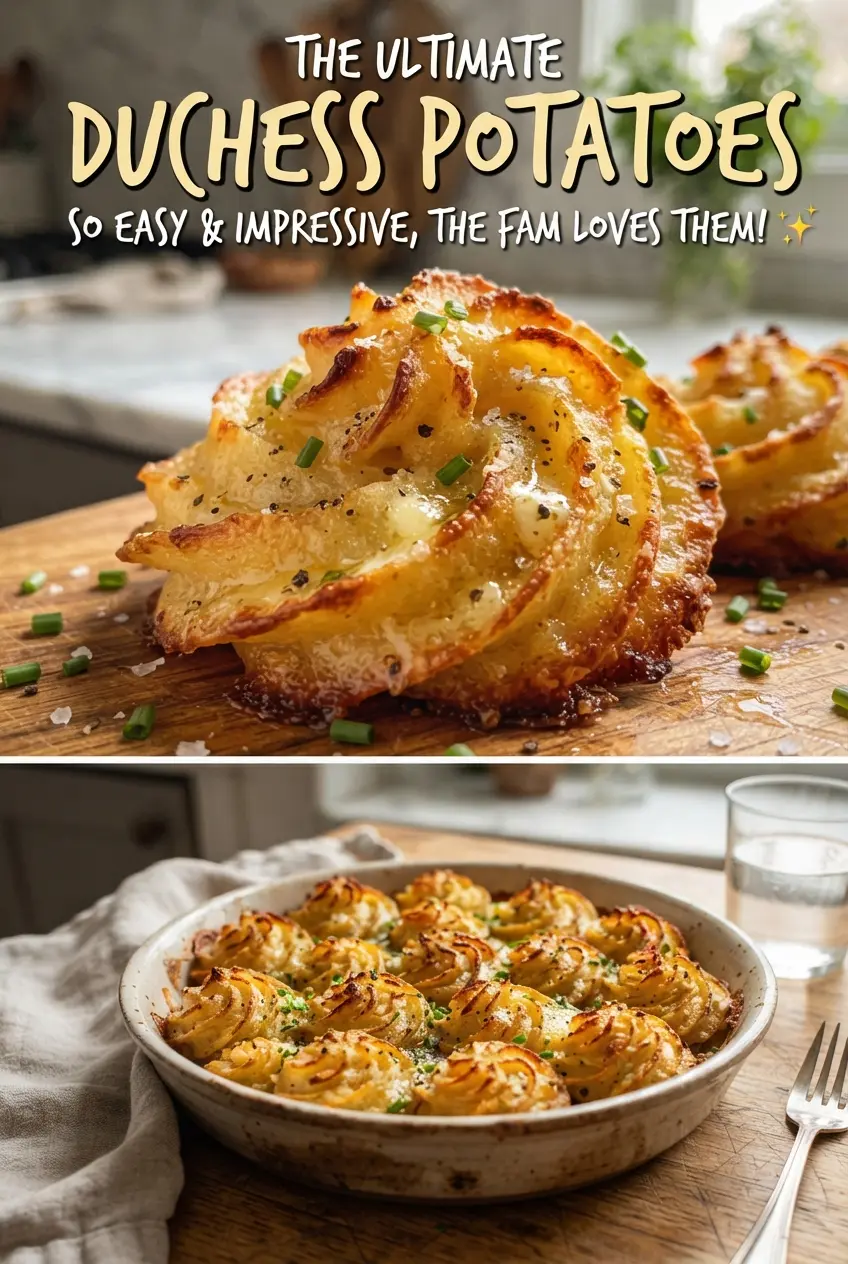
Duchess potatoes bake into crisp, golden-edged swirls with a tender, creamy center that feels a little dressed up without being fussy. The piped ridges catch extra heat in the oven, so each bite gives you that contrast people love: browned edges first, then fluffy potato beneath. They look special on the plate, but they’re built from familiar ingredients and a straightforward method.
The part that matters most is the potato texture. Yukon golds give enough richness to stay smooth, and drying the potatoes after boiling keeps the mixture from turning loose. A ricer makes the base light instead of gluey, and the egg yolks help the swirls hold their shape while the butter and cream keep them plush. Bake them long enough and the ridges turn deeply colored, not pale and soft.
Below you’ll find the one technique detail that keeps the piping mixture stable, plus a few smart swaps if you need to change the cheese or make them ahead. If you’ve ever had duchess potatoes collapse or spread, the fixes here matter.
The piping held its shape beautifully and the edges got that deep golden crunch without drying out. I used Parmesan, and the potatoes came out light, not dense at all.
Love those golden duchess potato swirls? Save this recipe for the holiday side dish that pipes neatly and bakes up crisp.
The Step That Keeps Duchess Potatoes From Going Soft
The biggest mistake with duchess potatoes is adding too much moisture before piping. If the potatoes are even a little wet, the swirls slump in the oven and lose those sharp ridges that make them worth serving. Drying them in the pot for a minute after draining sounds small, but it changes the texture enough to matter.
Riced potatoes matter here too. Mashed potatoes can work in a pinch, but a ricer gives you a finer, lighter base with no lumps to tear the piping bag. Once the butter, yolks, cream, and cheese go in, stop beating as soon as the mixture looks smooth; overmixing makes the potatoes dense and heavy.
- Yukon gold potatoes — Their natural creaminess gives the swirls a rich, almost custardy center. Russets can work, but they’re drier and a little more fragile after piping.
- Egg yolks — These are what help the potatoes set and hold their shape in the oven. Whole eggs add too much moisture and make the mixture looser.
- Gruyere or Parmesan — Gruyere melts a little silkier, while Parmesan brings a sharper, saltier edge. Either one supports the potatoes without overpowering them.
- Melted butter for brushing — This is what helps the ridges brown instead of drying out. Don’t skip it if you want the tops crisp and deeply colored.
What Each Ingredient Is Actually Doing in the Pan
The potatoes are the structure, but the butter, yolks, and cream decide whether the texture lands light or heavy. Butter adds flavor and softness; yolks help the swirls hold their shape; cream loosens the mixture just enough to pipe cleanly. If you add too much cream, the potatoes spread. If you skip the cheese, the flavor turns flatter and the tops color a little less deeply.
Nutmeg is subtle, but it gives the potatoes that classic French-side-dish warmth that tastes familiar even if you can’t quite name it. Fresh thyme goes on at the end for a clean herbal note after baking. Use it as garnish, not inside the mixture, so it stays bright instead of disappearing into the potatoes.
Building the Swirls So They Bake Tall, Not Flat
Dry the Potatoes Before Anything Else
Drain the potatoes well, then return them to the warm pot for about a minute over low heat. You’re driving off surface steam before it gets trapped in the mixture. If you skip this step, the potatoes can look fine in the bowl and then slump on the baking sheet. The goal is a dry, fluffy base that still feels smooth.
Mix Until Smooth, Then Stop
Press the potatoes through a ricer while they’re still hot enough to move easily, then beat in the butter, yolks, cream, cheese, salt, pepper, and nutmeg. The mixture should be thick enough to hold a peak when you lift the spoon, but soft enough to pipe without breaking the bag. If it looks loose, don’t add more cream; chill it briefly and check again. Overworking potatoes makes them gummy, and that texture only gets worse in the oven.
Pipe With Tall Ridges, Not Wide Mounds
Use a large star tip and pipe onto a parchment-lined baking sheet, pulling up at the end to create height. Tall swirls brown better than squat ones because the ridges catch the heat. Brush the tops with melted butter before baking so the peaks bronze while the centers stay tender. If the piping bag fights you, the mixture is too warm or too soft.
Bake Until the Edges Turn Deep Gold
Bake at 400°F until the ridges are deeply golden and the bottoms release easily from the parchment, usually 20 to 25 minutes. Pale duchess potatoes are underbaked; you want visible browning on the edges and a little crispness at the base. Let them sit for a minute or two before lifting them from the tray so they hold together cleanly.
How to Adapt These Potatoes for a Different Table
Parmesan for sharper flavor
Swap the Gruyere for Parmesan if you want a saltier, more pronounced finish. The potatoes will taste a little firmer and less creamy on the palate, but the top browns beautifully and the flavor reads a touch more classic and savory.
Dairy-free version with olive oil
Use a good dairy-free butter and replace the cream with unsweetened oat milk or cashew cream. The result won’t be quite as rich as the original, but it still pipes well if the mixture stays thick. Keep the nutmeg and thyme; they help the potatoes taste complete even without the cheese.
Make-ahead for a dinner party
Pipe the swirls onto the baking sheet, cover tightly, and refrigerate for up to 24 hours before baking. Bake them straight from the fridge, adding a few extra minutes so the centers heat through before the ridges overbrown. This is the easiest way to keep your oven work down when the rest of the meal is busy.
Freezing after piping
Freeze the piped potatoes on the tray until firm, then transfer them to a container or freezer bag. Bake from frozen at 400°F, adding several extra minutes until the ridges are fully browned. This works better than freezing after baking, which can make the texture a little grainy on reheating.
Storage and Reheating
- Refrigerator: Store leftovers in an airtight container for up to 3 days. The tops soften a little, but the flavor stays good.
- Freezer: They freeze best before baking. Fully baked duchess potatoes can be frozen, but the texture is softer after reheating.
- Reheating: Reheat on a baking sheet in a 375°F oven until hot and the edges re-crisp. The microwave turns the swirls soft, so skip it if you want to keep the texture.
Questions I Get Asked About This Recipe
Duchess Potatoes
Ingredients
Equipment
Method
- Boil the peeled and cubed Yukon gold potatoes in salted water for 15-18 minutes until tender. Drain and dry over low heat for 1 minute so excess moisture cooks off.
- Press the hot potatoes through a ricer until completely smooth. This keeps the piped texture light and prevents lumps.
- Beat in the softened unsalted butter until fully incorporated. The mixture should look glossy and cohesive.
- Beat in the egg yolks one at a time, then mix until smooth and creamy. Keep beating until there are no visible streaks.
- Beat in the heavy cream and grated Gruyere or Parmesan. Stop when the mixture is uniform and thick enough to pipe.
- Season with salt, black pepper, and nutmeg and mix again until evenly distributed. Taste should read savory with a warm nutmeg note.
- Preheat the oven to 400°F and line a baking sheet with parchment. Keep the sheet ready so the piped potatoes don’t slump.
- Pipe the potato mixture into tall swirls using a large star tip. Aim for crisp ridges by keeping each swirl tight and upright.
- Brush the swirls with the melted butter. Use a light coating so the ridges turn deep golden.
- Bake at 400°F for 20-25 minutes until the ridges are deep golden. The swirls should look set and browned on the raised edges.
- Sprinkle with fresh thyme leaves and serve hot. The aroma should be noticeable and the crust should stay crisp.


