
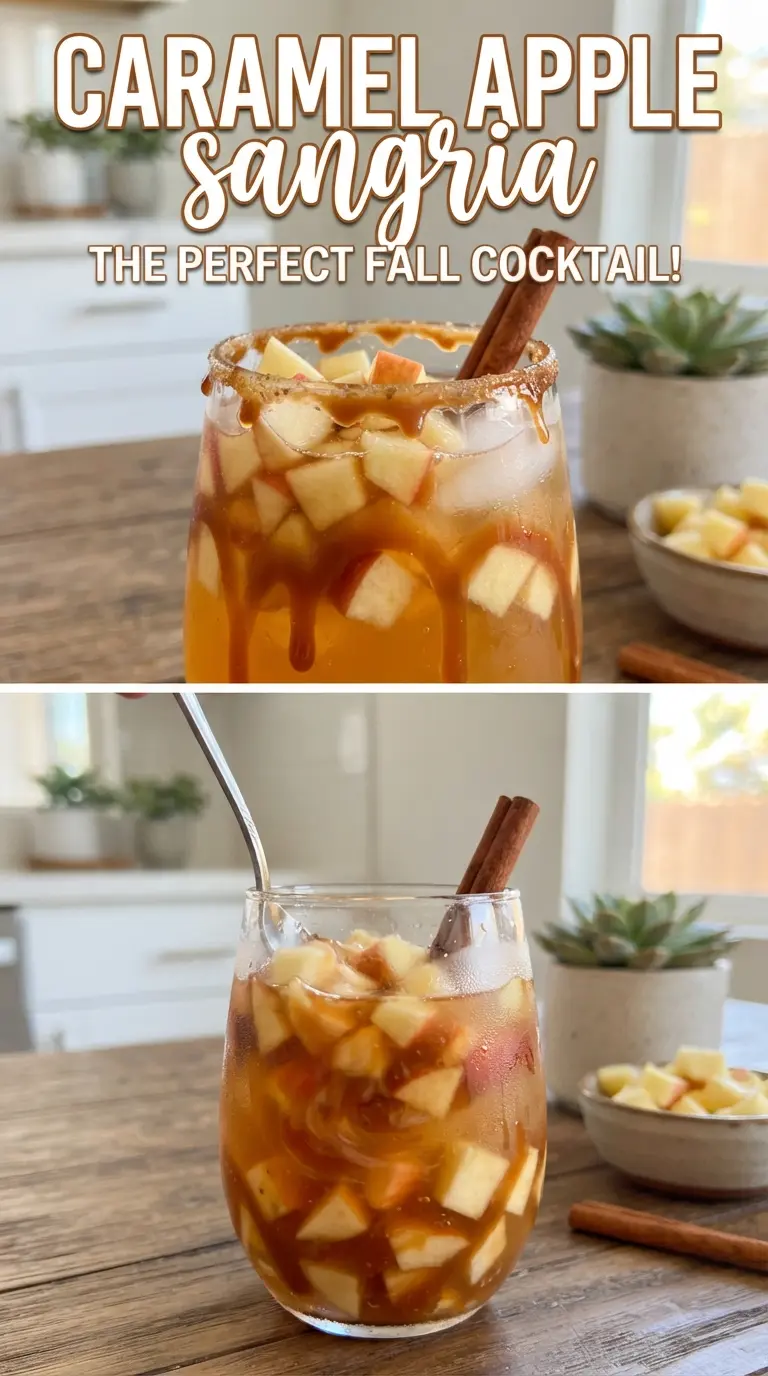
Caramel apple sangria lands in that sweet spot between festive and easy: crisp white wine, spiced cider, and caramel drift together into a drink that tastes like it took more work than it did. The fruit softens just enough in the pitcher to pick up the wine and cinnamon, and every glass pours out golden, cold, and full of apple slices.
What makes this version work is balance. Pinot grigio stays light enough to let the cider shine, while the caramel vodka or caramel sauce adds that dessert-like note without turning the whole thing heavy. The ginger ale goes in at the end, which keeps the drink lively instead of flat, and the chill time gives the fruit a chance to infuse the pitcher instead of just floating there.
Below, you’ll find the small details that matter most: how to keep the sangria from tasting syrupy, why the ginger ale waits until serving time, and a few easy ways to adjust the sweetness depending on the caramel you use.
The caramel flavor came through without making it sticky-sweet, and the apple slices soaked up just enough of the wine that everyone kept fishing them out of their glasses.
Caramel Apple Sangria is the kind of pitcher drink that tastes even better after the fruit has had time to steep and the cinnamon has worked its way through.
The Part That Keeps Caramel Sangria From Turning Heavy
The biggest mistake with caramel sangria is pushing it too far toward syrup. Once the drink gets thick or cloying, the fruit and cider stop feeling bright, and all you taste is sugar. The fix is simple: keep the wine chilled, use enough cider to round out the caramel, and save the ginger ale for the last minute so the drink still has lift.
The other thing worth watching is the caramel itself. Caramel sauce gives you the richest flavor, but it needs a good whisk so it doesn’t sink into sticky ribbons at the bottom of the pitcher. Caramel vodka is easier and cleaner to blend, while caramel sauce gives a deeper dessert note. Both work, but they don’t behave the same way.
What Each Ingredient Is Doing in the Pitcher
- Pinot grigio — This gives the sangria a crisp base that doesn’t fight the apple and caramel. A dry white wine works best because sweetness is added elsewhere. If you use a sweeter wine, the drink can turn muddy fast.
- Apple cider — This is where the apple flavor comes from, not from the fruit alone. Fresh, unfiltered cider tastes fuller and more autumnal than clear apple juice. Apple juice will work in a pinch, but the drink loses some depth.
- Caramel vodka or caramel sauce — Vodka blends in smoothly and keeps the pitcher clear. Caramel sauce gives a richer finish, but it needs to be whisked hard so it dissolves. If you use sauce, start with a little less and taste before adding more.
- Apples and pear — Thin slices matter because they give up flavor faster and look prettier in the glass. Use crisp apples so they hold their shape in the pitcher. The pear softens a little more quickly and brings a gentle perfume that makes the sangria feel layered.
- Cinnamon sticks — Whole sticks steep cleanly without turning the drink gritty. Ground cinnamon would cloud the pitcher and settle at the bottom. Add more sticks if you want a stronger spice note after chilling.
- Ginger ale or club soda — This is the brightness at the finish. Ginger ale adds sweetness and spice; club soda keeps the drink drier and lighter. Whichever you choose, add it just before serving so the bubbles don’t disappear.
- Caramel sauce and coarse sugar — The rim is decoration, but it also gives the first sip a little sweet crunch. Chill the glasses before dipping if you want the caramel to set a bit faster.
Building the Pitcher So the Flavor Actually Develops
Mixing the Base
Start with the wine, cider, and caramel component in a large pitcher and whisk until everything looks evenly combined. If you’re using caramel sauce, don’t rush this part; little streaks of sauce at the bottom will stay there until you stir them out. The liquid should look golden and smooth before the fruit goes in.
Letting the Fruit Infuse
Add the sliced apples, pear, and cinnamon sticks, then chill the pitcher for at least 2 hours. That resting time matters because it pulls flavor out of the fruit and softens the cinnamon into the drink. If you serve it too soon, the sangria tastes separate instead of blended.
Finishing With Bubbles
Right before serving, pour in the chilled ginger ale or club soda and stir once or twice. Too much stirring knocks out the carbonation, and if you add it early, the drink goes flat while it sits. Pour over ice, add a few pieces of fruit to each glass, and serve it while the bubbles are still lively.
Three Ways to Adjust the Sweetness and Make It Fit the Crowd
Use caramel vodka for a cleaner, lighter drink
Caramel vodka blends in without needing much extra whisking, and it keeps the sangria from feeling thick. This is the best choice if you want the caramel note to be there without turning the pitcher into a dessert drink.
Make it nonalcoholic with sparkling cider
Swap the wine and caramel vodka for more apple cider plus chilled sparkling cider at the end. The drink stays festive and still has that caramel-apple feel, just without the wine structure. It works best if you keep the cinnamon and fruit in the pitcher long enough to build flavor.
Use club soda if you want it less sweet
Club soda cuts the sweetness and lets the wine and cider stay front and center. You lose a little spice from the ginger ale, but the payoff is a fresher, crisper finish that works better with caramel sauce.
Storage and Batching Ahead
- Refrigerator: The base can sit for up to 24 hours with the fruit and cinnamon in it, but add the ginger ale only right before serving or it will go flat.
- Freezer: This drink doesn’t freeze well because the wine and cider texture changes and the carbonation is lost.
- Reheating: No reheating needed. If the pitcher has been sitting awhile, give it a stir, add fresh ice, and top with more chilled ginger ale if the bubbles have faded.
Answers to the Questions Worth Asking
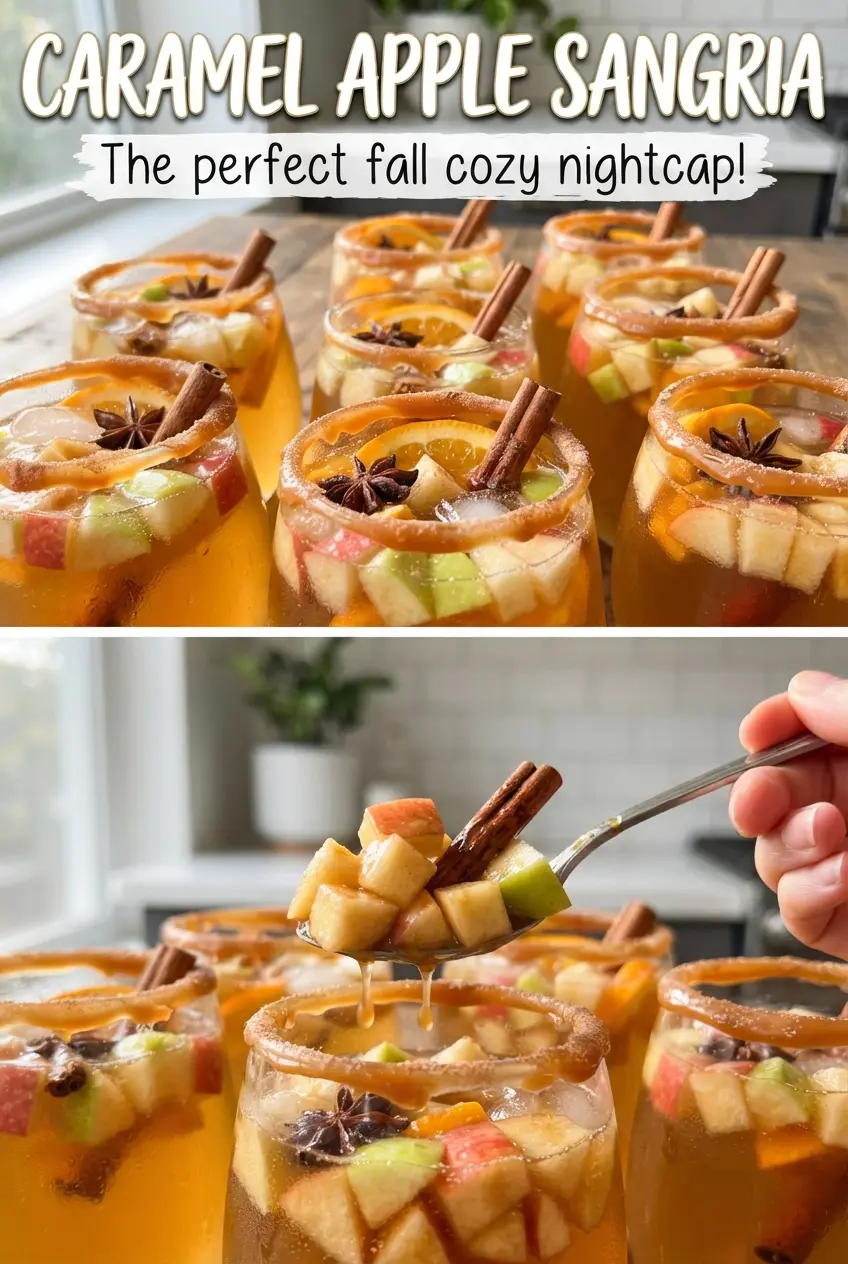
Caramel Apple Sangria
Ingredients
Method
- Combine pinot grigio, apple cider, and caramel vodka in a large pitcher and whisk well if using caramel sauce.
- Add apples, pear, and cinnamon sticks to the pitcher and stir gently to distribute the fruit and spices.
- Chill the sangria for at least 2 hours so the fruit soaks up the flavor, keeping it refrigerated until serving.
- Dip the glass rims in caramel sauce, then in coarse sugar to create a caramel-sugar edge.
- Top the pitcher with ginger ale just before serving, then pour over ice into glasses with some fruit in each.


