
Queso fundido hits the table at the exact moment people stop pretending they were only going to have “just one chip.” The cheese stretches in long, glossy pulls, the chorizo brings enough spice and fat to keep every bite interesting, and the jalapeños cut through the richness so it never turns heavy. Served straight from the skillet, it has the kind of rough-edged, bubbling look that makes everyone lean in before the first scoop.
The trick here is using cheeses that melt into each other instead of one cheese doing all the work. Oaxaca gives you that stretch, Chihuahua or asadero melts into a smooth base, and Cotija adds salty pockets of flavor that keep the dip from tasting flat. The chorizo needs to be fully browned before the cheese goes in, because that rendered fat seasons the whole pan and gives the finished dip its deep, savory backbone.
Below, you’ll find the small details that keep queso fundido silky instead of greasy, plus a few smart swaps if you need to work with what you’ve got on hand. The process is short, but the order matters more than most people think.
The cheese melted into a smooth, stretchy skillet dip and the chorizo flavor came through in every bite. I kept it on low heat while serving, and it stayed perfect until the chips were gone.
Save this bubbling queso fundido for your next chips-and-margaritas night — the chorizo, jalapeños, and stretchy cheese pull are the part people remember.
The Difference Between Melted and Greasy Queso Fundido
The biggest mistake with queso fundido is pushing the heat too hard once the cheese goes in. Cheese doesn’t need a rolling bubble to melt; it needs steady, gentle heat. If the pan is too hot, the fat separates before the proteins relax, and you end up with a slick of oil around grainy cheese instead of that smooth, spoonable pull.
The other thing that matters is choosing cheeses with different jobs. Oaxaca gives stretch, Chihuahua or asadero melts into a creamy body, and Cotija adds salt and sharpness, but too much Cotija can make the whole pan feel crumbly. That balance is why this version tastes layered instead of one-note.
- Chorizo — This is the main seasoning for the skillet. Use raw Mexican chorizo, not Spanish chorizo, because it renders enough fat to flavor the pan and stays soft enough to mingle with the cheese.
- Oaxaca or mozzarella — This is your stretch cheese. Oaxaca is ideal if you can find it; low-moisture mozzarella works in a pinch, though it gives a cleaner melt and a little less of that classic pull.
- Chihuahua or asadero — These cheeses bring the creamy middle. If you can’t find either, Monterey Jack is the closest stand-in and melts well without turning stringy.
- Cotija — Use it for salt and bite, not bulk. It won’t fully melt, and that’s the point; it breaks up the richness and keeps the dip from tasting flat.
- Heavy cream — Just a small amount helps the melted cheeses come together smoothly. If you skip it, the dip can still work, but the texture is a little tighter and less glossy.
- Jalapeños, garlic, and onion — These build the aromatic base. Dice them small so they soften quickly and spread through the cheese instead of sitting in sharp, uncooked pieces on top.
The 10 Minutes That Build the Skillet
Brown the Chorizo First
Cook the chorizo over medium heat in a cast iron skillet or other heavy pan, breaking it up as it cooks. You want it browned and a little crisp at the edges, with enough rendered fat to coat the bottom of the skillet. If you add the cheese before the chorizo is cooked through, the whole dip tastes flat and the texture turns heavy.
Wake Up the Garlic and Jalapeños
Stir in the garlic and jalapeños and cook them for about a minute, just until fragrant. That short hit of heat takes the raw edge off the garlic without burning it, which matters because burnt garlic turns bitter fast in a dish this simple. The jalapeños should still look bright, not collapsed.
Let the Cheese Melt Slowly
Add the shredded cheeses and the cream, then stir frequently over low to medium-low heat until everything melts together. The mixture should go from loose shreds to a thick, glossy mass that pulls away from the pan in soft folds. If the heat is too high, the cheese tightens up and the fat separates, so stay patient and keep the burner lower than you think.
Finish With Freshness and Serve at Once
Top the skillet with diced onion and cilantro right before it goes to the table. Those fresh toppings add crunch and lift, which the rich cheese needs. Serve immediately with warm tortilla chips, because queso fundido waits for no one; once it cools, it sets quickly and loses that stretchy pull.
Three Smart Ways to Adjust Queso Fundido Without Losing the Point
Make it milder for a mixed crowd
Use mild chorizo or drain off a little of the rendered fat before adding the cheese. You can also pull back on the jalapeños and leave the seeds out completely, which keeps the dip flavorful without the back-of-the-throat heat that can overpower the cheese.
Make it vegetarian
Skip the chorizo and cook the garlic and jalapeños in a tablespoon of oil with a pinch of smoked paprika and cumin. You lose the meaty richness, but you keep the smoky, savory base that gives queso fundido its character.
Make it lighter on dairy, not on texture
Use part-skim mozzarella in place of full-fat Oaxaca and keep the cream amount small, but don’t replace all the cheeses with low-moisture versions or the dip turns rubbery. This version will still melt, though it won’t have quite the same richness or pull.
Keeping it warm for a party
Move the finished queso fundido to a slow cooker on the warm setting if you’re serving a crowd. Stir it every so often so the edges don’t set before the center, and don’t leave it on high heat or the cheese will seize and separate.
Storage and Reheating
- Refrigerator: Store leftovers in an airtight container for up to 3 days. The cheese will firm up and the texture will be denser once chilled.
- Freezer: Freezing isn’t a great option here. Melted cheese tends to break after thawing, so the dip can turn grainy and oily.
- Reheating: Rewarm gently in a skillet over low heat with a spoonful of cream or a splash of milk, stirring often. The common mistake is blasting it in the microwave, which makes the cheese separate before it can loosen evenly.
Questions I Get Asked About This Recipe
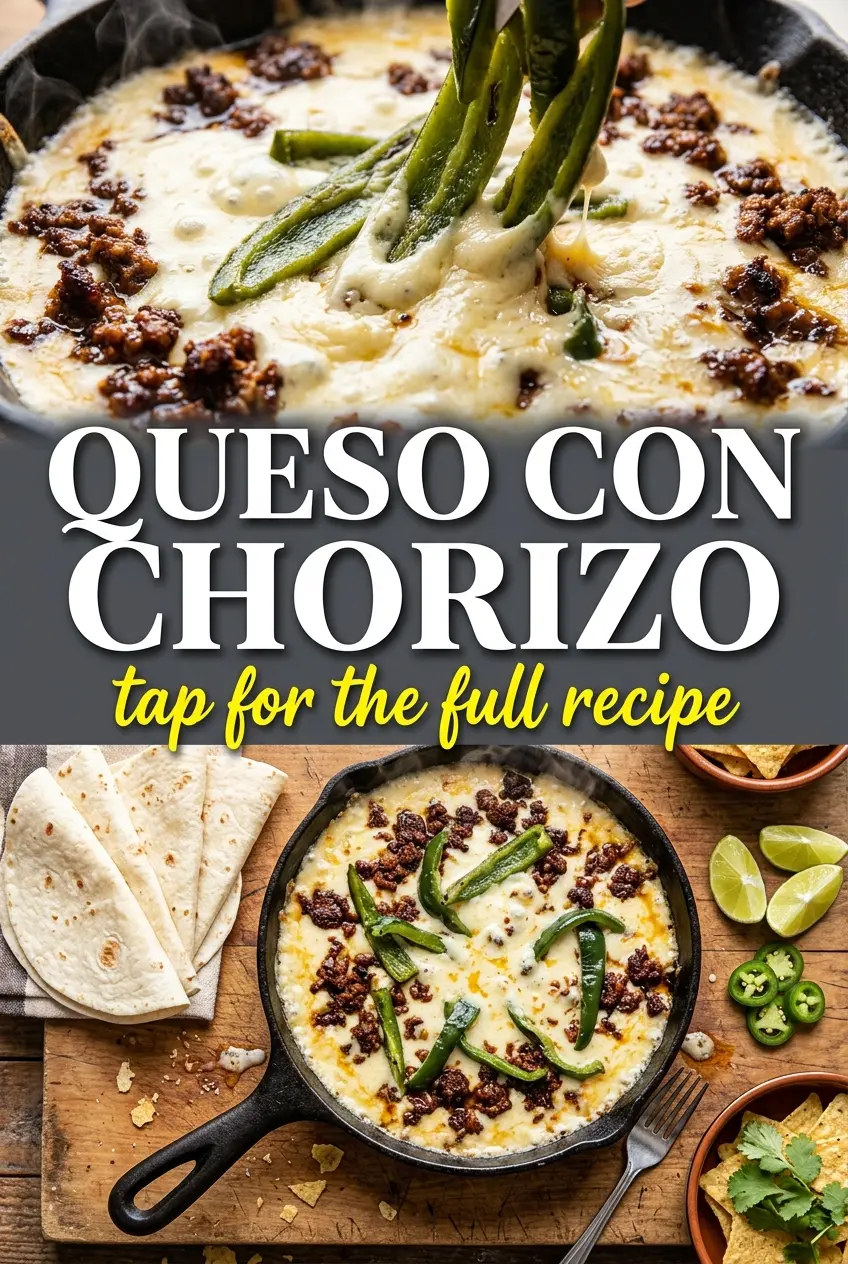
Queso Fundido with Chorizo and Jalapeños
Ingredients
Equipment
Method
- Heat a cast iron skillet over medium-high heat and cook the chorizo, breaking it apart as it cooks, until browned, about 6-8 minutes. Visual cue: the fat renders and the crumbles look crisp and browned.
- Add minced garlic and diced jalapeños to the browned chorizo and cook for 1 minute until fragrant, keeping the heat at medium. Visual cue: you see small bubbles around the jalapeños and the mixture smells fragrant.
- Add the Oaxaca or mozzarella, Chihuahua or asadero, and Cotija cheeses along with heavy cream, stirring frequently until completely melted and smooth, about 5-7 minutes. Visual cue: the mixture turns glossy and starts bubbling in the center.
- Top the queso with diced onion and chopped cilantro, then stir once to distribute. Visual cue: the onion and cilantro sit in bright flecks across the bubbling cheese.
- Serve immediately in the cast iron skillet with tortilla chips for dipping, keeping warm over low heat or in a slow cooker. Visual cue: lift a spoon to see melted cheese pull into stretching strings.


