
Charred chicken thighs and a bright green chimichurri are a hard combination to beat. The chicken stays juicy while the herbs, garlic, and vinegar cut through the richness, and the contrast between crispy edges and that fresh spooned-on sauce makes every bite taste alive. This is the kind of dinner that looks like you worked a lot harder than you did.
The trick is keeping the chimichurri bold and the chicken dry enough to brown. A paste-thin sauce disappears into the meat and turns muddy; a slightly chunky blend clings better and stays punchy after the grill. Letting the chicken sit with some of the sauce for a short marinating window gives it flavor without letting the vinegar take over.
Below, I’ll walk through the part that matters most: how to keep the sauce bright, how to avoid steaming the thighs, and what to do if you want to swap in different herbs or cook these another way.
The chimichurri stayed bright and the thighs got this perfect crispy edge on the grill. I marinated mine for just over an hour and the flavor was all the way through without tasting harsh.
Save these chimichurri chicken thighs for the nights when you want crisp grilled chicken and a punchy herb sauce that comes together fast.
The Chimichurri Needs Texture, Not a Puree
The most common mistake here is overprocessing the sauce. Chimichurri should look vibrant and loose, with tiny bits of herb and garlic still visible. If you blend it into a smooth green paste, it clings less to the chicken and starts tasting flat because the garlic gets pushed into the background instead of staying sharp and bright.
The other trap is marinating too long. Red wine vinegar is doing real work here, but if the chicken sits in it all day, the edges can get a little cured and the texture turns less juicy. Thirty minutes gives you enough flavor to season the meat; two hours is the upper end I’d use for thighs.
What Each Ingredient Is Doing in the Pan and the Blender
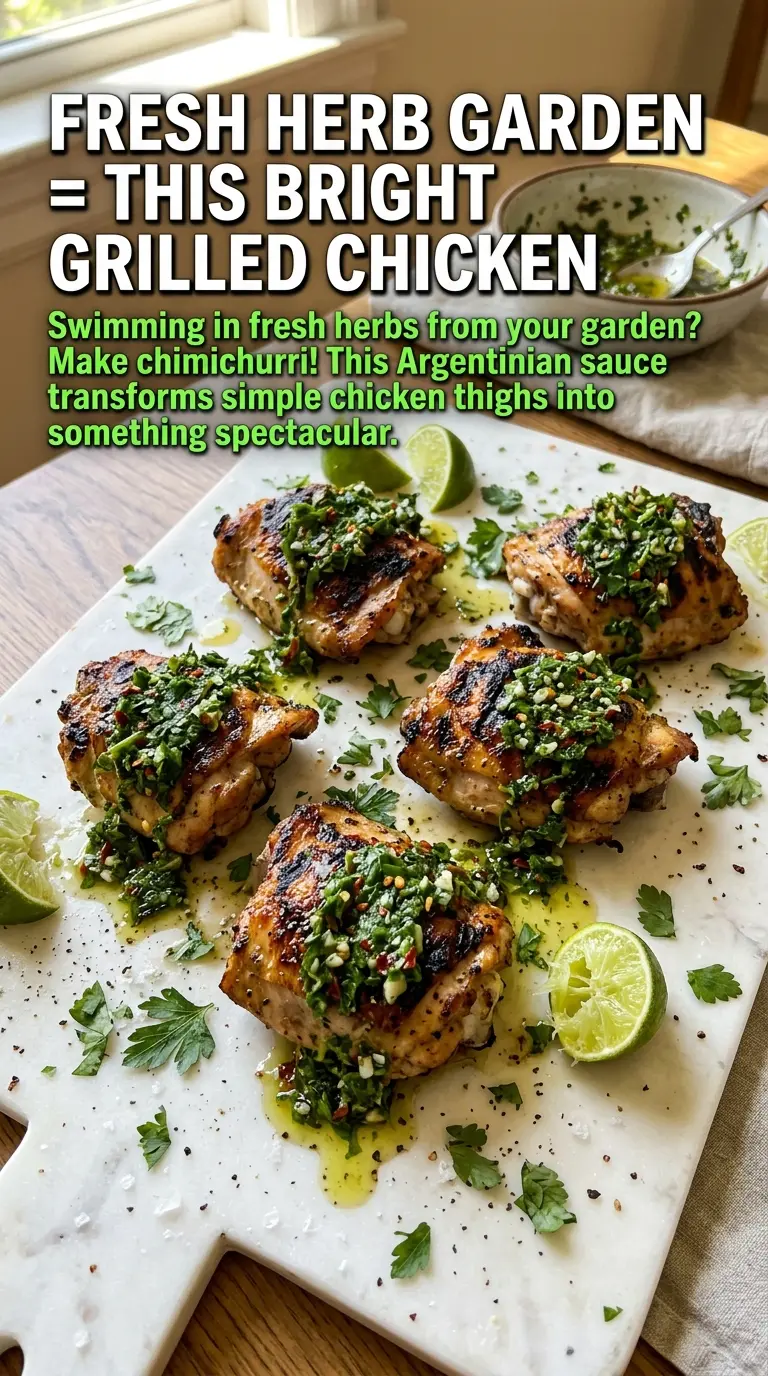
- Chicken thighs — Thighs stay juicier than breasts on the grill, which matters here because the sauce is bold and the meat needs enough richness to carry it. Bone-in thighs take a little longer and give you more flavor; boneless cooks faster and is easier for weeknights.
- Fresh parsley — This is the backbone of the sauce, so use fresh parsley, not dried, and pack the cup loosely enough that you’re measuring herbs, not stems. Flat-leaf parsley gives the cleanest flavor.
- Fresh oregano — Oregano gives chimichurri its unmistakable edge. If you can’t find fresh, use about one teaspoon dried oregano, but crush it between your fingers first so it wakes up a little.
- Red wine vinegar — This is what keeps the sauce bright and cuts through the fat on the chicken. White wine vinegar can work in a pinch, but it tastes a little cleaner and less rounded.
- Olive oil — Use a good everyday olive oil here. You don’t need the most expensive bottle, but you do need one that tastes clean and peppery, because the sauce is mostly oil and herbs.
- Garlic and red pepper flakes — Garlic should be fresh and sharp, not old and dry. The pepper flakes add a slow burn, not heat that takes over, so keep them in the measured range unless you want the sauce to bite back.
Grilling the Thighs So the Sauce Stays Fresh
Blending the Chimichurri
Blend the parsley, oregano, garlic, vinegar, olive oil, red pepper flakes, and salt until the sauce is mostly smooth but still has a little body. You want it spoonable, not watery. If it looks oily on top or too thick to coat a spoon, pulse it a few more times until it comes together. Taste it before it goes on the chicken; it should be sharp, herby, and salty enough to wake up the meat.
Marinating Without Turning the Chicken Harsh
Season the thighs with salt and pepper first, then brush on half the chimichurri. That first layer seasons the meat and starts building flavor, but don’t drown the chicken in it or the surface won’t brown well. Let it sit for 30 minutes to 2 hours in the fridge. If the chicken looks glossy but not soupy when it comes out, you’re in the right place.
Getting the Grill Marks and the Char
Preheat the grill to medium-high so the chicken hits hot grates right away. Lay the thighs down and leave them alone until they release easily; if they stick, they’re not ready to flip. Grill for about 6 to 7 minutes per side, depending on thickness, until the edges are crisp and the internal temperature reaches 165°F. If the outside is browning too fast before the center is done, move the thighs to a slightly cooler part of the grill and finish them there.
Finishing With the Fresh Sauce
Rest the chicken for 5 minutes so the juices settle back in. Then spoon the remaining chimichurri over the top right before serving. That last hit of sauce should taste fresh and bright, not cooked down or muted. This is what gives the dish its lift, so don’t skip it.
How to Adapt These Chimichurri Chicken Thighs for Different Kitchens
Boneless thighs for faster weeknights
Boneless thighs cook a little faster and are easier to portion, which makes this a strong weeknight version. Watch them closely on the grill, because they can go from browned to overdone quickly. The flavor stays the same, but you lose a little of the deep chicken richness that comes from the bone.
Dairy-free and naturally gluten-free
This recipe already works for both dairy-free and gluten-free cooking without any changes, which is part of why it’s such a useful dinner to keep around. The key is using clean ingredients and checking that your spices and vinegar are plain, with nothing added that would dull the sauce. You get all the payoff from the herbs and smoke without needing a replacement sauce.
Less heat, more herb
If you don’t want much spice, cut the red pepper flakes in half or leave them out entirely. The sauce still tastes complete because the garlic, oregano, and vinegar do most of the work. You’ll lose a little background warmth, but the chicken will still taste bright and punchy.
Storage and Reheating
- Refrigerator: Store leftovers in an airtight container for up to 4 days. The chicken stays juicy, though the chimichurri will mellow a bit as it sits.
- Freezer: Freeze the cooked chicken for up to 2 months. The sauce is best made fresh, since the herbs lose their brightness after thawing.
- Reheating: Reheat the chicken gently in a 300°F oven until warm. High heat dries out thighs and can make the herbs taste dull, so keep the reheating slow and spoon on fresh chimichurri after warming.
Questions I Get Asked About This Recipe

Chimichurri Chicken Thighs
Ingredients
Equipment
Method
- Blend fresh parsley, fresh oregano, garlic, red wine vinegar, olive oil, red pepper flakes, and salt until smooth but slightly chunky, scraping down the sides as needed.
- Set aside about half of the chimichurri for serving and keep the rest for brushing the chicken.
- Season the chicken thighs with salt and black pepper, then brush them with half the chimichurri.
- Marinate the brushed chicken for 30 minutes to 2 hours in the refrigerator.
- Preheat the grill to medium-high heat.
- Grill the chicken thighs for 6-7 minutes per side until the internal temperature reaches 165°F and the skin is crispy, showing visible char spots.
- Let the chicken rest for 5 minutes so the juices settle.
- Serve the chicken thighs topped with the remaining chimichurri, spooning it over while the meat is hot so it looks bright green and fresh.


