
Hot, chopped ribeye, sweet caramelized onions, and melted provolone tucked into a toasted hoagie roll is the kind of sandwich that disappears fast. The Blackstone earns its keep here because it gives you space to cook the vegetables, steak, and bread all on one surface, which means the rolls pick up some of the steak juices and the filling lands in the bread while it’s still steaming and stretchy with cheese.
The trick is cooking the onions and peppers first so they can soften and sweeten before the steak goes on. Ribeye stays tender when it’s sliced thin and only cooked until the pink is just gone, then chopped on the griddle the way a real cheesesteak should be. That quick chop gives you those small, juicy pieces that fit the roll instead of a pile of chewy strips.
Below, I’m sharing the timing that keeps the steak from drying out, the cheese move that gives you the best melt, and a few ways to adapt these sandwiches if you’re cooking for a crowd or need a simpler version.
The steak chopped up beautifully on the griddle, and the peppers were sweet without going mushy. I used the mayo on the roll and it helped hold everything together without making it greasy.
Save these Blackstone Philly Cheesesteak Sandwiches for the nights when you want shaved ribeye, melted provolone, and a toasted hoagie with real griddle flavor.
The Part Most Cheesesteaks Get Wrong on a Griddle
The biggest mistake with a cheesesteak on a flat-top is crowding the meat before the vegetables are finished. If the onions and peppers don’t get their time first, they steam instead of caramelize, and the sandwich loses the sweet, savory balance that makes it worth making on a Blackstone in the first place. Cook them until they’re soft, browned at the edges, and glossy with their own juices.
Ribeye is the right cut because it stays tender even with a short cook. Thin slicing matters more than expensive seasoning here. If the steak goes on in thick strips, you end up overcooking the outside before the center ever gets a chance to brown. Keep the pieces loose, then chop them as they cook so they stay juicy and easy to pile into the roll.
What the Cheese, Bread, and Steak Are Each Doing Here
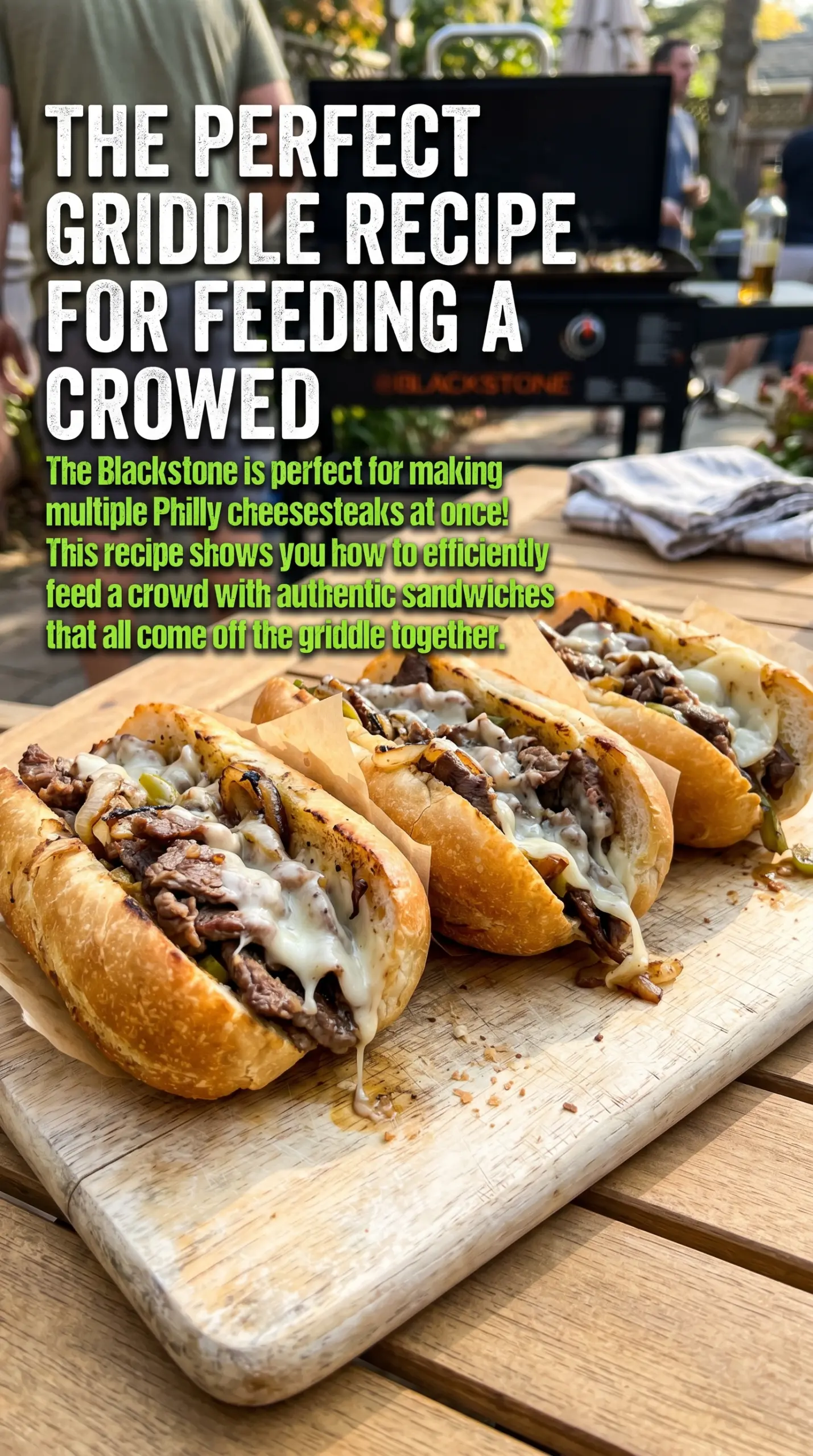
- Ribeye steak — This is the piece that gives the sandwich its richness and tenderness. Leaner cuts can work in a pinch, but they dry out faster and won’t have the same buttery bite. Ask for it sliced thin, or freeze it for 20 to 30 minutes before slicing it yourself so it cuts cleanly.
- Onions — They bring sweetness and body, and they’re worth the full cook time. Yellow or white onions both work, but they need to soften and brown before the steak goes on. If they’re rushed, they stay sharp and watery, which throws off the whole sandwich.
- Green bell peppers — These add the classic cheesesteak edge and a little bitterness to balance the cheese. You can swap in red or yellow peppers if that’s what you have, but the flavor will be sweeter and less traditional. Slice them evenly so they cook at the same pace as the onions.
- Provolone cheese — Provolone melts cleanly and gives you that smooth, stretchy finish without turning greasy. Mild provolone is the most reliable choice here. If you use a sharper cheese, it can overpower the beef; if you use pre-shredded cheese, it won’t melt as silkily.
- Hoagie rolls — The roll needs enough structure to hold the filling without collapsing, but it still has to toast up soft inside. A sturdy bakery roll works best. Buttering and toasting the cut sides on the griddle gives you a barrier against sogginess and adds a little crunch.
Building the Cheesesteak in the Right Order
Getting the Vegetables Soft and Sweet
Start with the onions and peppers on a medium-high griddle with oil. Stir them often enough to keep them from scorching, but let them sit long enough to pick up browning on the edges. You’re looking for tender slices with deep color, not crisp vegetables. Pull them off when they’ve lost their raw bite and taste sweet, because they’ll finish warming later when they go back onto the steak.
Cooking the Steak Fast Enough to Stay Tender
Season the sliced ribeye with salt and pepper right before it hits the griddle. Lay it out in a fairly even layer so it browns instead of steams, then chop it with spatulas as it cooks. If the pan starts getting crowded, the meat will gray before it sears, so work in batches if you need to. Stop cooking as soon as the pink is gone and the edges have a little caramelization.
Melting the Cheese Before the Roll Goes On
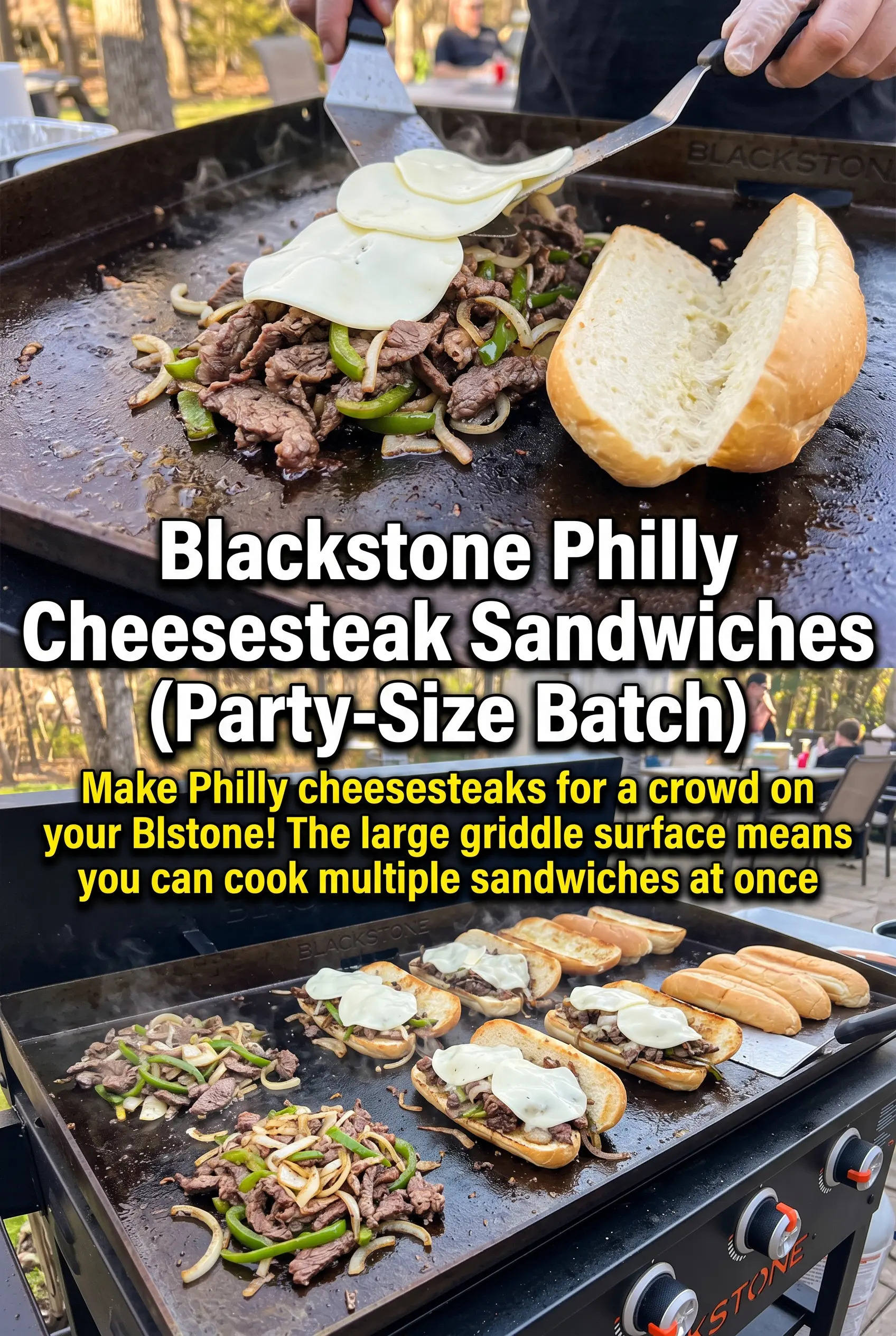
Divide the cooked steak into four portions, top each mound with the vegetables, then cover with two slices of provolone. The residual heat from the meat and vegetables will melt the cheese fast, but if your griddle isn’t hot enough, the top can sit there without softening. In that case, cover the portions for a minute with a melting dome or a loose metal bowl so the cheese turns glossy and pulls down over the filling.
Toasting the Rolls for the Final Build
Butter the hoagie rolls and place them cut-side down on the griddle until they’re golden. Don’t walk away during this part; bread can go from toasted to burnt in a minute on a hot flat-top. The goal is a crisp surface that still gives when you bite it, because that keeps the roll from going limp once the filling lands inside.
How to Adapt These Sandwiches for Different Kitchens
Dairy-Free Cheesesteak
Skip the provolone and use a dairy-free meltable cheese, or serve the steak and vegetables as-is with mayo on the roll for richness. You won’t get the same stretch, but the beef and caramelized vegetables still carry the sandwich. The key is choosing a dairy-free cheese that actually melts instead of one that just softens.
Mushroom Cheesesteak Version
Add sliced mushrooms with the onions and peppers for a deeper, earthier filling. They release a lot of moisture, so give them enough time to cook off before the steak goes on. The result is a fuller sandwich with more savory bite and a little less emphasis on the beef alone.
Gluten-Free Serving Option
Serve the filling in gluten-free rolls or over roasted potatoes if the bread options at your store are too fragile. Gluten-free buns usually need extra toasting so they don’t collapse under the steak. If you go bun-less, keep the cheese and vegetables hot and let the potatoes catch the juices.
Storage and Reheating
- Refrigerator: Store the steak, vegetables, and rolls separately for up to 3 days. The filling will stay good, but the bread softens fast if it sits assembled.
- Freezer: The cooked steak and vegetables freeze well for up to 2 months. Freeze them flat in an airtight bag, then thaw in the fridge before reheating. Don’t freeze the assembled sandwiches if you want the bread to hold up.
- Reheating: Warm the filling in a skillet over medium heat until hot, then toast fresh rolls and assemble. Microwaving the whole sandwich makes the bread rubbery and the cheese uneven, so keep the parts separate if you can.
Answers to the Questions Worth Asking
Blackstone Philly Cheesesteak Sandwiches
Ingredients
Equipment
Method
- Heat a griddle to medium-high and add the oil.
- Cook the onions and bell peppers until caramelized, about 8-10 minutes, then set aside.
- Season the steak with salt and pepper and spread it on the griddle.
- Cook for 3-4 minutes, chopping with spatulas until the steak is evenly broken up.
- Divide the steak into 4 portions, top each with caramelized vegetables, and lay 2 slices of provolone over the top.
- Butter the hoagie rolls and toast them on the griddle until golden.
- Scoop the steak mixture into the rolls, add mayo if desired, and serve immediately.


