
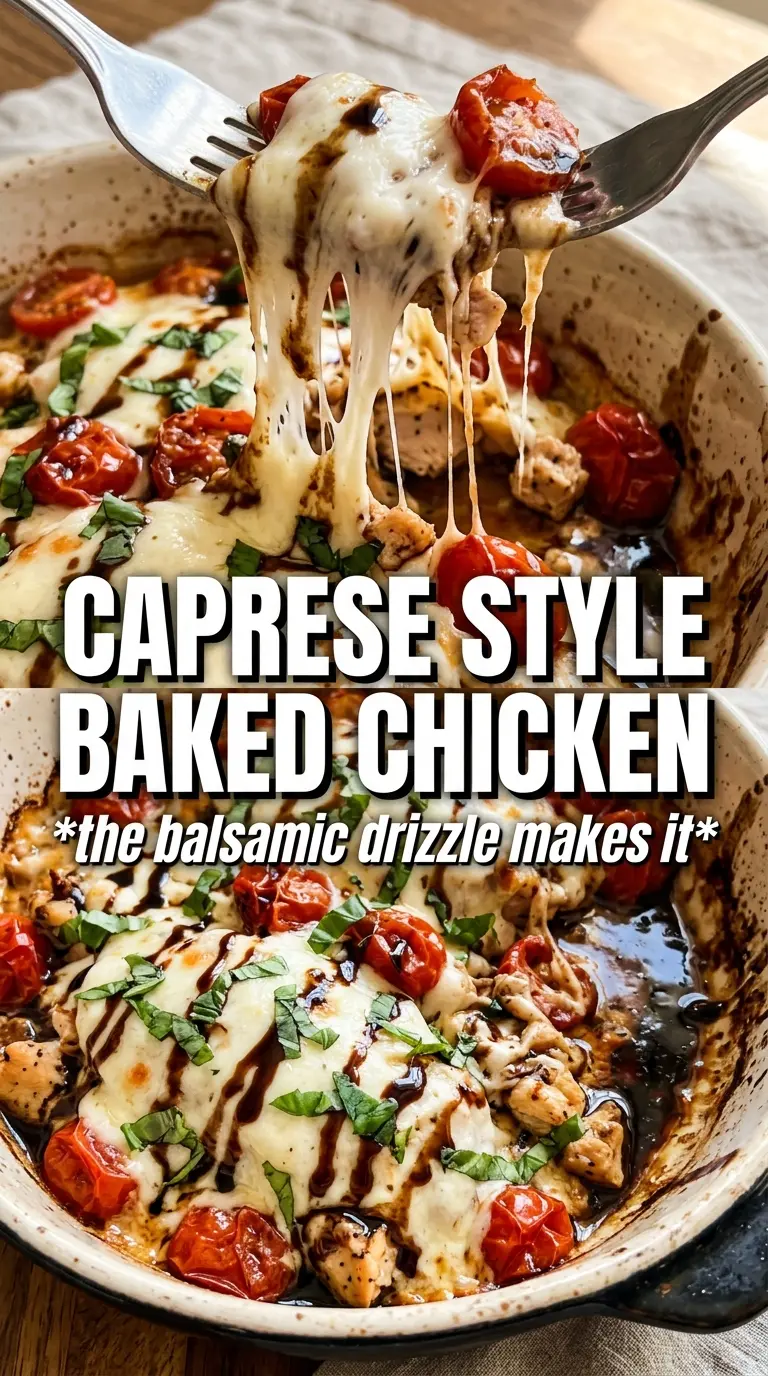
Juicy chicken breasts, a glossy balsamic reduction, and melted mozzarella are the kind of combination that makes a plain baked chicken dinner feel like something you’d order at a neighborhood Italian spot. The vinegar turns sweet and tangy as it cooks, the honey helps it cling to the chicken, and the mozzarella melts into soft pools instead of turning rubbery.
The key here is starting the chicken in a skillet before it goes into the oven. That quick sear gives you color and keeps the surface from tasting flat, while the reserved marinade finishes in the pan and turns into a sticky coating instead of thinning out in the oven. Fresh mozzarella and cherry tomatoes go on at the end, which keeps the cheese creamy and the tomatoes bright.
Below you’ll find the small details that matter most: how long to marinate without making the chicken mushy, why the glaze needs a little mustard, and how to keep the mozzarella from sliding off the chicken when you serve it.
The balsamic glaze thickened up beautifully and the mozzarella stayed creamy instead of getting rubbery. I served it with rice and the tomatoes on top made it taste like a caprese chicken bake.
Save this balsamic baked chicken breast with mozzarella for an easy dinner with glossy glaze, melty cheese, and fresh caprese-style tomatoes.
The Part That Keeps the Chicken Juicy Instead of Dry
Chicken breasts dry out when they spend too long in a hot oven without enough surface protection. The sear here gives you a little buffer: it sets the outside, adds flavor, and helps the balsamic mixture cling instead of running off into the pan. Then the oven finishes the chicken gently enough that the center stays juicy while the glaze reduces around it.
The other thing that matters is thickness. If your chicken breasts are uneven, the thin ends overcook before the center is done. Pounding them to a more even thickness is the easiest way to keep the texture consistent, and it pays off immediately when you slice into the finished dish.
What the Balsamic, Honey, and Dijon Are Doing Here
- Balsamic vinegar — This is the backbone of the sauce. It gives you tang, depth, and that dark glossy finish after it bakes, and cheap vinegar is fine here as long as it tastes clean and not harsh.
- Honey — Honey softens the vinegar and helps the glaze cling to the chicken. Maple syrup works in a pinch, but it tastes a little rounder and less sharp, so the final glaze won’t have quite the same brightness.
- Dijon mustard — Dijon doesn’t make the dish taste like mustard. It helps emulsify the marinade so the oil and vinegar stay together longer, which means better coverage and a smoother glaze.
- Fresh mozzarella — Use fresh mozzarella, not low-moisture shredded cheese, if you want those soft melted pockets on top. Shredded mozzarella melts, but it won’t give you the same creamy caprese-style finish.
- Cherry tomatoes — These add sweetness and a little burst of juice at the end. Halving them helps them soften quickly in the oven without turning watery.
Getting the Sear, Bake, and Melt in the Right Order
Mix the Marinade First
Whisk the balsamic vinegar, olive oil, honey, garlic, and Dijon until the mixture looks glossy and slightly thickened. That small bit of emulsification helps it coat the chicken instead of separating into sharp vinegar and oil. Season the chicken directly before it goes into the marinade so the seasoning sits on the meat instead of disappearing into the bowl.
Give the Chicken a Short Marinate
Twenty minutes is enough to season the surface and add flavor without softening the chicken too much. If you leave it in much longer, the vinegar starts to change the texture around the edges and the chicken can turn a little mealy after baking. Use the time to preheat the oven and heat the skillet so everything is ready when the chicken comes out of the marinade.
Build Color Before the Oven Takes Over
Sear the chicken in an oven-safe skillet over medium-high heat until the surface turns golden brown, about 3 minutes per side. You are not cooking it through at this point; you’re building flavor and creating a surface that will hold onto the sauce. If the pan is crowded or too cool, the chicken steams instead of searing, and the glaze won’t have the same depth.
Finish with Cheese and Tomatoes at the End
Once the chicken reaches 165°F, top it with the mozzarella and tomatoes and return it to the oven just until the cheese melts. If you add the cheese earlier, it can overcook and separate before the chicken is done. The basil and balsamic glaze go on after baking so they stay fresh, fragrant, and bright against the warm chicken.
How to Adapt This Balsamic Caprese Chicken for Different Kitchens
Make It Dairy-Free
Skip the mozzarella and finish with extra cherry tomatoes and torn basil instead. You lose the creamy caprese layer, but the balsamic glaze still gives you a rich, satisfying finish that works well over rice or roasted potatoes.
Use Chicken Thighs Instead of Breasts
Boneless skinless thighs bring more richness and stay juicy even if you cook them a little longer. Keep the sear, but add a few extra minutes in the oven and check for doneness with a thermometer instead of going by color alone.
Go Gluten-Free Without Changing the Method
This recipe is naturally gluten-free as written if your Dijon and balsamic glaze are certified gluten-free. That matters more than people think, because some bottled condiments sneak in thickeners or malt-based ingredients.
Use Shredded Mozzarella in a Pinch
Shredded mozzarella melts faster and covers the chicken more evenly, but it won’t give you the same soft, creamy look as fresh slices. If that’s what you have, sprinkle it on only for the last few minutes so it melts without drying out.
Storage and Reheating
- Refrigerator: Store leftovers in an airtight container for up to 3 days. The mozzarella firms up as it chills, but the flavor holds well.
- Freezer: You can freeze the cooked chicken without the fresh basil, but the mozzarella and tomatoes won’t stay at their best. Wrap tightly and freeze for up to 2 months if needed.
- Reheating: Warm gently in a 325°F oven, covered loosely with foil, until just heated through. High heat dries out the chicken fast and can make the cheese separate, so keep the reheating slow.
Answers to the Questions Worth Asking
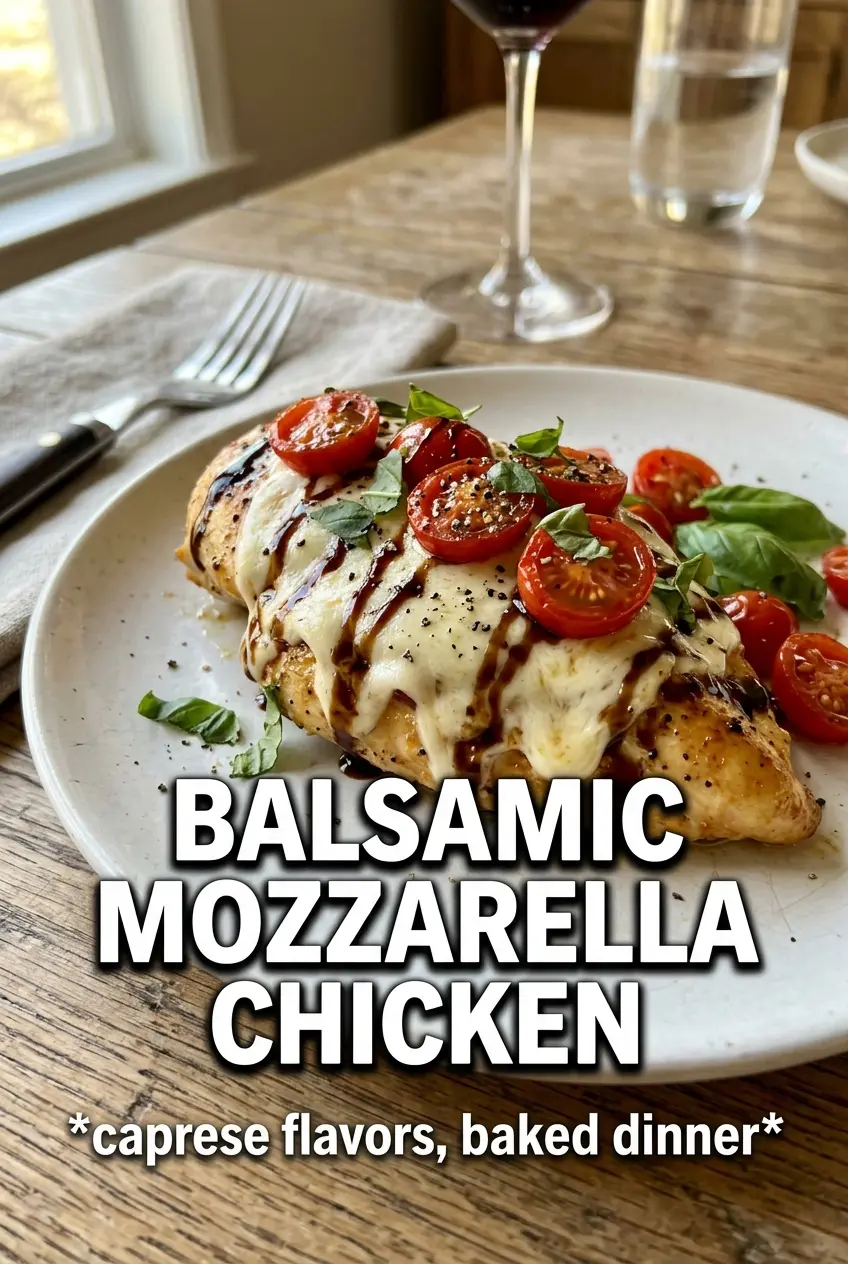
Balsamic Baked Chicken Breast with Mozzarella
Ingredients
Equipment
Method
- Whisk balsamic vinegar, olive oil, honey, minced garlic, and Dijon mustard until smooth, then season the chicken with salt, pepper, garlic powder, and Italian seasoning. Marinate for 20 minutes, reserving some of the mixture.
- Preheat the oven to 400°F, then sear the marinated chicken in an oven-safe skillet over medium-high heat for 3 minutes per side until golden.
- Transfer the skillet to the oven and bake for 18 to 20 minutes, using the reserved marinade, until the internal temperature reaches 165°F and the juices run clear.
- Remove the chicken from the oven and top each breast with mozzarella slices and cherry tomatoes, then return to bake for 4 to 5 minutes until the cheese is melted and lightly golden.
- Drizzle with balsamic glaze and garnish with fresh basil leaves so the top looks fresh and glossy.


