
Crispy-edged chicken coated in a dark, sticky Mongolian sauce is one of those dinners that disappears fast because every bite hits the same note: salty, sweet, garlicky, and glossy enough to cling to rice. The chicken stays tender under its light cornstarch crust, and the sauce tightens up just enough to coat the skillet without turning heavy or syrupy.
What makes this version work is the order. The chicken gets a dry cornstarch coating before it ever touches the pan, which gives you those golden edges that hold up under sauce. Then the sauce is boiled before the slurry goes in, so the cornstarch can thicken it cleanly instead of leaving it chalky or thin. The green onions go in at the end and stay a little blistered, which adds the right sharp bite against all that sweetness.
Below, I’m walking through the part that matters most: how to get the chicken browned fast without crowding the pan, how to build a sauce that turns glossy instead of sticky in the wrong way, and what to change if you want to use thighs or make it gluten-free.
The sauce thickened up perfectly and coated every piece of chicken without getting gummy. I used chicken breasts and it still stayed juicy because the cornstarch crust locked in the moisture.
Save this Mongolian Chicken for the night you want sticky takeout-style chicken with crisp edges and a glossy soy-ginger sauce.
The Trick to Getting Mongolian Chicken Sticky, Not Soggy
The difference between good Mongolian chicken and limp, saucy chicken comes down to how hard you sear it before the sauce goes in. If the pan is crowded or the heat is too low, the chicken steams in its own moisture and the coating turns pasty instead of crisp. You want the outside to pick up color fast while the inside stays just cooked through.
The sauce has the same issue. It needs a brief boil before the slurry is added, or the cornstarch never fully activates and the final glaze stays thin. Once the slurry goes in, the sauce should turn from watery to shiny in a minute or two. If it turns cloudy or gloppy, the heat was too low or the slurry was dumped in without enough simmering.
- Keep the chicken in a single layer as much as possible. Brown in batches if your skillet isn’t large.
- Let the sauce boil before thickening. That keeps the finish glossy instead of starch-heavy.
- Add the green onions at the end so they soften just enough without losing their bite.
What Each Ingredient Is Actually Doing in This Dish
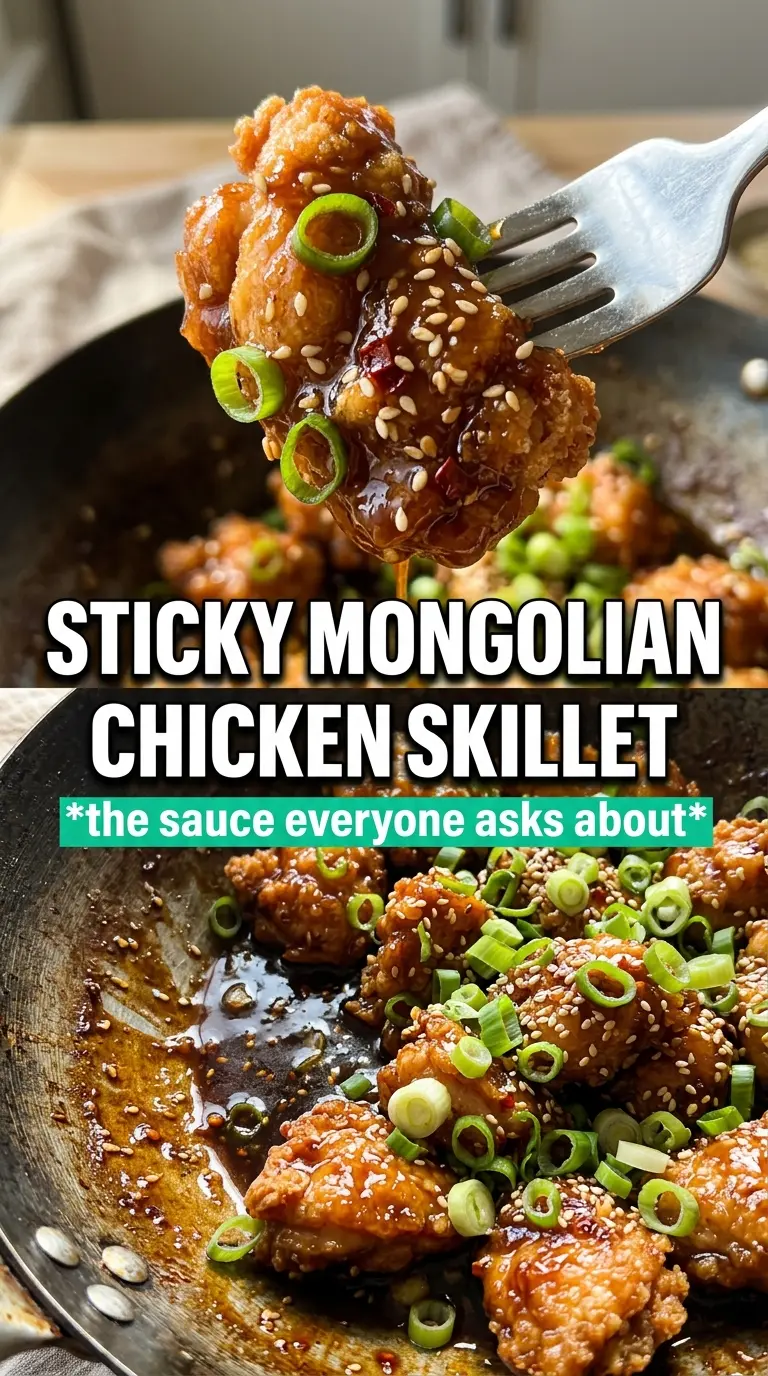
- Chicken breasts — Thin slicing is what keeps them tender in a fast stir-fry. If you cut them too thick, the outside overcooks before the center is done.
- Cornstarch — This is what gives the chicken its light crust and helps the sauce cling. Flour won’t give the same silky, takeout-style coating.
- Soy sauce, brown sugar, and hoisin — These are the backbone of the glaze. The soy brings salt and depth, the brown sugar gives that sticky finish, and the hoisin adds a little roundness that straight soy and sugar can’t match.
- Sesame oil — A small amount is enough. It adds the toasted note that reads as classic Mongolian chicken the second you taste it.
- Green onions — They’re not garnish here. Their sharpness cuts through the sweet sauce and keeps the dish from tasting flat.
- Red pepper flakes — This isn’t a hot dish, but a small amount keeps the sauce from leaning candy-sweet.
Building the Glaze Without Losing the Crisp Edges
Coating the Chicken First
Toss the sliced chicken with cornstarch, salt, and pepper until every piece looks lightly dusted, not caked. That thin coating is what gives you the browned edges and helps the sauce cling later. If there’s too much dry starch loose in the bowl, shake off the excess before the chicken hits the oil or you’ll get dusty spots instead of a clean crust.
Hard Sear, Then Out of the Pan
Heat the oil until it shimmers, then add the chicken in a single layer. Let it sit long enough to turn deeply golden on the first side before moving it around; if you stir too soon, the coating tears and sticks. The chicken doesn’t need to be fully finished in this stage, but it does need real color, because that’s where the flavor starts.
Turning the Pan Drippings Into Sauce
Once the chicken comes out, use the same pan for the garlic and ginger. They only need about 30 seconds, just until fragrant; any longer and the garlic can burn under the heat of the empty skillet. Pour in the sauce and bring it up to a boil, then stir in the slurry and watch for that quick change from thin to glossy.
Finishing With the Chicken and Green Onions
Return the chicken and add the green onions once the sauce has thickened. Toss just until everything is coated and the onions soften at the edges. If you keep cooking it after this point, the sauce tightens too far and the chicken loses the crisp texture that makes the dish worth repeating.
How to Adapt This for a Different Pantry or a Different Table
Use chicken thighs for a richer version
Boneless thighs stay juicier and give the dish a slightly fuller bite. They take about the same time to cook if sliced thin, but they won’t brown quite as sharply as breast meat, so keep the heat up and don’t overcrowd the pan.
Make it gluten-free without losing the glaze
Use tamari or a certified gluten-free soy sauce and check that your hoisin sauce is gluten-free too. The texture stays the same because the thickening here comes from cornstarch, not wheat flour.
Dial back the sweetness
Cut the brown sugar by 1 to 2 tablespoons if you want a sauce that leans more savory than sticky. The glaze will still cling, but it won’t have that deep takeout-style sweetness front and center.
Add vegetables without watering it down
Snow peas, broccoli florets, or bell peppers work best if you stir-fry them briefly before the sauce goes in. Keep the pieces dry and cut small so they don’t release too much water into the glaze.
Storage and Reheating
- Refrigerator: Store in an airtight container for up to 4 days. The sauce will thicken more as it chills.
- Freezer: It freezes well for up to 2 months, though the chicken will be a little softer after thawing. Freeze in portions with a little extra sauce if you can.
- Reheating: Warm gently in a skillet over medium-low heat with a splash of water to loosen the glaze. High heat can make the sauce tighten too fast and turn sticky in the wrong way.
Answers to the Questions Worth Asking
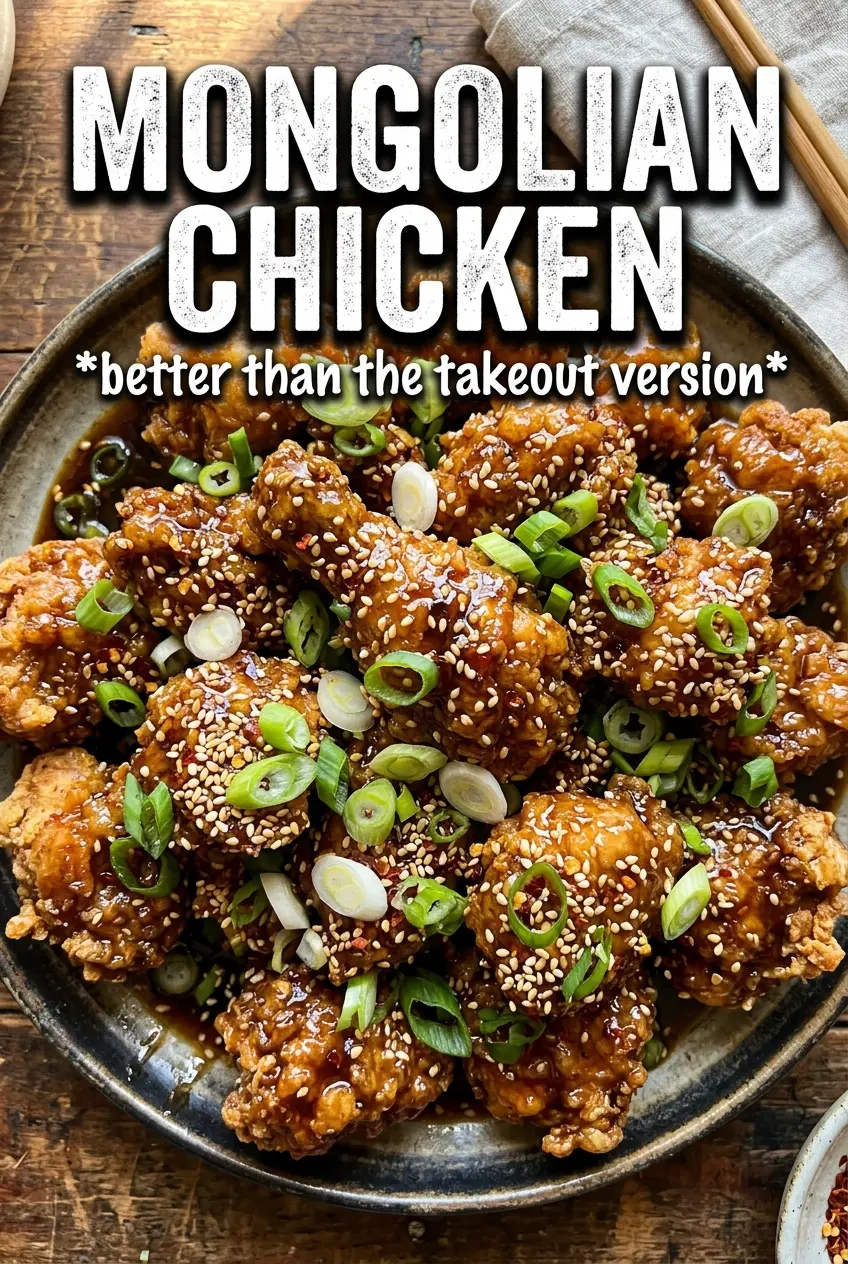
Mongolian Chicken
Ingredients
Equipment
Method
- Toss the thinly sliced chicken with cornstarch, salt, and pepper until evenly coated; the chicken should look lightly dusted and matte.
- Whisk together soy sauce, brown sugar, water, hoisin sauce, sesame oil, and red pepper flakes until the sugar dissolves and the sauce looks smooth and dark.
- Heat vegetable oil in a large skillet or wok over high heat until shimmering; cook the chicken for 3-4 minutes per side until deeply golden and cooked through, then remove to a plate.
- Add garlic and grated ginger to the same pan and stir-fry for 30 seconds until fragrant and slightly sizzling.
- Pour in the sauce and bring it to a boil; the liquid should bubble actively and look glossy-dark as it reduces.
- Stir in the cornstarch slurry and cook for 1-2 minutes until thickened and glossy; the sauce should coat the back of a spoon.
- Return the chicken to the pan with the green onions and toss until everything is glazed; charred-looking onion edges should cling to the sauce.
- Serve the Mongolian chicken over steamed rice and scatter with sesame seeds so the glaze clings to each bite.


