
Salted caramel cottage cheese ice cream lands with the same payoff as a scoop from a good ice cream shop: cold, creamy, and packed with that sweet-salty caramel hit that keeps you going back for one more spoonful. The texture is the surprise here. When it’s blended long enough, the cottage cheese disappears into a silky base that freezes up rich instead of icy, with a caramel flavor that tastes rounded and deep rather than one-note.
The part that makes this work is patience in the blender and restraint in the freezer. A quick blend leaves tiny curds behind, and those don’t magically smooth out after freezing. Two full minutes gets you a base that looks almost like soft-serve before it ever hits the freezer. The salt matters too. It keeps the caramel from tasting flat and gives the finished ice cream that grown-up sweet-salty edge.
Below, I’ve laid out the small details that matter most, plus the fixes for when the texture isn’t quite where you want it. If you’ve ever wanted a high-protein frozen dessert that still feels like dessert, this one earns its place.
I blended it for the full 2 minutes like you said, and it froze up creamy instead of icy. The caramel flavor came through beautifully, and the flaky salt on top made it taste like a real dessert.
Save this salted caramel cottage cheese ice cream for the nights when you want something frozen, creamy, and high in protein without giving up that caramel swirl.
The Blender Time That Keeps This Ice Cream from Turning Grainy
The biggest mistake with cottage cheese ice cream is stopping the blender too soon. Even if it looks smooth at a glance, tiny curds can still hide in the base, and those show up after freezing as a chalky or icy texture. You want the mixture to look glossy and almost pourable, with no visible flecks and no graininess when you rub a little between your fingers.
Caramel sauce changes the game here because it adds both sweetness and body. Brown sugar deepens the flavor and helps the base freeze with a softer scoop, while the salt keeps the dairy from tasting blunt. If your caramel sauce is thick, that’s fine; the blender will handle it. If it’s thin and watery, the finished ice cream may freeze a little harder, so the rest time before scooping matters.
What Each Ingredient Is Actually Doing in This Frozen Dessert

- Full-fat cottage cheese — This is the base, and full-fat gives the richest texture. Low-fat works, but it tends to freeze harder and taste a little sharper. Blend until it’s completely smooth, because the texture of the final ice cream depends on what happens here, not in the freezer.
- Caramel sauce — This brings the main flavor and the warm, cooked sugar note that makes the dessert taste like salted caramel instead of sweet dairy. Use a caramel sauce you actually like eating off a spoon, since a thin or overly sweet version will carry straight through.
- Brown sugar — This deepens the caramel flavor and helps keep the ice cream scoopable. You can reduce it slightly if your caramel sauce is very sweet, but don’t skip it completely unless you want a milder, more tangy dessert.
- Vanilla extract — Vanilla rounds out the caramel and softens the tang from the cottage cheese. It doesn’t read as a separate flavor here, but the ice cream tastes flatter without it.
- Sea salt — This keeps the sweetness balanced and makes the caramel taste fuller. If you only have table salt, use a little less, since it reads sharper.
- Cream cheese, optional — A tablespoon adds extra body and a more classic frozen-dessert richness. It’s helpful if your cottage cheese is on the leaner side, but the recipe still works without it.
Freezing It Smooth Instead of Icy
Blending Until the Base Turns Silky
Add everything to the blender and let it run long enough to erase every bit of curdiness. Scrape down the sides once or twice if needed. The mixture should look smooth, thick, and pale caramel in color, not speckled or separated. If it still looks slightly grainy, keep blending; that’s the difference between creamy and icy later.
Freezing in a Shallow Container
Pour the mixture into a freezer-safe container and spread it out in an even layer. A shallow container freezes faster and more evenly than a deep one, which helps keep the texture softer. If you use a deep container, the edges can overfreeze before the center sets, and that makes scooping harder.
Waiting for the Right Scoop
Four hours is enough for a firm, scoopable texture, but the ice cream should sit at room temperature for about 5 minutes before serving. That short rest matters. If you try to scoop it straight from the freezer, it’ll feel hard around the edges and the surface may crack instead of forming clean scoops.
How to Adjust the Salted Caramel Base Without Ruining the Texture
Make it dairy-free
Swap in a thick, unsweetened coconut yogurt or a dairy-free cottage cheese alternative if you can find one with a creamy texture. The flavor will shift a little toward coconut or plant-based tang, but the salt and caramel still carry the dessert. If the substitute is thinner than regular cottage cheese, freeze it in a shallower container and expect a softer scoop.
Use maple instead of caramel
Maple syrup gives you a softer, earthier sweetness that tastes less like candy and more like a fall dessert. You’ll lose some of the deep caramel note, so add a touch more brown sugar or a little extra vanilla to keep the flavor from flattening out.
Make it even richer
That tablespoon of cream cheese is small, but it changes the texture in a useful way. It adds body and a smoother mouthfeel, especially if your cottage cheese is a little loose. If you use it, blend it in completely so the final ice cream tastes creamy, not tangy or dense.
Lower-sugar version
Cut the brown sugar slightly and lean on the caramel sauce for sweetness. The texture may freeze a touch firmer because sugar helps keep ice cream soft, so let it sit closer to 10 minutes before scooping if needed.
Storage and Reheating
- Refrigerator: Not recommended. This is meant to be frozen, and the texture turns loose and grainy in the fridge.
- Freezer: Keeps well for about 1 week in a sealed container. After that, ice crystals start to creep in and the texture gets less creamy.
- Reheating: No reheating needed. For the best scoop, let it sit at room temperature for 5 to 10 minutes before serving. Don’t microwave it, or the edges will melt before the center softens.
Questions I Get Asked About This Recipe
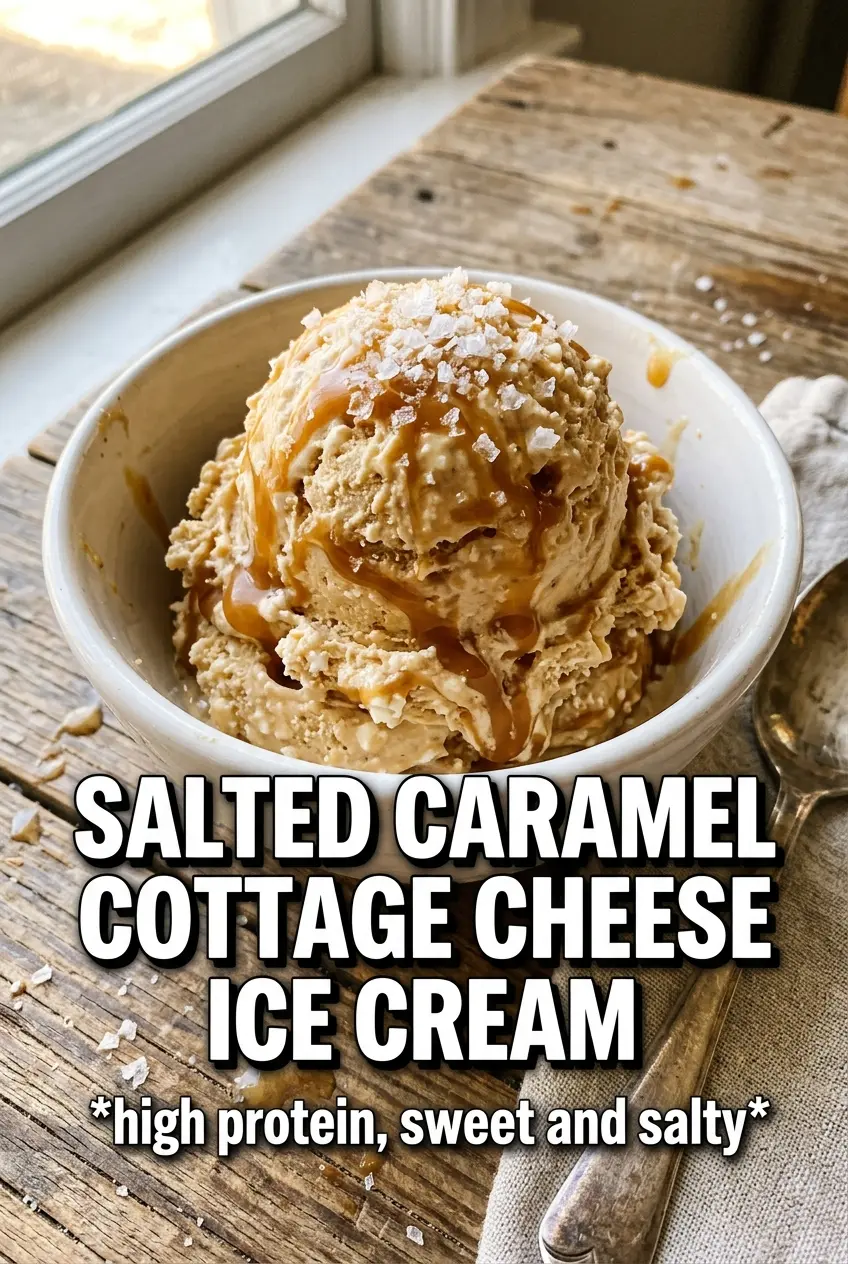
High-Protein Salted Caramel Cottage Cheese Ice Cream
Ingredients
Equipment
Method
- Blend full-fat cottage cheese, caramel sauce, brown sugar, vanilla extract, sea salt, and cream cheese until completely smooth, scraping down as needed. Blend for at least 2 minutes, using a continuous cycle, until no lumps remain.
- Taste the mixture and adjust the caramel or salt level as desired. Keep blending briefly only if you make an adjustment so the flavor disperses evenly.
- Pour the mixture into a freezer-safe container and press a sheet of parchment or plastic directly onto the surface to reduce ice crystals. Freeze for 4 hours.
- Transfer the container to the counter and let it sit for 5 minutes before scooping. The texture should soften enough to form clean scoops.
- Serve with caramel drizzle and a pinch of flaky sea salt on top. Add the toppings right before serving for the best sweet-salty contrast.


