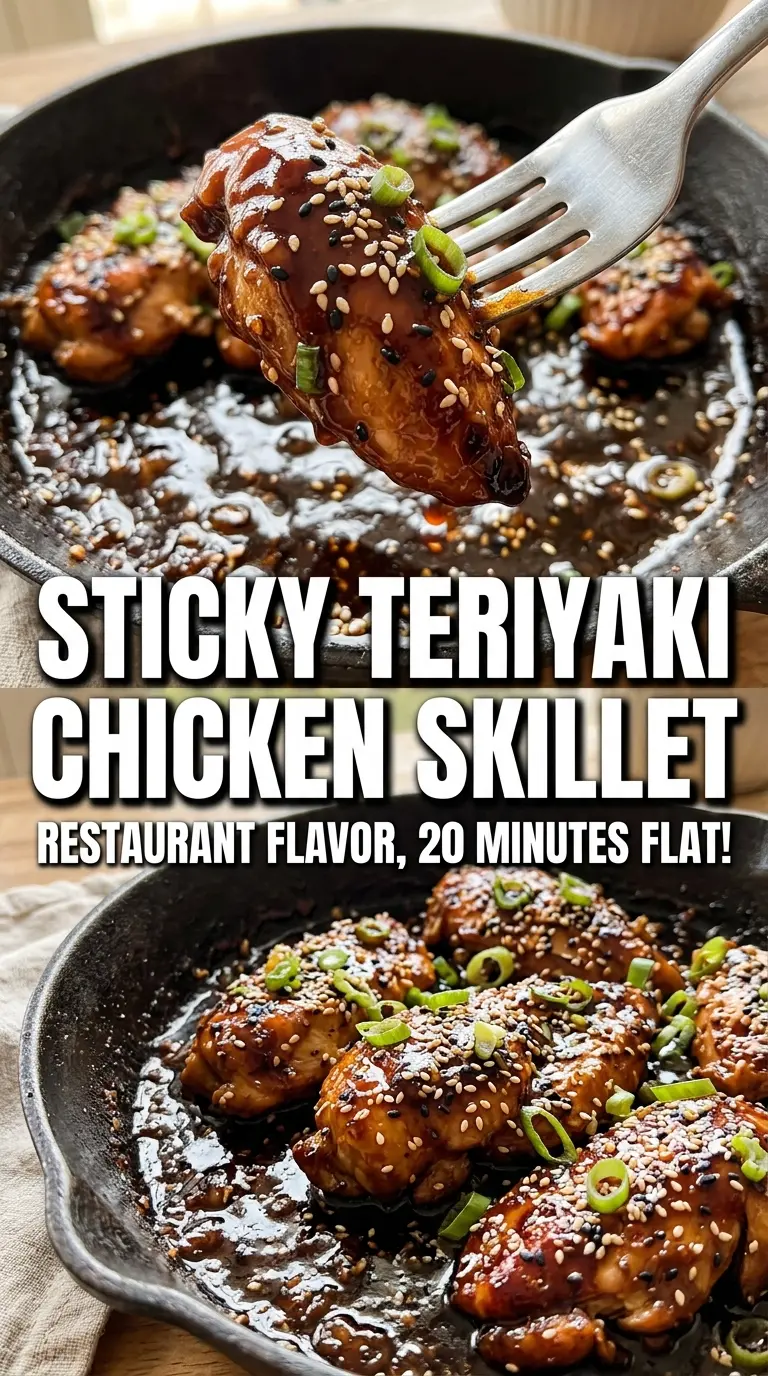
Sticky teriyaki chicken earns its place in the regular dinner rotation when the sauce turns glossy and clings to the chicken instead of pooling on the plate. The best versions hit that sweet-salty balance without tasting flat, and the edges of the chicken pick up a little char where the sugars in the sauce meet the heat. Served over rice, it has the kind of saucy finish that makes a simple bowl feel complete.
This version leans on a short marinade for flavor, then uses the same mixture again as the sauce, which keeps the ingredient list tight without sacrificing depth. Brown sugar, honey, and mirin build the sticky sheen, while garlic and ginger keep the sweetness from taking over. The key is splitting the marinade before the chicken goes in, then simmering the reserved portion until it thickens into a real glaze.
Below, you’ll find the timing that keeps the chicken juicy, the one pan move that gives you a better sauce, and a few ways to adapt it if you need to swap ingredients or stretch it into a bigger meal.
The sauce got thick and glossy right in the skillet, and the chicken stayed juicy even after the second toss in the teriyaki. My husband went straight back for a bigger bowl of rice just to get every drop.
Save this teriyaki chicken for the nights when you want a glossy homemade glaze over rice with almost no cleanup.
The Reason the Sauce Stays Glossy Instead of Turning Thin
The biggest mistake with teriyaki chicken is dumping everything into the pan at once and hoping the sauce thickens before the chicken overcooks. That usually leaves you with pale sauce, soggy coating, or chicken that tastes boiled instead of seared. The fix is to keep the marinade separate from the sauce portion and give the reserved mixture a full simmer so the cornstarch can activate and the sugars can concentrate.
Chicken thighs work especially well here because they stay tender under higher heat and can take on a little caramelization without drying out. If you use chicken breast, the timing gets tighter and the pan needs more attention. The other thing that matters is heat management: medium-high is enough to brown the chicken, but once the sauce goes in, the burner should come down so the glaze thickens without scorching.
What Each Ingredient Is Actually Doing in This Chicken
- Boneless skinless chicken thighs — These stay juicy and forgiving, which matters when you’re building color first and glaze second. Thighs also hold onto sauce better than leaner cuts.
- Soy sauce — This is the salty backbone and the main source of that deep savory note. Use regular soy sauce for the right balance; low-sodium works if that’s what you keep around, but the sauce may need a touch more simmering to taste full.
- Brown sugar and honey — They do the heavy lifting for shine and stickiness. Brown sugar gives a deeper molasses note, while honey smooths the edges and helps the glaze cling.
- Mirin or rice vinegar — Mirin adds sweetness and roundness, while rice vinegar gives the sauce a cleaner finish if that’s what you have. If you swap in vinegar, keep the amount the same; the sugar in the recipe is what keeps the flavor balanced.
- Sake or dry sherry — Optional, but it adds a little restaurant-style depth and takes the sauce away from tasting one-note. If you skip it, the recipe still works.
- Cornstarch slurry — This is what turns the pan liquid into a glossy coating instead of a thin glaze. Mix it with cold water first or it will clump the second it hits the heat.
From Marinade to Glaze Without Breaking the Sauce
Splitting the Marinade Before the Chicken Goes In
Whisk the sauce ingredients together first, then set aside half before the chicken touches anything. That reserved portion becomes your finished glaze, and it stays clean and safe because it never had raw chicken in it. If you skip this step and try to save marinade from the bowl after the chicken sits, you’ve lost your sauce and your food safety margin at the same time.
Getting Color on the Chicken
Heat the oil in a large skillet until it shimmers, then lay the chicken in a single layer and leave it alone long enough to brown. You’re listening for an active sizzle, not a furious spit; if the pan is overcrowded, the chicken steams and the sugars never get a chance to caramelize. Five to six minutes per side is the target, but go by color and internal temperature, not just the clock.
Turning the Pan Liquid into Teriyaki
Pour in the reserved marinade and bring it to a steady simmer, then stir in the cornstarch slurry. Within a couple of minutes, the sauce should go from thin and noisy to thick, shiny, and able to coat the back of a spoon. If it turns lumpy, the slurry was added too fast or the heat was too high; pull it back to a gentler simmer and whisk until smooth.
Coating the Chicken at the End
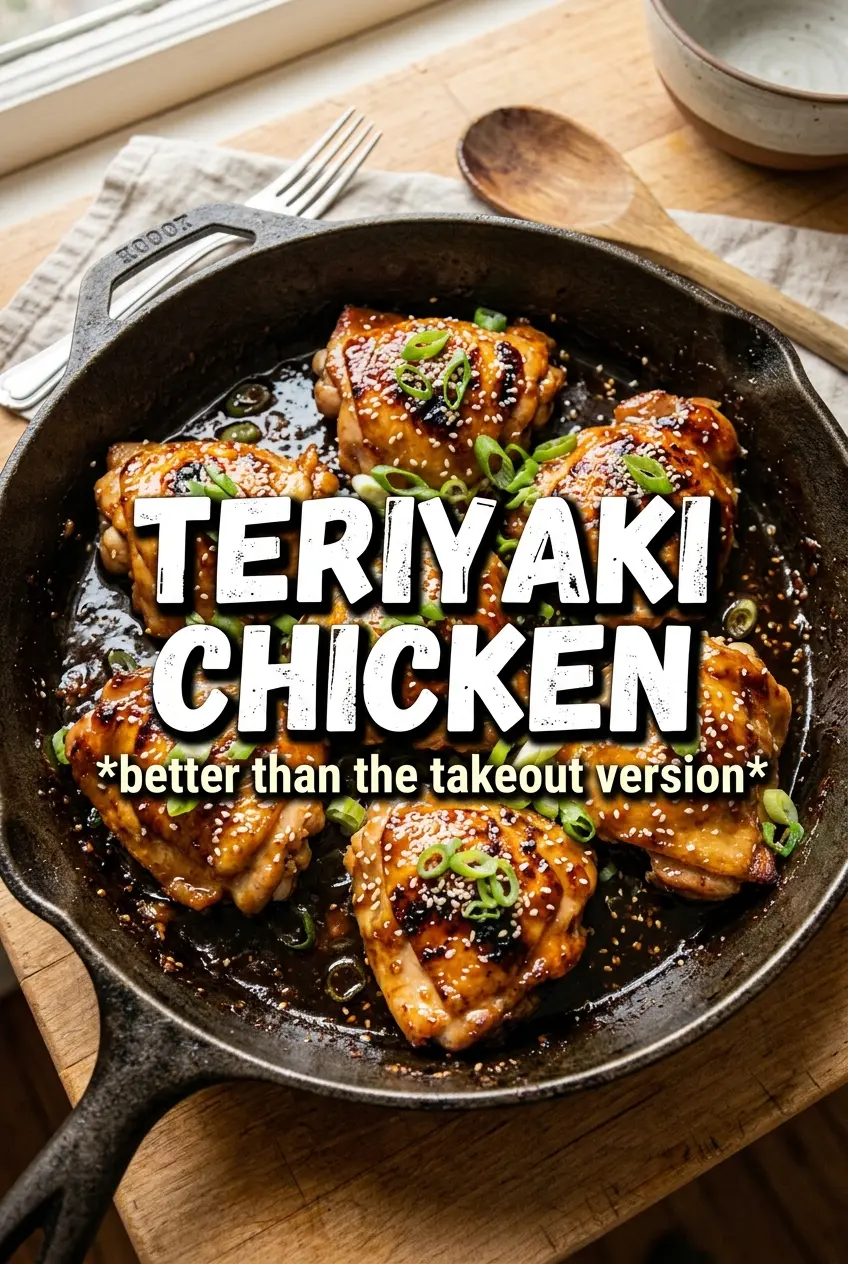
Return the cooked chicken to the pan and turn each piece until it’s lacquered in sauce. This final toss matters because it gives the chicken a fresh coat without cooking the glaze down too far. Pull it off the heat as soon as the sauce looks sticky and glossy, because teriyaki thickens a little more as it cools.
Three Ways to Adjust This Teriyaki Chicken Without Losing the Good Part
Gluten-Free Version
Use a gluten-free soy sauce or tamari in the same amount. The sauce will still be glossy and savory, but tamari usually tastes a little rounder, so you may notice the salt comes through more clearly.
Chicken Breast Instead of Thighs
You can swap in boneless skinless chicken breasts, but cut them into even pieces so they cook at the same pace. Watch the heat closely, because breast meat dries out faster and needs to come out of the pan as soon as it reaches 165°F.
Lower-Sugar Teriyaki
Cut the brown sugar to 2 tablespoons and keep the honey, or use a low-sugar honey substitute if that’s what you use in your kitchen. The sauce will be less sticky and a little less lacquered, but the ginger, garlic, and soy sauce still carry the flavor.
Make It a Meal Bowl
Serve the chicken over rice with steamed broccoli, snap peas, or shredded carrots. The extra vegetables catch the sauce well, and the bowl format stretches four servings into a more complete dinner without changing the cooking method.
Storage and Reheating
- Refrigerator: Store leftovers for up to 4 days. The sauce will thicken a bit more in the fridge, which is normal.
- Freezer: It freezes well for about 2 months, especially if you freeze the chicken and sauce together. Thaw overnight in the refrigerator before reheating.
- Reheating: Warm gently in a skillet over medium-low heat with a splash of water to loosen the glaze. The common mistake is blasting it in a hot pan or microwave until the sauce tightens up and the chicken turns dry.
Answers to the Questions Worth Asking
Teriyaki Chicken
Ingredients
Equipment
Method
- Whisk together soy sauce, brown sugar, honey, mirin, sake, garlic, and ginger, then reserve half for the sauce and use the other half to marinate the chicken for 20 minutes.
- Let the marinating chicken sit at cool room temperature or chilled as convenient until ready to cook, so the flavors penetrate the thighs.
- Heat vegetable oil in a large skillet over medium-high heat until shimmering, then add the marinated chicken and cook 5-6 minutes per side until deeply caramelized with dark amber blistered edges.
- Cook until the thickest part reaches 165°F, then remove the chicken from the pan to hold while you thicken the sauce.
- Pour the reserved marinade into the pan and bring it to a simmer.
- Stir in the cornstarch slurry (cornstarch mixed with water) and cook 2-3 minutes until the sauce turns thick and glossy.
- Return the chicken to the pan and turn to coat so the thighs are evenly glazed in the sticky teriyaki sauce.
- Serve over steamed rice, drizzle with any extra sauce, and garnish with sesame seeds and green onions.