
Slow Cooker Steak and Cheddar Potato Casserole lands with all the things people want from a comfort meal: tender potatoes, savory steak, and a cheddar blanket that melts into the layers instead of sitting on top like an afterthought. The slow cooker turns it into a true set-it-and-walk-away dinner, but the payoff still feels layered and deliberate, not muddy or overcooked.
What makes this version work is the balance between the broth-based soup mixture and the cheese. Too much liquid and the potatoes turn bland and watery; too little and the steak doesn’t have enough moisture to stay juicy as it cooks. Thin-sliced Yukon Golds help the casserole cook evenly, and the Worcestershire sauce gives the whole dish a deeper beefy note without needing a long stovetop reduction.
Below, I’ve included the small details that matter most: how to keep the layers from slipping into a soupy mess, which substitutions hold up, and what to do if your slow cooker runs hot. Those little choices are what turn this from a decent dump-and-go dinner into one you’ll want to make again.
The potatoes were tender all the way through and the sauce thickened up around the edges instead of turning watery. I used the low setting for the full six hours and the steak stayed nice and soft.
Like this slow cooker steak and cheddar potato casserole? Save it to Pinterest for a rich, layered dinner with tender steak and melty cheddar.
The Potato Layer That Keeps the Whole Casserole from Going Soft
The biggest mistake in a slow cooker casserole like this is cutting the potatoes too thick or crowding them unevenly. Thick rounds stay firm at the center while the edges overcook, and that leaves you with a mix of chalky and mushy bites. Thin, even Yukon Gold slices cook at the same pace and hold their shape just long enough to soak up the broth and cheese without collapsing.
Yukon Golds are the right potato here because they have enough starch to help the sauce thicken a little, but they don’t break apart the way russets often do in long, moist cooking. The soup mixture brings body, not just liquid, and the Worcestershire sauce sharpens the beef flavor in a way plain broth can’t. If your sauce turns thin at the end, it usually means the potatoes were sliced too thick or the lid was lifted too often during cooking.
What Each Ingredient Is Actually Doing in This Casserole

- Sirloin steak — Thin slicing matters more than the cut itself here. Sirloin stays tender enough for a long slow cook if you slice it against the grain and keep the strips thin, while a thicker cut can turn chewy before the potatoes are done.
- Yukon Gold potatoes — These hold their shape better than russets and bring a creamy texture without turning the dish into mashed potatoes. Slice them evenly, about 1/8-inch thick, so they finish at the same time as the steak.
- Cream of mushroom soup — This is the base that gives the casserole body and a little gloss. It also helps the cheddar melt into the layers instead of separating into oily pockets. If you want to swap it, use cream of celery for a lighter savory note, but the mushroom version gives the deepest flavor.
- Sharp cheddar — Sharp cheddar cuts through the richness and keeps the casserole from tasting flat. Pre-shredded cheese works, but freshly shredded melts smoother because it doesn’t have the anti-caking coating.
- Worcestershire sauce — This is the quiet ingredient that makes the beef taste more like beef. There isn’t a good one-to-one substitute, but soy sauce plus a tiny splash of vinegar can stand in if that’s what you have.
Building the Layers So the Sauce Stays Creamy, Not Watery
Season the steak before it goes in
Toss the sliced steak with the garlic powder, onion powder, smoked paprika, salt, and pepper before layering. That keeps the seasoning distributed through the casserole instead of sitting in the liquid at the bottom. The steak doesn’t need a long marinade, but it does need direct contact with the spices so every bite tastes seasoned, not just the sauce.
Mix the sauce until it looks smooth and loose
Whisk the cream of mushroom soup, broth, Worcestershire sauce, and minced garlic until the mixture is fully blended and pourable. If it looks too thick, add the broth gradually rather than all at once; the sauce should slip between the layers, not sit in clumps. That even coating is what helps the potatoes steam properly and keeps the final texture creamy.
Stack the ingredients in even layers
Start with half the potatoes, then half the onions, half the steak, half the sauce, and a layer of cheddar. Repeat the same order with the remaining ingredients. Don’t pack the layers down hard; a light hand leaves space for steam to move through the casserole, and that’s what gets the potatoes tender all the way through.
Cook until the potatoes give cleanly at the center
Cook on low for 6 to 7 hours, or on high for 3 to 4 hours, until a fork slides through the potatoes without resistance. If the potatoes are tender but the sauce still looks thin around the edges, leave the lid off for 10 to 15 minutes at the end so a little steam escapes. Add the chives right before serving so they stay bright and fresh against the melted cheese.
How to Adjust This for a Different Pantry, Diet, or Crowd
Dairy-Free Version With the Same Cozy Texture
Use a dairy-free cream soup and a good melting-style dairy-free cheddar. The casserole still works because the sauce is doing most of the heavy lifting, but the finish will be a little less rich and the cheese won’t brown or melt quite as silkily.
Gluten-Free Swap That Keeps the Sauce Thick
Choose a certified gluten-free cream of mushroom soup and make sure your Worcestershire sauce is gluten-free, since some brands contain barley. The texture stays the same, and this is the easiest way to keep the casserole from turning into a loose stew.
Swap the Steak for Ground Beef
Brown 1.5 pounds of ground beef first, drain it well, and layer it in place of the sliced steak. The casserole will taste a little more like a classic beef-and-potato bake and a little less elegant, but it still gives you the same creamy, savory comfort.
Make It Ahead for a Busier Day
You can slice the potatoes, onions, and steak up to a day ahead and store them separately in the fridge. Assemble the casserole just before cooking so the potatoes don’t discolor and the layers don’t weep liquid, which can make the finished dish looser.
Storage and Reheating
- Refrigerator: Store leftovers in an airtight container for up to 4 days. The sauce thickens as it chills, and the potatoes soften a little more by day two.
- Freezer: It freezes, but the potato texture gets softer after thawing. Freeze in portions for up to 2 months, and expect the sauce to loosen up a bit when reheated.
- Reheating: Reheat covered in the oven at 325°F or in the microwave at medium power until hot. Add a spoonful of broth if it looks dry, and don’t blast it on high heat or the steak can turn tough before the center warms through.
Questions I Get Asked About This Recipe
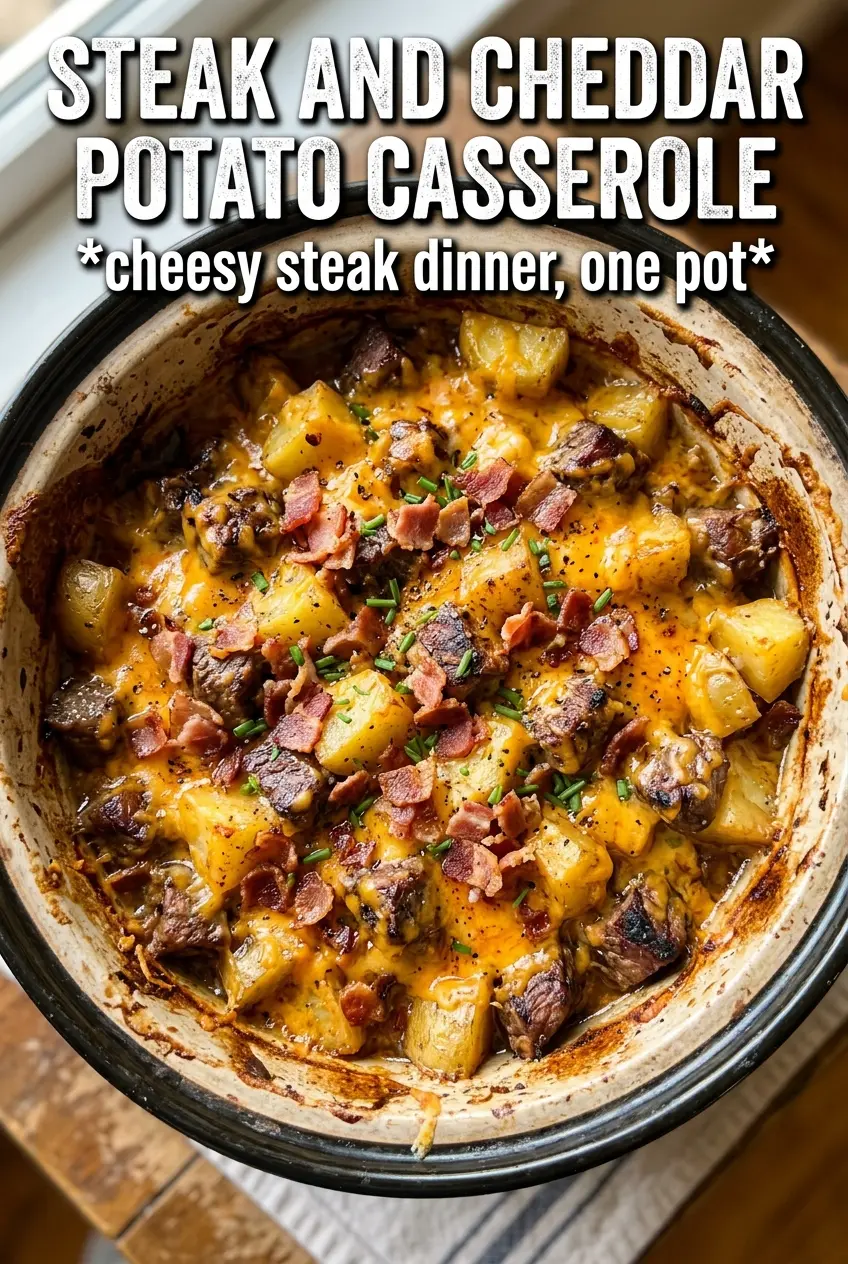
Slow Cooker Steak and Cheddar Potato Casserole
Ingredients
Equipment
Method
- Season the steak slices with garlic powder, onion powder, smoked paprika, salt, and black pepper.
- Whisk together cream of mushroom soup, beef broth, Worcestershire sauce, and minced garlic until smooth.
- Layer half the potato slices in the bottom of the slow cooker.
- Top with half the onion slices, half the steak strips, half the soup mixture, and 1 cup of shredded sharp cheddar cheese.
- Repeat layers with the remaining potato slices, onion slices, steak strips, soup mixture, and remaining cheddar cheese.
- Cook on low for 6–7 hours or on high for 3–4 hours until potatoes are fork-tender and the steak is cooked through.
- Serve the casserole garnished with fresh chives.


