
Cold, creamy, and scoopable, cottage cheese ice cream hits the same satisfying note as a good no-churn dessert, but with a lighter finish and a serious protein boost. The trick is getting past the obvious cottage cheese texture and blending it until the base turns completely smooth before it ever sees the freezer. Done right, it sets up with a dense, plush spoonful that tastes more like vanilla ice cream than a “healthy” swap.
This version works because the honey or maple syrup softens the freeze, the lemon juice sharpens the flavor just enough to keep the base from tasting flat, and full-fat cottage cheese gives the finished ice cream body. Low-fat cottage cheese can work in a pinch, but the texture won’t be as rich and the scoop will freeze harder. The blender matters too; if the curds aren’t fully broken down, they’ll show up later as icy specks instead of disappearing into the base.
Below, I’ve included the small details that matter most: how long to blend, when to taste for sweetness, and how to keep the texture creamy after freezing. If you’ve tried cottage cheese desserts before and ended up with something grainy, this method fixes the part that usually goes wrong.
I was skeptical, but blending it until totally smooth made all the difference. After 4 hours in the freezer it scooped like real ice cream, and my kids couldn’t tell it was cottage cheese.
Save this creamy cottage cheese ice cream for the days when you want an easy frozen dessert that tastes rich but still feels light.
The Part Where Most Cottage Cheese Ice Cream Turns Grainy
The biggest mistake is freezing cottage cheese that still has any visible curd texture. Once it goes into the freezer, those little bits don’t magically disappear; they get harder and more noticeable. The base needs to be blended until it looks like a thick cream, not a blended curd mixture.
Honey or maple syrup does more than sweeten here. It helps keep the texture from freezing into a block, which is why this version scoops after a short rest on the counter. The lemon juice also matters more than it looks like it should; it brightens the dairy and keeps the flavor from reading flat or chalky.
What Each Ingredient Is Actually Doing In This Ice Cream
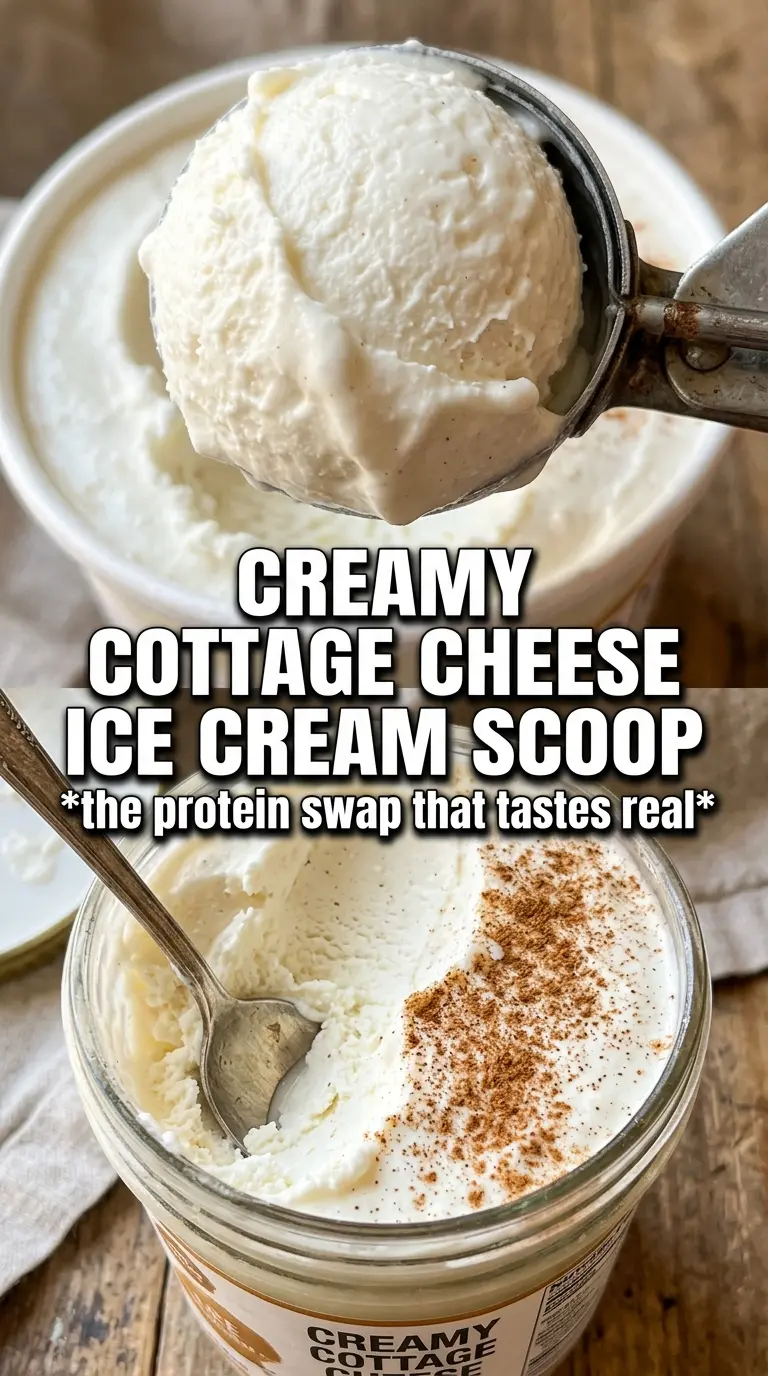
- Full-fat cottage cheese — This is the base, and the fat content helps the ice cream taste richer and freeze smoother. Full-fat gives you the best result here; low-fat cottage cheese works, but it sets firmer and tastes less plush.
- Honey or maple syrup — Either one sweetens and softens the final texture. Honey gives a rounder, more classic dairy flavor, while maple adds a deeper note that works especially well with berries or chocolate chips.
- Vanilla extract — Vanilla is what makes this taste like ice cream instead of a cold protein snack. Use real vanilla if you can, because the flavor sits front and center.
- Lemon juice — A small amount keeps the base bright and helps the flavor taste balanced after freezing. Don’t skip it unless you want the final scoop to lean dull.
- Salt — A little salt tightens up the sweetness and makes the vanilla taste cleaner. It’s a small amount, but it matters in a frozen dessert where flavors get muted.
How to Blend, Freeze, and Scoop It Without Fighting the Texture
Blend Until the Curds Disappear
Add the cottage cheese, honey or maple syrup, vanilla, salt, and lemon juice to a high-powered blender or food processor. Blend for about 2 minutes, stopping once or twice to scrape down the sides, until the mixture looks completely smooth and glossy. If you can still see grainy bits, keep going; those bits will only get more obvious after freezing.
Taste Before It Freezes
Give the base a quick taste and adjust the sweetness now, not later. Frozen desserts always taste less sweet than the mixture does at room temperature, so the base should taste a touch sweeter than you want the finished ice cream to be. If it tastes flat, add a little more honey and blend again for a few seconds.
Freeze in a Shallow Container
Pour the mixture into a freezer-safe container and spread it out evenly. A shallow container freezes faster and more evenly than a deep one, which helps keep the texture creamy instead of icy around the edges. Freeze for about 4 hours until firm enough to scoop.
Let It Soften Before Scooping
Set the container at room temperature for about 5 minutes before serving. That short rest takes the edge off the freeze and makes the texture much easier to scoop without melting the top layer into soup. Finish with berries, chocolate chips, or a drizzle of honey.
How to Change the Base Without Losing the Creamy Texture
Berry Swirl Version
Blend in a few spoonfuls of mashed strawberries or raspberries after the base is smooth, then swirl lightly instead of fully mixing. You’ll get little ribbons of fruit through the ice cream, but adding too much fruit will push the texture toward icy.
Chocolate Chip Protein Dessert
Fold in mini chocolate chips after blending if you want a more classic ice cream feel. Add them before freezing so they stay suspended in the base, but don’t overdo it or the mix-in crowding will make each scoop crumble.
Dairy-Free Swap
This recipe doesn’t convert cleanly to dairy-free with a simple one-for-one swap, because cottage cheese is doing the heavy lifting for both body and protein. If you need a dairy-free version, use a thick plant-based yogurt or coconut cream instead, but expect a softer, less tangy result.
Storage and Reheating
- Refrigerator: Not recommended. This is meant to be served frozen, and it turns loose and watery in the fridge.
- Freezer: Keeps for about 2 weeks in a tightly sealed container. Press parchment or plastic wrap directly on the surface if you want to limit ice crystals.
- Reheating: No reheating needed. For best texture, let it sit at room temperature for 5 to 10 minutes before scooping instead of microwaving it, which melts the outside before the center softens.
Questions I Get Asked About This Recipe
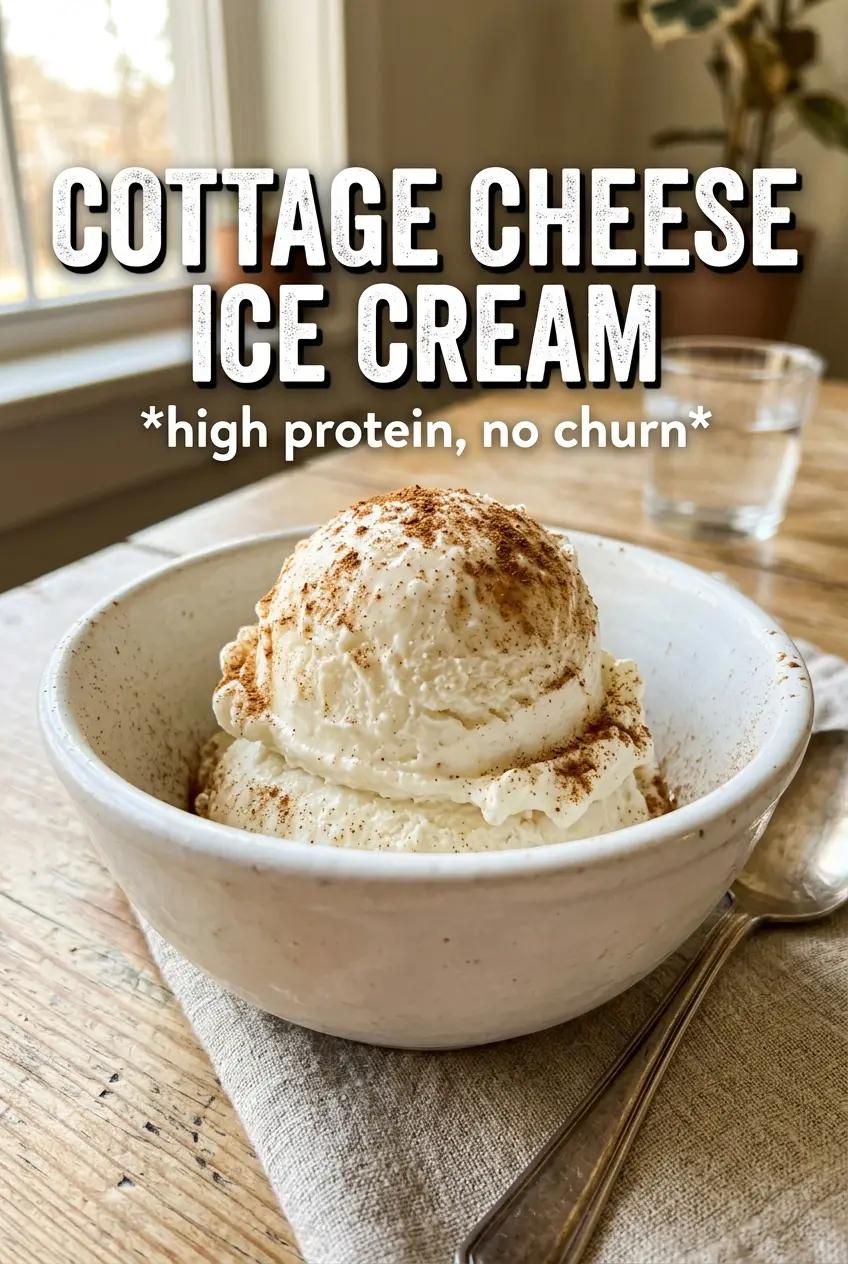
Cottage Cheese Ice Cream
Ingredients
Equipment
Method
- Blend full-fat cottage cheese, honey or maple syrup, vanilla extract, salt, and lemon juice in a high-powered blender (or food processor) until completely smooth with no lumps, about 2 minutes, using a clear “no lumps” visual cue as you scrape down once.
- Taste the mixture and adjust sweetness to your preference; the texture should remain smooth and thick, not gritty.
- Pour the blended mixture into a freezer-safe container, spreading it evenly, then freeze for 4 hours until firm.
- Let the ice cream sit at room temperature for 5 minutes before scooping, so the surface softens slightly for clean scoops.
- Top with fresh berries, chocolate chips, or honey and serve immediately, using a visible topping layer to finish.


