
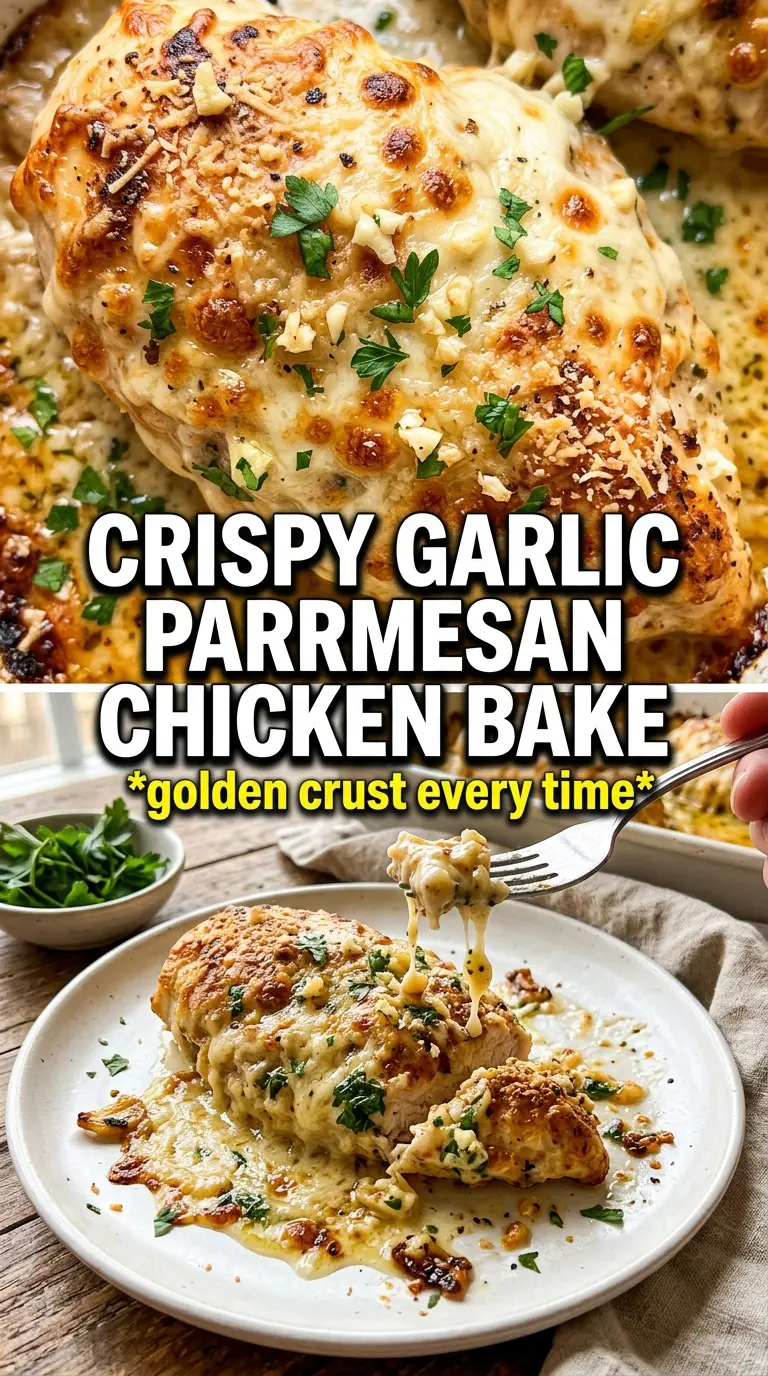
Garlic Parmesan chicken bake delivers the kind of dinner that gets scraped clean from the pan: juicy chicken breasts under a salty, garlicky crust that bakes up browned, crisp at the edges, and rich enough to feel a little special without any extra work at the stove. The topping stays in place instead of sliding off, and the Parmesan turns fragrant and toasty while the panko adds the crunch that keeps each bite from feeling heavy.
What makes this version work is the order of things. The butter and garlic go on first, so the seasoning has something to cling to, and the Parmesan-panko mixture gets pressed firmly onto the surface instead of sprinkled loosely. That press matters. It’s what helps the crust bake into one even layer instead of a patchy blanket that falls apart the moment you slice into it.
Below, I’ve included the small details that keep the chicken moist, the topping crisp, and the cheese from burning before the meat is done. There’s also a simple way to adjust the crust if you want it even more golden or need a gluten-free version.
The Parmesan crust browned up beautifully and stayed on the chicken instead of sliding off. I used a thermometer and pulled it right at 165, and the breasts were juicy with that garlicky butter flavor all the way through.
Like this garlic Parmesan chicken bake? Save it to Pinterest for a crisp, juicy chicken dinner with a golden crust that needs almost no cleanup.
The crust fails when the coating sits loose
The biggest mistake with a Parmesan chicken bake is treating the topping like a sprinkle instead of a crust. If the cheese mixture isn’t pressed onto the buttered chicken, it doesn’t fuse during baking; it dries out in patches and sheds onto the pan. That’s why this method starts with butter on the chicken first and then uses your hands or the back of a spoon to pack the coating down firmly.
Chicken breasts also cook unevenly when they’re all different thicknesses. If one end is much thicker, it’s worth a quick pound so the pieces roast at the same pace. That keeps the crust from overbrowning while you wait for the center to hit temperature.
- Pressing the topping gives you one cohesive crust instead of scattered crumbs.
- Even thickness helps the chicken finish at the same time the crust turns golden.
- Checking temperature early keeps the Parmesan from overbaking while the thickest part of the breast catches up.
What each ingredient is doing in the crust
- Chicken breasts — Boneless, skinless breasts are the right canvas here because they bake fast and give the crust a flat surface to cling to. If yours are huge, split them horizontally or pound them thinner so the topping doesn’t overcook before the meat is done.
- Butter — Melted butter is what helps the garlic and dry seasonings coat the chicken evenly. Olive oil can work in a pinch, but it won’t give the same rich flavor or the same browning on the crust.
- Fresh garlic — Minced garlic is worth using here. Garlic powder won’t give you the same aromatic punch under the cheese, and fresh garlic perfumes the whole dish as it bakes.
- Freshly grated Parmesan — This matters. Pre-grated cheese often has anti-caking agents that keep it from melting into a tight crust. Grating it yourself gives you a cleaner, craggier top.
- Panko breadcrumbs — Panko keeps the topping light and crisp instead of dense. If you need gluten-free, use gluten-free panko; regular fine breadcrumbs will make the crust tighter and less crunchy.
- Italian seasoning, parsley, and smoked paprika — These round out the crust so it tastes seasoned all the way through, not just salty and cheesy. The paprika doesn’t make it smoky in a loud way; it just deepens the color and adds a little warmth.
Getting the chicken juicy before the crust goes dark
Season the chicken first
Lay the chicken breasts in a greased 9×13 dish and season them before anything else touches the pan. Salt and garlic powder on the meat itself give the chicken flavor under the crust, not just on top of it. If the breasts are very thick, flatten the thicker end lightly so the center cooks at the same pace as the thinner side.
Build the butter-garlic layer
Mix the melted butter with the minced garlic and brush it over each breast until the surface looks evenly glossy. This step helps the coating stick, but it also carries flavor into the chicken while it bakes. If there are dry spots, the topping won’t brown evenly there, so cover the meat edge to edge.
Press on the Parmesan crust
Combine the Parmesan, panko, Italian seasoning, parsley, and smoked paprika, then press that mixture firmly over the buttered chicken. Don’t shake it on and hope for the best. The pressure is what gives you that crackled top that holds together after baking instead of sliding off in crumbs.
Bake until the center is done
Bake at 400°F for 25 to 30 minutes, but start checking early if your chicken breasts are on the smaller side. The crust should be deeply golden and the cheese should smell nutty, not sharp or burnt. Pull the dish when the thickest part of the chicken reaches 165°F, then let it rest for a few minutes so the juices settle back in.
How to adapt this crust without losing the good part
Make it gluten-free with crisp texture intact
Swap in gluten-free panko and keep the rest of the coating the same. You’ll still get a light, crunchy finish instead of the dense crust that regular crumbs can create when they bake on chicken.
Use chicken thighs for a richer dinner
Boneless thighs work well if you want more forgiving meat and a little extra richness. They may need a few extra minutes in the oven, and the crust won’t look as neat on the uneven surface, but the flavor is deep and the meat stays tender.
Add a little heat
A pinch of red pepper flakes in the Parmesan mixture gives the crust a gentle kick without overpowering the garlic and cheese. Use a light hand; too much heat can cover up the browned, buttery flavor that makes this dish work.
Storage and Reheating
- Refrigerator: Store leftovers in an airtight container for up to 3 days. The crust softens a little as it sits, but the flavor stays solid.
- Freezer: It freezes, but the crust loses some crunch. Wrap portions tightly and freeze for up to 2 months if you don’t mind a softer topping after thawing.
- Reheating: Reheat in a 350°F oven until warmed through, uncovered, so the topping can re-crisp. The usual mistake is microwaving it until the cheese gets rubbery and the crust turns damp.
Questions I Get Asked About This Recipe
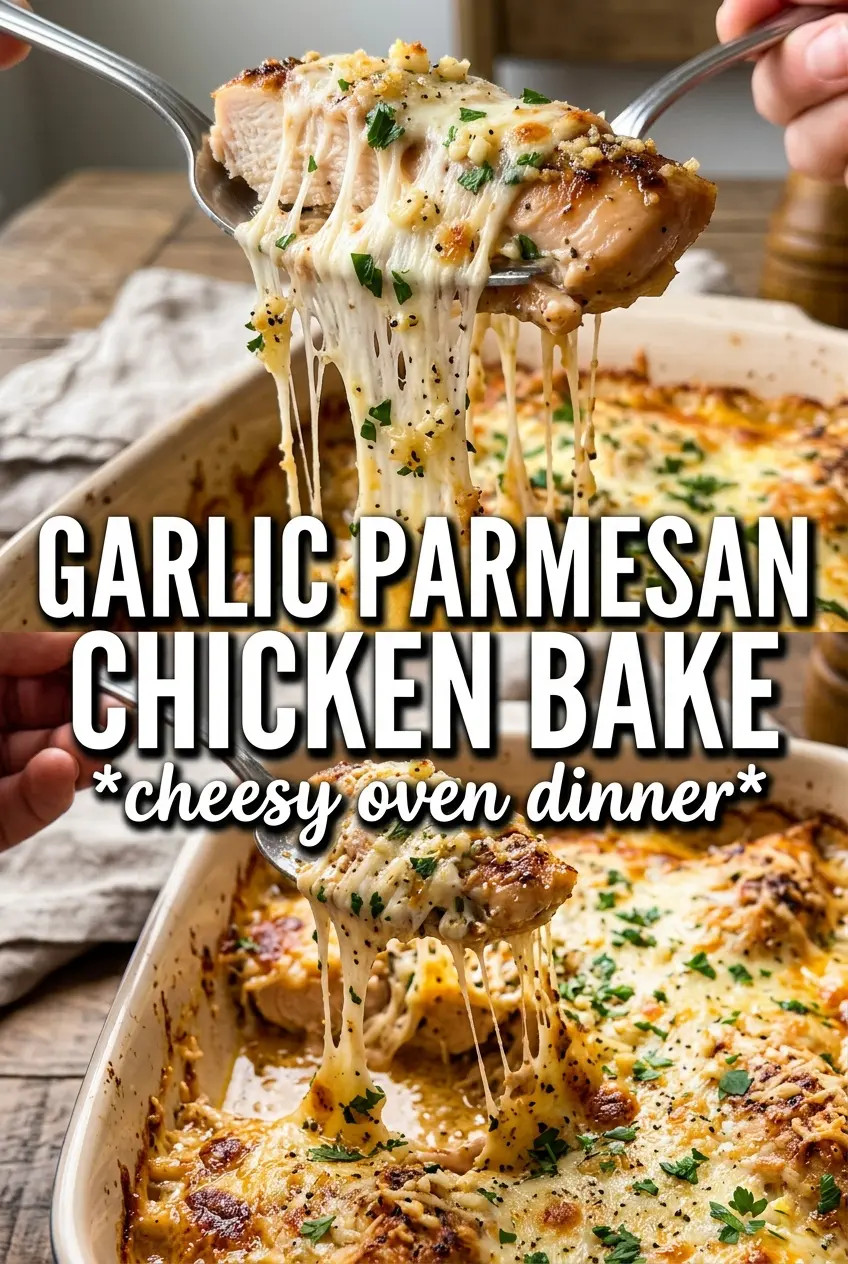
Garlic Parmesan Chicken Bake
Ingredients
Equipment
Method
- Preheat the oven to 400°F and grease a 9x13 baking dish.
- Season the boneless skinless chicken breasts with salt, pepper, and garlic powder, then place them in the prepared dish.
- Mix the melted butter with the minced garlic and brush generously over each chicken breast.
- Combine Parmesan cheese, panko breadcrumbs, Italian seasoning, dried parsley, and smoked paprika, then press firmly over the buttered chicken to coat.
- Bake at 400°F for 25-30 minutes until the Parmesan crust is deeply golden and crackled, and the internal temperature reaches 165°F.
- Garnish with fresh parsley and serve with lemon wedges.


