
Silky, sharply tart lemon sorbet has a way of waking up the whole dessert table. The texture lands somewhere between snow and satin when it’s churned cold enough, with a clean citrus bite that tastes brighter than lemonade and colder than ice cream. It’s the kind of dessert people keep going back to for one more spoonful because it never feels heavy.
This version leans on a straightforward sugar syrup, which matters more than it sounds. Sugar doesn’t just sweeten here; it controls how hard the sorbet freezes, keeps the texture scoopable, and softens the acidity enough that the lemon still tastes vivid instead of harsh. The zest goes in too, so the aroma carries through every bite instead of flattening out once the sorbet is frozen.
Below you’ll find the small details that make the difference: how cold the base needs to be before it hits the machine, when the optional egg white helps, and what to do if you want a sorbet with a little more body without losing that clean, icy finish.
I let the base chill overnight and the sorbet churned into the prettiest pale texture. The lemon zest made it taste fresh instead of just sweet, and it scooped cleanly after a couple hours in the freezer.
Save this homemade lemon sorbet for a clean, intensely tart dessert with a smooth churn and bright citrus finish.
The Part That Keeps Lemon Sorbet Scoopable Instead of Icy
Homemade sorbet turns grainy when the sugar level is off or the base goes into the freezer before it’s fully chilled. That’s the main thing people miss. The syrup needs to dissolve completely, then cool all the way down before it meets the lemon juice, because a warm base takes longer to freeze and forms larger ice crystals.
The other quiet problem is too much water and not enough body. Lemon juice brings a lot of sharp flavor, but it also brings water, so the sugar isn’t optional here. It’s what keeps the sorbet from freezing into a lemon brick.
- Fresh lemon juice — Bottled juice tastes flatter and more metallic. Fresh juice gives the sorbet its clean edge and keeps the flavor bright after freezing.
- Lemon zest — Zest carries the oil, and that oil is what makes the sorbet smell like real lemon instead of candy. Grate only the yellow part; the white pith turns bitter fast.
- Simple syrup — This is the structure. Stir until every crystal disappears, then cool it completely so the mixture chills evenly and churns faster.
- Egg white, optional — Folded in softly, it adds a little extra air and a smoother mouthfeel. Skip it if you want a cleaner, icier sorbet, but don’t whisk it straight into a warm base or it can turn foamy and unstable.
What Each Ingredient Is Actually Doing in This Ice Cream

- Base ingredient (cream, milk, or custard) — This provides the foundation and richness. Quality matters.
- Sweetener (sugar, honey, or condensed milk) — This sweetens and prevents ice crystals. The ratio is critical.
- Flavor element (vanilla, fruit, chocolate, or other) — This defines the ice cream personality. Use quality ingredients.
- Egg yolks (if making custard base) — These create richness and silky texture. Optional but elevates ice cream.
- Churning (if using ice cream maker) — This incorporates air and prevents ice crystals. Critical for smooth texture.
- Freezing temperature and time — Proper freezing prevents rock-hard texture. Store at 0°F or below.
- Mix-ins (chocolate, cookies, fruit, or swirls) — These add texture and prevent one-dimensional flavor. Add near end of churning.
- Serving temperature (slightly soft, not rock hard) — This provides creamy mouthfeel. Remove from freezer 5 minutes before serving.
Building the Base So It Freezes Fine, Not Hard
Make the Syrup First
Combine the sugar and water in a saucepan over medium heat and stir until the mixture turns completely clear. Once the last grain dissolves, pull it off the heat and let it cool to room temperature. If the syrup still feels warm when you add the lemon juice, you’ll lose some of the fresh aroma and slow down the chilling later.
Blend in the Lemon While Everything Is Cold
Stir the cooled syrup with the lemon juice, zest, and pinch of salt, then refrigerate the mixture until it’s very cold. That chill matters because the ice cream maker can only do so much; it can’t rescue a lukewarm base. If you have time, overnight is even better, and the flavor settles into a cleaner, more balanced tartness.
Use the Egg White for a Softer Scoop
If you want a slightly creamier texture, whip the egg white to soft peaks and fold it into the cold lemon mixture. Soft peaks are enough — you’re not making meringue, just adding a little lift. Don’t add it before chilling, or the mixture loses that airy texture and the result tastes flatter.
Churn Until It Looks Like Soft Snow
Pour the base into your ice cream maker and churn until it’s thick, pale, and slushy, usually 20 to 25 minutes. It should mound on a spoon and look almost like wet snow. If your machine struggles, the base probably wasn’t cold enough; let it chill longer next time instead of trying to freeze it by force.
Freeze Just Long Enough to Set
Transfer the sorbet to a container and freeze for at least 2 hours until firm. Press a piece of parchment or plastic wrap directly onto the surface to limit ice crystals if you plan to hold it longer. For the cleanest scoops, let it sit at room temperature for 5 to 10 minutes before serving.
Three Ways to Tweak the Finish Without Losing the Lemon
A Smoother, Softer Sorbet
Keep the egg white in the mix and churn a minute or two less than you think you need. That leaves a lighter texture and a softer scoop straight from the freezer, which works well if you’re serving it after a rich meal.
A Pure Dairy-Free, Egg-Free Version
Leave out the egg white and freeze the base a little longer after churning. You’ll get a cleaner, icier texture with a sharper citrus snap, which is how many classic sorbets are meant to taste anyway.
A Sweeter, Less Sharp Lemon Sorbet
Add 2 to 3 tablespoons more sugar if your lemons are especially tart. That mutes the edge just enough without turning the sorbet into lemon candy, but don’t overdo it or the texture can start to feel loose instead of crisp.
What to Do When You Want a Bigger Batch
Double everything and churn in batches if your machine is small. Sorbet freezes best when the bowl isn’t overcrowded, because too much base at once slows the set and gives you a wetter finish with larger ice crystals.
Storage and Reheating
- Refrigerator: Not recommended; sorbet melts into a thin citrus syrup and doesn’t come back.
- Freezer: Keeps well for about 2 weeks in a covered container with parchment pressed on top. After that, ice crystals start to creep in.
- Reheating: There isn’t any. For serving, let it stand at room temperature until the surface gives slightly to a spoon, then scoop with a warm spoon for cleaner portions.
Answers to the Questions Worth Asking
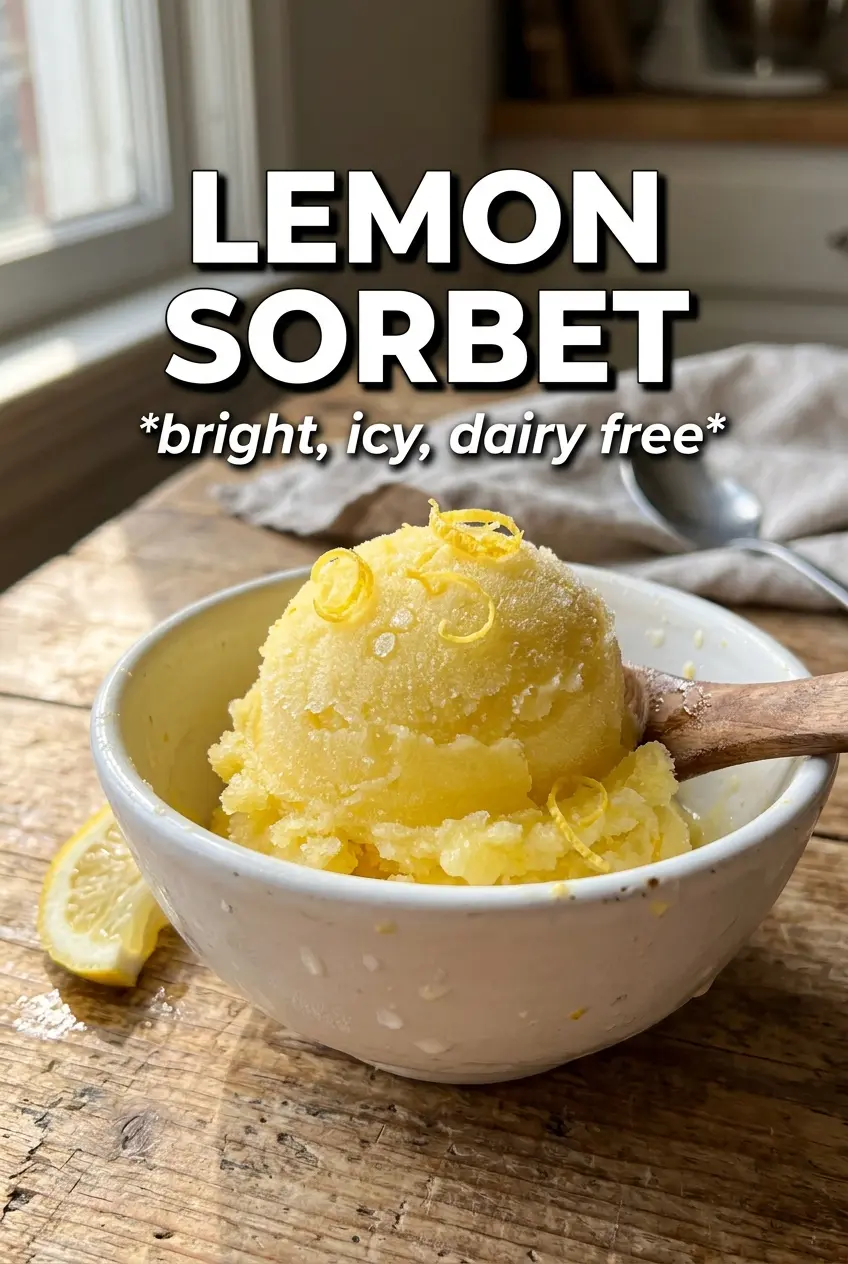
Lemon Sorbet
Ingredients
Equipment
Method
- Make simple syrup by combining granulated sugar and water in a saucepan, heating over medium and stirring until sugar fully dissolves, about 5 minutes, until the mixture looks clear.
- Cool the simple syrup completely, then combine it with fresh lemon juice, lemon zest, and salt, stirring well until evenly mixed.
- Refrigerate the lemon mixture until very cold for about 4 hours, so it thickens slightly and stays perfectly chilled.
- If using egg white, whip it to soft peaks, then fold it into the cold lemon mixture to lighten the texture.
- Churn in an ice cream maker until thick and slushy, about 20-25 minutes, until the mixture looks pale and airy.
- Transfer the churned sorbet to a container and freeze at least 2 hours until firm, so scoops hold their shape.
- Serve the lemon sorbet in chilled bowls or scoop into hollowed lemon halves, keeping it cold for clean, crisp bites.


