This butternut squash pasta is creamy, comforting, and packed with flavor! The sweet squash blends perfectly with the pasta, making each bite a delight. 🍝
Cooking this dish feels like a warm hug on a plate! I love adding a sprinkle of parmesan on top; it takes it to a whole new level. You’ll want to savor every forkful!
Key Ingredients & Substitutions
Butternut Squash: This is the star of your dish! Its sweetness balances well with pasta. If butternut squash isn’t available, acorn squash or any pumpkin can work too.
Pasta: I enjoy using fettuccine because it holds the sauce beautifully. You can swap it for gluten-free pasta or whole wheat if you prefer a healthier option.
Sage: Fresh sage adds a delightful earthy taste. Dried sage can substitute, but use less as it’s more concentrated. If you prefer, try thyme or rosemary for a different flavor twist!
Parmesan Cheese: For a salty kick, I love grated Parmesan. If you’re dairy-free, nutritional yeast can give a cheesy flavor without the dairy.
Pancetta or Bacon: These give a nice crunch and flavor boost. If you’re vegetarian, omit it or use mushrooms to add some umami without meat.
How Do You Roast Butternut Squash Perfectly?
Roasting butternut squash enhances its sweetness, making it a perfect pasta sauce base. Here’s how to do it:
- Preheat your oven to 400°F (200°C).
- Peel the squash thoroughly, scoop out the seeds, and cut it into 1/2-inch cubes.
- Toss the cubes with olive oil and salt to season evenly.
- Spread on a lined baking sheet, ensuring they’re in a single layer for even cooking.
- Roast for 20-25 minutes until tender and slightly caramelized. You’ll know they’re ready when a fork can easily pierce them!
This method brings out the best flavors and textures in your squash, setting the stage for a delicious pasta dish!
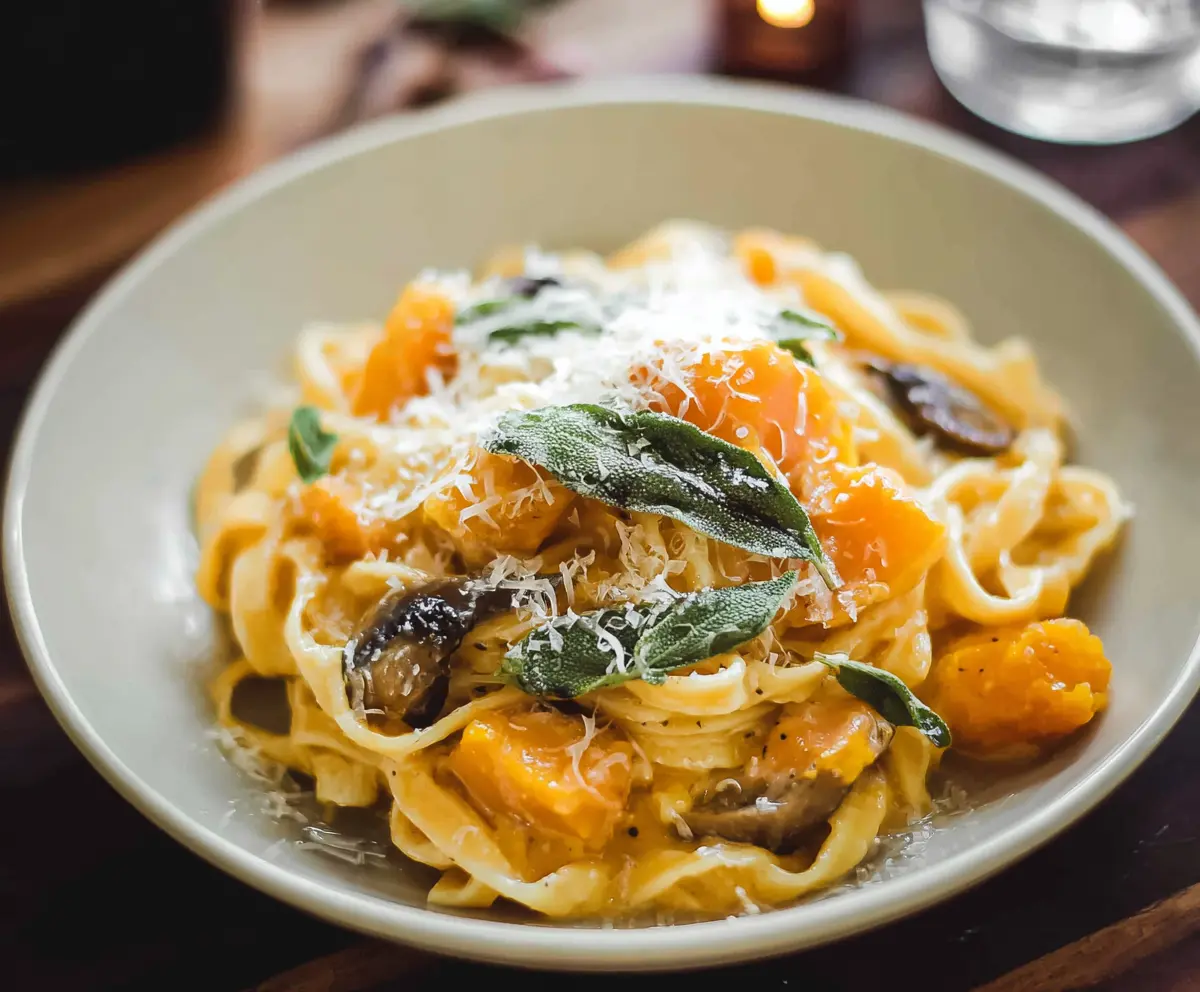
Butternut Squash Pasta
Ingredients You’ll Need:
Pasta & Protein:
- 12 oz fettuccine or tagliatelle pasta
- Crispy pancetta or bacon bits (optional, about 1/4 cup)
For the Sauce:
- 1 small butternut squash (about 2 cups diced)
- 3 tbsp olive oil, divided
- 2 tbsp unsalted butter
- 2 cloves garlic, minced
- 4-5 fresh sage leaves
- 1/4 cup dry white wine or vegetable broth (optional)
- 1/4 cup grated Parmesan cheese, plus extra for garnish
- Salt and black pepper, to taste
- Pinch of red pepper flakes (optional)
How Much Time Will You Need?
This recipe will take about 40 minutes in total. You’ll need around 25 minutes for roasting the butternut squash, 10 minutes for cooking the pasta, and about 5 minutes to put everything together. It’s a quick and satisfying meal!
Step-by-Step Instructions:
1. Roast the Butternut Squash:
First, preheat your oven to 400°F (200°C). Carefully peel the butternut squash, scoop out the seeds, and dice it into 1/2-inch cubes. Toss the cubes in 1 tbsp of olive oil and sprinkle with a pinch of salt. Spread them out on a baking sheet and roast for 20-25 minutes until they’re tender and lightly caramelized. This step brings out the lovely sweetness of the squash!
2. Cook the Pasta:
While the squash is roasting, get a large pot of salted water boiling on the stove. Once it’s bubbling, add your pasta and cook according to package directions until it’s al dente. Remember to reserve 1 cup of the pasta water before you drain it! Set the drained pasta aside for later.
3. Prepare the Sauce:
In a large skillet, heat the remaining 2 tbsp of olive oil and the butter over medium heat. Toss in the minced garlic and sauté for about 1 minute, until it’s fragrant. Be careful not to let it burn!
4. Fry the Sage Leaves:
Add the fresh sage leaves to the skillet. Fry them gently until they’re crispy, then remove them and set aside for garnishing later. These leaves will add a beautiful aroma!
5. Optional: Cook Pancetta or Bacon:
If you’re opting to use pancetta or bacon, add it to the skillet now and cook until crispy. Once cooked, remove from the pan and save for topping the dish.
6. Combine Squash with Sauce:
Now, add the roasted butternut squash to the skillet. Use the back of a spoon or a fork to mash about half of it, creating a creamy texture while leaving some chunks for bites of texture. It’s delicious!
7. Add Liquid:
Pour in the white wine or vegetable broth, if using, and let it simmer for 2-3 minutes. This is where the flavors meld together beautifully!
8. Mix in the Pasta:
Add the cooked pasta to your skillet and toss everything together, ensuring that the pasta is well-coated in the squash sauce.
9. Adjust the Sauce:
If the sauce is too thick, gradually add the reserved pasta water until you achieve your desired consistency. It should be creamy but not overly runny!
10. Add Cheese & Seasoning:
Stir in the grated Parmesan cheese and season with salt, pepper, and red pepper flakes, if you want a little heat. Mix well and taste—adjust the seasoning if needed!
11. Serve it Up:
Dish out the pasta into bowls and top each serving with crispy sage leaves, additional crispy pancetta or bacon (if using), and a generous sprinkle of grated Parmesan cheese. Enjoy!
Now, dig into your creamy, flavorful Butternut Squash Pasta! 🍂🍝
Can I Use a Different Type of Pasta?
Absolutely! While fettuccine or tagliatelle works wonderfully, you can substitute with any pasta shape you prefer, such as penne, spaghetti, or even gluten-free pasta for a dietary choice.
Can I Make This Recipe Vegan?
Yes! To veganize the dish, use olive oil in place of butter, omit the Parmesan cheese or use a vegan cheese alternative, and skip the pancetta or bacon. The dish will still be delicious and creamy with the butternut squash sauce!
What’s the Best Way to Store Leftovers?
Store any leftover pasta in an airtight container in the fridge for up to 3 days. To reheat, warm it gently in a skillet over low heat, adding a splash of water or vegetable broth to loosen the sauce if needed.
Can I Use Frozen Butternut Squash?
Yes, you can! Just make sure to thaw it completely before using. You may need to adjust the cooking time, as frozen squash typically cooks faster than fresh. Ensure it’s heated through before adding it to the sauce.