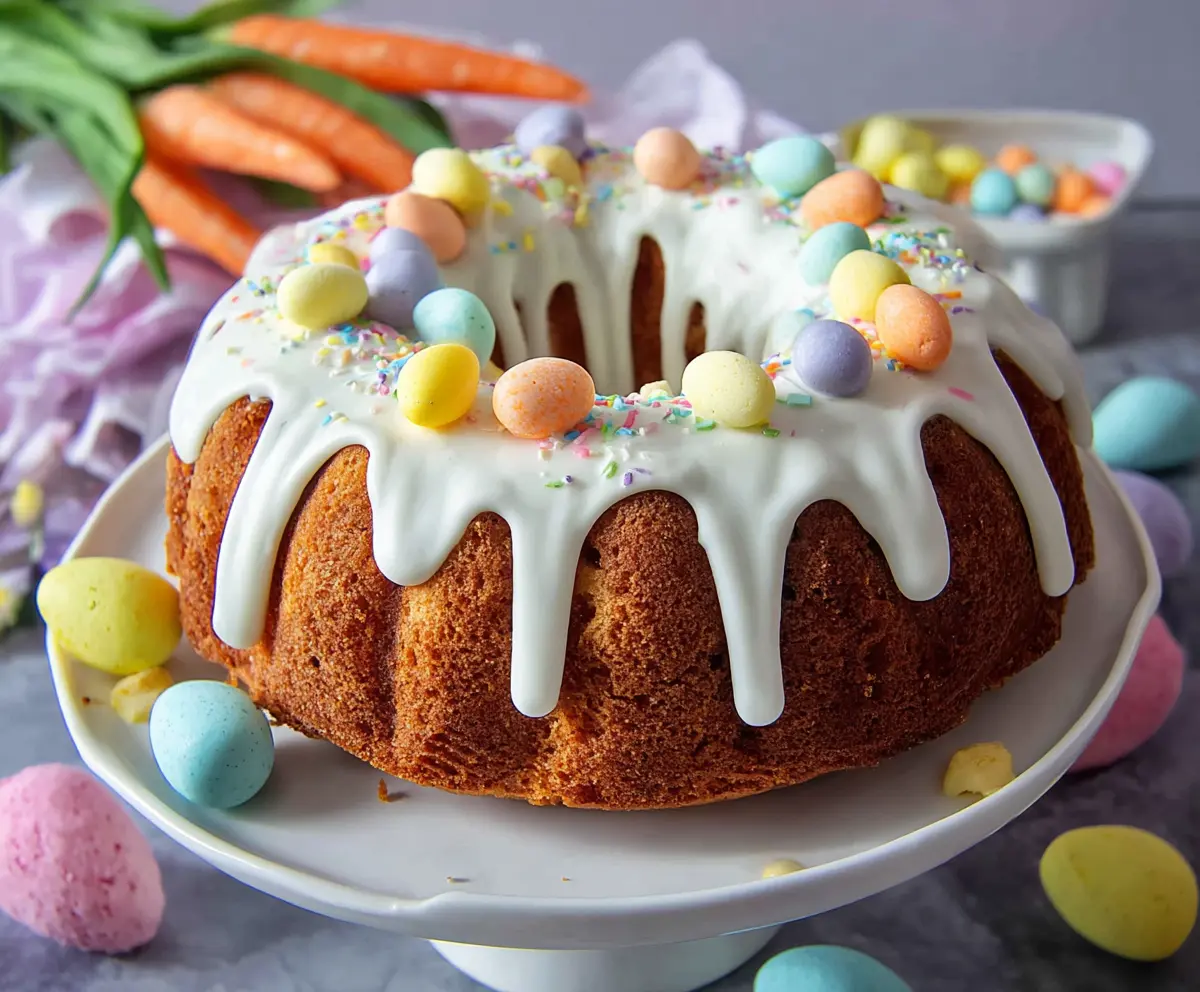
This Easter Bundt Cake is a cheerful treat that looks as good as it tastes! With fluffy vanilla cake and a colorful glaze, it’s perfect for spring celebrations.
Every time I make it, I can already hear the oohs and aahs from family and friends. Plus, it’s a snap to whip up—just pour, bake, and decorate with your favorite sprinkles!
Key Ingredients & Substitutions
All-Purpose Flour: This is the base for your cake. If you need a gluten-free option, you can use a 1:1 gluten-free flour blend. I’ve had great results with these blends!
Granulated Sugar: While white sugar provides sweetness, brown sugar can add a slight caramel flavor. Just remember it can make your cake a bit denser.
Butter: Using unsalted butter is best for controlling the salt content. If you’re short on butter, you can substitute with an equal amount of vegetable oil.
Eggs: These are crucial for structure. If you’re looking for a vegan alternative, try using a ‘flax egg’ (1 tablespoon ground flaxseed mixed with 2.5 tablespoons water, let it sit until it thickens) for each egg.
Lemon Zest: This is optional but adds a lovely brightness to the cake. If you don’t have a lemon, orange zest works well too or leave it out completely!
How Can I Get a Beautiful Bundt Cake Release Easily?
Greasing and flouring the bundt pan properly is key to preventing your cake from sticking. Start by using some softened butter or baking spray to coat every nook of the pan. Then, add a little flour, tapping and rotating the pan to ensure the flour coats all the greased areas.
- Use a pastry brush to spread the butter evenly.
- Make sure to get into all the crevices of the bundt pan.
- After flouring, tap out any excess flour before pouring in the batter. This helps the cake come out clean!
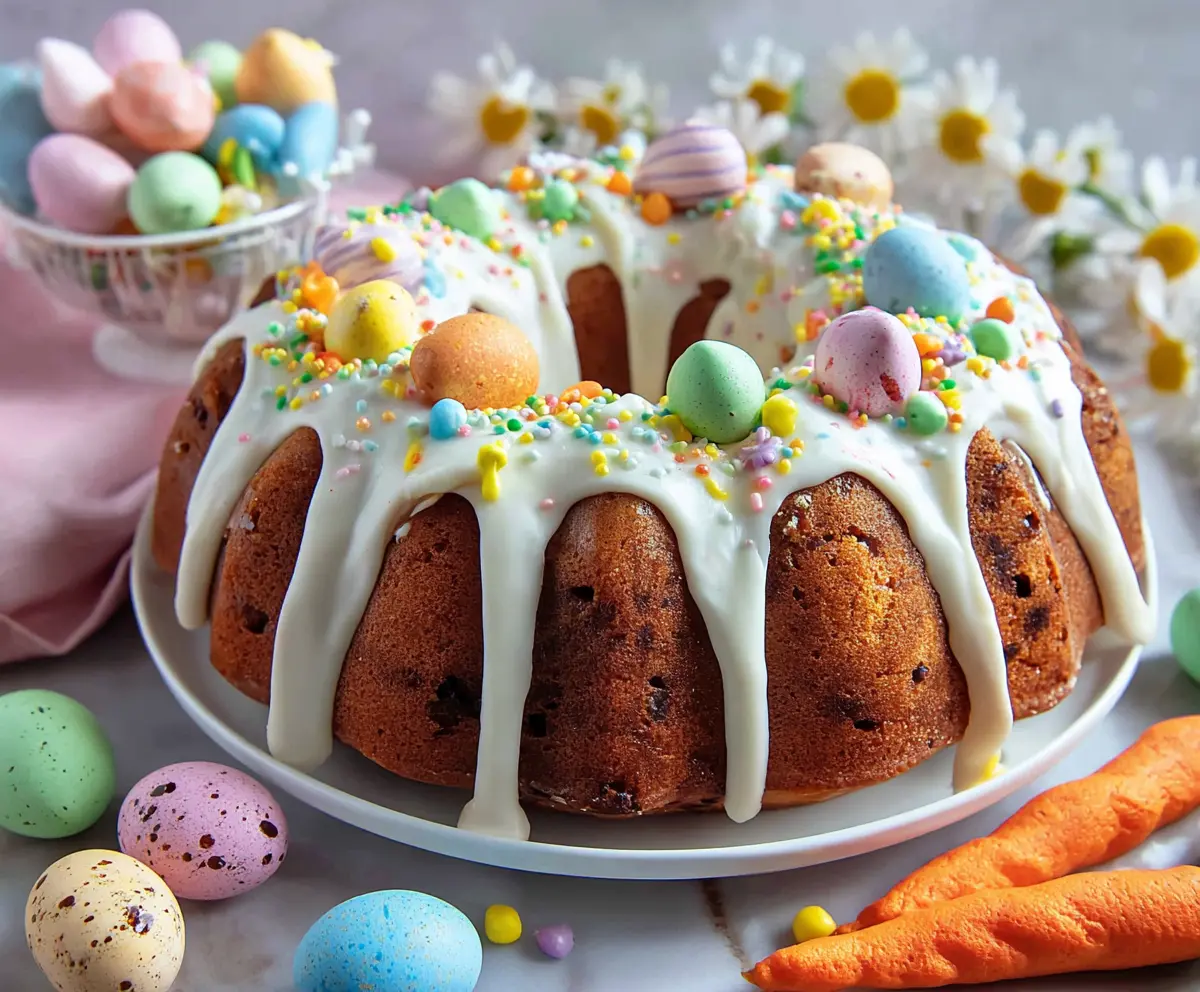
How to Make an Easter Bundt Cake
Ingredients You’ll Need:
For the Cake:
- 3 cups all-purpose flour
- 1 tablespoon baking powder
- 1/2 teaspoon salt
- 1 cup unsalted butter, softened
- 2 cups granulated sugar
- 4 large eggs
- 1 teaspoon vanilla extract
- 1 cup whole milk
- 1 teaspoon grated lemon zest (optional for added freshness)
For the Icing:
- 2 cups powdered sugar
- 2-3 tablespoons milk or cream
- 1 teaspoon vanilla extract
For Decoration:
- Mini pastel-colored candy eggs or speckled chocolate eggs
- Rainbow sprinkles
How Much Time Will You Need?
This delightful Easter Bundt Cake takes about 20 minutes to prep and 45-55 minutes to bake. After baking, let it cool for about 15 minutes in the pan, and then another hour on a wire rack to cool completely. So, total time including cooling is around 2 hours. Perfect for a festive celebration!
Step-by-Step Instructions:
1. Preheat and Prepare the Pan:
Start by preheating your oven to 350°F (175°C). Make sure to grease and flour your bundt pan thoroughly to ensure that your cake comes out easily after baking.
2. Mix the Dry Ingredients:
In a medium-sized bowl, whisk together the flour, baking powder, and salt. This will help to evenly distribute the leavening agent and make the cake rise beautifully. Set this mixture aside for later.
3. Cream the Butter and Sugar:
In a large mixing bowl, use a hand mixer or stand mixer to cream together the softened butter and granulated sugar. Beat them on medium speed until the mixture is light and fluffy, which should take about 4-5 minutes.
4. Add the Eggs and Flavorings:
Add the eggs to the butter-sugar mixture one at a time, beating well after each addition. This helps incorporate them fully. Then, stir in the vanilla extract and lemon zest if you chose to use it for that extra zing!
5. Combine Dry Ingredients with Wet:
Now it’s time to mix the dry ingredients with the wet mixture. Gradually add the flour mixture alternately with the milk, starting with the dry ingredients and ending with the dry. Be careful not to over-mix; just mix until everything is combined!
6. Pour in the Bundt Pan:
Pour the batter into your prepared bundt pan, making sure to smooth it out on top with a spatula for an even bake.
7. Bake the Cake:
Bake in the preheated oven for about 45-55 minutes. You can tell it’s done when a toothpick inserted in the center comes out clean. If your cake is browning too much on top, you can cover it loosely with foil during the last 15 minutes of baking.
8. Cool the Cake:
Once baked, remove the cake from the oven and let it cool in the pan for about 15 minutes. Then, carefully invert it onto a wire rack to cool completely. This prevents it from getting soggy.
9. Prepare the Icing:
While your cake is cooling, make the icing. In a bowl, whisk together the powdered sugar, 2 tablespoons of milk or cream, and vanilla extract. Adjust the consistency by adding more milk if needed until it’s thick but pourable.
10. Drizzle the Icing:
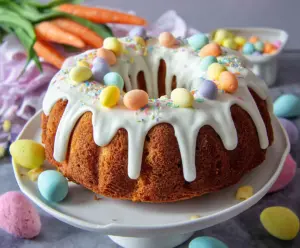
Once the cake is fully cooled, drizzle the icing generously over the top, allowing it to drip down the sides for that beautiful effect.
11. Decorate Your Cake:
While the icing is still wet, add your pastel candy eggs and sprinkle with rainbow sprinkles. This adds a festive touch perfect for Easter!
12. Let It Set and Serve:
Let the icing set for a few minutes before slicing. Serve to your friends and family, and enjoy your delicious, festive Easter Bundt Cake!
Can I Use a Different Type of Flour?
Yes! If you need a gluten-free option, you can substitute all-purpose flour with a 1:1 gluten-free flour blend. Just ensure it’s a blend that works well for baking.
What Can I Use Instead of Unsalted Butter?
You can use salted butter, just reduce the added salt in the recipe to 1/4 teaspoon. Alternatively, vegetable oil can be used in an equal amount if you’re out of butter.
How Should I Store Leftover Cake?
Store any leftover cake in an airtight container at room temperature for up to 3 days or in the fridge for about a week. You can also freeze slices wrapped tightly in plastic wrap for up to 3 months!
Can I Add Other Flavors or Ingredients?
Absolutely! Consider adding chocolate chips, nuts, or swapping the lemon zest for orange or lime for a different citrus flavor. Just keep in mind that any added ingredients may slightly alter the baking time.