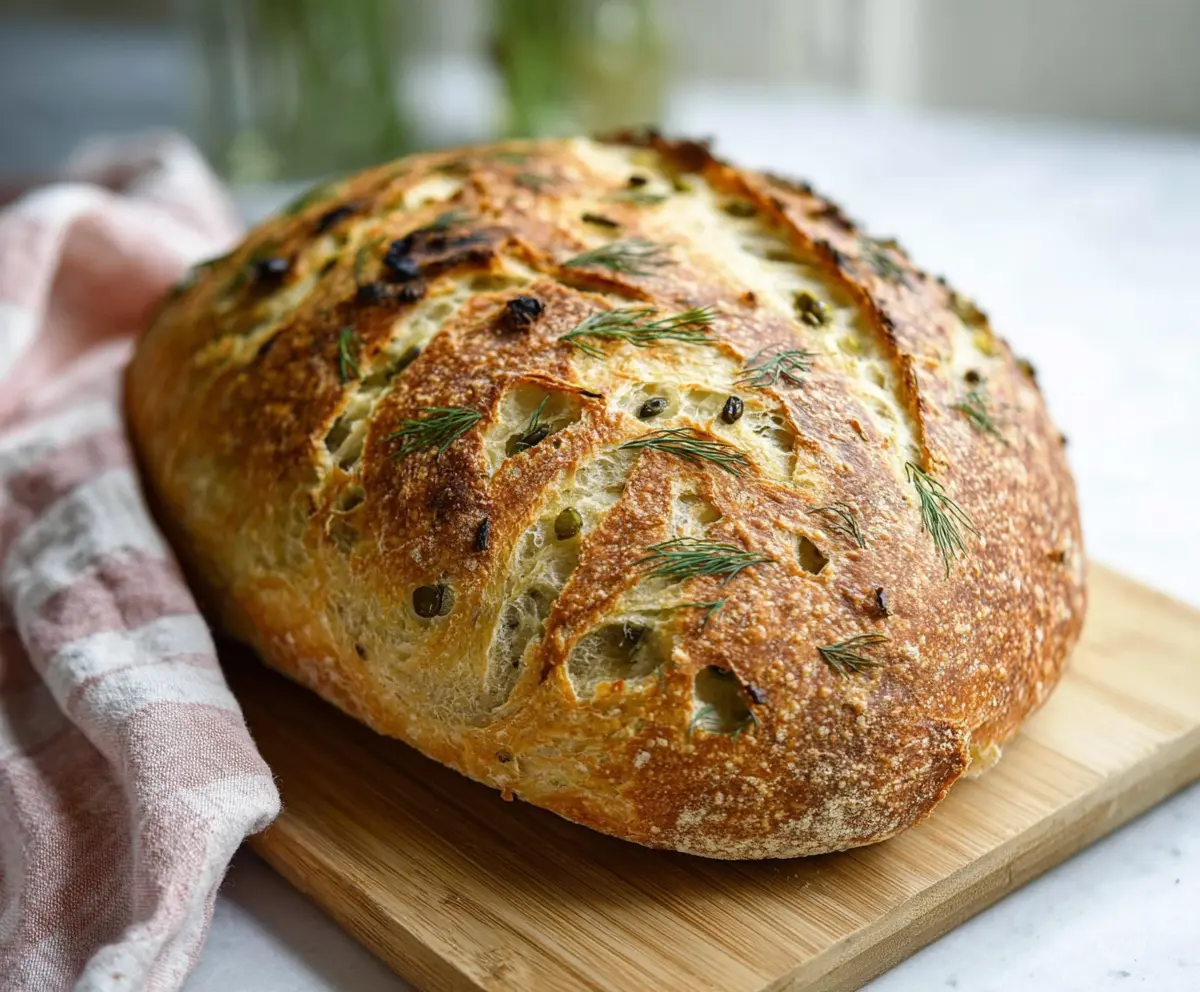
This Dill Pickle Sourdough Bread is a unique twist on a classic favorite! It combines tangy dill pickles with soft, chewy sourdough for a deliciously bold flavor in every bite.
Honestly, who knew bread could be this exciting? I love to enjoy it with sandwiches or just some butter. Plus, it’s a fun surprise for your friends at a picnic! 🥳
Key Ingredients & Substitutions
Bread Flour: Use bread flour for its higher protein content, which helps develop a chewy texture. If you need a substitute, all-purpose flour works, but the bread may not be as chewy.
Dill Pickles: Fresh dill pickles are key for flavor. You can use dill pickle spears or slices, or even bread and butter pickles for a sweeter taste, just keep in mind it will alter the bread’s overall flavor.
Sourdough Starter: A healthy, active starter is essential. If you’re new to sourdough, you can buy one, or use a friend’s. If you don’t have any, you can try instant yeast, but it won’t provide the same depth of flavor.
Fresh Dill: Fresh dill is best for that vibrant flavor. If fresh isn’t available, use dried dill (1 tsp needed), but be aware it will be less aromatic.
How Do I Properly Stretch and Fold My Dough?
Stretching and folding the dough is crucial for gluten development! Here’s how to do it right:
- After the first 2 hours of bulk fermentation, every 30 minutes, dampen your hands to prevent sticking.
- Gently lift one side of the dough, stretch it upwards, and fold it over towards the center.
- Repeat this step on all four sides of the dough. It builds strength without kneading!
Keep it gentle; you want the dough to retain air bubbles. This will give your bread that lovely open crumb! 😊
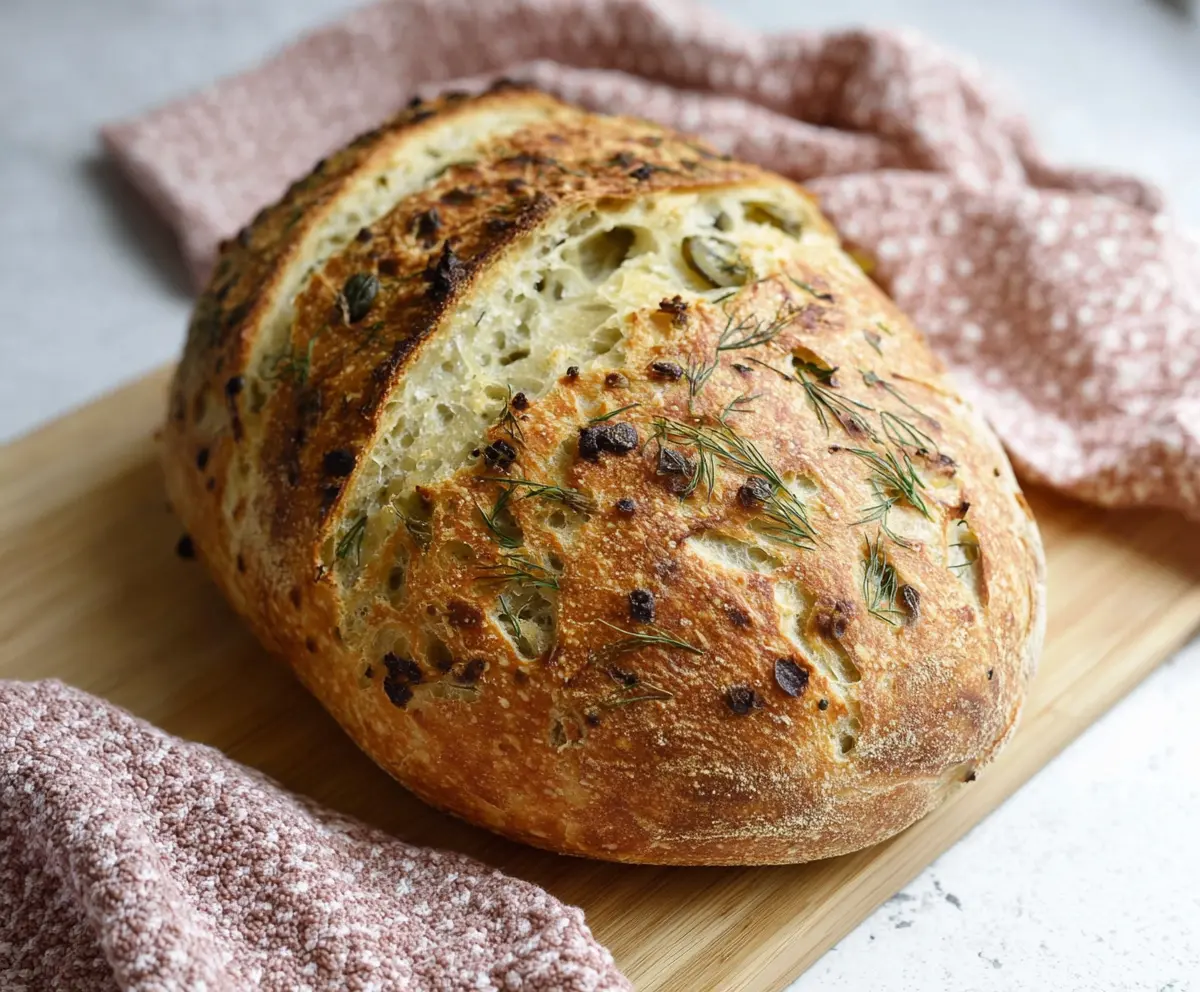
Flavorful Dill Pickle Sourdough Bread
Ingredients You’ll Need:
- 500g (about 4 cups) bread flour
- 375g (about 1 1/2 cups + 1 tablespoon) water, at room temperature
- 100g active sourdough starter (100% hydration)
- 10g salt
- 1 cup chopped dill pickles, drained and patted dry
- 2 tablespoons pickle juice (from dill pickles)
- 2 tablespoons fresh dill, chopped (plus extra for garnish)
- 1 teaspoon cracked black pepper (optional)
How Much Time Will You Need?
This recipe will take roughly 6 to 8 hours in total, including 30-45 minutes for initial preparation, about 4 to 5 hours of bulk fermentation, and 8 to 12 hours of proofing overnight. Don’t worry; most of the time is spent waiting for the dough to rise, which means you can take it easy in between!
Step-by-Step Instructions:
1. Preparing the Dough:
In a large mixing bowl, combine the bread flour and water. Mix everything together until no dry flour remains. Cover the bowl with a kitchen towel and let it rest for 30-45 minutes. This process is called autolyse and helps with gluten development.
2. Adding Starter and Salt:
Once the dough has rested, it’s time to add some flavor! Add the active sourdough starter and salt to the autolysed dough. Mix well using your hands or a dough scraper until everything is fully incorporated.
3. Adding Pickle Flavor:
Now, gently stir in the pickle juice, chopped dill pickles, fresh dill, and optional cracked black pepper. Be careful not to smash the pickles too much; we want those little bits to stay intact for texture and flavor!
4. Bulk Fermentation:
Cover the bowl with a lid or towel and let the dough rise at room temperature for about 4 to 5 hours. During the first 2 hours, every 30 minutes, perform a series of stretch and folds: reach under the dough, stretch it upwards, and fold it back over itself. This helps develop gluten and strength!
5. Shaping the Dough:
Once the dough has risen and become nice and puffy, turn it out onto a lightly floured surface. Shape it into a round or oval loaf by tucking the edges underneath to create surface tension.
6. Proofing:
Place the shaped dough seam-side up in a floured banneton or a bowl lined with a floured kitchen towel. Cover it and proof in the refrigerator for 8 to 12 hours or overnight. This slow proofing process enhances flavor and texture!
7. Preheating the Oven:
The next day, about 30 minutes before you plan to bake, place a cast iron Dutch oven or a baking stone in the oven and preheat to 475°F (245°C). This helps create a nice crust.
8. Scoring and Baking:
Take the dough out of the fridge. Gently invert it onto a piece of parchment paper. Score the top with a sharp knife or razor blade to allow it to expand while baking. You can sprinkle a few extra dill sprigs on top for added garnish and presentation.
9. Baking the Bread:
Carefully place the dough, with the parchment, into the preheated Dutch oven. Cover it and bake for 20 minutes. Then remove the lid, reduce the heat to 450°F (230°C), and bake for an additional 20-25 minutes, or until the crust is deeply golden and crisp.
10. Letting it Cool:
Once baked, remove the bread from the oven and let it cool completely on a wire rack before slicing. This waiting period is crucial to allow the crumb to set properly. Patience is key!
Enjoy your tangy, herbaceous dill pickle sourdough bread as a bold snack or use it as a sandwich base! It’ll surely be a hit with family and friends! 🍞🥒
Can I Use Active Dry Yeast Instead of Sourdough Starter?
Yes, you can substitute active dry yeast for the sourdough starter, but it will change the flavor profile. Use about 1 to 2 teaspoons of yeast mixed with warm water to activate it before combining with the other ingredients. Keep in mind that the dough will rise faster, so adjust the fermentation times accordingly!
How Do I Store My Leftover Dill Pickle Sourdough Bread?
Store any leftover bread in a paper bag at room temperature for up to 2 days for the best texture. For longer storage, wrap it tightly in plastic wrap or foil and place it in the freezer for up to 3 months. To enjoy it later, let it thaw at room temperature before slicing.
Can I Add More Dill or Pickles?
Absolutely! Feel free to increase the amount of chopped dill pickles or fresh dill to suit your taste. Just ensure the overall hydration of the dough remains balanced; too many pickles could make it too wet, so maybe reduce a little water if adding more.
Why Is My Dough Too Sticky?
If your dough feels overly sticky, it could be due to not enough flour or the humidity in your kitchen. You can sprinkle in a bit of extra flour during the mixing process, but be cautious not to add too much, as it can affect the final texture of the bread. Using a bench scraper can also help manage sticky dough effectively.