Ingredients
Equipment
Method
Make the custard base
- In a saucepan over medium heat, warm the full-fat coconut milk, heavy cream, and granulated sugar, whisking just until the sugar dissolves. Keep it steaming but not boiling (about 5 minutes), and use a visual cue of smooth liquid with no visible sugar grains.
- In a bowl, whisk the egg yolks, then slowly whisk the hot coconut mixture into the yolks to temper them. Pour in a thin stream while whisking continuously so the yolks stay glossy and don’t scramble (about 1 to 2 minutes).
- Return everything to the saucepan and cook, stirring constantly, until the mixture reaches 175F. Keep the temperature steady (about 6 to 8 minutes) and stop when it coats the back of a spoon and looks slightly thickened.
- Strain the custard into a clean bowl, then whisk in the coconut extract, vanilla extract, and salt. Mix until fully combined (about 1 minute), with a uniform creamy texture.
- Cool the custard completely at room temperature, then cover and refrigerate for at least 4 hours. Chill until very cold (no warmth when you touch the container) before churning.
Churn and freeze
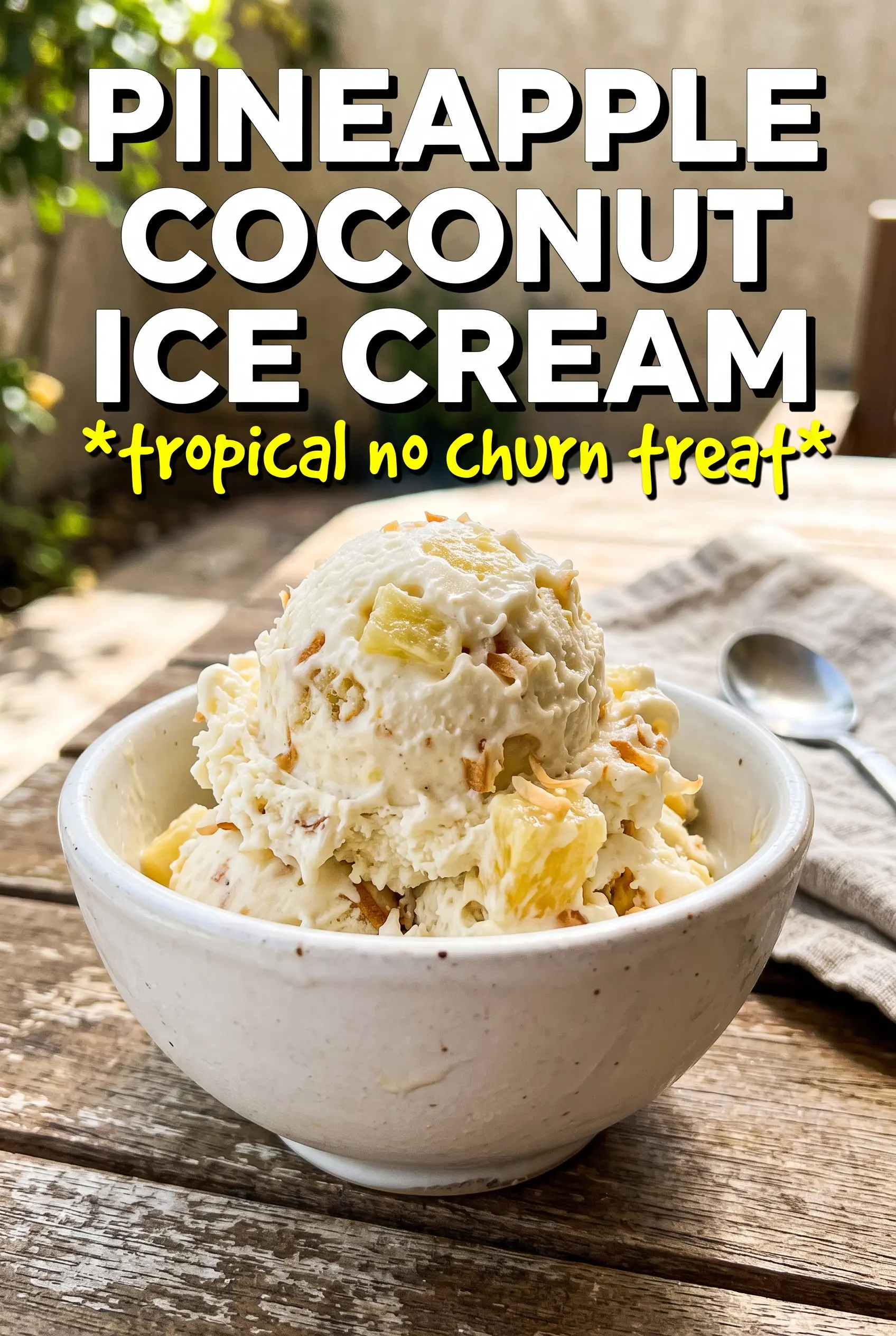
- Churn the chilled custard in an ice cream maker according to the manufacturer’s instructions until it reaches a soft-serve consistency. Add the finely diced fresh pineapple and toasted shredded coconut during the last 5 minutes so they are evenly distributed.
- Transfer the ice cream to a container and freeze until scoopable. Freeze until firm but workable (at least 2 to 4 hours), using a visual cue of a scoop that holds shape.
Notes
Pro tip: Strain the custard for an extra-smooth result, especially if any yolk bits form during cooking. Refrigerate any leftover ice cream in a covered container for up to 1 week; freeze for longer (up to 2 months) for best texture. No custard swap is used here, but for a dairy-light option you could substitute part-skim dairy with coconut-based alternatives—texture may be softer.