
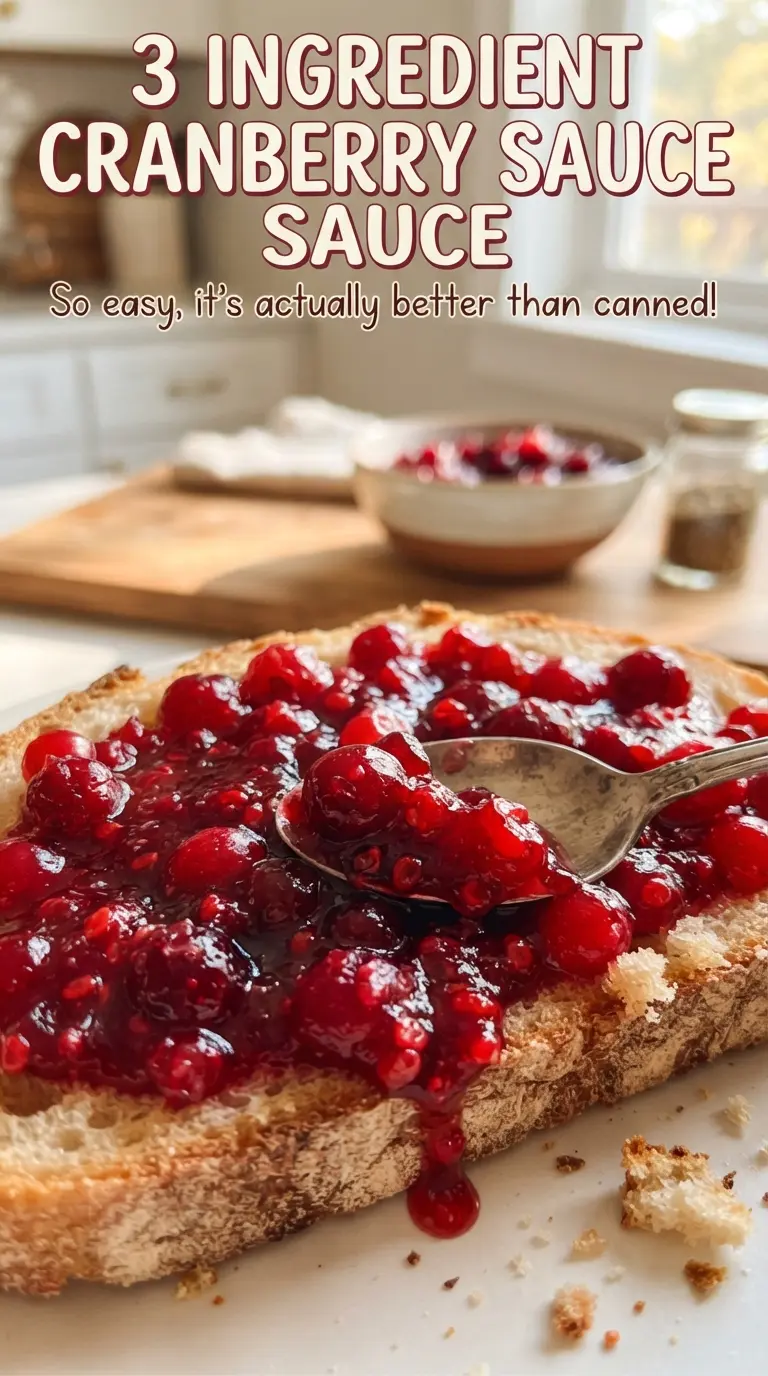
Thick, glossy cranberry sauce has a way of stealing the whole plate. The berries burst just enough to leave a mix of jammy sauce and whole fruit, and the finished texture lands somewhere between spoonable compote and clean, bright jelly. It tastes cleaner and fresher than the canned version, with enough body to sit neatly beside turkey, pork, biscuits, or a wedge of sharp cheese.
The trick is starting with the sugar fully dissolved in the water before the cranberries go in. That keeps the sauce smooth and prevents any gritty sugar at the bottom of the pan. Once the berries hit the boil, they only need a short simmer to split and thicken; if you cook them much longer, the sauce can turn dull and overly soft instead of glossy and vibrant.
You’ll find the exact simmer point below, along with a few ways to adjust the texture if you like your cranberry sauce looser, thicker, or a little less sweet.
I loved how the sauce turned thick and jammy after chilling. The berries burst but still kept some texture, and it set up beautifully on my turkey sandwich the next day.
Save this jammy 3 Ingredient Cranberry Sauce for a quick side that sets up thick, glossy, and perfectly tart.
The Shortcut That Keeps Cranberry Sauce Glossy, Not Grainy
Cranberry sauce looks simple, but the texture depends on timing. If the sugar doesn’t dissolve before the berries go in, the sauce can taste sandy instead of silky. If it simmers too hard for too long, the berries can break down into a flat puree and the color turns darker than you want. The middle ground is a full boil to start, then a steady simmer just long enough for most of the berries to pop while a few remain intact.
This version also leans on the cranberries themselves for thickness. They’re naturally high in pectin, which means the sauce tightens as it cools without any extra thickeners. That makes the cooling step part of the recipe, not an afterthought.
- Cranberries — Fresh cranberries give the cleanest flavor and the best pop. Frozen cranberries work too; use them straight from the freezer and add a minute or two to the simmer.
- Sugar — This balances the tart berries and helps the sauce set with a smooth sheen. Brown sugar will work in a pinch, but it adds molasses notes and a darker color.
- Water — It dissolves the sugar and creates the base syrup. You need enough liquid for an even simmer, but not so much that the sauce stays thin after chilling.
What Each Ingredient Is Actually Doing in This Recipe
- Primary ingredient (the star) — Quality matters most. Choose the best you can find.
- Cooking medium (oil, butter, or broth) — This carries flavors and prevents dryness.
- Seasonings (salt, pepper, spices, herbs) — Layer flavors so nothing overpowers. Build depth gradually.
- Aromatics (garlic, onion, herbs) — Cook with fat to bloom flavors. Become the foundation.
- Supporting ingredients — Complement the main ingredient without overpowering it.
- Sauce or liquid (if applicable) — Brings flavors together. Balance richness with acid.
- Acid (lemon, vinegar, wine, or other) — Brightens and prevents flat-tasting results.
- Final finish (garnish, glaze, or sauce) — Prevents one-dimensional taste and adds visual appeal.
How to Cook It Until the Berries Burst and the Sauce Sets
Building the Syrup First
Bring the water and sugar to a boil before adding the cranberries. Stir only until the sugar disappears, then stop fussing with it so the syrup can come up evenly to temperature. If you add the berries before the sugar dissolves, the bottom can stay cloudy and slightly gritty even after the sauce cools.
Letting the Cranberries Split
Once the berries go in, the pot should return to a boil quickly, then settle into a gentle simmer. You’ll hear the berries start to pop after a few minutes, and the liquid will look less watery and more ruby red. Stir occasionally so the berries on the bottom don’t scorch, but don’t mash them if you want some texture in the finished sauce.
Cooling Into the Right Texture
Take the pan off the heat when most of the berries have burst and the sauce still looks looser than you expect. It thickens a lot as it cools, and chilling finishes the set. If it looks perfect in the pan, it usually ends up too stiff in the fridge.
Less Sweet, More Tart
Cut the sugar back by 2 to 4 tablespoons if you like a sharper cranberry sauce. The sauce will still set, but the flavor will be brighter and less candy-sweet. Go too far and you’ll lose the balance that keeps the cranberries tasting rounded instead of puckery.
Frozen Cranberries
Frozen berries work well here and don’t need to be thawed first. They may take a minute longer to come back to a boil, but the final texture is the same. Keep the simmer gentle so the juices thicken instead of splashing all over the stove.
Orange Cranberry Sauce
Swap up to half the water for orange juice and add a little zest at the end. You’ll get a softer, rounder flavor that works especially well with roast turkey. If you use all orange juice, the sauce can taste sweeter and less cranberry-forward.
Make It Ahead
This sauce is a great make-ahead side because the texture improves after a night in the fridge. The pectin has time to set, and the flavor gets cleaner and more balanced. Serve it cold or let it sit at room temperature for 20 to 30 minutes before dinner.
Storage and Reheating
- Refrigerator: Store in an airtight container for up to 10 days. It thickens as it sits and may look firmer than when first chilled.
- Freezer: It freezes well for up to 2 months. Thaw overnight in the refrigerator and stir well after thawing, since the texture can loosen slightly.
- Reheating: Cranberry sauce is usually best served cold or at room temperature, but if you want it warm, heat it gently on low. High heat can make it thin and can scorch the sugars at the bottom of the pan.
Answers to the Questions Worth Asking
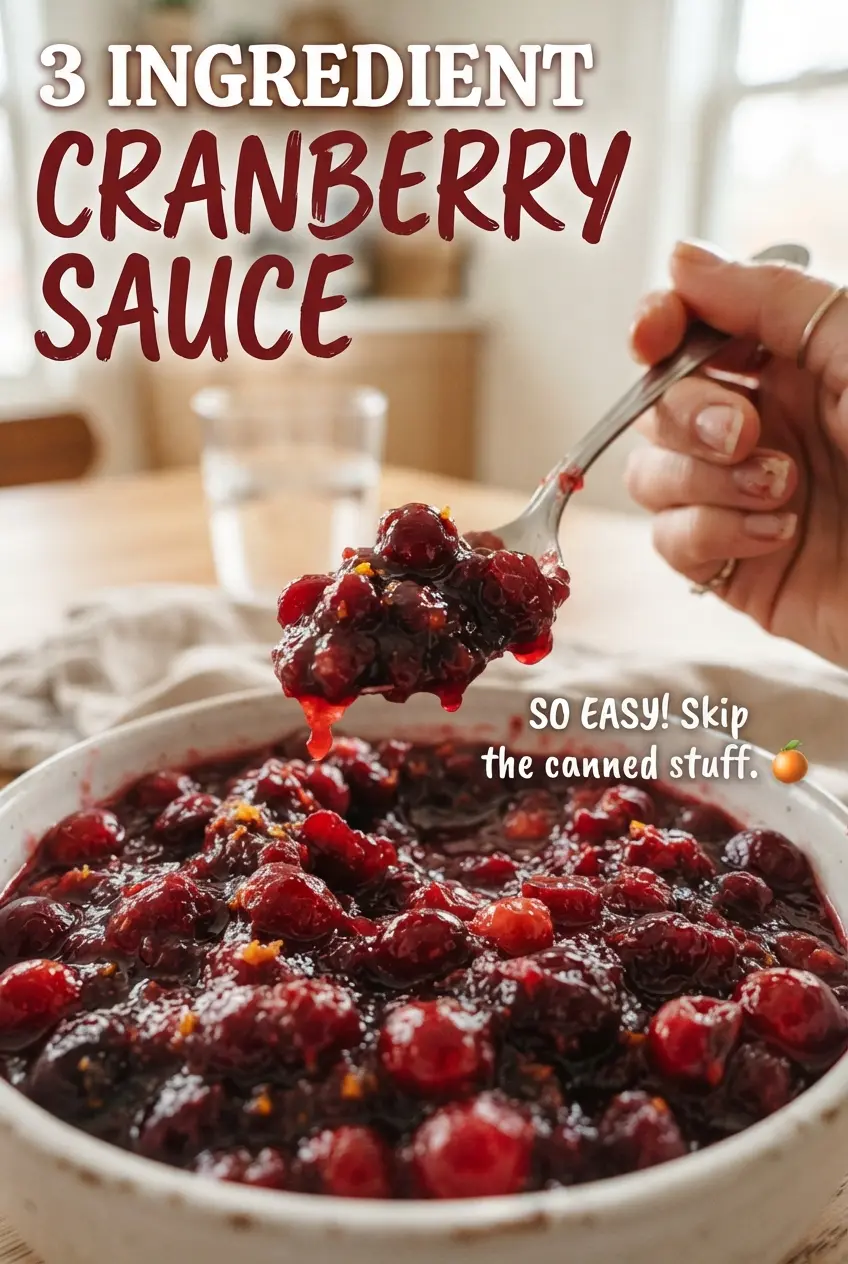
3 Ingredient Cranberry Sauce
Ingredients
Equipment
Method
- In a saucepan, bring the water and granulated sugar to a boil over medium-high heat, stirring until the sugar dissolves. Keep it at a steady boil until the liquid looks clear and uniform, about 2 minutes.
- Add the fresh cranberries to the boiling syrup and return to a boil, stirring to coat the berries. Continue boiling until bubbles break across the surface, about 1 minute, then reduce heat.
- Reduce heat to a simmer and cook for 10 minutes, stirring occasionally, until the berries burst and the sauce thickens. Look for popped, glossy berries and a syrupy consistency that clings lightly to the spoon.
- Remove the saucepan from the heat and let the cranberry sauce cool completely. The color will deepen to a jammy ruby as steam fades and the sauce thickens.
- Chill the cranberry sauce until serving so it sets as it cools. Serve cold, with a spoonful that holds its shape.


