Deep golden broth, tender shredded chicken, and soft noodles make this flu-fighting chicken noodle soup the kind of bowl people ask for when they want something comforting that still tastes bright and clean. The ginger, garlic, lemon, and a small hit of cayenne give it the warm, clearing quality that makes each spoonful feel like it’s doing a little more than dinner.
Bone-in chicken is the quiet advantage here. It gives the broth more body without needing extra ingredients, and the chicken simmers right in the same pot with the vegetables, so every layer of flavor builds together instead of tasting separately cooked. The lemon juice and apple cider vinegar go in at the end, which keeps the soup lively instead of dulling it down with too much early acid.
Below you’ll find the timing that keeps the noodles from turning mushy, the ingredient swaps that still preserve the broth’s depth, and the small finishing touch that makes this soup taste fresh even on the second day.
The broth had that rich, golden color and the ginger-garlic flavor came through without being harsh. I added the noodles at the end like you said and they stayed perfect, even after lunch the next day.
Save this chicken noodle soup for the days when you want a deeply golden broth, ginger warmth, and noodles that stay tender instead of soggy.
The Broth Needs the Chicken Bones, Not Just the Chicken
The biggest mistake in chicken noodle soup is treating the broth like a background ingredient. If you start with boneless meat only, you’ll get a lighter soup that tastes fine but not especially full. Bone-in chicken gives the simmering liquid more body, and that extra richness is what makes the ginger, garlic, and turmeric taste rounded instead of sharp.
There’s another small point that matters here: the noodles go in after the chicken is cooked and shredded. If they boil for the full soup simmer, they soak up too much liquid and turn bloated. Keeping them separate until the end gives you a clearer broth and better texture in the bowl.
- Bone-in chicken — This is what gives the soup its depth. Boneless chicken breasts work in a pinch, but the broth will be thinner and less satisfying.
- Fresh ginger and garlic — Use the fresh version here. Powdered ginger won’t give the same clean heat, and pre-minced garlic can taste muddy in a broth this simple.
- Turmeric — It adds color and a soft earthy note. You don’t need much; too much and the soup starts tasting dusty instead of bright.
- Lemon juice and apple cider vinegar — These finish the soup by waking up the broth. Add them at the end so the acidity stays fresh and doesn’t cook flat.
What Each Ingredient Is Actually Doing in This Soup

- Bone-in chicken — This is the base of the broth’s body. If you only have boneless chicken, it will still work, but simmer it gently and don’t overcook it or the meat turns stringy before the broth has much chance to deepen.
- Carrots, celery, and onion — These build the classic soup backbone and sweeten the broth as they soften. Dice the onion finely so it melts into the liquid instead of floating as sharp chunks.
- Garlic and ginger — These are the warming notes that make this feel restorative. Grating the ginger gives more flavor than slicing it, and minced garlic distributes better than whole cloves.
- Honey, lemon juice, and apple cider vinegar — Honey softens the heat, while lemon and vinegar sharpen the finish. If your soup tastes flat, this is the trio that fixes it.
- Egg noodles — They give the soup its familiar comfort. Standard egg noodles are the right choice; whole wheat noodles will make the broth taste heavier and can overtake the delicate ginger notes.
How to Keep the Broth Bright and the Noodles Tender
Building the Aromatic Base
Combine the chicken, vegetables, garlic, ginger, broth, turmeric, cayenne, and thyme in a large pot and bring it up to a boil before lowering the heat. The broth should move at a gentle simmer, not a hard bubbling boil, or the chicken can tighten and the vegetables can break down too fast. You want the liquid fragrant and golden, with the ginger and garlic smelling warm but not bitter.
Cooking the Chicken Through
Simmer until the chicken is cooked through and pulls apart easily, about 25 to 30 minutes depending on the size of the pieces. If the broth looks cloudy, that’s not a problem; what matters is that the chicken is tender enough to shred without resistance. Pull it out as soon as it’s done, because leaving it in too long dries it out before the noodles even go in.
Adding the Noodles at the End
Shred the chicken and return it to the pot, then stir in the egg noodles and cook just until tender. Start checking them at the six-minute mark, because overcooked noodles turn starchy and drag the whole soup down. The soup should still look brothy when the noodles are done, not thick and sludgy.
The Bright Finish
Stir in the honey, lemon juice, and apple cider vinegar off the heat or over very low heat, then season with salt and pepper. This is where the soup goes from one-dimensional to lively. Finish with extra lemon wedges and parsley, because the fresh squeeze right before eating is what keeps the bowl tasting clean.
How to Adapt This for Different Kitchens and Different Needs
Make It Gluten-Free
Swap the egg noodles for a certified gluten-free noodle that holds its shape in broth. Rice noodles or gluten-free rotini both work, but add them only at the end and watch the clock closely, because they can go soft faster than wheat noodles.
Use Boneless Chicken for a Shorter Simmer
Boneless thighs or breasts cut the simmer time a little, and thighs stay juicier if you’re worried about dry meat. The tradeoff is a broth that tastes a touch lighter, so don’t skip the lemon and vinegar at the end; they help make up for the missing richness from the bones.
Dial Back the Heat
If you want a milder bowl, cut the cayenne in half or leave it out entirely. The soup will still taste warming from the ginger and garlic, but it won’t have that gentle burn at the back of the throat.
Storage and Reheating
- Refrigerator: Store for up to 4 days. The noodles will keep absorbing broth, so expect the soup to thicken a bit overnight.
- Freezer: Freeze the soup without the noodles if you can. Noodles turn mushy after thawing, so cook a fresh batch when you reheat.
- Reheating: Warm gently on the stove over medium-low heat until steaming. If it looks too thick, add a splash of broth or water; boiling hard will break the noodles and dull the ginger and lemon.
Questions I Get Asked About This Recipe
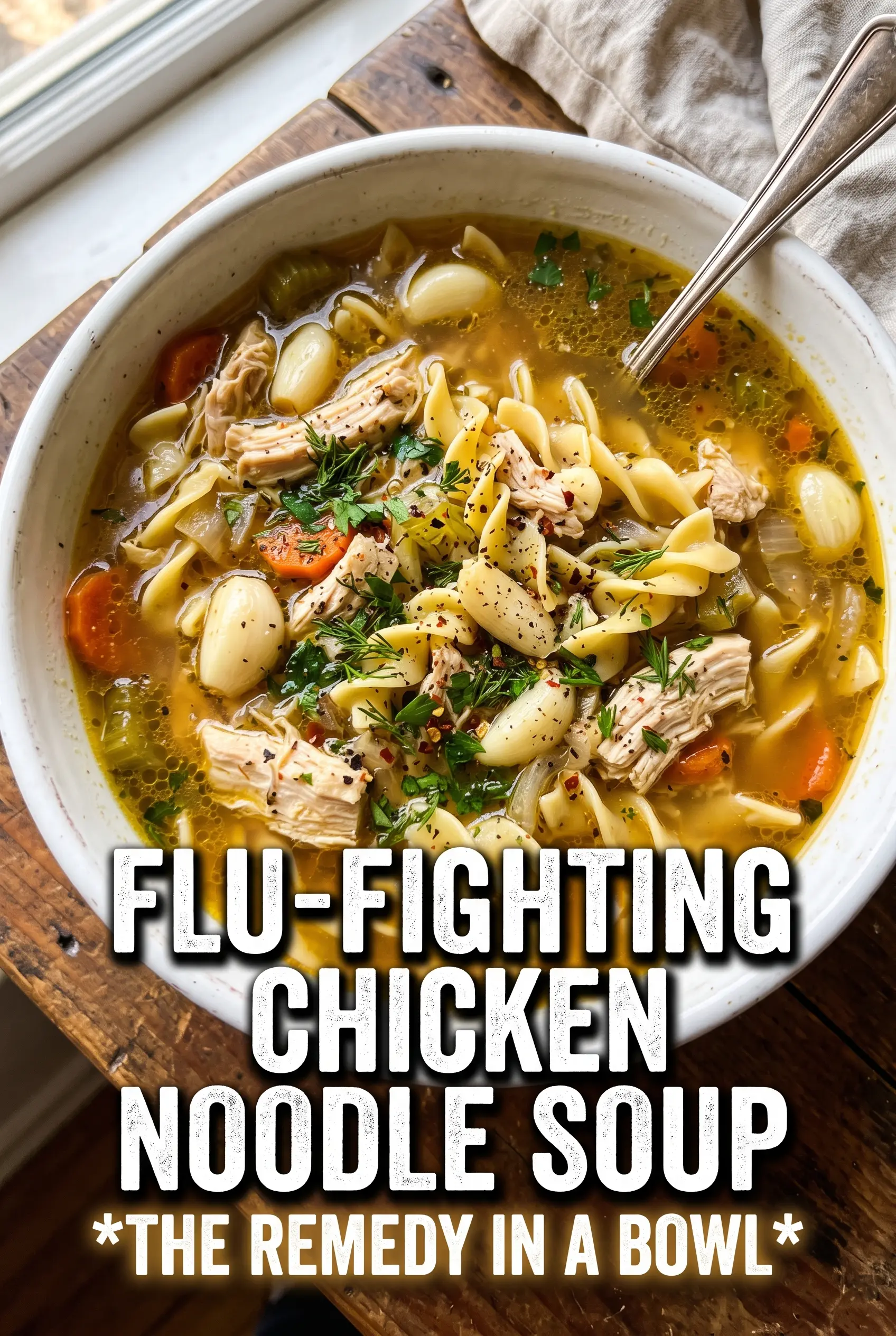
Flu-Fighting Chicken Noodle Soup
Ingredients
Equipment
Method
- Combine chicken, carrots, celery, onion, garlic, ginger, chicken broth, turmeric, cayenne pepper, and dried thyme in a large pot.
- Bring to a boil over high heat, then reduce to a simmer and cook for 25-30 minutes until the chicken is cooked, with active bubbling that eases to gentle simmering.
- Remove the chicken from the pot and shred it, then return the shredded chicken to the broth.
- Add egg noodles and simmer for 6-8 minutes until tender, watching for the noodles to soften and the broth to stay at a steady gentle simmer.
- Stir in honey, lemon juice, and apple cider vinegar, then season with salt and black pepper to taste.
- Serve hot with fresh parsley and lemon wedges for squeezing over the top.