Homemade chicken noodle soup earns its place in the rotation because the broth tastes deep, round, and clean in a way the boxed version just can’t touch. The noodles stay tender without turning gluey, the chicken stays juicy, and the vegetables keep enough bite to give each spoonful some life. It’s the kind of bowl that tastes like somebody paid attention.
The difference starts with the broth. Simmering chicken pieces with onion, carrot, celery, garlic, bay leaves, and a little apple cider vinegar pulls out a fuller chicken flavor and gives the finished soup a gentle richness. I also strain the broth before adding the noodles and vegetables back in, which keeps the soup clear instead of cloudy and muddy-looking.
Below, I’ll walk through the broth, the best time to season, and the one noodle detail that keeps the texture right even if the soup sits for a bit.
The broth turned out rich and golden, and the noodles stayed perfectly tender even after I reheated the leftovers the next day. My kids kept going back for “just one more bowl.”
Save this homemade chicken noodle soup for the days when you want a deeply golden broth and tender egg noodles in one bowl.
The Broth Needs Time to Taste Like It’s Been Simmering All Afternoon
A good chicken noodle soup can go flat if the broth is rushed. The long simmer with chicken pieces, vegetables, and a little vinegar is what gives this version body, color, and a fuller chicken flavor. The vinegar doesn’t make it taste sour; it helps pull more from the bones and connective tissue, which is why the broth tastes richer instead of watery.
The other mistake is boiling the broth hard the whole time. Once it comes up, lower the heat so it barely bubbles. A hard boil can make the broth cloudy and can leave the chicken stringy instead of tender enough to shred cleanly.
- Chicken pieces with bones — Backs, necks, or a whole chicken all work because the bones and connective tissue build the broth. Boneless chicken won’t give you the same depth.
- Apple cider vinegar — Use a tablespoon. It’s enough to help extraction without making the broth taste sharp.
- Bay leaves — They add a quiet savory note that makes the broth taste finished. Skip them and the soup is still good, but a little less layered.
- Cooked shredded chicken — If you start with a whole chicken, reserve the meat from the broth and use that. It keeps the soup tied to the broth you just made and saves time.
What Each Ingredient Is Actually Doing in the Bowl

- Chicken backs, necks, or whole chicken — This is the backbone of the broth. A whole chicken gives you both broth and meat, while backs and necks are often cheaper and make an especially flavorful stock if you already have cooked chicken to add later.
- Carrots, celery, onion, and garlic — These build the classic soup base and give the broth sweetness and savoriness. Rough chopping is enough here because everything gets strained out.
- Egg noodles — Wide noodles hold up best in a bowl of broth and chicken. If you swap in thinner noodles, they’ll soften faster and can disappear into the soup.
- Fresh parsley — Add it at the end so it stays bright. Dried parsley won’t give the same fresh finish.
- Salt — Season in layers, but wait until after straining to adjust the broth. If you salt too heavily before reducing and straining, the finished soup can end up over-seasoned.
Building the Soup So the Noodles Stay Tender, Not Mushy
Start with a Gentle Broth
Combine the broth ingredients in a large pot and bring everything up to a boil just once, then lower the heat and let it settle into a steady simmer. Skim off the foam in the first few minutes; that’s what keeps the broth tasting clean. If the pot is rolling hard for the full hour and a half, the broth will turn cloudy and the chicken can toughen.
Strain Before You Add the Fresh Vegetables
Once the broth is done, strain it and return it to the same pot. This is the point where you season with salt, because the liquid finally tastes like the finished soup base instead of an in-progress stock. If you’re using chicken from the broth, pick it off the bones now so nothing good gets wasted.
Cook the Vegetables Until They Lose Their Raw Edge
Add the sliced carrots, celery, and onion to the strained broth and simmer them for about 10 minutes. You want the onion to soften and the carrots to just start yielding at the edges. If you dump the noodles in too early, the vegetables will still taste undercooked by the time the pasta is done.
Add the Noodles at the End
Stir in the egg noodles and cook them until they’re tender, usually 6 to 8 minutes. Watch the texture closely, because noodles keep softening once the heat is off. If you’re making the soup ahead, stop cooking them a minute early so they don’t turn bloated after sitting in the broth.
Finish with Chicken, Herbs, and a Final Seasoning Check
Add the shredded chicken and parsley at the end just long enough to warm through. Taste the broth again and season generously with salt and pepper. This final adjustment matters because noodles and chicken dilute the broth a little, and an under-seasoned bowl tastes thin no matter how good the stock was at the start.
How to Adapt This Soup for What’s in Your Kitchen
Gluten-Free Version
Swap the egg noodles for a sturdy gluten-free pasta and cook it separately if possible. Gluten-free noodles can cloud the broth and turn mushy faster than wheat noodles, so keeping them out of the pot until serving gives you a cleaner soup with better texture.
Use a Rotisserie Chicken Shortcut
If you don’t want to start with raw chicken pieces, use store-bought chicken broth as the base and add shredded rotisserie chicken at the end. You’ll lose some of the depth that homemade broth gives you, but you’ll still get a fast, comforting soup with good texture.
Extra Vegetables, Same Broth
Add peas, chopped spinach, or diced zucchini near the end of cooking. Tender vegetables should go in after the noodles are nearly done so they don’t collapse into the broth and muddy the flavor.
Storage and Reheating
- Refrigerator: Store for up to 4 days. The noodles will keep soaking up broth, so expect the soup to thicken a bit.
- Freezer: Freeze the broth and chicken without the noodles for the best results. Pasta turns soft after freezing, so add fresh noodles when you reheat.
- Reheating: Warm gently on the stove over medium-low heat until just steaming. If it boils hard, the noodles can break down and the chicken can dry out.
Answers to the Questions Worth Asking
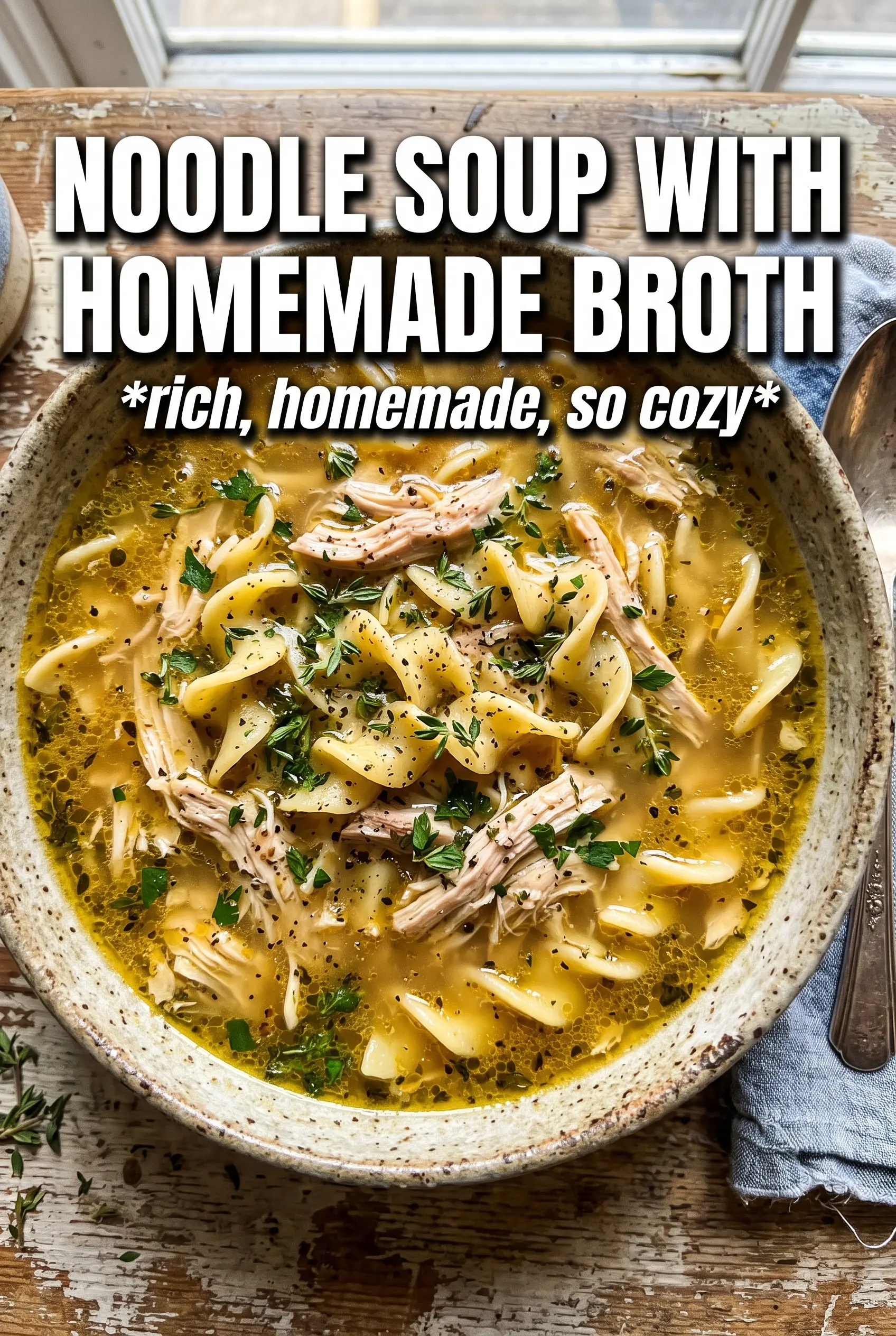
Chicken Noodle Soup With Homemade Broth
Ingredients
Equipment
Method
- Add chicken pieces, carrots, celery, onion, garlic, bay leaves, apple cider vinegar, and cold water to a large pot. Bring to a boil, then skim foam off the surface and reduce heat to a steady simmer.
- Simmer the broth for 1.5-2 hours, keeping it at a gentle simmer (not a hard boil). Watch for a deep, golden color and continued gentle bubbling.
- Strain the broth through a fine-mesh strainer, then season with salt. Reserve any shredded chicken from the broth bones.
- Pour the strained broth back into the same pot and bring it to a simmer. Keep the heat at a gentle simmer so the vegetables cook evenly.
- Add fresh sliced carrots, sliced celery, and diced onion to the simmering broth. Cook for 10 minutes, stirring once or twice so the vegetables stay submerged.
- Add wide egg noodles and return to a simmer, then cook for 6-8 minutes. Look for the noodles to become tender while still holding their shape.
- Stir in shredded chicken and fresh parsley, then season generously with salt and black pepper. Cook for 1-2 minutes just to warm through and finish with a fresh green aroma.