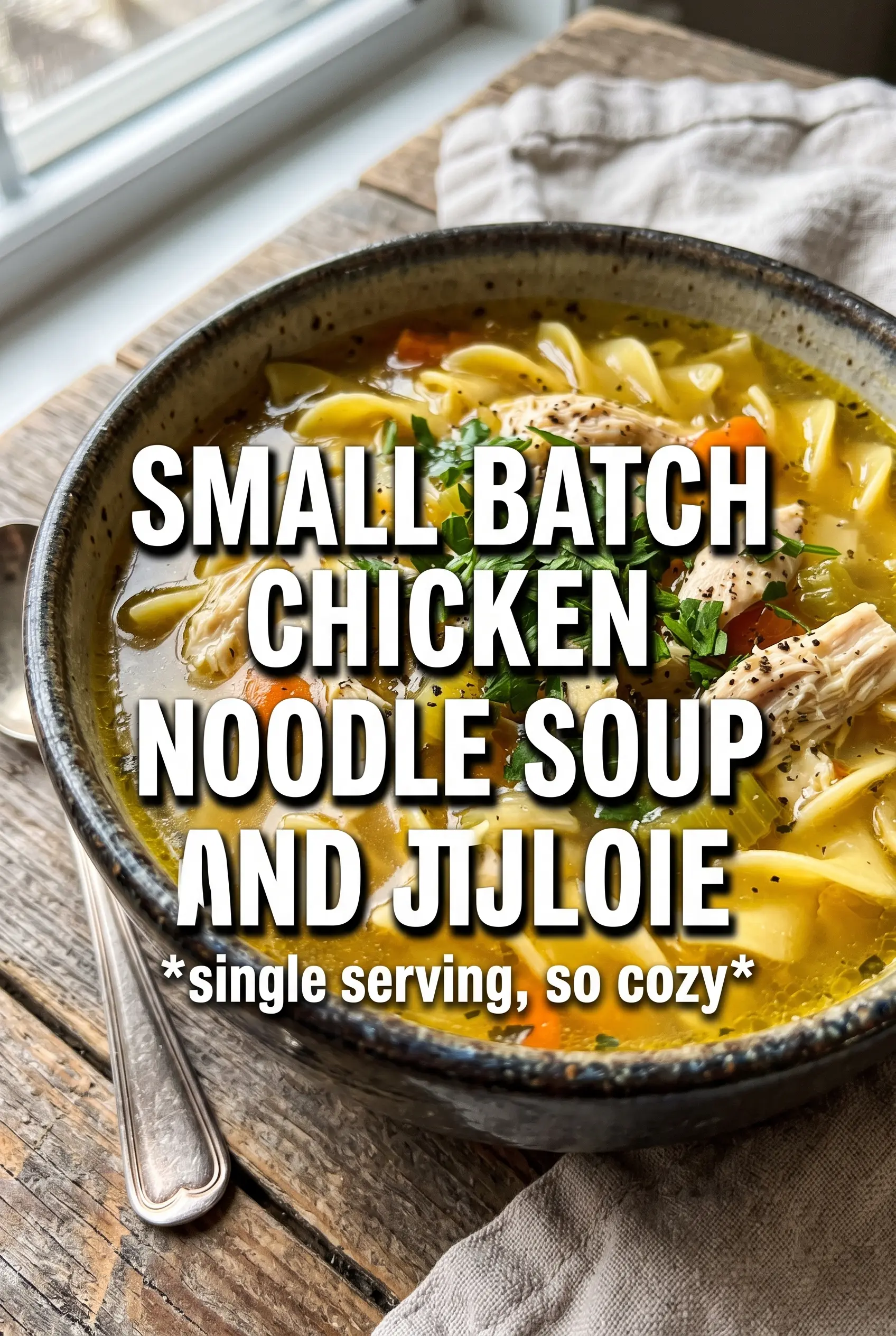

Small batch chicken noodle soup lands in the bowl with a clear, clean broth, tender shreds of chicken, and noodles that stay springy instead of turning soft and swollen. It hits that comforting place without leaving you with a pot full of leftovers you have to finish all week. For a two-serving soup, that balance matters more than almost anything else.
The trick is keeping the vegetables in the pot just long enough to soften and sweeten before the broth goes in, then simmering the chicken whole so it stays juicy and easy to shred. A small squeeze of lemon at the end wakes up the broth and keeps the soup from tasting flat, especially when you’re working with a compact ingredient list. The noodles go in near the end for a reason too: they cook fast, and if they sit too long in hot broth, they drink up the liquid and blur the texture of the whole soup.
Below you’ll find the small details that make this version dependable, plus a few ways to adapt it if you’re cooking for different diets or planning ahead.
The broth came together fast, and the noodles stayed perfectly tender instead of getting mushy. I loved how the lemon at the end made the chicken flavor pop.
Save this small batch chicken noodle soup for the nights when you want a bright, brothy bowl without a giant pot of leftovers.
The Broth Stays Clear When the Chicken Simmering Time Is Just Right
With a small batch soup, the difference between tender chicken and dry chicken is only a few minutes. Cooking the breast whole in the broth keeps it from overcooking in small shreds, and removing it as soon as it reaches temperature gives you meat that pulls apart cleanly instead of stringing into tough little bits. If the broth ever looks cloudy, it usually means the pot was boiling too hard, not just simmering; keep it at a gentle bubble and the soup will stay light.
The other thing that matters here is timing the noodles. They keep cooking even after the heat is off, so adding them near the end preserves their texture and keeps the broth from disappearing into the pasta. That matters even more in a two-serving recipe, where a handful of overcooked noodles can throw off the whole bowl.
What Each Ingredient Is Actually Doing in This Bowl
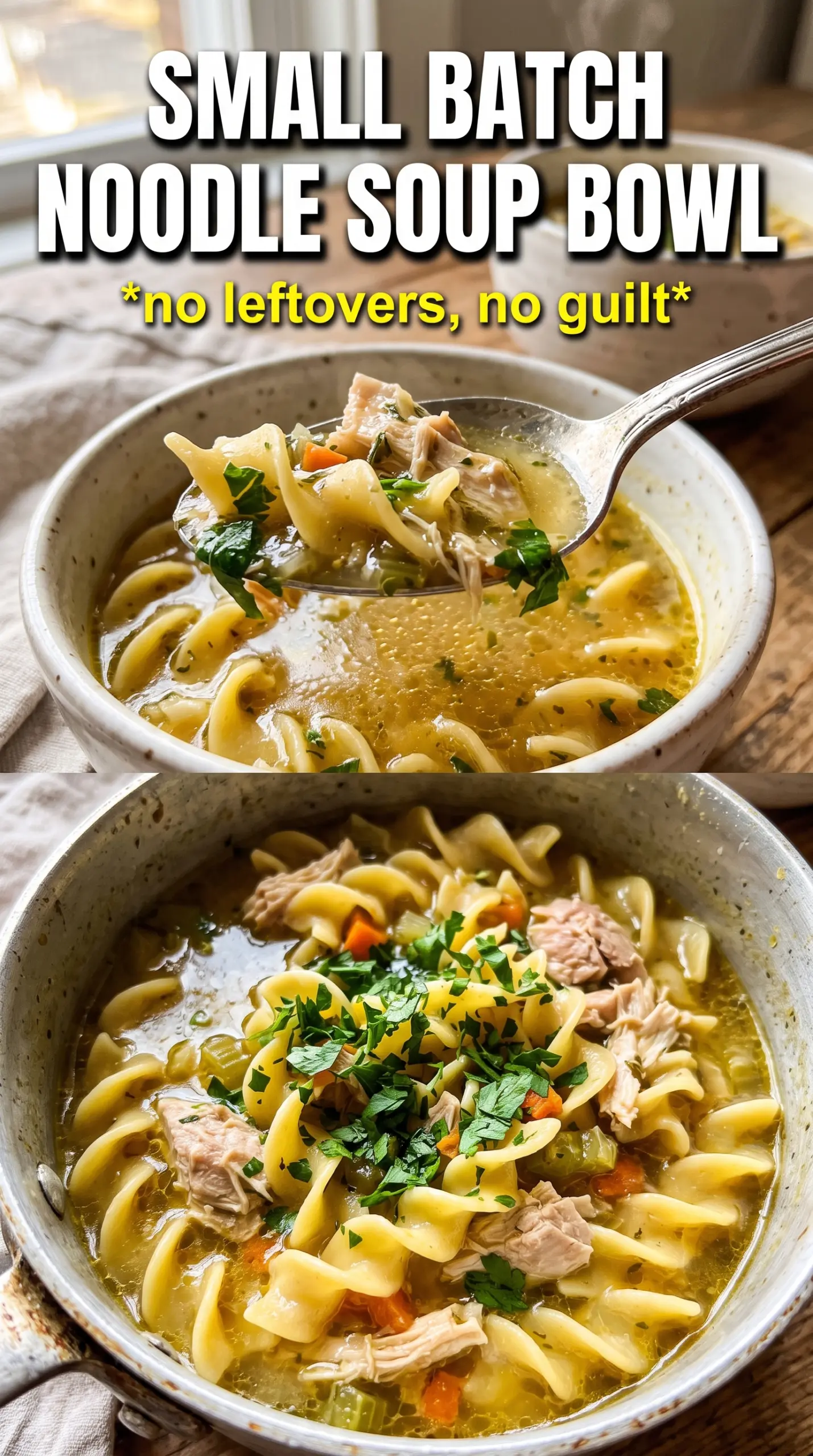
- Chicken breast — A whole breast is the easiest way to keep the meat juicy in a small pot. Thighs work too and give you a richer broth, but the breast stays lighter and shreds neatly for this style of soup.
- Chicken broth — This is the backbone of the soup, so use one you actually like tasting on its own. If your broth is on the bland side, the lemon at the end helps, but it won’t fully fix a flat base.
- Carrots, celery, and onion — This is the classic soup base, and it needs a few minutes in the oil before the broth goes in so the vegetables soften instead of tasting raw. Dice the onion small so it melts into the broth instead of staying chunky.
- Egg noodles — These bring the comfort factor, but they’re also the ingredient most likely to ruin the texture if they overcook. Add them only when the chicken is back in the pot and the soup is almost finished.
- Lemon juice — Don’t skip it. A little acid at the end sharpens the broth and makes the chicken taste more savory without making the soup taste lemony.
Building a Two-Serving Soup Without Overcooking Anything
Softening the Vegetables First
Heat the olive oil in a medium saucepan and cook the onion, carrots, and celery until the onion turns translucent and the carrots lose their raw edge. Four minutes is enough if you keep the heat at medium and stir once or twice. If the vegetables start browning hard, the heat is too high for this style of soup and the broth will pick up a roasted note instead of staying clean.
Simmering the Chicken Whole
Add the garlic for just a minute, then pour in the broth and seasonings before slipping the chicken breast into the pot whole. Keep the pot at a gentle simmer, not a hard boil, and let the chicken cook until it reaches 165°F and feels firm but not tight when you press it. Hard boiling squeezes the juice out of a small chicken breast fast, and that’s the easiest way to end up with dry soup meat.
Shredding and Finishing the Bowl
Pull the chicken out, shred it with two forks, and return it to the pot before adding the noodles. Cook the noodles just until tender, then stir in the lemon juice and taste for salt and pepper. The broth should taste bright, savory, and just a little more lively than it did a minute earlier; if it tastes dull, it usually needs one more pinch of salt before anything else.
Ways to Adjust This Soup Without Losing the Point of It
Make It Gluten-Free
Swap the egg noodles for gluten-free pasta or rice noodles. Rice noodles need less time and can turn soft fast, so add them at the very end and pull the pot off the heat as soon as they’re tender.
Use Chicken Thighs for a Richer Broth
Boneless thighs give you a deeper, fuller broth and stay forgiving if you accidentally simmer a little longer. The soup will taste a bit more savory and less delicate, which is a good trade if you prefer a heartier bowl.
Add Extra Vegetables Without Diluting the Soup
Mushrooms, peas, or chopped spinach all work, but add them near the end so they keep their shape and color. Root vegetables need more simmering time, so cut them small if you want them to cook through in the same window as the chicken.
Storage and Reheating
- Refrigerator: Store up to 4 days in a sealed container. The noodles will keep soaking up broth, so expect a thicker soup by day two.
- Freezer: Freeze the broth, chicken, and vegetables without the noodles for the best texture. Cook fresh noodles when you reheat it.
- Reheating: Warm gently on the stove over medium-low until steaming. If the pot boils hard, the noodles get mushy and the chicken tightens up.