Instant Pot chicken noodle soup lands in the bowl with a broth that tastes like it simmered all afternoon, even though most of the work happens under pressure. The chicken turns tender enough to shred with a fork, the carrots and celery hold their shape, and the egg noodles soak up just enough broth to make every spoonful comforting without going mushy. It’s the kind of soup that settles everyone down fast.
What makes this version work is the order. The chicken cooks raw with the vegetables, so the broth picks up real flavor from the meat and aromatics instead of relying on extra steps. The noodles go in only after pressure cooking, which keeps them from turning bloated and soft. A short natural release helps the chicken stay juicy and keeps the broth from erupting when you vent the pot.
Below, you’ll find the small timing details that matter most, plus a few smart swaps if you need to use different noodles or stretch this into another meal later in the week.
The broth came out deep and rich, and the noodles stayed springy because I added them at the end. My kids asked for seconds, which never happens with soup.
Save this Instant Pot chicken noodle soup for the nights when you want a deep, homemade-tasting broth without hovering over the stove.
The Part That Keeps the Noodles from Turning to Mush
The biggest mistake with pressure-cooker chicken noodle soup is adding the noodles too early. Egg noodles cook fast, and in a sealed pot they go from tender to swollen and soft in no time. Pressure cook the broth, chicken, and vegetables first, then switch to Sauté and cook the noodles just until they lose their raw edge. That’s what keeps the texture clean and the broth from turning starchy and heavy.
Natural release matters here too. A five-minute pause before quick releasing gives the chicken time to relax, which means it shreds in larger, juicier pieces instead of turning stringy. It also keeps the broth from bubbling up aggressively when you open the valve, which is one of those small Instant Pot details that saves a mess.
What Each Ingredient Is Actually Doing in the Pot
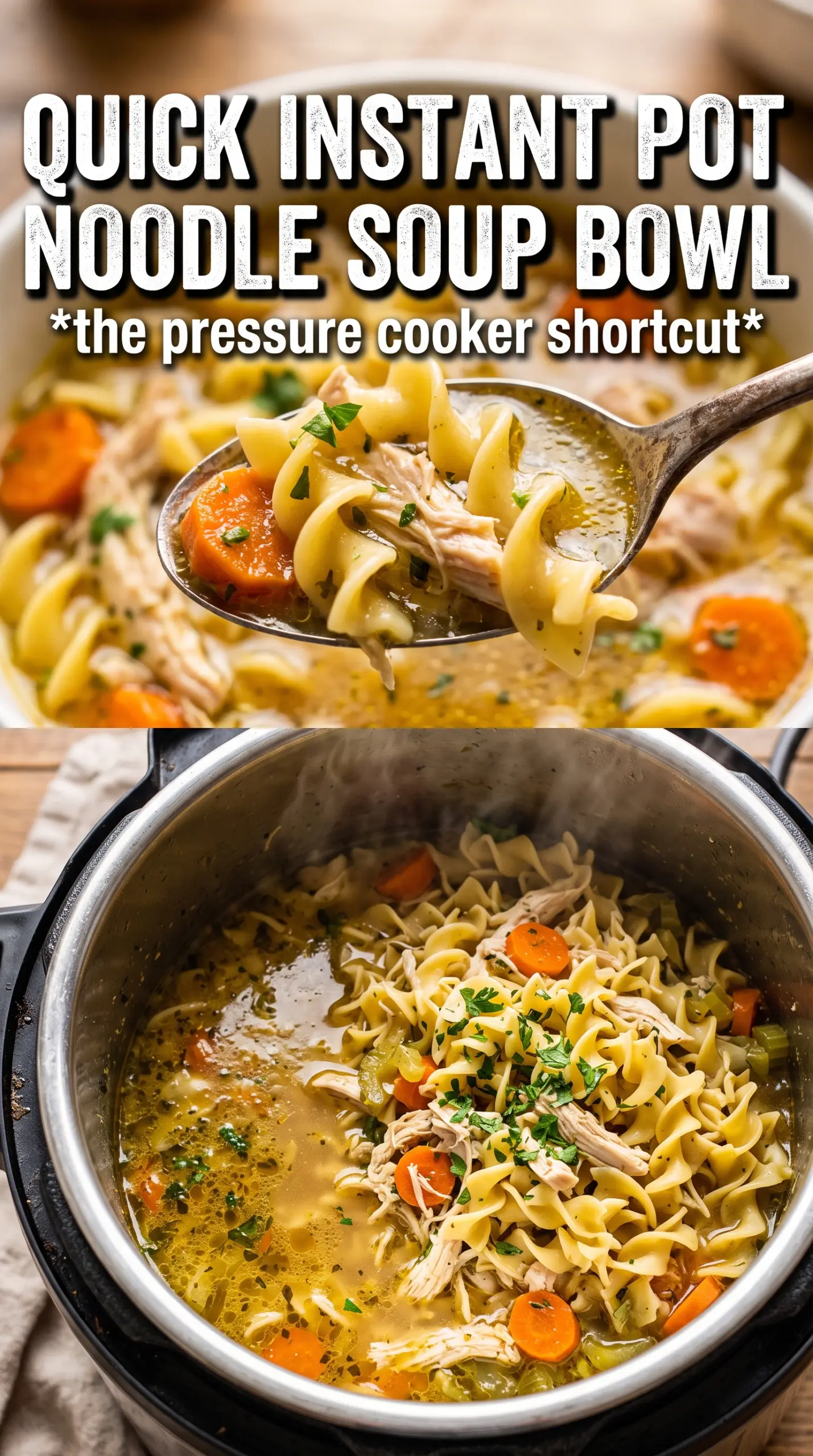
- Chicken breast — Raw chicken breast gives the broth body as it cooks, and it shreds cleanly after pressure cooking. If you swap in thighs, the soup gets a little richer and more forgiving, but the flavor is a touch darker.
- Chicken broth — This is the base of the soup, so use a broth you’d actually drink. Low-sodium broth gives you room to season at the end, which matters because the noodles absorb salt fast.
- Carrots, celery, and onion — These build the classic soup backbone and hold up well under pressure. Dice the onion small so it softens completely; large chunks can stay too sharp for a soup like this.
- Garlic, thyme, parsley, and bay leaves — The herbs and garlic give the broth its old-fashioned chicken soup flavor. Bay leaves are important here; they add background depth, but they need to come out before serving or they’ll keep the broth tasting woody.
- Egg noodles — Use standard egg noodles for the soft, homey finish this soup is known for. If you use wider or thicker noodles, you may need an extra minute or two on Sauté, but watch them closely because they keep cooking in the hot broth.
Building the Soup in the Right Order
Loading the Pot
Add the chicken, vegetables, garlic, broth, herbs, and bay leaves all at once, and keep the ingredients in an even layer if you can. The broth needs to cover the chicken so it cooks evenly, and the vegetables should sit mostly submerged so they soften instead of drying out at the top. If your pot is overfilled, the soup won’t pressure cook as cleanly, so don’t crowd it past the max line.
Pressure Cooking the Base
Seal the lid and cook on High for 15 minutes. That timing is long enough for the chicken breast to cook through and the carrots to turn tender, but not so long that the vegetables collapse. When the cycle ends, let it sit for 5 minutes before quick releasing. That short pause helps the broth settle and keeps the liquid from blasting out of the valve.
Shredding and Finishing with Noodles
Pull out the chicken, shred it, and remove the bay leaves before you do anything else. Then switch the pot to Sauté, return the chicken, and add the noodles. Stir often as they cook so they don’t clump on the bottom, and stop as soon as they’re tender with a little bite left in the center. If they sit too long, they’ll keep absorbing broth and the soup will turn thick instead of brothy.
Seasoning at the End
Taste after the noodles are done, not before. Noodles soak up salt, and pressure cooking can mute seasoning a bit, so the final salt and pepper adjustment is what brings the whole pot into focus. Fresh parsley on top adds a clean finish and keeps the soup from tasting flat.
Small Changes That Still Keep the Soup Worth Making
Use chicken thighs for a richer broth
Boneless skinless thighs add a little more body and stay juicy even if the pot runs a minute long. The soup gets deeper and slightly more savory, which is great if you want a heartier result.
Make it gluten-free with the right noodle swap
Use a gluten-free egg-style noodle or a sturdy rice noodle, but add it at the very end and watch the clock closely. Gluten-free noodles can turn fragile fast, so undercook them slightly and let the hot broth finish the job.
Skip the noodles for a lower-carb version
Leave out the noodles and serve the soup as a chicken-and-vegetable bowl, or add zucchini ribbons at the end for a lighter finish. The broth stays flavorful, and the texture becomes a little cleaner and more vegetable-forward.
Storage and Reheating
- Refrigerator: Store for up to 4 days. The noodles will keep soaking up broth, so expect the soup to thicken.
- Freezer: Freeze the soup without the noodles for the best texture. Add freshly cooked noodles after reheating.
- Reheating: Warm gently on the stove or in the microwave with a splash of broth or water. If you reheat it hard and fast, the noodles can break apart and the chicken can dry out.
Answers to the Questions Worth Asking

Instant Pot Chicken Noodle Soup
Ingredients
Equipment
Method
- Add raw chicken, carrots, celery, onion, garlic, chicken broth, dried thyme, dried parsley, garlic powder, and bay leaves to the Instant Pot. Spread ingredients evenly so they cook uniformly.
- Seal the Instant Pot and pressure cook on High for 15 minutes. When it reaches pressure, you should see the pot maintain steady pressure.
- Let the Instant Pot naturally release for 5 minutes. The float valve should drop gradually as pressure comes down.
- Quick release any remaining pressure. Open carefully to avoid steam.
- Remove the chicken and shred it, then discard the bay leaves. The shredded chicken should look fibrous and ready to return to the broth.
- Set the Instant Pot to Sauté and return the shredded chicken to the pot. You should see small bubbles forming around the edges.
- Add egg noodles and cook on Sauté for 6–8 minutes, stirring often. They should turn tender and hydrate fully without overcooking.
- Season with salt and pepper to taste. The broth should taste balanced after simmering with the noodles.
- Garnish with fresh parsley and serve right away. The top should look bright green against the golden broth.