Clear, golden broth and tender noodles make this ginger garlic chicken noodle soup the kind of bowl that settles in fast and keeps getting requested again. The ginger stays bright, the garlic gives it backbone, and the shredded chicken soaks up every bit of that savory broth without turning heavy. It eats like a full meal, but it still feels light enough that you can go back for a second bowl without regretting it.
What makes this version work is the order. The vegetables soften first so they can lend sweetness to the broth, then the ginger and garlic bloom briefly before the liquid goes in. That short step matters because it wakes up their aroma without letting the garlic turn bitter. A small splash of rice vinegar at the end keeps the soup from tasting flat, and the sesame oil is best stirred in off the heat so it stays fragrant instead of disappearing.
You’ll find the little timing cues below that keep the noodles from going mushy and the chicken from drying out. I’ve also included the swaps that still taste good when you don’t have ramen noodles or want to make the soup a little more your own.
The broth had that deep ginger-garlic flavor I was hoping for, and the noodles were still perfect after sitting a few minutes. I also liked that the chicken stayed juicy instead of stringy.
Save this ginger garlic chicken noodle soup for the nights when you want a clear, fragrant broth and tender noodles with almost no fuss.
The broth stays clear when you don’t rush the aromatics
The biggest mistake in noodle soup is cramming everything into the pot at once and hoping it turns into something cohesive. That usually gives you watery broth and limp vegetables. Here, the onion, carrots, and celery go in first so they can soften and release a little sweetness before the garlic and ginger hit the heat.
That brief sauté gives the soup its backbone. Once the garlic and ginger are fragrant, the broth goes in right away, which stops them from browning and turning harsh. If the pot ever smells sharp instead of warm, the heat is too high. Pull it back. Ginger and garlic need enough heat to wake up, but not enough to scorch.
What each ingredient is actually doing in this soup
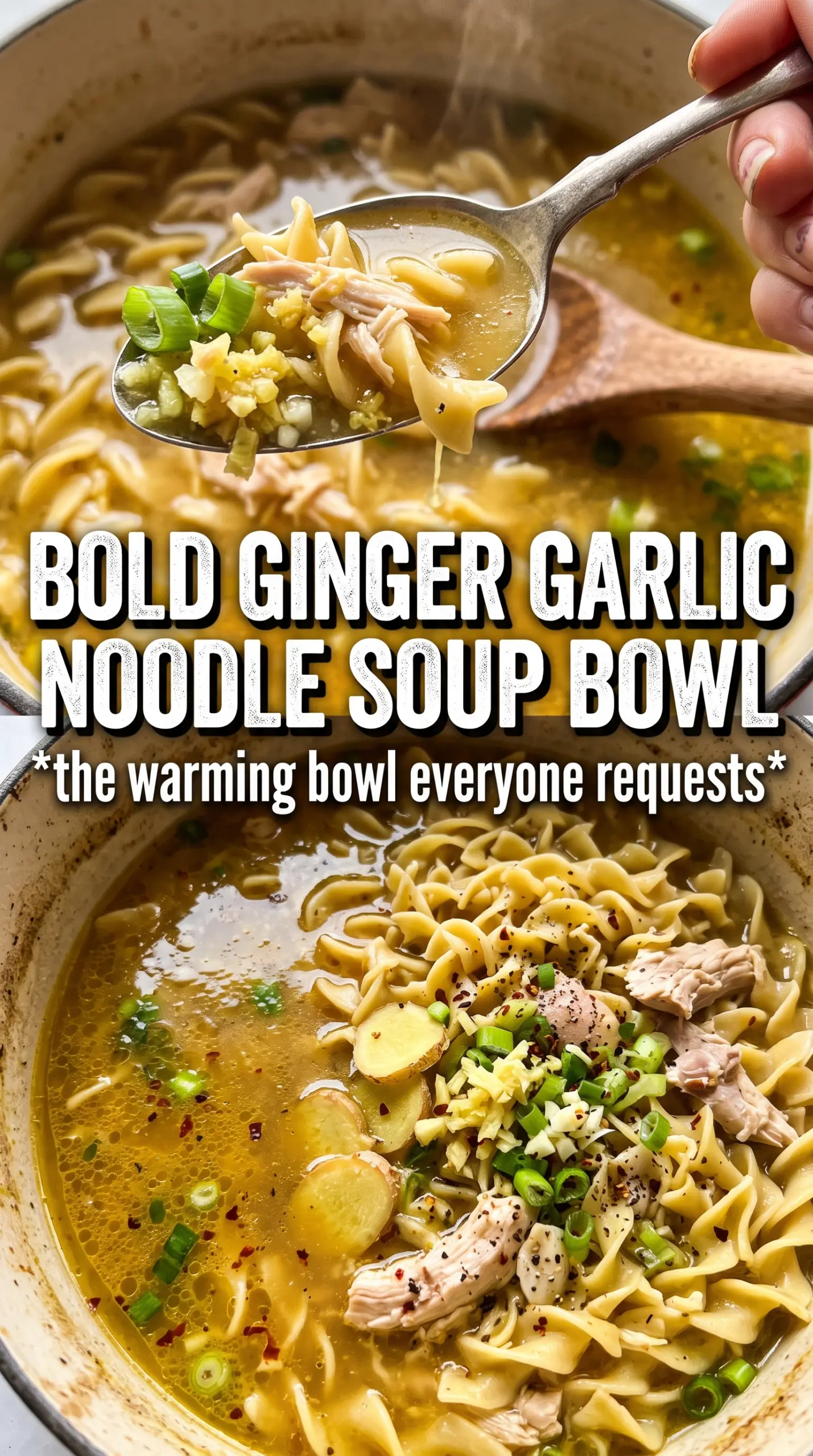
- Chicken breast or thighs — Thighs give you a little more richness and stay forgiving if the soup simmers a few minutes longer. Breasts work well too, especially if you shred them as soon as they’re cooked through so they don’t dry out in the pot. If you use thighs, trim off any large pieces of fat before they go in.
- Fresh ginger and garlic — These are the flavor anchors, and fresh is worth using here. Ground ginger won’t give the same brightness, and pre-minced garlic can taste flat once it simmers. Grate the ginger finely so it melts into the broth instead of showing up in chewy strands.
- Chicken broth — This is the body of the soup, so use a broth you actually like tasting on its own. A boxed broth is fine, but if it tastes thin, the finished soup will taste thin too. If needed, simmer it a little longer with the vegetables before adding the noodles to deepen it.
- Ramen or egg noodles — These cook fast, which is exactly what you want at the end. Don’t add them too early or they’ll soak up too much broth and go soft. If you’re using egg noodles, watch them closely because they can go from tender to swollen fast.
- Sesame oil and rice vinegar — Both go in at the end because their job is to finish, not simmer away. Sesame oil adds that toasty aroma; rice vinegar lifts the broth so it tastes bright instead of heavy. If you skip the vinegar, the soup still works, but it loses some of its clean finish.
Building the soup in the right order keeps every bowl balanced
Softening the vegetables first
Start with oil in a large pot and cook the onion, carrots, and celery for about 4 minutes. You’re looking for the onions to turn translucent at the edges and the carrots to lose their raw crunch, not for anything to brown. If the vegetables start sticking, the heat is too high for the amount of oil in the pot.
Waking up the ginger and garlic
Add the garlic and ginger and cook them for 2 minutes, just until the kitchen smells sharp, warm, and fragrant. Stir constantly so the garlic doesn’t catch on the bottom. If it starts to darken, move on fast — browned garlic turns bitter and takes the whole broth with it.
Simmering the chicken until tender
Pour in the broth and soy sauce, then add the chicken and bring everything to a boil before lowering it to a steady simmer. The chicken is done when it feels firm but still gives a little when pressed, and the broth should stay gently moving, not rolling hard. A hard boil can make the chicken stringy and cloud the broth, so keep it calm once the heat comes down.
Finishing with noodles and the last bright note
Remove the chicken, shred it, and return it to the pot before adding the noodles. Cook the noodles just until tender, usually 3 to 5 minutes, because they keep softening in the hot broth after the heat is off. Stir in the sesame oil and rice vinegar at the end, then taste for salt and pepper before topping with green onions, cilantro, and sesame seeds.
How to adapt this soup when you need a different pantry or a different bowl
Gluten-free version with the same comfort
Use gluten-free noodles and swap the soy sauce for tamari or coconut aminos. Tamari keeps the savory edge closest to the original, while coconut aminos taste a little sweeter and softer. Cook the noodles separately if your gluten-free brand tends to shed starch into the broth.
Thighs instead of breasts for a richer bowl
Chicken thighs make the soup a little more savory and stay juicier if you let it simmer a few minutes longer. They shred into softer pieces and bring more flavor to the broth, which is helpful if your broth is on the mild side. If you want a cleaner, leaner broth, stick with breasts.
Extra vegetables when you want more in the bowl
Mushrooms, baby spinach, or thinly sliced cabbage all fit naturally here. Add mushrooms with the carrots and celery, spinach at the very end, and cabbage during the simmer so it softens without falling apart. Each one changes the texture more than the flavor, which keeps the ginger-garlic broth front and center.
Storage and Reheating
- Refrigerator: Store for up to 4 days. The noodles will continue to absorb broth, so the soup thickens as it sits.
- Freezer: Freeze the broth, chicken, and vegetables without the noodles for best texture. Noodles turn mushy after thawing, so add fresh noodles when reheating.
- Reheating: Warm gently on the stove over medium-low until steaming. If it looks too thick, add a splash of broth or water before heating; boiling hard again can overcook the chicken and turn the noodles soft.
Questions I Get Asked About This Recipe
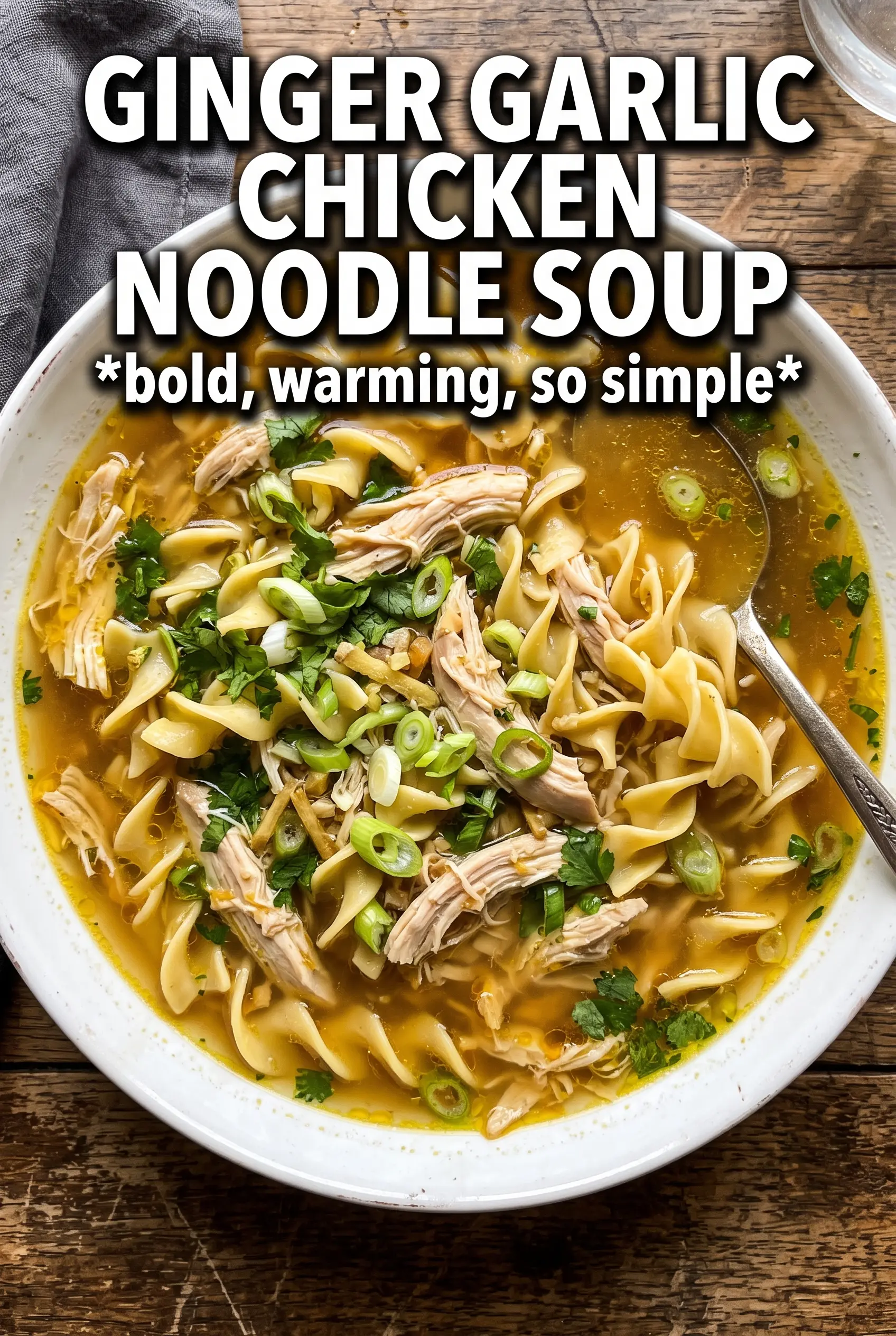
Ginger Garlic Chicken Noodle Soup
Ingredients
Equipment
Method
- Heat 1 tablespoon sesame oil in a large pot over medium-high heat, then sauté onion, carrots, and celery for 4 minutes, stirring often until they soften.
- Add minced garlic and grated ginger and cook for 2 minutes until very fragrant, scraping up any browned bits from the bottom of the pot.
- Add chicken broth, soy sauce, and the chicken to the pot, bring everything to a boil, then simmer for 20 minutes until the chicken is cooked through.
- Remove the chicken, shred it, and return the shredded chicken to the pot.
- Add ramen noodles or egg noodles and cook for 3-5 minutes until tender, keeping the broth at a gentle simmer.
- Stir in sesame oil and rice vinegar, then season with salt and pepper to taste.
- Top with green onions, cilantro, and sesame seeds to serve.