Wide egg noodles give chicken noodle soup the kind of comfort that lands in the bowl fast: tender chicken, sweet carrots, soft celery, and a broth that tastes like it had time to become itself. The noodles hold onto the savory broth instead of disappearing into it, and that little bit of chew is what keeps this version from feeling flat or watery.
The trick is building the broth before the noodles go in. Onion, carrot, and celery need a few minutes in the pot first so the soup starts with a deeper base, then the chicken simmers gently until it shreds cleanly. Egg noodles cook separately in the same pot at the end, but only after the chicken comes out, which keeps them from soaking up too much liquid and turning heavy.
Below you’ll find the timing that keeps the noodles tender, the chicken juicy, and the broth clear enough to still look bright in the bowl. A handful of fresh dill at the end wakes everything up without making the soup taste herbal in an obvious way.
The noodles stayed tender without turning bloated, and the dill at the end made the broth taste fresh instead of heavy. I followed the timing exactly and the chicken shredded perfectly.
Save this chicken noodle soup with egg noodles for the nights when you want a clear, cozy broth with tender noodles that don’t turn mushy.
The Difference Between Brothy Chicken Soup and Watered-Down Noodle Soup
Chicken noodle soup falls apart when the noodles are treated like an afterthought. If they simmer too long in the broth, they swell, drag starch into the pot, and turn the whole bowl cloudy and heavy. This version stays balanced because the chicken gets cooked first, removed to shred, and the noodles go in only when the soup is ready to finish.
That order matters more than most people think. Wide egg noodles need enough time to soften, but not enough time to lose their shape, and simmering them after the chicken is back in the pot gives you a full-bodied soup without overcooking anything. The broth stays clean, the vegetables hold their edge, and every spoonful tastes distinct instead of blended into mush.
What Each Ingredient Is Actually Doing in This Soup

- Chicken breast — It gives you lean, shreds-cleanly meat that doesn’t cloud the broth. Chicken thighs work too if you want a richer finish, but breast keeps this version light and classic. Pull it out as soon as it’s cooked through so it doesn’t dry out while the noodles finish.
- Wide egg noodles — These are the heart of the dish. Their wide, wavy shape holds broth better than thin noodles and gives the soup that old-fashioned, comforting texture. Don’t swap in quick-cooking pasta unless you shorten the final simmer dramatically, or you’ll lose that tender bite.
- Carrots, celery, and onion — This trio builds the base flavor before the broth even goes in. The vegetables soften in the oil and take on a little sweetness, which keeps the soup from tasting thin. Dice the onion small enough that it nearly disappears; big chunks don’t melt into the broth the same way.
- Fresh dill — Stirred in at the end, it brightens the whole pot without turning the soup grassy. Dried dill won’t give the same lift, so use fresh if you can. If you’re substituting, parsley is the safest backup, but the soup will taste a little less lively.
- Chicken broth — Use a broth you actually like tasting on its own. Since this recipe doesn’t rely on a long list of spices, the broth carries most of the flavor. A low-sodium version gives you room to season properly at the end instead of locking yourself into a salty pot.
Building the Pot in the Right Order
Softening the Vegetables First
Heat the olive oil in a large pot, then add the onion, carrots, and celery and cook them for about five minutes. You’re looking for the onions to go translucent and the carrots to lose their raw edge, not for deep browning. If the vegetables are still crunchy at this stage, the broth will taste unfinished even after the chicken cooks.
Simmering the Chicken Gently
Once the garlic has had a minute in the pot, add the broth, thyme, parsley, garlic powder, and chicken. Bring the soup to a boil, then drop it to a steady simmer so the chicken cooks through without tightening up. When the thickest part reaches done and the meat shreds easily, pull it out right away; overcooked chicken turns stringy fast.
Adding the Egg Noodles at the End
Shred the chicken, return it to the pot, then bring the soup back to a boil before adding the egg noodles. Cook them just until tender, usually 7 to 8 minutes, and stir often enough that they don’t clump on the bottom. If the soup sits boiling hard after the noodles go in, they’ll go past tender and start absorbing too much broth.
Finishing With Fresh Dill and Salt
Turn off the heat and stir in the dill after the noodles are done. Herbs like dill lose their bright flavor if they boil too long, so this final step matters. Taste the broth before serving and season generously with salt and pepper, since the noodles will soften the saltiness a bit as they sit.
How to Adjust This Soup Without Losing Its Character
Use chicken thighs for a richer broth
Thighs give the soup a slightly deeper, more savory finish and stay juicy even if they simmer a little longer. The broth may look a touch richer, and the meat shreds in softer pieces. If you want the most classic deli-style soup, chicken breast is lighter; if you want more body, thighs are the move.
Make it gluten-free with the right noodles
Use a sturdy gluten-free egg-style pasta or rice noodle, but shorten the final cook time and watch it closely. Gluten-free noodles can go from tender to falling apart fast, especially in hot broth. If you’re cooking it ahead, keep the noodles separate and add them to each bowl when serving.
Skip the dill and lean into parsley
If dill isn’t your thing, double the parsley and finish with a little extra black pepper. The soup loses some brightness, but it still tastes clean and familiar. This is a better swap than using a heavy herb blend, which can overpower the broth.
Storage and Reheating
- Refrigerator: Store for up to 4 days. The noodles will keep absorbing broth, so expect the soup to thicken.
- Freezer: Freeze the soup without the noodles for the best texture. Egg noodles get soft and a little grainy after freezing, so cook a fresh batch when you reheat.
- Reheating: Warm it gently on the stove over medium-low heat until steaming. If it seems too thick, add a splash of broth or water before heating; boiling hard will break the noodles and toughen the chicken.
Answers to the Questions Worth Asking
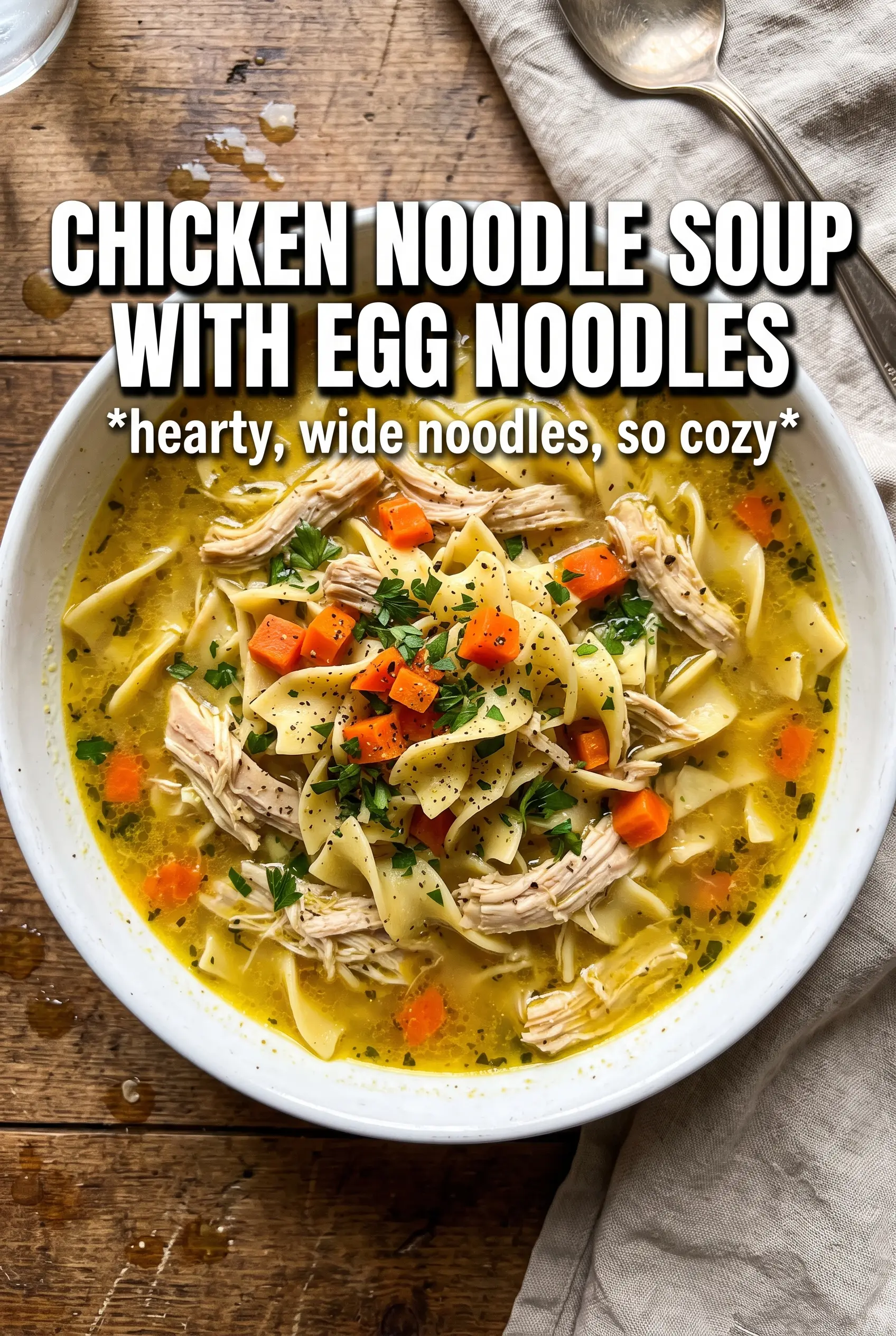
Chicken Noodle Soup With Egg Noodles
Ingredients
Equipment
Method
- Heat the olive oil in a large pot and sauté the onion, carrots, and celery for 5 minutes, until the onion looks translucent.
- Add the garlic and cook for 1 minute, stirring, until fragrant.
- Add the chicken broth, thyme, dried parsley, garlic powder, and chicken to the pot.
- Bring the mixture to a boil over high heat, then reduce to a simmer and cook for 18-20 minutes until the chicken is cooked through.
- Remove the chicken, shred it, and return the shredded chicken to the pot.
- Bring the soup back to a boil and add the wide egg noodles.
- Simmer for 7-8 minutes until the noodles are tender but not mushy, stirring occasionally so they don’t stick.
- Stir in the fresh dill and season generously with salt and pepper to taste.