Clear, comforting chicken noodle soup has a way of disappearing fast, but this Chick-Fil-A-style version earns repeat status because it stays light, clean, and satisfying without turning cloudy or heavy. The broth tastes gently seasoned, the vegetables keep a little bite, and the tiny pieces of chicken blend into the bowl instead of taking it over. It’s the kind of soup that feels simple at first glance and then quietly delivers exactly what you wanted.
The part that makes this version work is restraint. The broth stays clean because the vegetables simmer just until tender, the chicken goes in already cooked, and the noodles finish right at the end so they don’t soak up half the pot. Dicing the chicken small instead of shredding it matters here, too — it gives the soup that familiar fast-food texture where every spoonful feels balanced.
Below, I’ll show you how to keep the broth bright, which shortcut still tastes good, and what to do if you want to stretch the soup for lunch the next day without the noodles falling apart.
The broth stayed clear and the little diced chicken made it taste just like the restaurant soup. I loved that the noodles were tender without getting mushy, even after sitting on the stove for a bit.
Save this Chick-Fil-A chicken noodle soup for the nights when you want a clear broth, tender noodles, and that small-diced chicken texture.
The Trick to Keeping the Broth Clear Instead of Cloudy
Chicken noodle soup goes cloudy fast when it boils hard or sits too long after the noodles go in. That’s the part most people miss. A gentle simmer keeps the broth clean and lets the vegetables soften without breaking apart, which is what gives this version that neat, restaurant-style look.
The other detail that matters is timing. The chicken is already cooked, so it only needs to heat through in the broth. If you cook it too long, it starts to dry out and the soup loses that soft, comforting texture. Add the noodles near the end and watch them closely; once they’re tender, the pot is done. Carryover heat will keep them cooking if the soup sits on the stove.
What Each Ingredient Is Actually Doing in This Soup
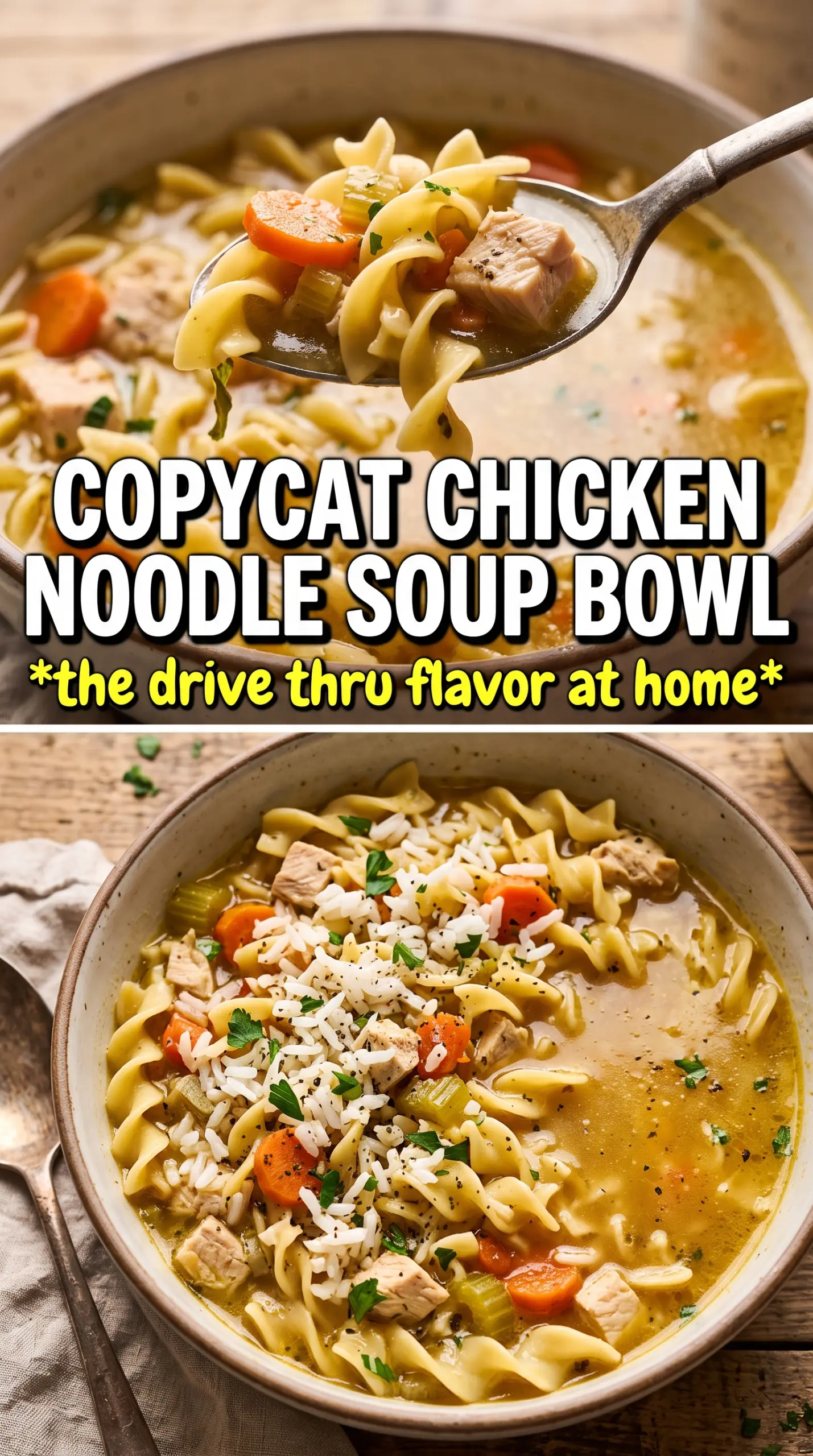
- Cooked chicken breast — Finely diced chicken gives this soup the same small, even pieces you get in the restaurant version. Shredded chicken makes the texture feel heavier and less precise. If you’re using rotisserie chicken, cut it smaller than you think you need.
- Chicken broth — This is the backbone of the soup, so use the best broth you’ve got. A low-sodium broth gives you room to season at the end without overshooting the salt. If your broth tastes thin, simmering the vegetables in it for the full 10 minutes helps build more body.
- Carrots, celery, and onion — Dice them small so they soften at the same pace and blend into the spoonful instead of dominating it. Bigger chunks look rustic, but they won’t give you the same Chick-Fil-A-style feel. The onion should cook until just translucent, not browned.
- Corn kernels — Corn adds the little pop of sweetness that makes the broth taste fuller. Frozen corn works perfectly here. There’s no need to thaw it first; it goes in straight from the freezer and warms through quickly.
- Egg noodles — These give the soup its familiar finish. Small pasta works too, but egg noodles hold a softer, more classic texture. Cook them just until tender, because they’ll keep absorbing broth after the pot comes off the heat.
Building the Soup in the Right Order
Softening the Vegetables First
Start the broth and water at a boil, then lower it to a steady simmer once the vegetables go in. You want the carrots and celery tender, not mushy, so keep the heat moderate and the lid partly off. If the broth is bubbling hard, it will look like the soup is moving fast, but the vegetables won’t cook evenly and the broth can turn murky.
Adding the Chicken and Corn
Stir in the diced chicken and corn once the vegetables have softened. The chicken only needs enough time to heat through and absorb the seasoning already in the broth. If you add it too early, the chicken dries out before the noodles are even done. At this stage, the soup should smell savory and clean, not heavy or overly salty.
Cooking the Noodles at the End
Add the noodles last and simmer just until they’re tender. Watch the texture closely; egg noodles can go from perfect to bloated fast. If you plan to have leftovers, pull a portion of soup out before adding the noodles and cook them separately, because noodles left in the pot keep drinking broth and soften more by the hour.
How to Adapt This Soup Without Losing the Clean Broth
Gluten-Free Version
Swap the egg noodles for a gluten-free small pasta that holds its shape well, and cook it only until just tender. Some gluten-free pastas thicken the broth as they sit, so if the pot starts looking starchier than you want, add a splash of hot water before serving.
Use Rotisserie Chicken for a Faster Shortcut
Rotisserie chicken works well here, but chop it into small, even pieces instead of pulling it apart. The smaller cut keeps the texture close to the copycat version and helps the chicken blend into the broth instead of floating in big shreds.
Dairy-Free and Lightened-Up
This soup is naturally dairy-free as written, which is part of why it tastes so clean. Keep the broth simple and don’t add cream or butter unless you want a much richer, less restaurant-like result. The plain broth is the point.
Storage and Reheating
- Refrigerator: Store for up to 4 days. The noodles will continue to soften, so expect them to absorb more broth.
- Freezer: Freeze the broth, vegetables, and chicken without the noodles for the best texture. Add fresh noodles after reheating.
- Reheating: Warm gently over medium-low heat until steaming. A hard boil will break down the noodles and make the chicken dry, so keep the heat low and add a splash of broth or water if it thickens.
Questions I Get Asked About This Recipe
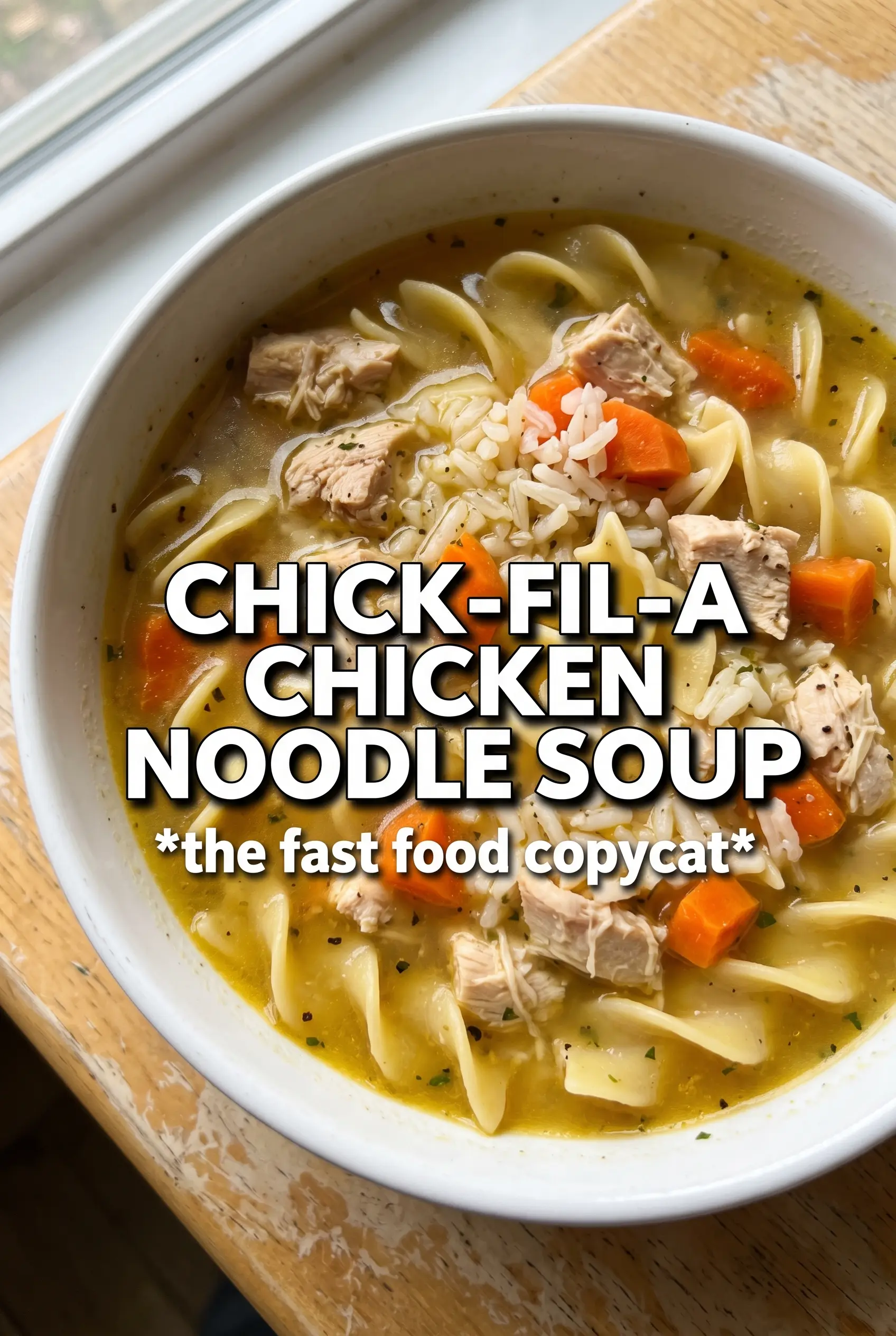
Chick-Fil-A Chicken Noodle Soup (Copycat)
Ingredients
Equipment
Method
- Bring the chicken broth and water to a boil in a large pot over high heat. You should see steady bubbling across the surface before moving on.
- Add the carrots, celery, onion, garlic, dried parsley, dried thyme, and garlic powder to the boiling broth. Reduce to a simmer and cook for 10 minutes, until the vegetables are just tender.
- Add the finely diced chicken and corn kernels to the pot. Simmer for 5 minutes, until the chicken is heated through and the broth looks clear and lightly golden.
- Add the egg noodles and cook for 6–8 minutes, stirring occasionally, until tender. Watch for the noodles to soften but not turn mushy.
- Season with salt and pepper to taste and stir to combine. For the closest copycat texture, keep using finely diced (not shredded) chicken so each spoonful stays structured.