Silky broth, tender chicken, and egg noodles that stay plush instead of bloated make this creamy parmesan chicken noodle soup the kind of pot that disappears fast. The parmesan melts into the broth and gives it a deep, savory backbone, while the vegetables keep every spoonful balanced instead of heavy. It lands in that sweet spot between comforting and polished, which is why it works for a quiet weeknight or for feeding people who expect a little more from chicken soup.
The trick is treating the cream and parmesan like finishing ingredients, not something you boil hard from the start. A gentle simmer keeps the dairy smooth, and adding the noodles after the broth has already picked up flavor means they cook in something worth absorbing. Grating the parmesan fresh matters here too, because pre-shredded cheese can leave the soup grainy instead of velvety.
Below you’ll find the small timing details that keep the chicken tender, the noodles from overcooking, and the soup creamy all the way to the last bowl. I also included a few practical swaps for when you need to adjust the recipe without losing that rich, cozy feel.
The broth turned out silky and the parmesan melted right in without getting stringy. I used rotisserie chicken and the noodles were still perfect after reheating the next day.
Creamy Parmesan Chicken Noodle Soup with silky broth, tender chicken, and noodles that stay perfectly spoonable
The Reason Parmesan Soup Stays Smooth Instead of Turning Grainy
The soup only stays creamy if the heat stays gentle once the dairy goes in. Hard boiling is what makes cream tighten up and parmesan turn a little gritty, especially if you dump the cheese in too early. Keep the pot at a lazy simmer after the broth has done its job, and the texture stays silky from the first bowl to the last.
The other thing people miss is the flour base. It needs a full minute or two in the butter with the vegetables and garlic so the raw taste cooks off and the broth has something to cling to. If you rush that part, the soup can taste thin even after the cream goes in.
- Butter — This gives the vegetables a richer base than oil alone and helps the flour cook evenly. If you use oil, the soup still works, but it loses some of that rounded, finished taste.
- Flour — This is what keeps the broth lightly thickened instead of looking like plain chicken soup with cream stirred in. Cook it long enough to smell a little nutty, not pasty.
- Freshly grated parmesan — This melts cleanly and adds the savory backbone of the dish. Pre-shredded parmesan often has anti-caking agents that can leave the soup slightly sandy.
- Heavy cream — Half-and-half will work in a pinch, but the soup will be thinner and less lush. Add it after the broth has simmered so it warms through without breaking.
Building the Soup So the Noodles and Dairy Hold Up

- Chicken breast — Diced breast cooks quickly and stays tender if you simmer it gently. If you want to use thighs, they bring a little more richness and are more forgiving if the pot runs hot.
- Egg noodles — They give you the classic comfort-food texture and soak up the broth without turning the soup into a stew. Cook them just until tender; they keep softening as the pot sits.
- Spinach — It adds color and a fresh note right at the end, which keeps the soup from tasting too heavy. Stir it in last so it wilts instead of dissolving.
- Nutmeg — You won’t taste it as a separate flavor, but it quietly rounds out the cream and parmesan. Use only a pinch; too much takes the soup in an odd sweet direction.
The Sequence That Keeps the Chicken Tender and the Broth Rich
Softening the Vegetables First
Melt the butter and cook the onion, carrots, and celery until the onion turns translucent and the carrots start to soften around the edges. That first five minutes builds the base of the soup, and it also keeps the vegetables from staying crunchy after the broth simmers. If the pot looks dry, the heat is too high; lower it so the butter coats everything instead of browning too fast.
Cooking Off the Flour
Stir in the garlic for just a minute, then add the flour and keep it moving so it coats the vegetables evenly. You want the mixture to look a little pasty but not clumpy, and you should smell the raw flour fade as it cooks. If you skip this step or rush it, the finished soup can taste dusty instead of smooth.
Simmering the Chicken in the Broth
Pour in the broth gradually while whisking or stirring so the flour base loosens without forming lumps. Add the diced chicken and Italian seasoning, then bring everything to a steady simmer until the chicken is cooked through and tender. A hard boil will make the chicken stringy, so keep the bubbles small and gentle.
Finishing With Cream, Noodles, and Cheese
Stir in the cream and bring the soup back to a gentle simmer before adding the egg noodles. Cook until the noodles are tender but still have a little bite in the center, then lower the heat and stir in most of the parmesan until it melts fully. Add the spinach near the end so it wilts in the hot broth, then finish with nutmeg, salt, pepper, and the remaining parmesan.
Use Rotisserie Chicken for a Faster Version
Shred about 3 cups of cooked rotisserie chicken and stir it in after the broth has simmered and the noodles are nearly tender. You’ll cut the cook time and keep the chicken extra juicy because it isn’t spending 15 minutes in the pot.
Make It Gluten-Free
Swap the flour for a 1:1 gluten-free blend and use gluten-free noodles or cooked rice instead of egg noodles. The broth will still thicken, but rice gives a softer finish and GF pasta can get fragile if it sits too long in the soup.
Dairy-Free Version
Use olive oil instead of butter, swap the cream for full-fat unsweetened coconut milk, and leave out the parmesan or use a dairy-free parmesan-style alternative. The soup will be lighter and a little less savory, so add an extra pinch of salt and a touch more Italian seasoning.
Storage and Reheating
- Refrigerator: Store for up to 4 days. The noodles will keep absorbing broth, so the soup thickens as it sits.
- Freezer: Freeze the soup without the noodles if you can; dairy soups freeze best when the pasta is added fresh later. If you freeze the finished soup, expect a slightly softer texture after thawing.
- Reheating: Warm it slowly over low heat and add a splash of broth if needed. Don’t boil it again or the cream can separate and the noodles can turn mushy.
Questions I Get Asked About This Recipe
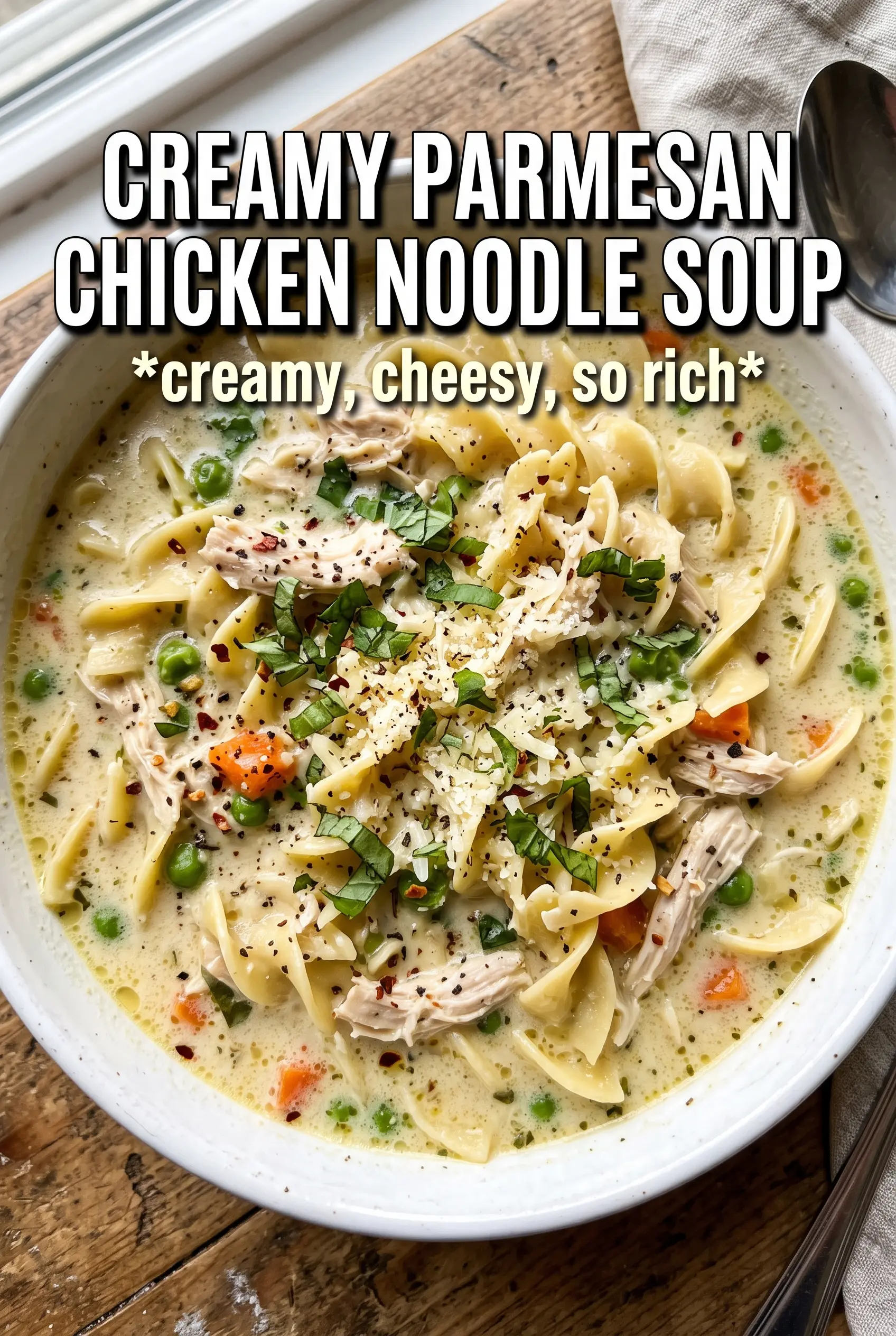
Creamy Parmesan Chicken Noodle Soup
Ingredients
Equipment
Method
- Melt the butter in a large pot over medium heat, then sauté the onion, carrots, and celery for 5 minutes until the vegetables begin to soften and look glossy.
- Add the minced garlic and cook for 1 minute until fragrant, then whisk in the flour and cook for 1–2 minutes to remove the raw flour taste.
- Gradually add the chicken broth while whisking, then add the diced chicken and Italian seasoning.
- Simmer the soup for 15 minutes, until the chicken is cooked through and no longer pink in the center.
- Stir in the heavy cream and bring to a gentle simmer, then add the egg noodles.
- Cook for 6–8 minutes at a gentle simmer until the noodles are tender.
- Reduce the heat, then stir in 1 cup of the parmesan until fully melted and the broth looks smooth and slightly thickened.
- Add the baby spinach and cook for 2 minutes, stirring just until wilted and bright green.
- Stir in the nutmeg, then season with salt and pepper to taste.
- Serve hot with the remaining parmesan sprinkled on top.