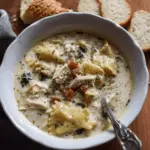
Butternut squash lasagna soup lands in that sweet spot between comforting and a little bit special. The broth turns silky and golden from the squash, the noodles give it that familiar lasagna pull, and the kale keeps each spoonful from feeling heavy. A bowl of this eats like a full dinner, but it still has the easy rhythm of a one-pot soup.
What makes this version work is the balance of texture. Part of the squash gets mashed right in the pot, which thickens the broth without turning it into puree, and the mozzarella gets added at the end in the bowl so it melts into soft ribbons instead of disappearing into the soup. Sage, thyme, and a little nutmeg give it that cozy lasagna feel without making the flavor muddy.
You’ll find the exact order that keeps the noodles from going soft too early, plus a few smart swaps if you want to make it dairy-free or use what you already have on hand.
The squash thickened the broth just enough and the broken noodles held their shape without getting mushy. I loved how the mozzarella melted on top in the bowl instead of getting lost in the pot.
Save this butternut squash lasagna soup for the nights when you want creamy broth, tender noodles, and melted mozzarella in one pot.
The Trick to Keeping the Broth Silky, Not Starchy
Lasagna soup can go flat fast if everything cooks together at the same pace. The noodles need enough time to soften, but if they sit in the pot too long, they soak up too much broth and turn the whole thing gummy. The fix here is to let the squash do part of the thickening before the noodles go in, then stop once the pasta is just tender.
Mashing only half the squash is the move that gives this soup body without losing the little cubes that make every spoonful interesting. You get a broth that tastes rich and layered instead of blended into submission. That texture matters even more once the mozzarella melts on top, because the soup needs enough structure to hold up under the cheese.
- Butternut squash — Fresh squash gives the broth its sweetness and body. Pre-cut squash works fine if it’s cut into even pieces; uneven chunks cook at different rates and leave you with some mush and some hard centers.
- Lasagna noodles — Broken noodles mimic the feel of layered pasta without any fuss. Don’t use fresh pasta here; it cooks too fast and falls apart in a soup like this.
- Heavy cream — This gives the broth its finish and keeps it from tasting thin. Half-and-half works in a pinch, but the soup will be looser and a little less plush.
- Mozzarella and parmesan — Parmesan seasons the broth from the inside, while mozzarella melts on top in the bowl for that lasagna effect. If you buy a block of mozzarella and shred it yourself, it melts cleaner than the bagged kind.
- Sage, thyme, and nutmeg — These are what pull the soup toward lasagna instead of basic squash soup. Fresh sage matters most here because it gives a sharper, woodsy note that stands up to the cream.
What Each Ingredient Is Actually Doing in This Recipe

- Primary ingredient (the star) — Quality matters most. Choose the best you can find.
- Cooking medium (oil, butter, or broth) — This carries flavors and prevents dryness.
- Seasonings (salt, pepper, spices, herbs) — Layer flavors so nothing overpowers. Build depth gradually.
- Aromatics (garlic, onion, herbs) — Cook with fat to bloom flavors. Become the foundation.
- Supporting ingredients — Complement the main ingredient without overpowering it.
- Sauce or liquid (if applicable) — Brings flavors together. Balance richness with acid.
- Acid (lemon, vinegar, wine, or other) — Brightens and prevents flat-tasting results.
- Final finish (garnish, glaze, or sauce) — Prevents one-dimensional taste and adds visual appeal.
Building the Pot in the Right Order
Softening the Onion Base
Start the onion in olive oil and let it cook until it turns translucent and sweet at the edges, not brown. That first four minutes gives the soup its base and keeps the garlic from tasting raw later. Add the garlic and sage only after the onion has softened, because garlic burns fast and burnt garlic will take over the whole pot. You want the kitchen to smell warm and savory before the broth goes in.
Cooking the Squash Until It Yields
Once the broth and squash are in, bring everything to a boil, then drop it to a steady simmer. The squash is ready when a fork slides through the pieces without resistance and the cubes are soft enough to mash against the side of the pot. If the boil is too hard, the outside of the squash breaks down before the center is tender, and you lose control of the texture. A gentle simmer keeps the broth clear and gives the squash time to soften evenly.
Adding the Noodles Without Overcooking Them
Stir in the broken lasagna noodles once the squash is tender and keep the simmer moderate. The noodles should stay moving enough not to clump, but not so aggressively that they tear apart. Pull the pot when the noodles are just cooked through with a little bite left, because they’ll keep softening in the hot broth. This is the point where people usually overdo it and end up with soup that eats like pasta porridge.
Finishing With Cream, Kale, and Cheese
Add the cream and kale near the end so the dairy stays smooth and the greens keep some color. The kale should wilt and turn glossy within a few minutes, not collapse into the background. Stir in the parmesan off the heat if the soup is bubbling hard, because hard simmering can make the cheese seize and turn grainy. Serve it right away and top each bowl with mozzarella so it melts over the surface instead of disappearing into the pot.
How to Adapt This Soup Without Losing What Makes It Work
Dairy-Free Version
Swap the heavy cream for full-fat coconut milk or an unsweetened oat cream and skip the mozzarella topping. Coconut milk gives the best body, but it does add a faint coconut note, so use oat cream if you want the flavor to stay closer to the original.
Gluten-Free Bowl
Use a sturdy gluten-free pasta that holds up in soup, then start checking it early. Gluten-free noodles can go from tender to swollen and soft in a short window, so pull them before they look fully finished in the pot.
Make It Heartier
Add cooked Italian sausage or shredded rotisserie chicken after the squash is tender. The soup handles extra protein well, but add it late so it warms through without drying out or making the broth taste muddy.
Storage and Reheating
- Refrigerator: Store for up to 4 days. The noodles will keep absorbing broth, so expect a thicker soup on day two.
- Freezer: Freeze the soup without the noodles and cream if you can. The texture holds up much better that way; add fresh pasta and cream after thawing and reheating.
- Reheating: Warm it gently over medium-low heat with a splash of broth or water. Hard boiling makes the cream separate and can turn the noodles soft in a hurry.
Answers to the Questions Worth Asking

Butternut Squash Lasagna Soup With Kale And Mozzarella
Ingredients
Equipment
Method
- Heat the olive oil in a large pot over medium heat, then sauté the onion for 4 minutes until softened. Add the garlic and chopped fresh sage and cook for 2 minutes, stirring, until fragrant.
- Add the butternut squash and broth, then bring the mixture to a boil and simmer for 15 minutes until the squash is tender. Mash about half the squash in the pot to thicken the broth while leaving some cubes for texture.
- Stir in the broken lasagna noodles, dried thyme, and nutmeg, then simmer for 10-12 minutes until the noodles are cooked through. Keep the soup at a gentle simmer so the noodles soften evenly.
- Stir in the heavy cream and the chopped kale, then cook for 3-4 minutes until the kale is wilted. The soup should look creamy and slightly thickened.
- Season with salt and pepper to taste, then stir in the grated parmesan until melted and smooth.
- Ladle the soup into bowls and place a generous handful of shredded mozzarella on top of each portion to melt. Serve immediately while the cheese is still gooey.