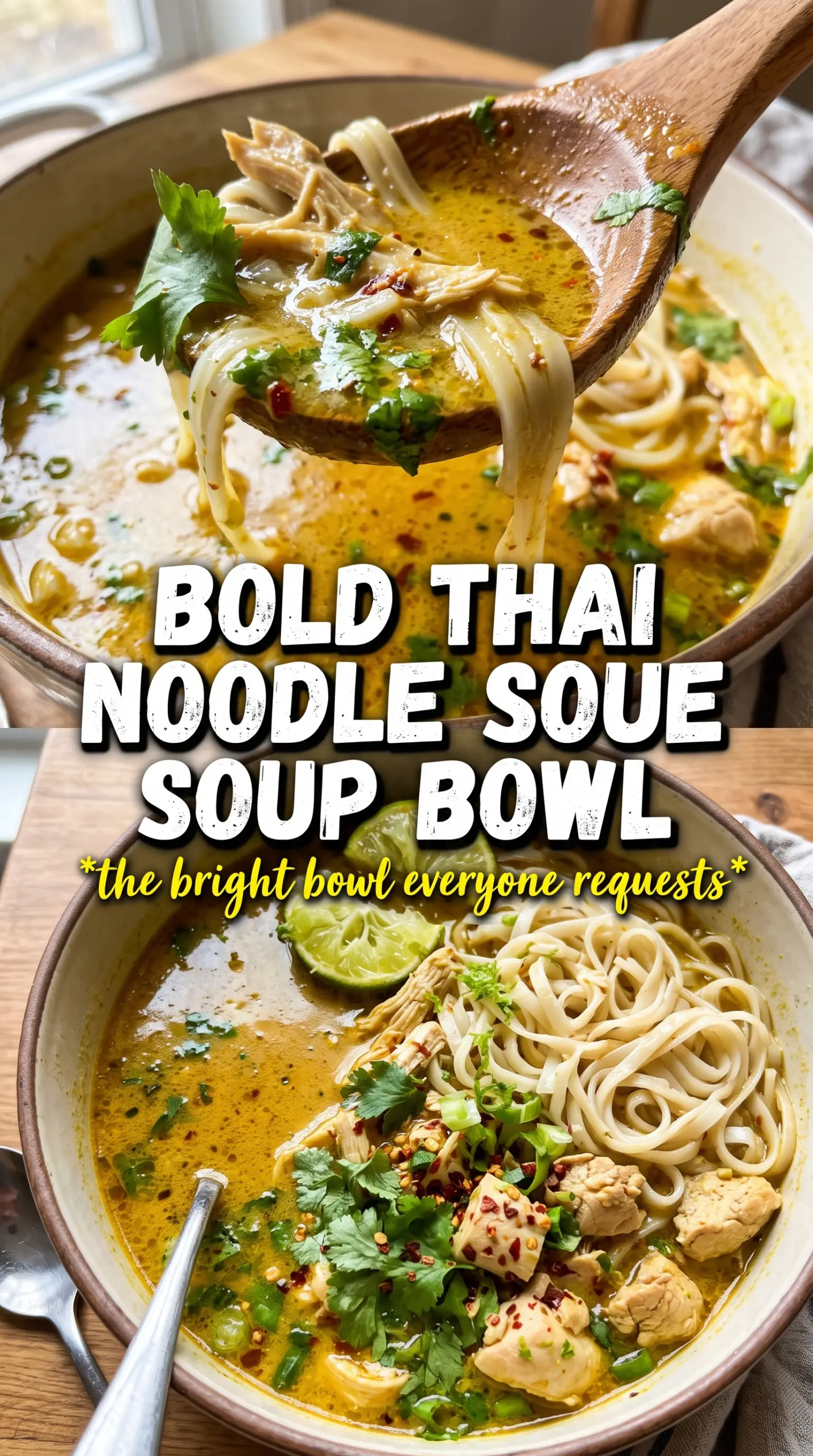
Golden coconut curry broth, tender chicken, and slippery rice noodles make this Thai chicken noodle soup the kind of bowl that disappears fast. The broth is fragrant without being heavy, with enough lime and fish sauce to keep the coconut milk from tasting flat, and the toppings bring fresh crunch and brightness right at the end. It eats like a full meal, but it still feels light enough that you’ll want a second bowl.
The trick is building the soup in layers. The curry paste needs a minute in the hot oil to wake up before the coconut milk goes in, and the lemongrass and galangal need time to release their flavor without turning stringy or bitter in the bowl. Thin-sliced chicken cooks quickly in the simmering broth, which keeps it tender instead of dry. Rice noodles are best cooked separately enough to soften, then finished in the soup so they don’t soak up every drop of broth before serving.
Below, I’ve included the small details that matter most here: how to keep the broth balanced, which swap works if you can’t find galangal, and the one noodle step that keeps the whole pot from turning gummy.
The curry broth turned out silky and the noodles stayed separate instead of clumping up. I used thighs and the chicken was tender all the way through, plus the lime and basil at the end made it taste fresh, not heavy.
Save this Thai Chicken Noodle Soup for the nights when you want a coconut-curry broth with bright lime, tender chicken, and fresh herbs on top.
The One Thing That Keeps This Soup From Tasting Flat
The broth in Thai chicken noodle soup lives or dies on balance. Coconut milk brings body, but it can mute the sharp edges that make the soup taste alive, so the lime juice, fish sauce, and brown sugar have to work together instead of one showing off. If the soup tastes good in the pot but dull in the bowl, it usually needs one more squeeze of lime or a small splash of fish sauce, not more coconut milk.
Red curry paste needs heat and fat before the liquids go in. That short fry in oil opens up the spices and chili enough that the soup tastes layered instead of one-note. The same idea applies to the aromatics: garlic, lemongrass, and galangal need just enough cooking to soften and bloom, but not so long that the garlic browns and turns bitter.
- Red curry paste — This is the backbone of the soup. Different brands vary a lot in heat and salt, so start with the amount listed and add more only after the broth simmers.
- Coconut milk — Full-fat coconut milk gives the soup its silky body. Lite coconut milk works in a pinch, but the broth will be thinner and a little less rounded.
- Lemongrass — Bruising the stalk matters because it lets the oils escape into the broth. If you can’t find it, use a little extra lime zest and a strip of lemon peel, then remove it before serving.
- Galangal or ginger — Galangal gives the soup its sharper Thai edge, but fresh ginger still keeps it fragrant and warm. Ginger is the easier swap and the one I use most often.
What Each Ingredient Is Actually Doing in This Recipe
- Primary ingredient (the star) — Quality matters most. Choose the best you can find.
- Cooking medium (oil, butter, or broth) — This carries flavors and prevents dryness.
- Seasonings (salt, pepper, spices, herbs) — Layer flavors so nothing overpowers. Build depth gradually.
- Aromatics (garlic, onion, herbs) — Cook with fat to bloom flavors. Become the foundation.
- Supporting ingredients — Complement the main ingredient without overpowering it.
- Sauce or liquid (if applicable) — Brings flavors together. Balance richness with acid.
- Acid (lemon, vinegar, wine, or other) — Brightens and prevents flat-tasting results.
- Final finish (garnish, glaze, or sauce) — Prevents one-dimensional taste and adds visual appeal.
Building the Broth Without Overcooking the Chicken
Wake Up the Curry Paste
Start with oil and red curry paste in a large pot, then cook until it smells bold and almost roasted, about 1 to 2 minutes. You’re looking for the paste to darken slightly and loosen in the oil, not sit there looking wet and raw. If the paste sticks hard to the pot, lower the heat; burned curry paste tastes harsh fast.
Layer in the Aromatics
Add the garlic, bruised lemongrass, and galangal or ginger next, and cook just until the garlic is fragrant, about a minute. This is where the soup starts smelling like something you’d want to eat immediately. Don’t let the garlic take on color, because browned garlic gives the broth a bitter edge that fights the coconut milk later.
Simmer the Broth Before the Noodles
Pour in the coconut milk and broth, then add the fish sauce, lime juice, and brown sugar. Let the soup simmer so the flavors marry and the liquid takes on a rounded, slightly glossy look. This is the point where you taste and adjust; if it tastes salty but not bright, add lime. If it tastes sharp but thin, add a pinch more sugar.
Cook the Chicken Gently
Add the sliced chicken and simmer until it’s just cooked through, 8 to 10 minutes depending on thickness. Thin slices cook quickly, which keeps them tender and allows the broth to stay clear instead of cloudy from hard boiling. If the soup is rolling like crazy, the chicken tightens up and turns dry around the edges.
Finish With the Noodles
Remove the lemongrass and galangal, then add the drained rice noodles and heat them through for 2 to 3 minutes. This short finish keeps them supple without letting them soak up too much broth in the pot. If you’re making the soup ahead, hold the noodles back until serving so they don’t swell and turn soft.
How to Adapt This Thai Chicken Noodle Soup Without Losing Its Character
Use chicken thighs for a richer bowl
Thighs stay juicier than breast meat and hold up well if the soup sits a few minutes before serving. They bring a little more body to the broth, which works especially well if you like a heartier finish.
Make it dairy-free and gluten-free without extra fuss
This recipe already fits both of those needs as written, as long as your curry paste and fish sauce are labeled gluten-free. Rice noodles keep the texture light and springy, so there’s no need for a substitute unless you want a different bowl entirely.
Turn down the heat without losing the curry flavor
Use less curry paste and add it gradually until the broth tastes right to you. Cutting the paste lowers the spice, but the coconut milk, lime, and herbs still give you the same bright, savory result.
Storage and Reheating
- Refrigerator: Store the broth and chicken for up to 4 days. The noodles soften as they sit, so they’re best kept separate if you can.
- Freezer: The broth and chicken freeze well for up to 2 months, but freeze it without noodles, bean sprouts, or herbs. Coconut milk can separate slightly after thawing, but a good stir smooths it out again.
- Reheating: Warm gently over medium-low heat until steaming, then add fresh noodles if possible. Hard boiling can make the chicken dry and the coconut broth grainy, so keep the heat modest.
Answers to the Questions Worth Asking
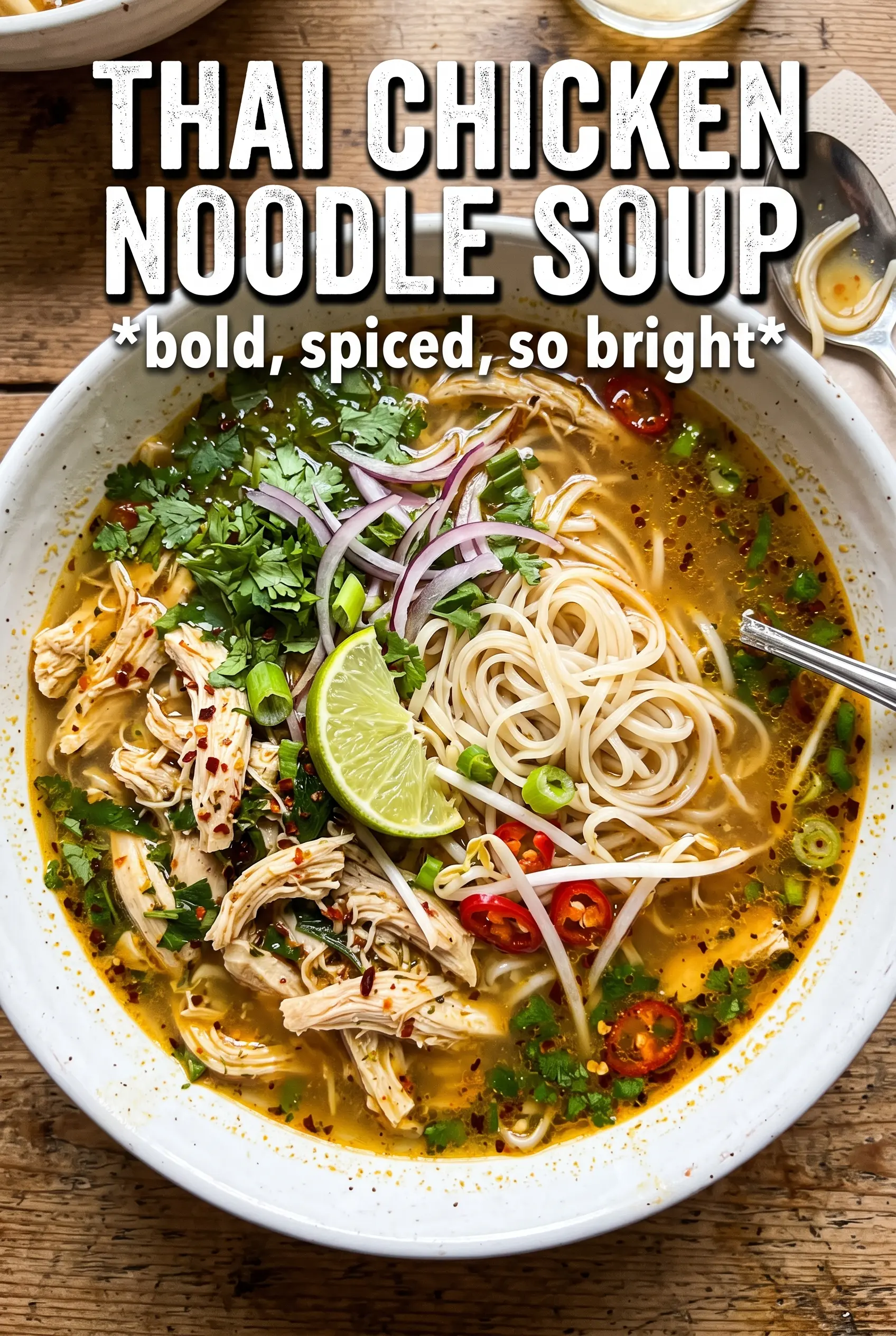
Thai Chicken Noodle Soup
Ingredients
Equipment
Method
- Soak the rice noodles in warm water for 15 minutes, then drain and set aside.
- Heat 1 tablespoon oil in a large pot and cook the red curry paste for 1-2 minutes until fragrant.
- Add the garlic, lemongrass, and galangal, then cook for 1 minute.
- Pour in the coconut milk and chicken broth, then add fish sauce, lime juice, and brown sugar.
- Simmer the broth for 10 minutes.
- Add the sliced chicken and cook for 8-10 minutes until cooked through.
- Remove the lemongrass and galangal, then add the drained rice noodles and heat through for 2-3 minutes.
- Serve hot with bean sprouts, green onions, fresh Thai basil, cilantro, lime wedges, and sliced red chili on top.