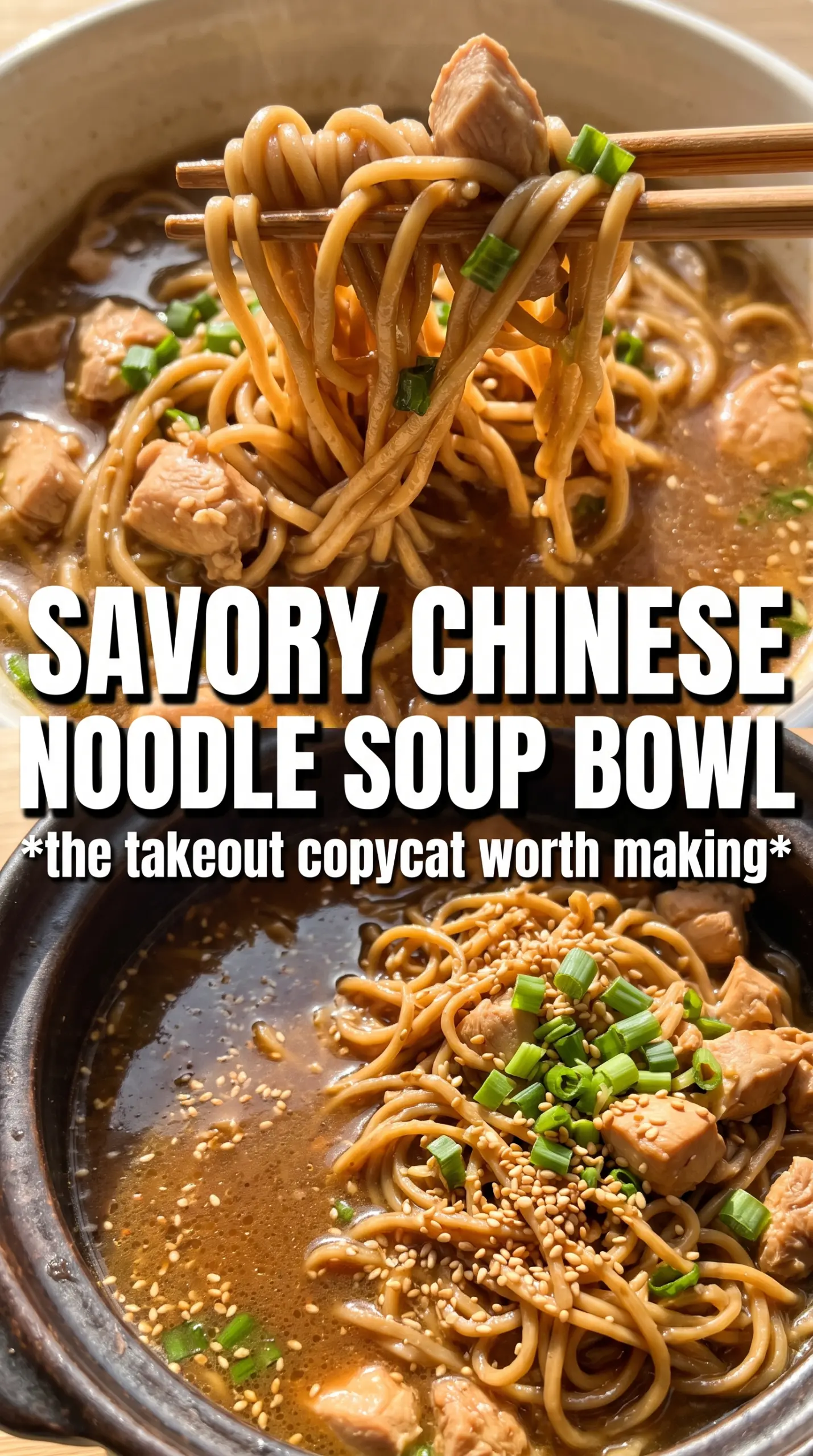
Clear broth, tender chicken, and bouncy noodles make Chinese chicken noodle soup one of those bowls that disappears fast. The broth stays light but never bland, with ginger, garlic, soy sauce, and sesame oil building a base that tastes clean and deeply savory at the same time. Bok choy and shiitakes bring enough texture to keep every spoonful interesting, and the white pepper at the end gives the whole bowl a gentle heat that lingers.
What makes this version work is timing. The noodles cook separately, so they don’t steal broth or turn gummy, and the bok choy goes in at the very end so it keeps its green color and delicate bite. I also add the sesame oil and rice vinegar after the broth has started to season, not at the start, because both taste brighter when they aren’t cooked hard for too long.
Below you’ll find the trick for keeping the soup clear and balanced, plus a few swaps that make it easier to adapt for what’s already in your kitchen.
The broth stayed clear, the noodles didn’t get mushy, and the ginger came through without overpowering everything. I made it on a weeknight and my husband went back for a second bowl before I’d even sat down.
Save this Chinese chicken noodle soup for a clear, savory broth with tender chicken, silky noodles, and that final drizzle of chili oil.
The Trick to Keeping the Broth Clear and the Noodles Separate
A good bowl of Chinese chicken noodle soup should taste clean, not muddy. The fastest way to lose that clarity is to boil the broth hard after the chicken goes in or to let the noodles sit in the pot too long. Gentle simmering keeps the chicken tender and the broth bright, while cooking the noodles separately protects the texture and keeps the soup from turning starchy.
That separation matters even more if you plan on leftovers. Noodles left in the soup keep drinking liquid, so the broth turns dull and the noodles go soft by the next day. If you want the best bowl possible, treat the noodles like their own component and add them only when you’re ready to serve.
- Chicken breast — Thin slicing helps it cook quickly and stay tender. If you cut it too thick, it can go stringy before the center is done.
- Chicken broth — Use the best broth you can find here. This is the body of the soup, so a weak broth will taste thin no matter how much seasoning you add.
- Thin Chinese wheat noodles or rice noodles — Either one works, but thin wheat noodles give the most classic chewy bite. Rice noodles are a good gluten-free swap, though they soften a little faster.
- Bok choy — Add it near the end so the stalks stay crisp-tender and the leaves wilt without turning mushy.
- Shiitake mushrooms — They bring a deeper savory note than button mushrooms. Fresh shiitakes are worth buying if you can find them, but dried shiitakes, rehydrated and sliced, work in a pinch.
What Each Ingredient Is Actually Doing in This Recipe
- Primary ingredient (the star) — Quality matters most. Choose the best you can find.
- Cooking medium (oil, butter, or broth) — This carries flavors and prevents dryness.
- Seasonings (salt, pepper, spices, herbs) — Layer flavors so nothing overpowers. Build depth gradually.
- Aromatics (garlic, onion, herbs) — Cook with fat to bloom flavors. Become the foundation.
- Supporting ingredients — Complement the main ingredient without overpowering it.
- Sauce or liquid (if applicable) — Brings flavors together. Balance richness with acid.
- Acid (lemon, vinegar, wine, or other) — Brightens and prevents flat-tasting results.
- Final finish (garnish, glaze, or sauce) — Prevents one-dimensional taste and adds visual appeal.
Building the Bowl in the Right Order
Starting the Broth Base
Bring the broth to a steady simmer before anything else goes in. Add the garlic and ginger and let them cook for about 5 minutes so they soften and perfume the broth without turning sharp. If the broth is boiling hard, the aromatics can taste harsh instead of rounded, and the soup loses that clean finish.
Seasoning Before the Chicken Goes In
Stir in the soy sauce, sesame oil, and rice vinegar before the chicken. This gives the broth a chance to taste balanced before the meat goes in, which matters because chicken can mute seasoning as it cooks. Taste now and adjust lightly; the broth should taste a little bolder than you want in the finished bowl because the noodles and vegetables will soften that edge.
Cooking the Chicken and Mushrooms Gently
Add the sliced chicken and mushrooms and simmer until the chicken is cooked through, about 10 to 12 minutes. The chicken should turn opaque and just lose its pink center, not fall apart or get tough at the edges. If the pot is boiling hard at this stage, the chicken tightens up fast, so keep the heat at a gentle simmer.
Finishing with Greens and Noodles
Cook the noodles separately, drain them, and divide them into bowls. Add the bok choy to the broth for the last 3 minutes, just until the stems soften and the leaves wilt. Ladle the soup over the noodles, then finish with white pepper, salt, green onions, cilantro, and chili oil. White pepper is the final detail that makes the bowl taste like itself, so don’t skip it if you want that classic warm finish.
How to Adapt This Bowl When You Need a Swap
Make It Gluten-Free
Use rice noodles and choose a gluten-free soy sauce or tamari. The broth stays just as savory, though rice noodles soften faster than wheat noodles, so add them to each bowl right before serving if you want the best texture.
Use Thighs Instead of Breast
Chicken thighs give you a richer, juicier result and hold up well if the soup simmers a little longer than planned. Cut them thin so they cook at the same pace as the broth; thicker pieces need extra time and can make the soup feel heavier.
Swap the Greens Based on What You Have
Baby bok choy is best, but napa cabbage or spinach works if that’s what’s in the fridge. Napa cabbage needs a few extra minutes, while spinach should go in at the very end because it wilts almost instantly and can turn the broth a little muddy if it cooks too long.
Storage and Reheating
- Refrigerator: Store the broth, chicken, and vegetables separately from the noodles for up to 4 days. The broth stays clear longer this way, and the noodles won’t soak up all the liquid.
- Freezer: Freeze the broth, chicken, and mushrooms without the noodles or bok choy for up to 3 months. Fresh noodles and greens are best added after thawing, since both lose texture in the freezer.
- Reheating: Reheat the broth gently on the stove until steaming, then add the chicken and vegetables just long enough to warm through. Don’t boil it hard, or the chicken gets dry and the broth loses its clean taste.
Answers to the Questions Worth Asking
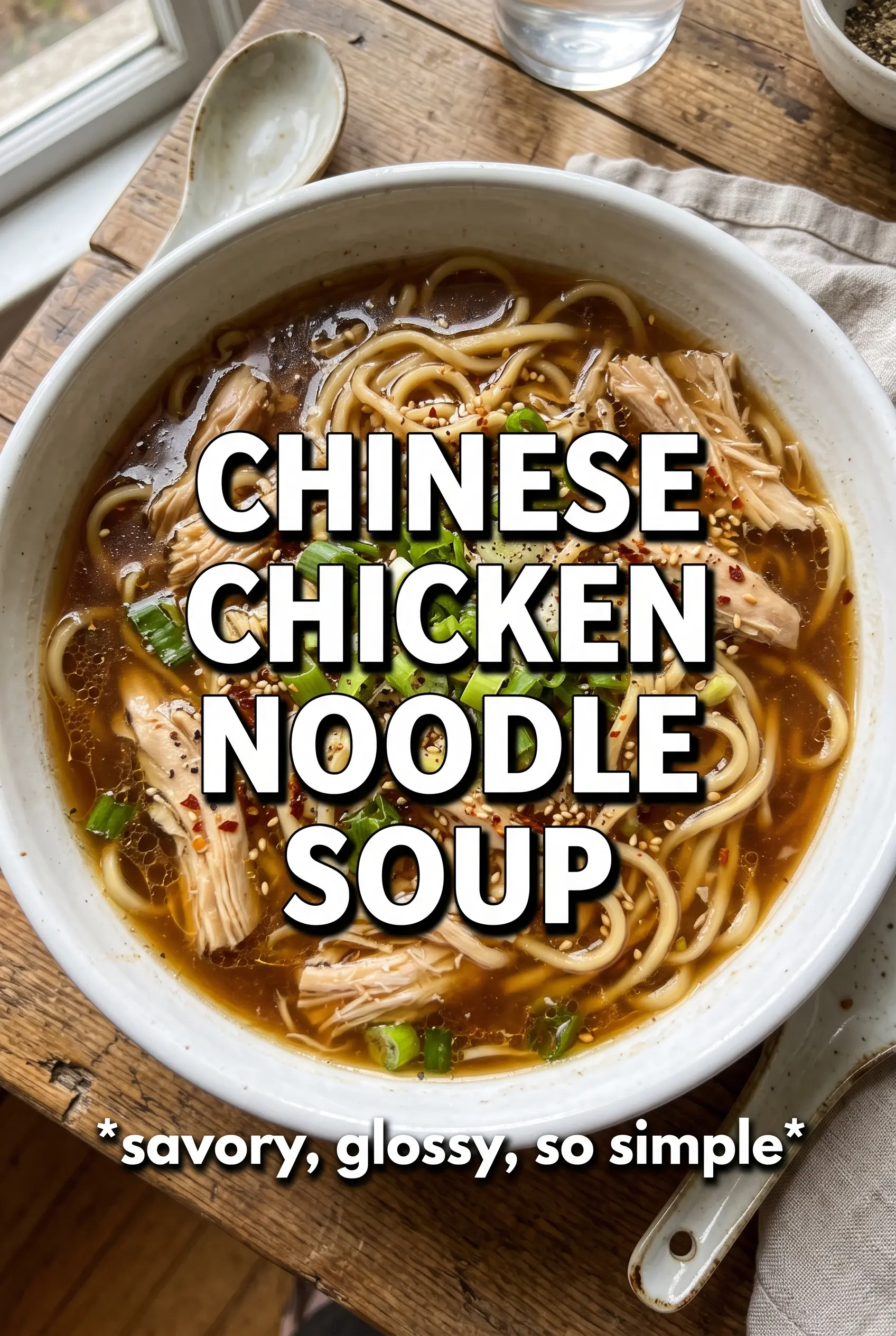
Chinese Chicken Noodle Soup
Ingredients
Equipment
Method
- Bring the chicken broth to a simmer in a large pot over medium-high heat, then stir in the minced garlic and grated ginger and cook for 5 minutes, until fragrant. Keep the liquid at a steady gentle simmer with small bubbles around the edges.
- Stir in the soy sauce, sesame oil, and rice vinegar and taste, adjusting as needed. The broth should turn lightly amber-brown and smell savory with a mild tang.
- Add the thinly sliced chicken and sliced shiitake mushrooms to the broth, then simmer for 10 to 12 minutes until the chicken is cooked through. Visual cue: the chicken pieces turn opaque and the mushrooms soften without breaking apart.
- Cook the thin Chinese wheat noodles (or rice noodles) separately according to the package directions, then drain and divide them into serving bowls. The noodles should be tender and slippery, not clumped; rinse only if the package directs it.
- Add the chopped bok choy to the soup and cook for 3 minutes until wilted. Visual cue: bok choy should turn bright green and become tender while still holding shape.
- Ladle the hot soup over the noodles, then season with white pepper and salt to taste. Add until the noodles are fully covered and the broth looks clear and lightly glossy.
- Top each bowl with sliced green onions, cilantro, and a drizzle of chili oil. Finish with a fresh, green garnish that sits on the surface and a small red chili oil sheen.